
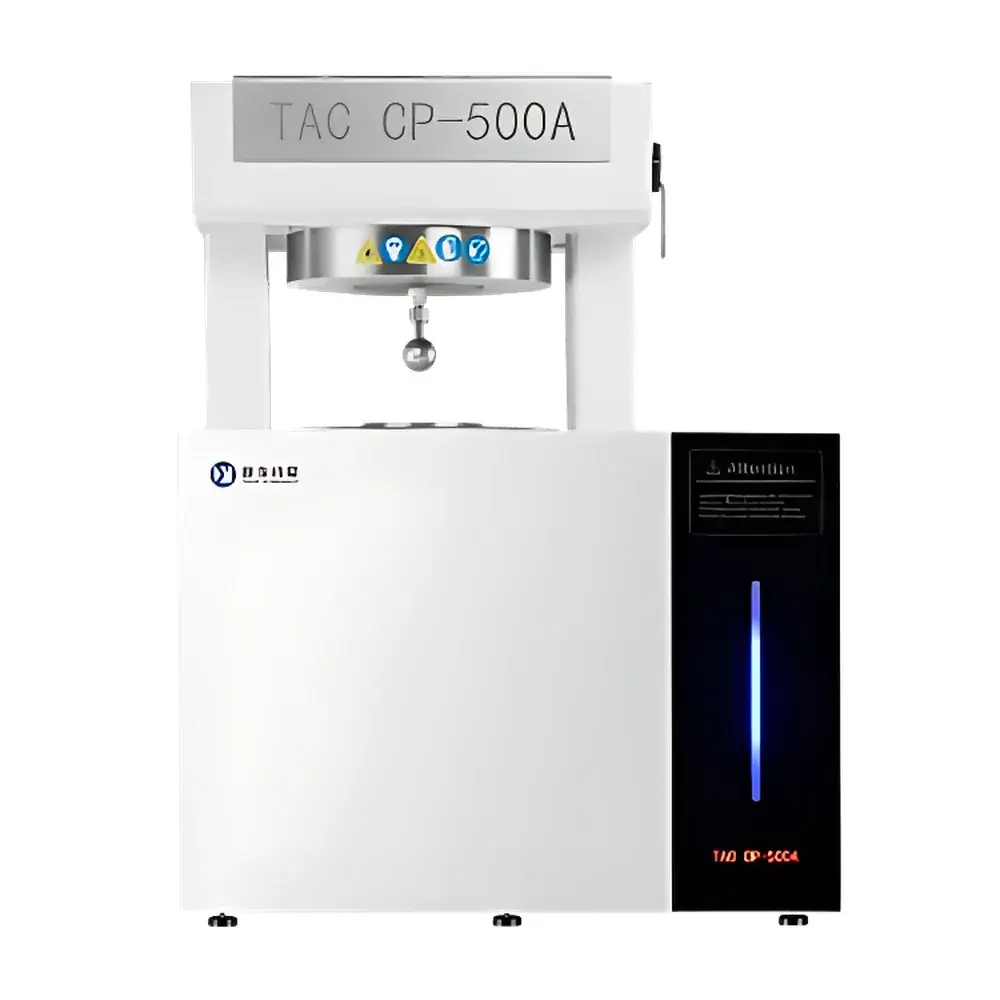
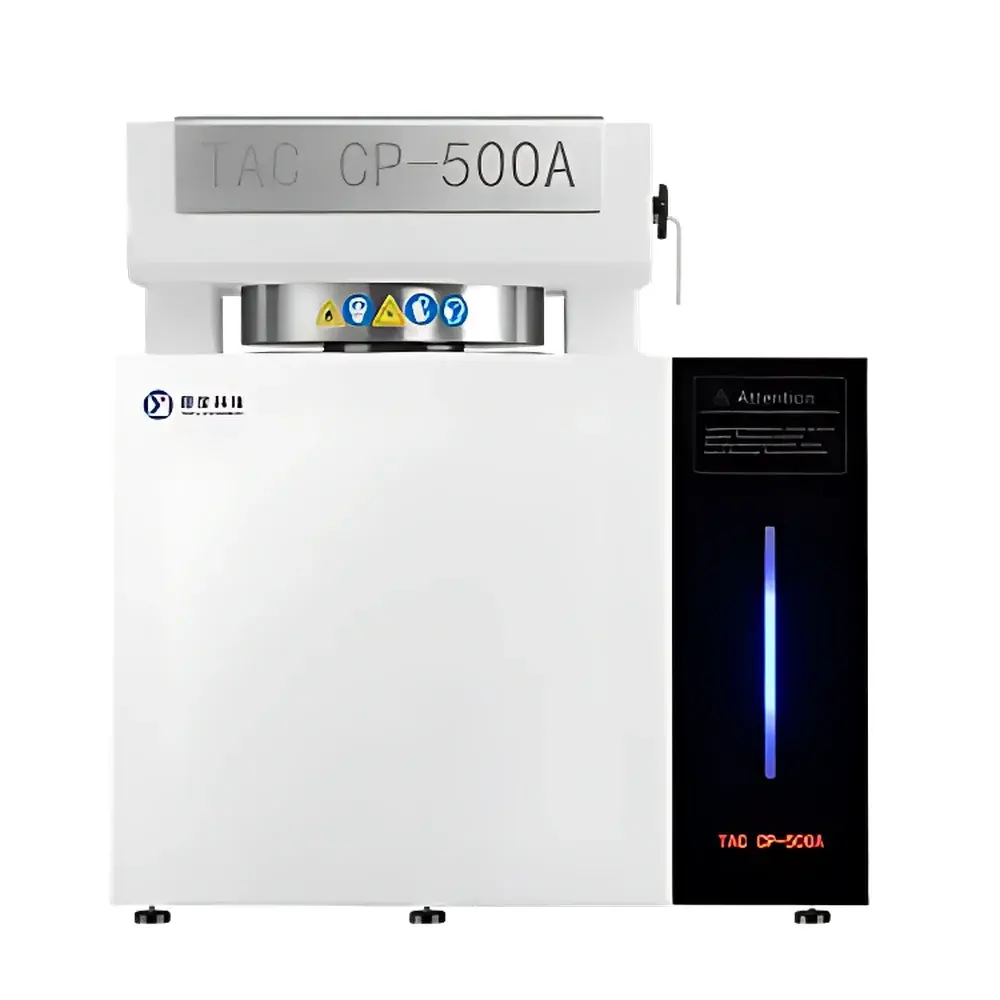
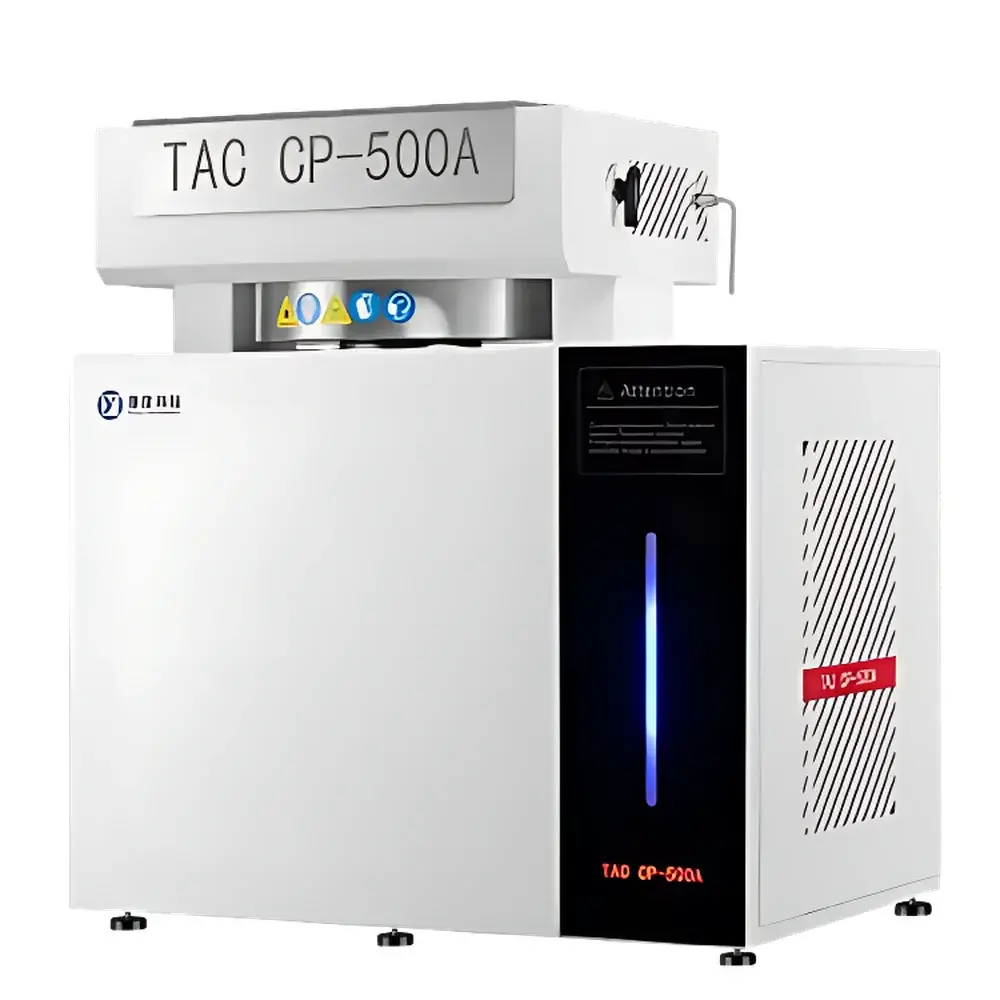
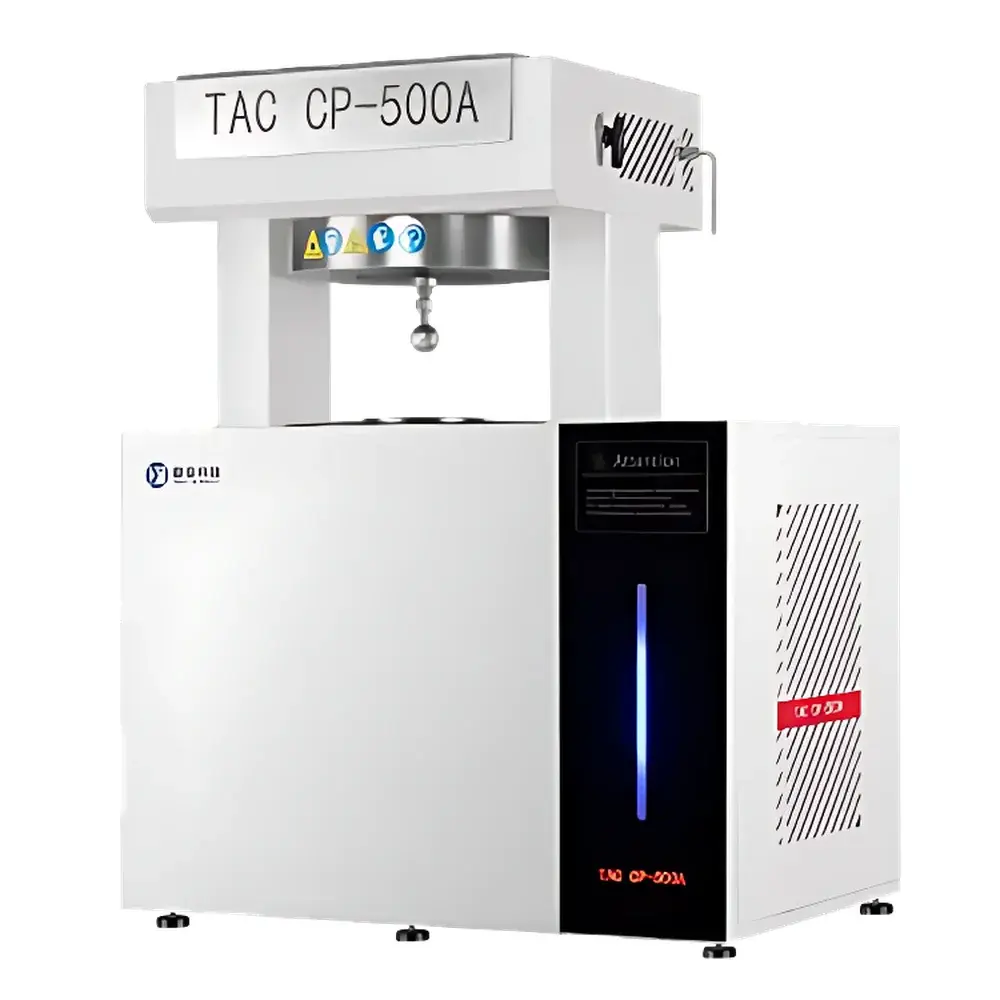
Young Instruments TAC CP-500A Low-Thermal-Inertia Adiabatic Accelerating Calorimeter
| Brand | Young Instruments |
|---|---|
| Origin | Zhejiang, China |
| Manufacturer Type | Manufacturer |
| Country of Origin | Domestic (China) |
| Model | TAC CP-500A |
| Functionality | Automated |
| Instrument Type | Accelerating Calorimeter |
| Measurement Mode | Adiabatic Calorimetry |
| Temperature Range | Ambient to 500 °C |
| Temperature Resolution | 0.001 °C |
| Temperature Detection Threshold | 0.005–0.02 °C/min |
| Temperature Tracking Rate | 0.005–60 °C/min |
| Pressure Range | 0–20 MPa |
| Pressure Resolution | 1 kPa |
| Sample Cell Volume | 8 mL |
| Sample Cell Materials | Stainless Steel, Titanium, or Hastelloy (optional) |
| Phi Factor | ≈1.0 |
| Interface | USB, RS232 |
| Power Supply | AC 220 V / 50 Hz |
| Power Consumption | 3000 W |
| Dimensions | 620 × 470 × 670 mm |
| Weight | 78 kg |
Overview
The Young Instruments TAC CP-500A is a high-precision, low-thermal-inertia adiabatic accelerating calorimeter engineered for rigorous thermal hazard assessment and kinetic parameter derivation in chemical process safety and reaction engineering. Unlike conventional adiabatic calorimeters—where sample temperature rise relies solely on exothermic heat release—the TAC CP-500A employs real-time power compensation to actively offset heat loss from the sample cell. This architecture decouples the thermal inertia factor (Φ) from the sample cell’s heat capacity, enabling direct measurement of intrinsic thermokinetic parameters without empirical Φ correction. The instrument operates on the fundamental principle of adiabatic heat flow control, maintaining near-ideal adiabatic conditions (Φ ≈ 1.0) across its full operating range (ambient to 500 °C), thereby delivering superior accuracy in onset temperature (Tonset), adiabatic temperature rise (ΔTad), self-heat rate (dT/dtad), and time-to-maximum-rate (TMRad). Its design aligns with internationally recognized methodologies for thermal runaway evaluation, including ASTM E698, ISO 8230-2, and UN Test Series H, supporting compliance-driven workflows in regulated environments.
Key Features
- Real-time thermal power compensation ensures dynamic adiabatic tracking with Φ ≈ 1.0—eliminating systematic bias from thermal lag and enabling direct extraction of Arrhenius parameters (activation energy Ea, pre-exponential factor A) without iterative correction.
- Multi-mode operational flexibility: fully supports Heating–Wait–Search (HWS), isothermal hold, and adiabatic scanning protocols—ensuring backward compatibility with legacy test procedures while enabling faster screening of thermal instability thresholds.
- Integrated safety-critical hardware: motorized furnace lid actuation prevents manual exposure during high-pressure/temperature operation; dual-stage overpressure (up to 20 MPa) and overtemperature alarms with automatic shutdown meet IEC 61508 SIL-2 functional safety requirements.
- Modular sample cell construction using stainless steel, titanium, or Hastelloy C-276 accommodates aggressive chemistries—including halogenated solvents, strong oxidizers, and corrosive intermediates—ensuring long-term integrity under repeated thermal cycling.
- High-fidelity thermal sensing: platinum resistance thermometer (PRT) with 0.001 °C display resolution and detection threshold as low as 0.005 °C/min enables early identification of low-energy decomposition events relevant to storage stability and transportation classification.
Sample Compatibility & Compliance
The TAC CP-500A accepts liquid, slurry, paste, and solid-phase samples up to 8 mL volume, making it suitable for active pharmaceutical ingredients (APIs), agrochemical formulations, polymerization initiators, nitroaromatic compounds, and energetic materials. Its pressure-rated cell (0–20 MPa) allows closed-system vapor pressure and gas evolution analysis under confinement—critical for evaluating vent sizing (per DIERS methodology) and runaway scenario modeling. The system conforms to regulatory frameworks governing process safety management (PSM), including OSHA 1910.119, CCPS Guidelines, and the Chinese State Administration of Work Safety’s Guideline for Safety Risk Assessment of Fine Chemical Reactions. Data audit trails, user access controls, and electronic signature support comply with FDA 21 CFR Part 11 and EU Annex 11 requirements when deployed in GLP/GMP-aligned laboratories.
Software & Data Management
Proprietary TACSoft v4.x provides automated data acquisition, baseline correction, kinetic model fitting (e.g., nth-order, autocatalytic, multi-step), and standardized reporting. Built-in modules implement the four-tier reaction severity classification defined in the Chinese Fine Chemical Reaction Safety Risk Assessment Guideline—calculating thermal accumulation, adiabatic time-to-explosion (Tex), and criticality indices (e.g., ΔTad, MTSR, TD24) per industry best practices. All raw sensor data (temperature, pressure, heater power, time) are timestamped and stored in HDF5 format for traceability. Export options include CSV, PDF reports with embedded metadata, and direct integration with Aspen Tech, DSC-Sim, and Sphera PHA software via OPC UA or REST API.
Applications
- Thermal stability screening of new synthetic routes and intermediate compounds during process development.
- Quantitative determination of activation energy and kinetic models for scale-up predictions (e.g., RC1e correlation, thermal accumulation modeling).
- Reaction calorimetry support for Design of Experiments (DoE)-driven optimization of temperature, concentration, and addition rate.
- Hazard classification per GHS (UN GHS Rev.10, Appendix 6) and transport safety evaluation (UN Manual of Tests and Criteria, Section 38.3).
- Validation of computational chemistry predictions (e.g., DFT-calculated bond dissociation energies) against empirical thermal decomposition onset.
- Supporting Process Hazard Analysis (PHA) deliverables including Layer of Protection Analysis (LOPA) and Quantitative Risk Assessment (QRA) input parameters.
FAQ
What distinguishes the TAC CP-500A from traditional adiabatic calorimeters like the ARC or VSP?
The TAC CP-500A eliminates reliance on Φ-factor correction by dynamically compensating for heat loss in real time—resulting in higher fidelity onset detection and more robust kinetic parameter estimation, especially for low-enthalpy or slow-onset reactions.
Can the instrument be used for gas evolution quantification?
Yes—integrated pressure transduction (0–20 MPa, 1 kPa resolution) enables simultaneous monitoring of exothermic activity and non-condensable gas generation, supporting vent sizing calculations per DIERS methodology.
Is the software compliant with 21 CFR Part 11 for regulated pharmaceutical labs?
TACSoft supports role-based user authentication, electronic signatures, and immutable audit trails—fully configurable to meet 21 CFR Part 11 and EU Annex 11 requirements when deployed on validated IT infrastructure.
What sample cell materials are available for highly corrosive systems?
Standard cells are 316 stainless steel; optional cells are fabricated from Grade 2 titanium or Hastelloy C-276 for compatibility with hydrochloric acid, nitric acid, bromine, or chlorine-containing reaction mixtures.
How does the adiabatic scanning mode improve throughput in thermal hazard screening?
By ramping temperature at controlled rates (0.005–60 °C/min) while maintaining adiabatic conditions, the scanning mode identifies multiple exothermic events in a single run—reducing test time by up to 70% compared to sequential HWS experiments.



