
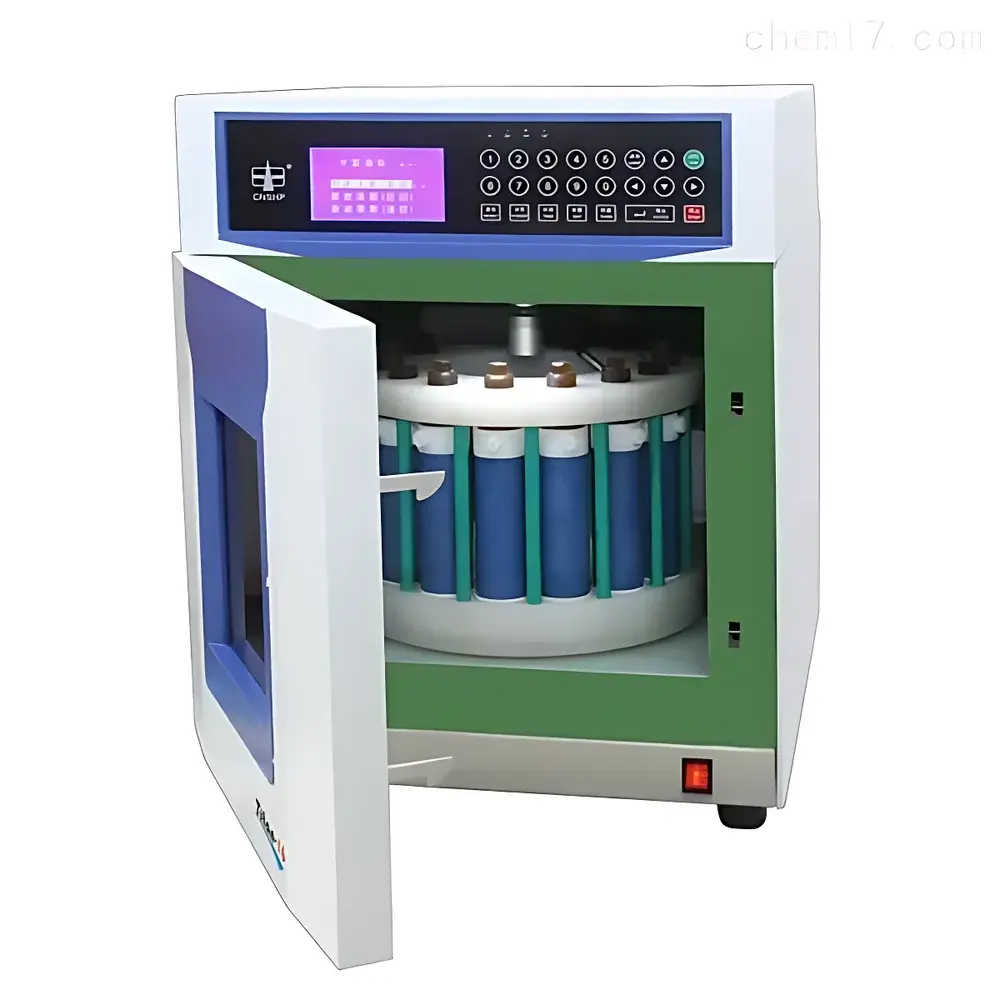
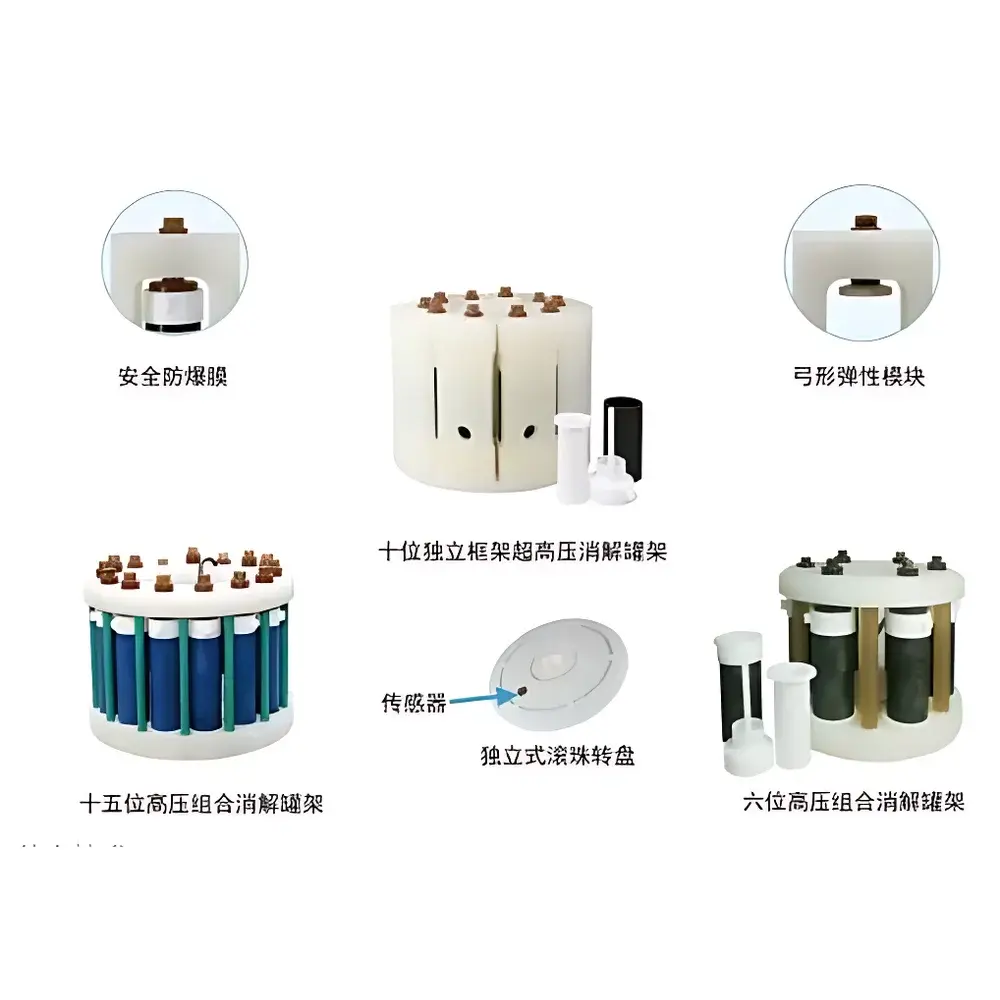
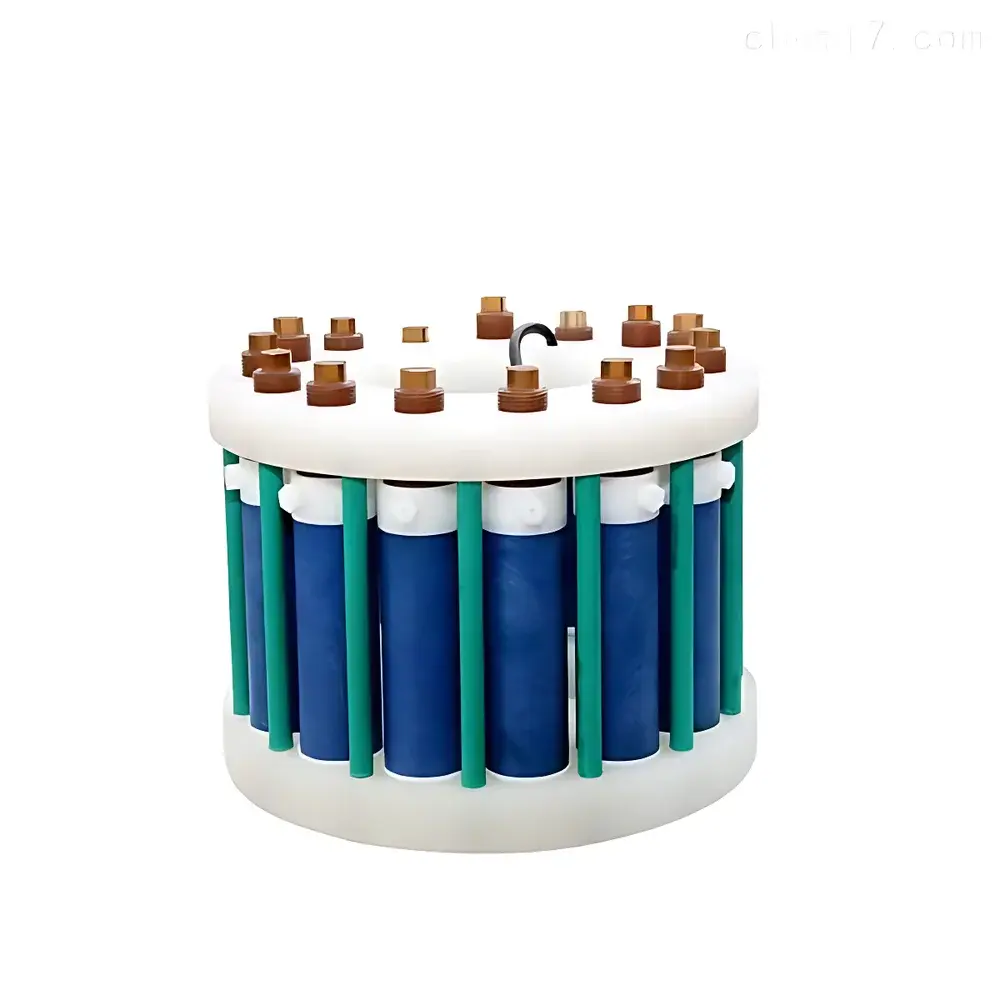
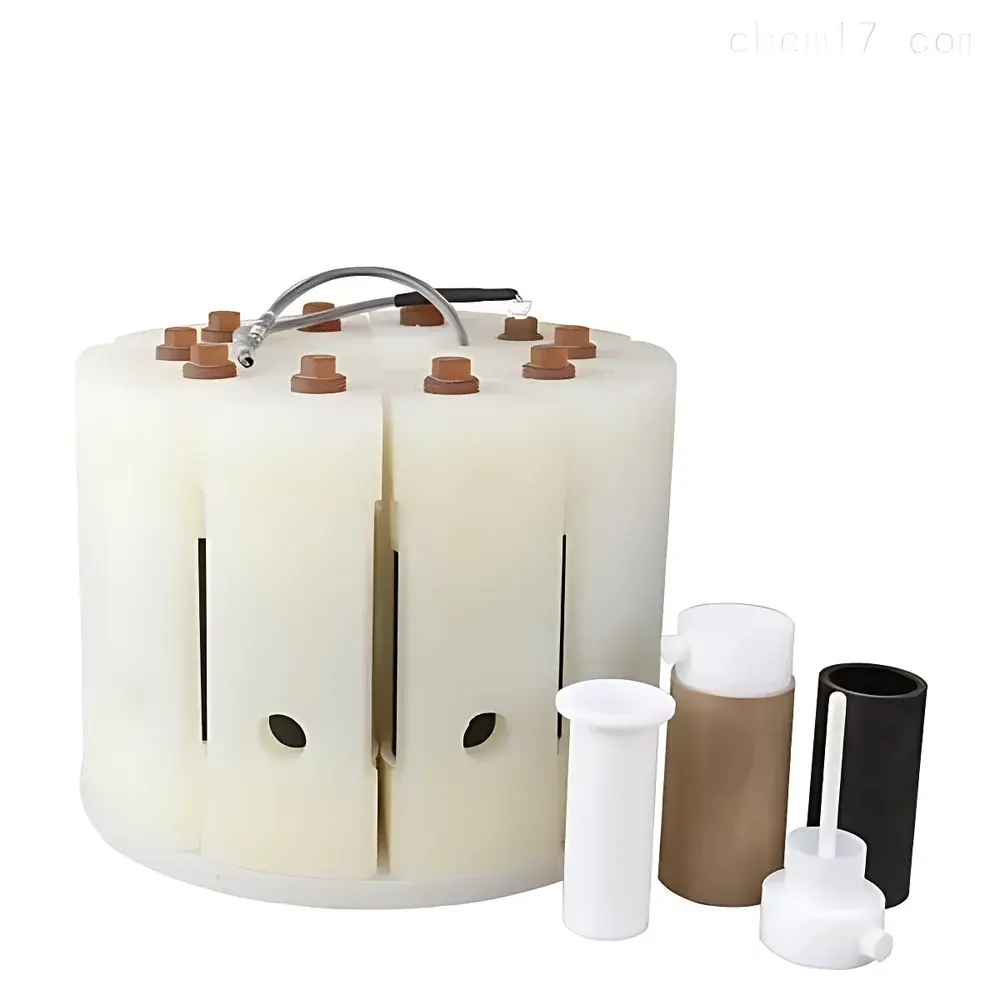
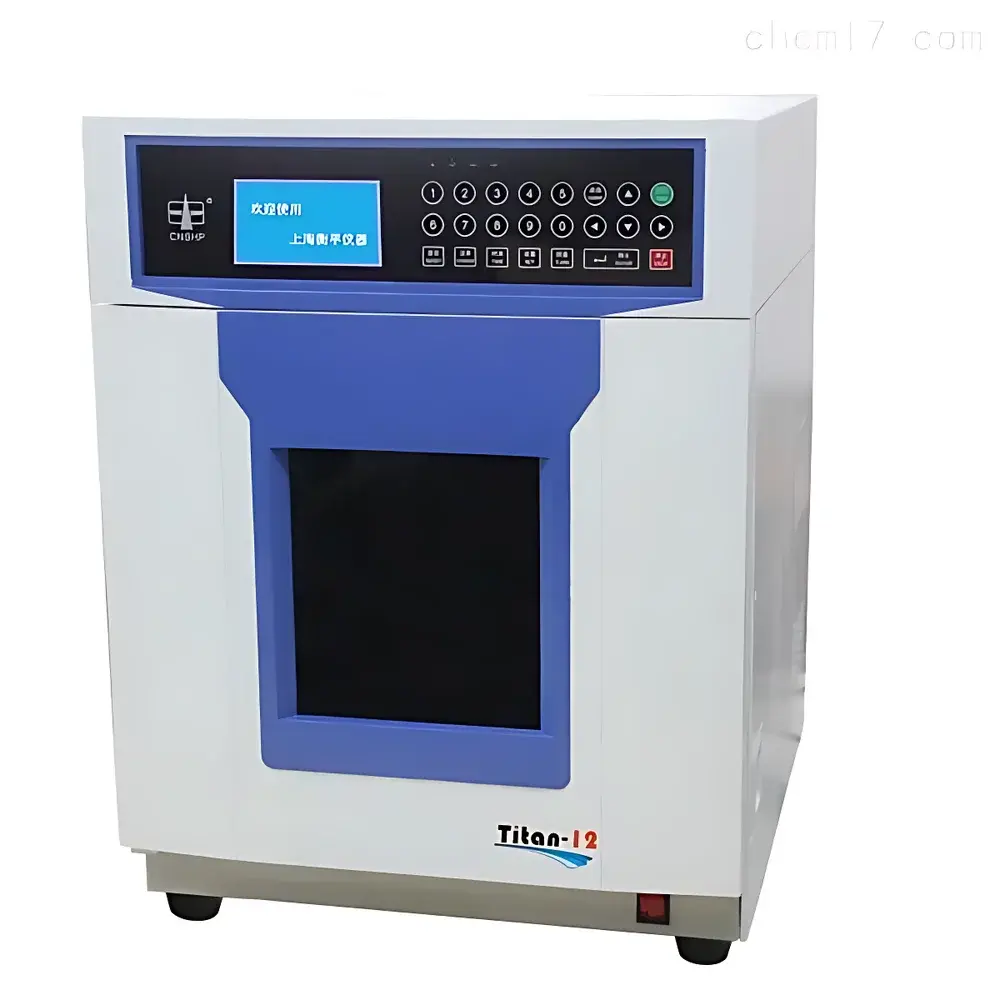
yoyilab TITAN10B 10-Position Dual-Magnetron Microwave Digestion System
| Brand | yoyilab |
|---|---|
| Origin | Shanghai, China |
| Manufacturer Type | OEM Manufacturer |
| Region Category | Domestic (China) |
| Model | TITAN10B |
| Price Range | USD 7,000 – 14,000 |
| Cavity Class | Industrial-Grade |
| Batch Capacity | 10 samples |
| Microwave Source | Dual Magnetron (3600 W total output) |
| Max Temperature | 300 °C |
| Max Pressure | 20 MPa |
| Cavity Material | 316L Stainless Steel with 8-layer PFA coating |
| Temperature Sensor | High-precision Pt100 RTD (–40 to 500 °C |
| Pressure Sensor | Piezoelectric crystal (0–20 MPa |
| Safety Features | Auto-retracting safety door, dual-stage pressure relief (bow-spring module + burst disc), full-enclosure aerospace-grade carbon-fiber outer vessels with PFA spray coating (rated to 85 MPa), 360° real-time cavity monitoring via optical viewport and LED status array |
| Rotation | Unidirectional continuous rotation |
| Power Supply | 220 VAC ±10%, 50 Hz |
| Dimensions (L×W×H) | 480 × 550 × 630 mm |
| Net Weight | 57 kg |
| Operating Environment | 0–50 °C, 15–80% RH |
Overview
The yoyilab TITAN10B is an industrial-grade, 10-position dual-magnetron microwave digestion system engineered for high-throughput, reproducible sample preparation in regulated analytical laboratories. It operates on the principle of controlled microwave energy absorption by polar molecules—primarily water and acids—within sealed quartz or composite vessels, enabling rapid, uniform thermal decomposition of organic matrices under precisely regulated temperature and pressure conditions. Designed for compliance-critical workflows—including environmental testing (EPA Methods 3051A, 3052), food safety (AOAC 999.10), clinical toxicology, and geological analysis—the TITAN10B delivers consistent performance across demanding applications such as heavy metal quantification (ICP-MS/OES), nutrient profiling, and speciation analysis. Its architecture integrates a 3600 W dual-magnetron source, a 42 L 316L stainless steel cavity with eight-layer PFA anti-corrosion coating, and a unidirectional rotating carousel to eliminate cold spots and ensure homogeneous field distribution—critical for method robustness and inter-laboratory comparability.
Key Features
- Dual-magnetron power architecture: Two independently controlled 1800 W magnetrons deliver enhanced microwave coupling efficiency, faster ramp rates, and superior load adaptability—even with heterogeneous or low-dielectric samples.
- Industrial-grade safety engineering: Combines active and passive safeguards: auto-retracting safety door with real-time mechanical lock verification; piezoelectric pressure sensing with ±0.01 MPa control accuracy; bow-spring pressure modulation module paired with calibrated burst discs for quantitative overpressure release; and fully enclosed aerospace carbon-fiber outer vessels rated to 85 MPa (12,500 psi), spray-coated with inert PFA to resist HF, HNO₃, and aqua regia exposure.
- Real-time multimodal monitoring: Integrated LED status array provides immediate visual feedback on door integrity, microwave emission, rotor motion, and keypress execution—enabling remote operational validation without physical proximity to the cavity.
- PID-controlled closed-loop regulation: Simultaneous feedback-driven control of temperature (via Pt100 RTD) and pressure (via non-contact piezoelectric sensor) ensures precise trajectory adherence during multi-step digestion programs, minimizing thermal overshoot and vessel stress.
- Unidirectional continuous rotation: Eliminates rotational inertia and dwell time associated with bidirectional turntables, improving heating uniformity, reducing motor wear, and extending service life beyond 10,000 cycles.
- Corrosion-resistant cavity design: Top-vented 316L stainless steel chamber with eight-layer PFA coating minimizes acid vapor residence time, accelerates post-digestion cooling, and resists pitting from repeated HCl/HF exposure—validated per ASTM B117 salt-spray testing protocols.
Sample Compatibility & Compliance
The TITAN10B supports standardized digestion vessels compatible with ISO/IEC 17025-accredited workflows and aligns with regulatory requirements for GLP and GMP environments. Its 10-position rotor accepts interchangeable high-pressure digestion vessels (standardized to 55 mL capacity), including quartz inner liners and reinforced composite outer vessels. The system accommodates diverse sample types—from soil and sediment (EPA 3050B) to biological tissues (USP <231>), polymers, and catalysts—without cross-contamination risk due to non-invasive piezoelectric pressure transduction and sealed vessel geometry. All firmware and hardware design elements comply with IEC 61000-4 electromagnetic compatibility standards and meet CE marking requirements for laboratory equipment. Optional audit trail logging and user-access controls support FDA 21 CFR Part 11 readiness when integrated with validated LIMS platforms.
Software & Data Management
The embedded control interface features a capacitive touch panel with intuitive icon-based navigation and multilingual support (English, Spanish, German, Chinese). Up to 50 customizable digestion methods can be stored locally, each defining ramp/hold profiles for temperature, pressure, and power—fully traceable with timestamped event logs. Raw sensor data (temperature, pressure, microwave duty cycle, rotation status) are exportable in CSV format for external statistical analysis (e.g., JMP, Minitab) or integration into ELN systems. Firmware updates are performed via USB port with cryptographic signature verification to maintain integrity. No cloud dependency or vendor-hosted services are required—ensuring full data sovereignty and alignment with institutional IT security policies.
Applications
- Environmental analysis: Total recoverable metals in wastewater sludge (EPA 3052), leachate characterization (TCLP), and airborne particulate digestion (NIOSH Method 7300).
- Food and agriculture: Lead, cadmium, and arsenic quantification in cereals, dairy, and infant formula per EU Commission Regulation (EU) No 836/2012.
- Clinical and forensic toxicology: Quantitative recovery of antimony, thallium, and uranium from hair/nail matrices prior to ICP-MS analysis.
- Geochemical research: Rare earth element (REE) extraction from silicate rocks using HF-HNO₃-HCl mixtures under 20 MPa confinement.
- Materials science: Dissolution of battery cathode materials (NMC, LFP) and catalyst supports (Al₂O₃, TiO₂) for elemental mass balance studies.
FAQ
What safety certifications does the TITAN10B hold?
The instrument complies with IEC 61010-1 (Safety Requirements for Electrical Equipment for Measurement, Control, and Laboratory Use) and carries CE marking for EMC and Low Voltage Directive conformity. It is designed to meet ISO/IEC 17025 internal quality system requirements for digestion step validation.
Can the system be integrated with laboratory information management systems (LIMS)?
Yes—via USB data export in CSV format, supporting manual import or automated ingestion through middleware. Audit trail logs include operator ID, method name, start/end timestamps, and final pressure/temperature values.
Is the 85 MPa vessel rating applicable during routine operation?
No—the 85 MPa rating reflects the ultimate burst strength of the outer composite vessel under destructive testing. Operational pressure is strictly limited to 20 MPa per ASME BPVC Section VIII design code, enforced by dual independent pressure sensors and hardware interlocks.
Does the system support method development for novel sample matrices?
Yes—its programmable PID controller allows fine-tuned ramp rates (0.1–30 °C/s), hold durations (1 s–24 h), and dynamic power modulation, enabling optimization for challenging materials such as carbon nanotubes, graphene oxides, or high-silica ceramics.
What maintenance is required to sustain calibration integrity?
Annual verification of temperature and pressure sensors using NIST-traceable reference standards is recommended. The PFA-coated cavity requires only deionized water wipe-down after acidic runs; no abrasive cleaning agents are permitted.



