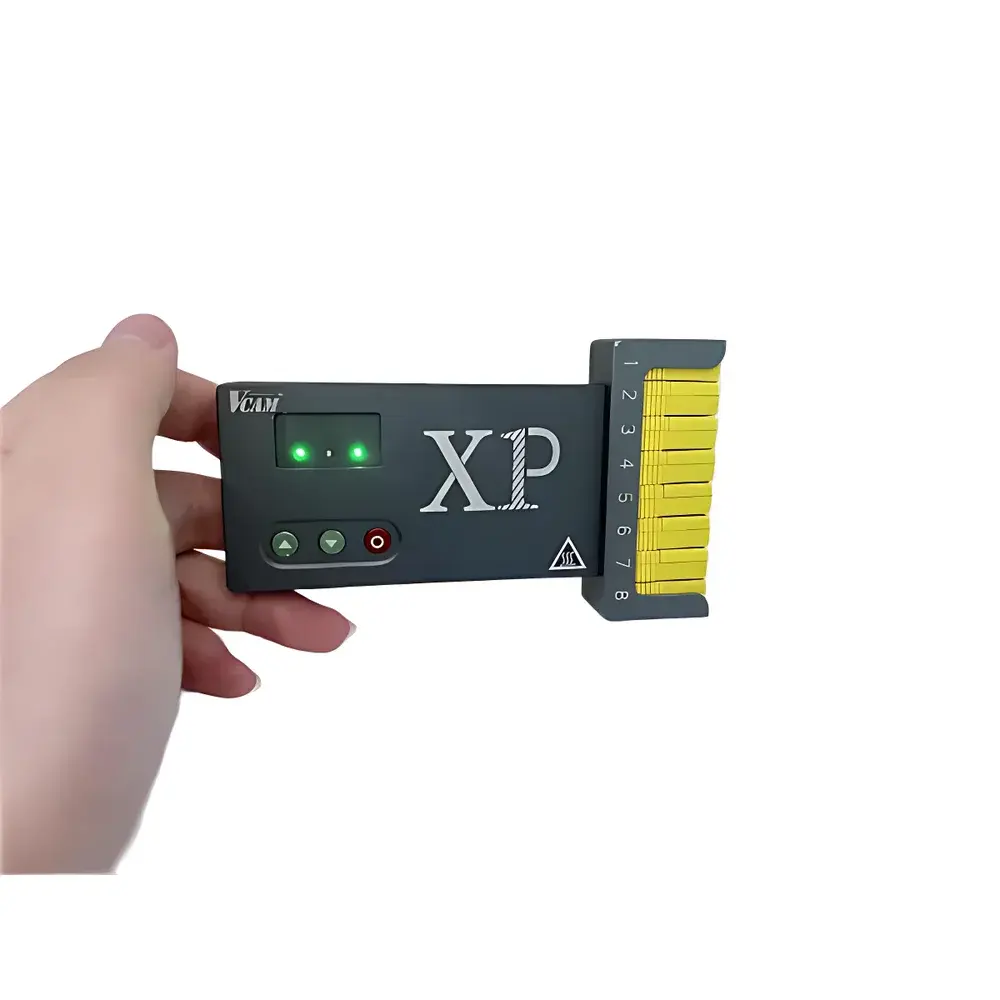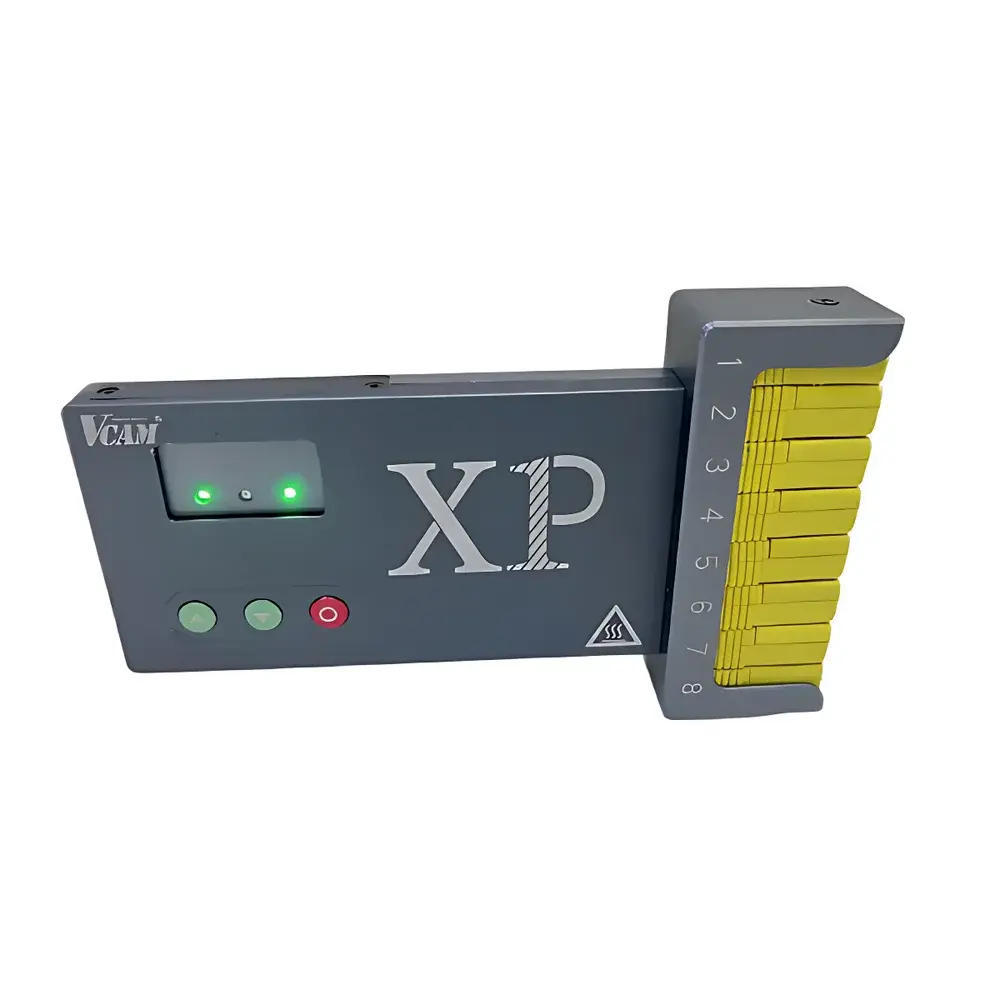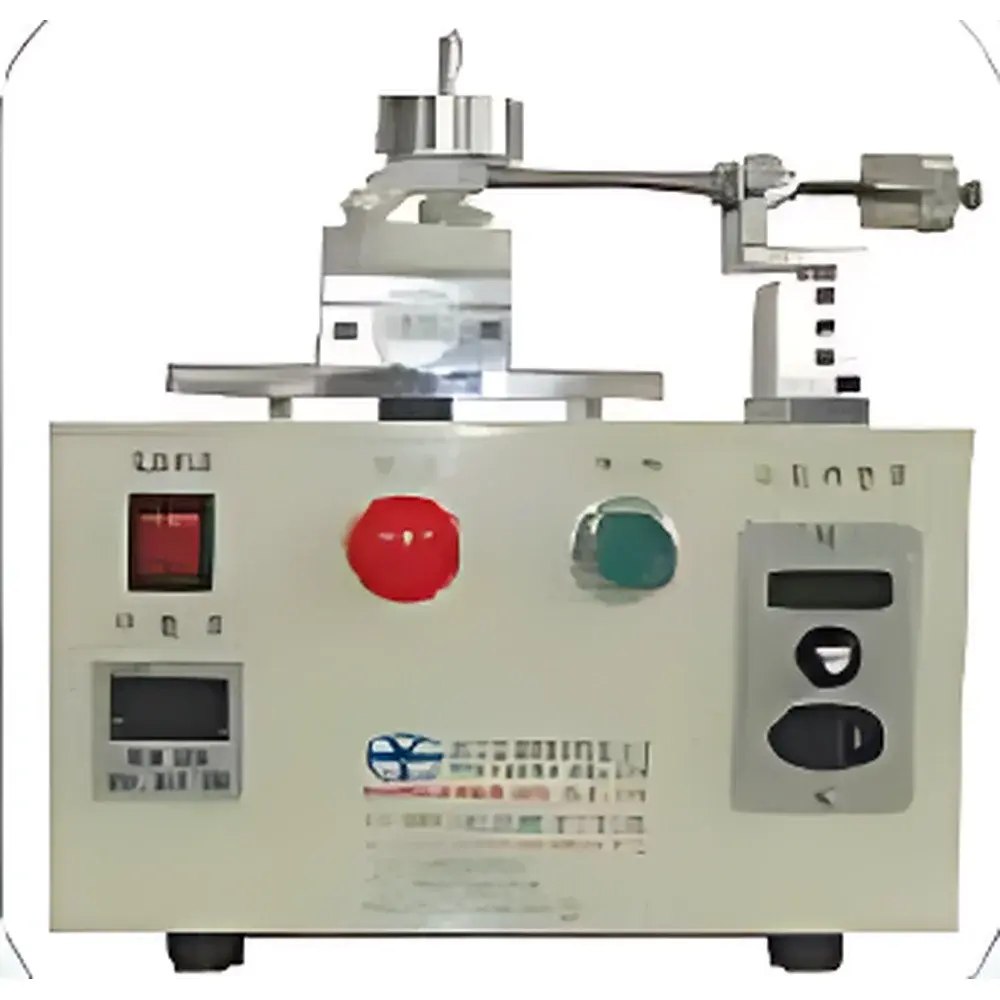
YT520 Dual-Mode Optical Lens Surface Hardness Tester
| Origin | Taiwan |
|---|---|
| Manufacturer Type | Authorized Distributor |
| Regional Classification | China-sourced Instrument |
| Model | YT520 |
| Pricing | Available Upon Request |
Overview
The YT520 Dual-Mode Optical Lens Surface Hardness Tester is a precision-engineered instrument designed for standardized, repeatable assessment of surface resistance to mechanical abrasion and indentation on optical lenses and coated optical components. Unlike general-purpose hardness testers, the YT520 implements two distinct, norm-referenced test methodologies—steel wool abrasion and pencil hardness—within a single, mechanically stable platform. Its operation is grounded in controlled-force linear motion and calibrated tip-to-surface interaction, enabling quantitative evaluation of coating integrity, scratch resistance, and surface durability under defined loading conditions. The system is engineered for use in QC laboratories, R&D facilities, and optical manufacturing cleanrooms where traceable, operator-independent hardness verification is required per national and industry-specific optical material standards.
Key Features
- Dual-test capability: Integrated mechanical modules support both 0000-grade steel wool abrasion testing (per QB/T 2702–2005) and standardized pencil hardness assessment (per QB 2506–2001), eliminating need for separate instruments.
- Fixed-load actuation: Precision-machined carriage ensures consistent normal force application during both test modes, minimizing inter-operator variability and enhancing measurement reproducibility.
- Optical alignment guide: Integrated LED-assisted visual targeting system enables precise positioning over lens curvature or flat substrates without requiring auxiliary fixtures.
- Modular test head design: Interchangeable steel wool holder and pencil holder assemblies allow rapid mode switching with mechanical repeatability verified via factory calibration certificate.
- Stainless steel baseplate and granite-composite stage: Provide thermal stability and vibration damping essential for high-resolution surface response detection.
- Compliance-ready documentation: Includes calibration record, traceable reference standard data sheet, and test procedure templates aligned with Chinese national standards for optical product quality control.
Sample Compatibility & Compliance
The YT520 accommodates plano-convex, biconvex, and aspheric optical lenses with diameters ranging from 8 mm to 120 mm and maximum thickness up to 35 mm. Curved surfaces are evaluated using a self-centering lens support ring with adjustable height stops. The instrument complies with QB 2506–2001 (“Pencil Hardness Test Method for Coated Lenses”) and QB/T 2702–2005 (“Steel Wool Abrasion Resistance Test Method for Optical Lens Coatings”). While not certified to ISO 15184 or ASTM D3363, its mechanical architecture and test protocols are functionally equivalent to those referenced in GLP-aligned optical QC workflows. All test reports generated via manual recording meet internal audit requirements for traceability when paired with dated calibration logs and operator ID entries.
Software & Data Management
The YT520 operates as a hardware-only, manually operated tester—no embedded firmware, touchscreen interface, or proprietary software is included. This design prioritizes long-term reliability, regulatory simplicity, and compatibility with existing laboratory information management systems (LIMS). Users record results directly into standardized paper-based test forms or digital spreadsheets compliant with FDA 21 CFR Part 11 when paired with validated electronic signature workflows. Calibration certificates include serial-numbered traceability to NIM (National Institute of Metrology, China)–accredited reference standards. Optional accessories include a certified 0000-grade steel wool lot certificate (ASTM A967–22 compliant) and HB–9H pencil set with hardness grade verification report.
Applications
- Quality assurance of anti-reflective (AR), hydrophobic, and oleophobic coatings on spectacle lenses, camera optics, and laser windows.
- Comparative evaluation of coating adhesion and wear resistance across vendor batches during incoming material inspection.
- Process validation for plasma-enhanced chemical vapor deposition (PECVD) and dip-coating lines producing optical thin films.
- R&D screening of novel hard coat formulations under accelerated abrasion stress per QB/T 2702–2005 Annex B.
- Supporting technical documentation for CCC (China Compulsory Certification) and SRRC (State Radio Regulatory Commission) optical component submissions.
FAQ
Does the YT520 comply with international standards such as ISO or ASTM?
The YT520 is designed and validated specifically against Chinese national standards QB 2506–2001 and QB/T 2702–2005. While it does not carry formal ISO/IEC 17025 accreditation, its mechanical implementation aligns with the physical principles underlying ISO 15184 (pencil hardness) and ASTM D4060 (abrasion resistance), making it suitable for comparative testing in multinational supply chains.
Can the instrument test concave or freeform optical surfaces?
Yes—the adjustable lens support ring and low-profile test head permit stable contact on concave surfaces with radii down to 25 mm. Freeform surfaces require custom fixturing; contact technical support for fixture design consultation.
Is calibration service available outside mainland China?
Authorized calibration partners operate in Taiwan, Singapore, and Germany. Calibration intervals are recommended every 12 months or after 500 test cycles, whichever occurs first.
What consumables require periodic replacement?
0000-grade steel wool must be replaced after each test sequence (per QB/T 2702–2005 Section 5.3); pencils are replaced upon visible tip wear or after 10 applications per hardness grade.
Is operator training provided with purchase?
Yes—a 4-hour on-site or virtual training session covers test setup, standard operating procedure execution, result interpretation, and calibration log maintenance, delivered by certified application engineers.