
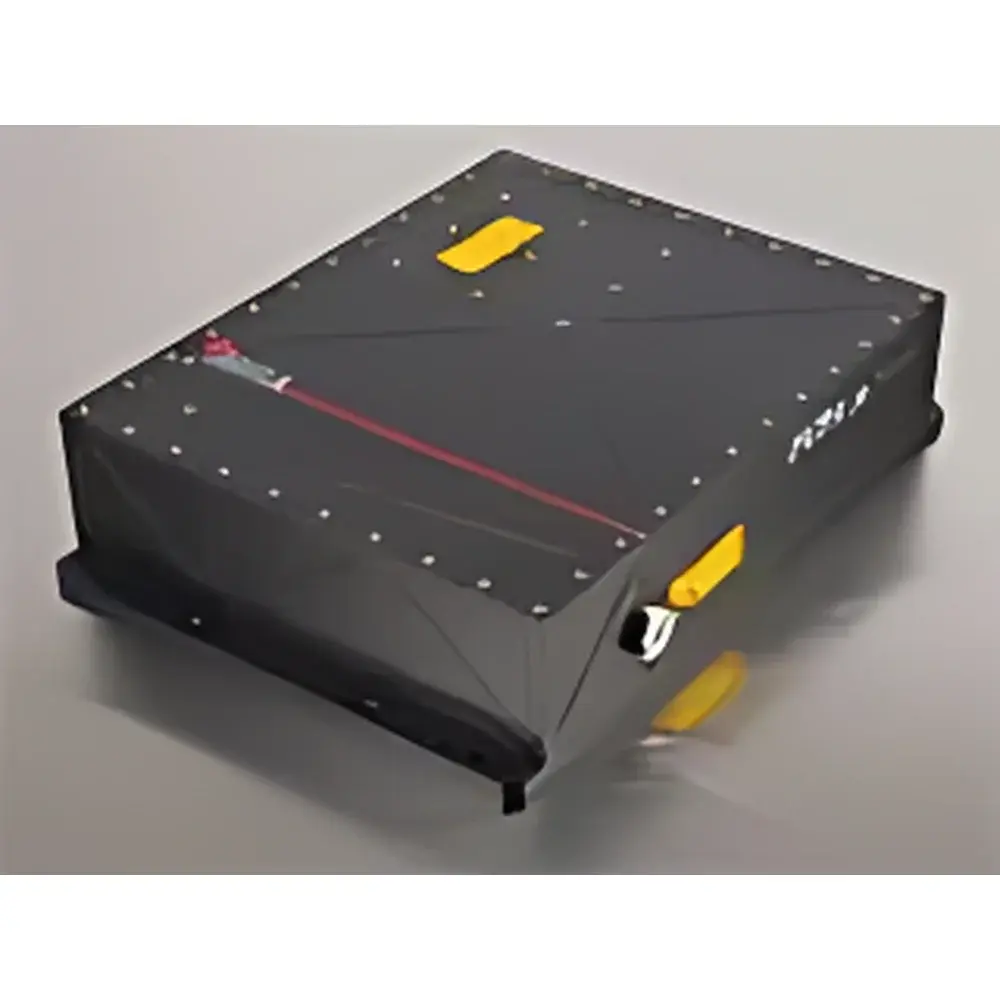
Ytterbium-Doped Femtosecond Fiber Laser FCPA Series
| Origin | USA |
|---|---|
| Manufacturer Type | Authorized Distributor |
| Origin Category | Imported |
| Model | FCPA Series |
| Core Technology | Yb-doped all-fiber ultrafast oscillator-amplifier architecture |
| Wavelength | 1041–1045 nm (±5 nm) |
| Average Power | 1–20 W |
| Pulse Duration | ≤350–600 fs |
| Pulse Energy | ≥10–50 μJ |
| Repetition Rate | 100 kHz – 1 MHz |
| Beam Quality (M²) | ≤1.3 |
| Cooling | Air-cooled laser head |
| Compliance | CE, RoHS, FDA 21 CFR Part 1040.10 (Laser Product Safety) |
Overview
The FCPA Series ytterbium-doped femtosecond fiber lasers represent a class of turnkey ultrafast light sources engineered for industrial and scientific applications requiring high temporal resolution, excellent pulse-to-pulse stability, and robust air-cooled operation. Based on an all-fiber master oscillator power amplifier (MOPA) architecture, these lasers generate transform-limited pulses via nonlinear pulse compression in polarization-maintaining photonic crystal fiber or chirped-pulse amplification (CPA) stages—depending on the submodel (D-1000, D-10K, D-20K, DE-series). The fundamental emission at 1041–1045 nm is derived from ytterbium ion transitions in silica-based double-clad fibers, offering high quantum efficiency and low thermal lensing. Unlike Ti:sapphire oscillators, the FCPA platform eliminates water cooling, alignment-sensitive free-space optics, and complex pump laser integration—delivering laboratory-grade femtosecond performance in a compact, maintenance-free enclosure suitable for cleanroom integration or OEM embedding.
Key Features
- Stable, self-starting mode-locked oscillator with integrated dispersion management for consistent <350–600 fs pulse duration across operating conditions
- Air-cooled laser head design enabling continuous 24/7 operation without external chillers or compressed air
- High pulse energy output (≥10–50 µJ) with selectable repetition rates (100 kHz, 200 kHz, or 1 MHz) to match material interaction requirements
- Diffraction-limited beam quality (M² ≤ 1.3) ensuring tight focusability for precision ablation, nonlinear excitation, and waveguide writing
- Integrated electronic interlock, shutter control, and analog/digital I/O for synchronization with motion stages, detectors, or pump-probe setups
- Compliance with IEC 60825-1:2014 Class 4 laser safety standards; built-in key switch, emission indicator, and remote enable/disable interface
Sample Compatibility & Compliance
The FCPA Series is compatible with a broad range of transparent, reflective, and absorbing materials—including fused silica, sapphire, silicon wafers, polymers (e.g., PI, PET), metals (Cu, Al, stainless steel), and biological tissues—without requiring vacuum environments or specialized sample holders. Its near-IR wavelength minimizes linear absorption in many dielectrics while enabling efficient multiphoton absorption for precise subsurface modification. All models meet CE marking requirements under the EU Machinery Directive and Electromagnetic Compatibility (EMC) Directive. For regulated environments, the system supports optional audit trail logging and user-access controls aligned with GLP/GMP documentation practices. While not certified as a medical device per ISO 13485, it complies with essential safety requirements referenced in IEC 62366-1 for usability engineering in laser-based instrumentation.
Software & Data Management
Laser operation is managed via a Windows-compatible USB- or Ethernet-connected GUI that provides real-time monitoring of average power, pulse energy (via internal calibrated photodiode), repetition rate, and temperature diagnostics. The software exports timestamped measurement logs in CSV format and supports SCPI command protocol for integration into LabVIEW, MATLAB, or Python-based automation frameworks. Optional SDKs enable custom trigger sequencing, burst-mode programming, and synchronization with high-speed cameras or time-correlated single-photon counting (TCSPC) modules. Audit trail functionality—including operator ID, parameter changes, and session timestamps—is available upon configuration to satisfy FDA 21 CFR Part 11 requirements for electronic records in pharmaceutical or clinical research settings.
Applications
- Biomedical imaging: Multiphoton fluorescence microscopy (MPM) and second-harmonic generation (SHG) imaging of live tissue, collagen, and neural structures
- Laser micromachining: Cold ablation of thin-film solar cells, OLED display patterning, and microfluidic channel fabrication in glass and polymer substrates
- Neuroscience: Two-photon optogenetics stimulation and uncaging experiments requiring spatially confined photoactivation
- Pulsed laser deposition (PLD): High-quality thin-film growth of complex oxides (e.g., YBCO, STO) with stoichiometric transfer fidelity
- Semiconductor processing: Stealth dicing of SiC, GaN, and silicon wafers with minimal kerf loss and no microcracking
- Nanoparticle generation: Femtosecond laser ablation in liquid (FLAL) for synthesis of colloidal metal, oxide, and alloy nanoparticles
- Laser microsurgery: Subcellular precision cutting in ophthalmology (e.g., corneal flap creation) and neurosurgical applications
FAQ
What is the typical pulse-to-pulse energy stability over 8 hours?
Measured RMS fluctuation is ≤0.8% (all models, under constant ambient temperature and stable line voltage).
Can the repetition rate be externally triggered or modulated?
Yes—models with 100/200 kHz options support external TTL triggering with jitter <100 ps RMS; full-rate modulation is supported via analog voltage input (0–5 V).
Is harmonic generation (e.g., 520 nm or 347 nm) available as a factory option?
Second-harmonic (520–522 nm) and third-harmonic (347–348 nm) modules are available as integrated, alignment-free add-ons with >40% conversion efficiency.
Does the system include beam delivery optics for focusing or fiber coupling?
Standard configurations include a collimated free-space output (Ø3 mm, divergence <1.5 mrad); optional fiber-coupled outputs (FC/APC, SMF-28 or PM980) and motorized focusing stages are available.
What maintenance is required during normal operation?
No routine optical alignment or consumable replacement is needed; annual verification of power calibration and thermal sensor response is recommended for metrology-critical use cases.





