
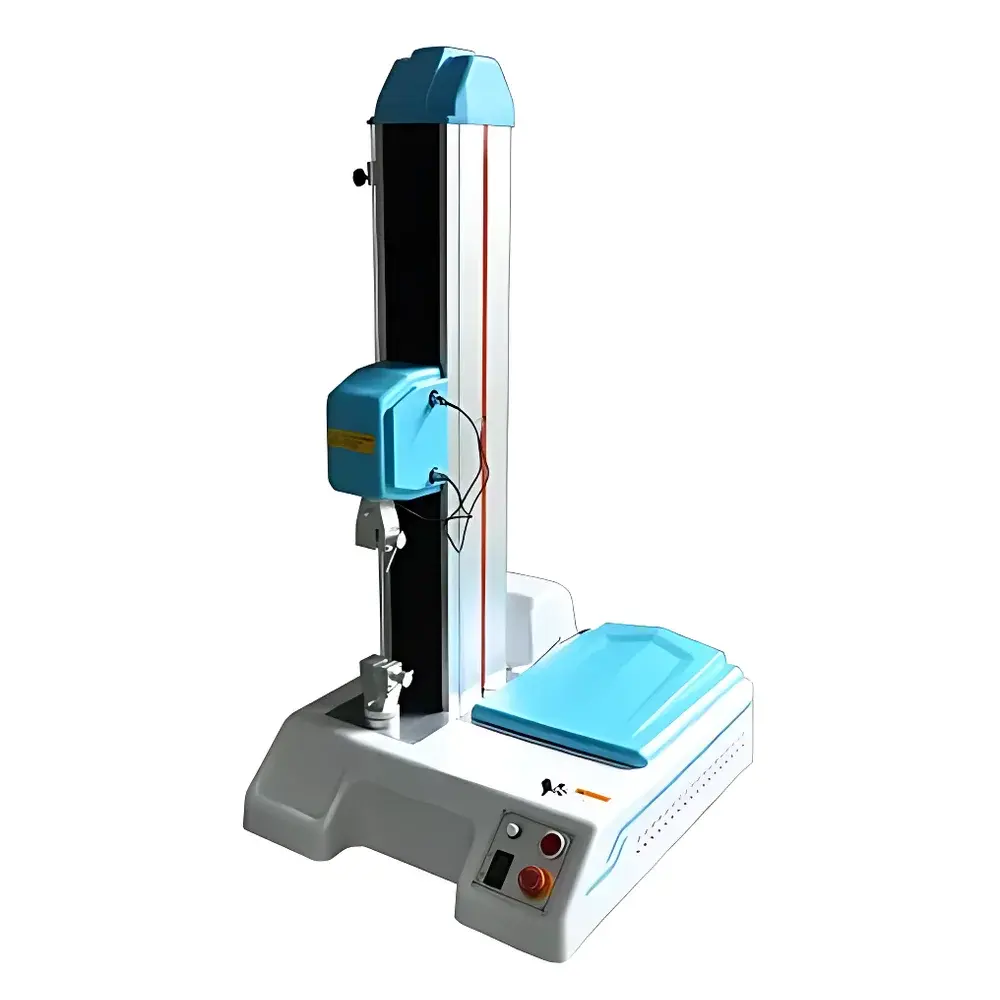
Yuelian YL-S70 Computer-Controlled Peel & Tensile Testing Machine
| Brand | Yuelian |
|---|---|
| Origin | Guangdong, China |
| Model | YL-S70 |
| Instrument Type | Electromechanical Tensile Tester |
| Load Capacity Options | 10 N, 20 N, 50 N, 100 N, 200 N, 500 N, 1 kN, 2 kN, 5 kN (dual-range configuration available) |
| Force Resolution | 1/500,000 full scale |
| Force Accuracy | ±0.1% FS |
| Displacement Resolution | 1/500,000 mm |
| Displacement Accuracy | ±0.1% FS |
| Data Acquisition Rate | 2000 Hz |
| Effective Stroke | 450 mm (customizable) |
| Speed Range | 0.001–500 mm/min (customizable) |
| Test Space Diameter | Ø140 mm |
| Control Mode | Full PC-based closed-loop control |
| Power Supply | 220 V AC, 50–60 Hz |
| Rated Power | 400 W |
| Net Weight | 66 kg |
| Dimensions (W×D×H) | 650 × 260 × 2625 mm |
Overview
The Yuelian YL-S70 is a high-precision, computer-controlled electromechanical testing system engineered for quantitative mechanical characterization of flexible and semi-rigid materials under uniaxial loading conditions. It operates on the fundamental principle of controlled displacement or force actuation via a servo-motor-driven ball-screw transmission system, enabling precise execution of standardized peel, tensile, compression, flexural, shear, tear, puncture, and cyclic loading protocols. Designed in accordance with international mechanical testing conventions—including ASTM D903 (peel strength), ASTM D882 (tensile properties of thin plastic sheeting), ISO 8510-2 (adhesive peel tests), and ISO 11339 (bond strength of laminates)—the YL-S70 delivers traceable, repeatable results suitable for quality control laboratories, R&D facilities, and contract testing organizations operating under GLP or GMP-aligned workflows.
Key Features
- High-resolution dual-circuit control architecture: 2000 Hz real-time data acquisition with synchronized force and displacement sampling ensures fidelity in transient event capture (e.g., bond failure initiation, viscoelastic relaxation).
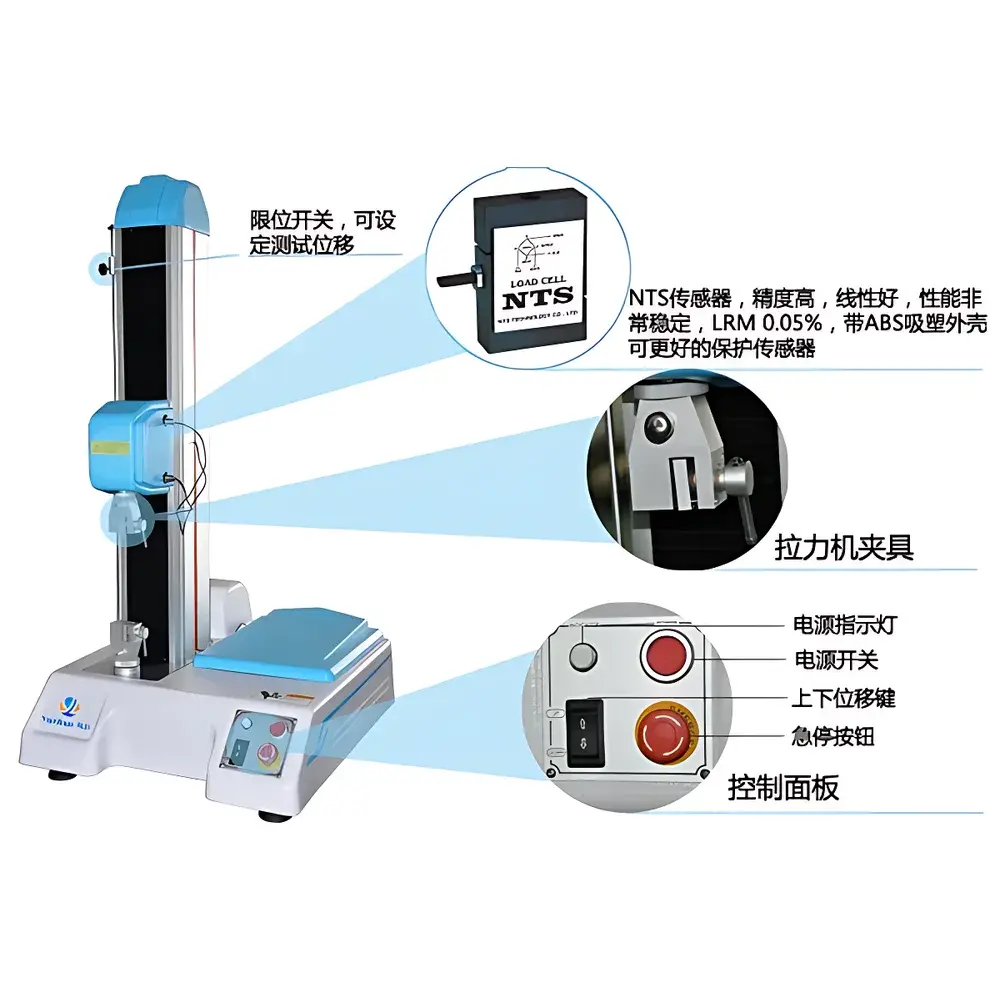
- Modular load cell design supporting nine selectable capacities (10 N to 5 kN), including dual-range configurations for extended dynamic range without manual recalibration.
- Precision-ground ball-screw assembly with aluminum extrusion protective shrouding—surface-treated via sandblasting and anodized silver finish—ensures long-term positional stability and resistance to environmental wear.
- Quick-change fixture interface with standardized mechanical couplings enables tool-less swapping between peel jigs, tensile grips, three/four-point bend fixtures, puncture probes, and compression platens.
- Integrated safety architecture: hardware-level overload cutoff, programmable upper/lower limit stops, automatic fracture detection, emergency stop button, and mechanical overtravel limit switches compliant with IEC 61800-5-2 functional safety requirements.
- Full bidirectional sensor capability: load cell polarity reversal allows seamless transition between tension and compression modes within a single test sequence.
Sample Compatibility & Compliance
The YL-S70 accommodates a broad spectrum of specimen geometries and material classes—including pressure-sensitive adhesives (PSAs), laminated films, medical device packaging, textile composites, elastomeric seals, paperboard substrates, and footwear components. Its Ø140 mm test chamber and 450 mm effective stroke support standard specimens per ASTM D3330, ISO 298-2, and EN 1977. Software-configurable test methods adhere to regulatory documentation standards: audit trails, electronic signatures, and parameter locking are implemented to meet FDA 21 CFR Part 11 requirements for electronic records in pharmaceutical and medical device manufacturing environments. Calibration certificates are traceable to NIM (National Institute of Metrology, China) and optionally to NIST or UKAS-accredited reference standards upon request.
Software & Data Management
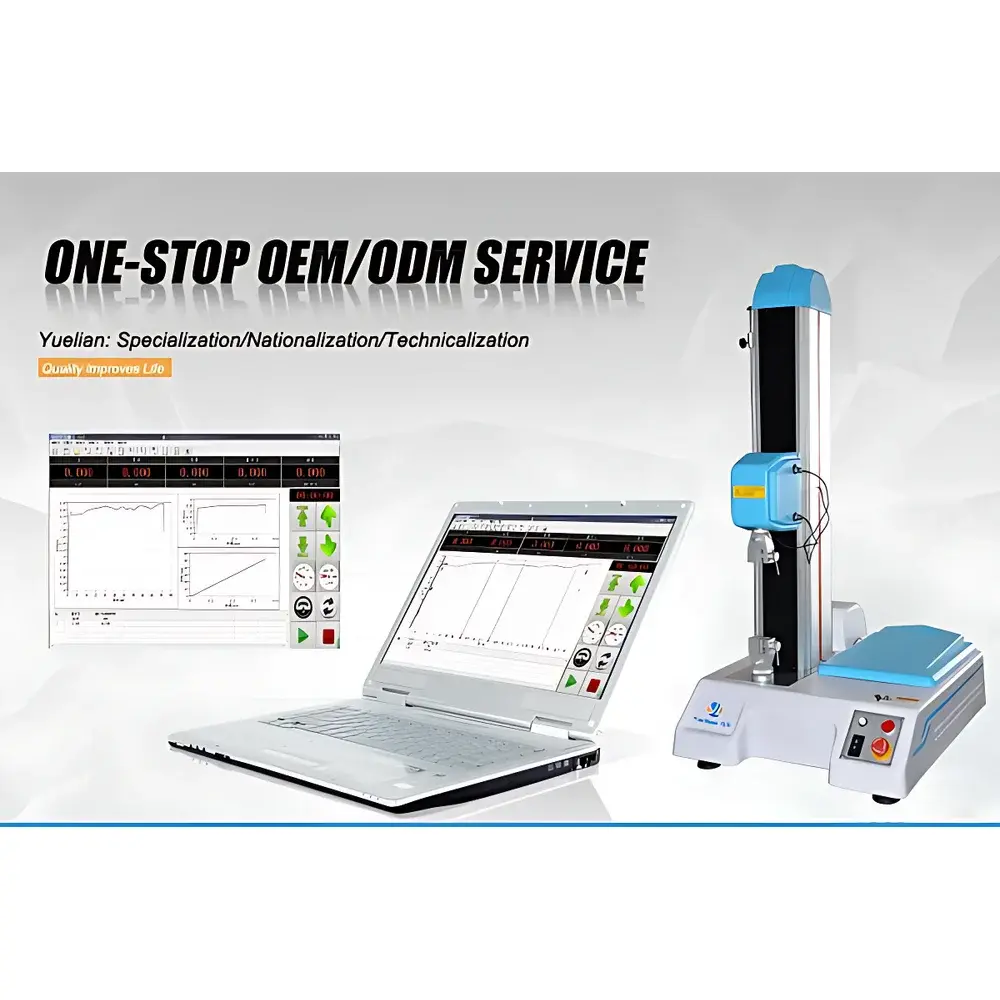
The embedded Windows-based control software provides ISO/IEC 17025-aligned test method definition, execution, and reporting. Users define multi-step test profiles—including ramp-hold-relax cycles, staircase loading, and conditional branching based on real-time force thresholds. Up to 120 auto-sampled points and 40 manual cursor placements per curve enable granular post-test analysis. Statistical modules compute CPK, standard deviation, median, trimmed mean, and Weibull distribution parameters directly from raw datasets. Graphical overlays permit concurrent visualization of up to seven historical curves (force–displacement, stress–strain, force–time, displacement–time), with zoom, pan, crosshair interrogation, and export to CSV, PDF, or image formats. All test logs include timestamped metadata: operator ID, environmental conditions (optional external sensor integration), calibration status, and firmware revision.
Applications
- Peel strength evaluation of adhesive tapes, labels, and medical transdermal patches per ASTM D6862 and ISO 8510-1.
- Tensile modulus, yield point, and elongation-at-break measurement of polymer films, foams, and nonwovens.
- Compression set and cyclic fatigue behavior of polyurethane and silicone elastomers.
- Puncture resistance of blister packaging, sterile barrier systems, and surgical drapes.
- Three-point bending stiffness of printed circuit board laminates and composite panels.
- Shoe sole delamination testing per ISO 20344 Annex B and ASTM F2913.
- Creep and stress-relaxation profiling under constant-load or constant-strain conditions.
FAQ
Is the YL-S70 compliant with ISO/IEC 17025 requirements for accredited testing laboratories?
Yes—the system supports full audit trail logging, user access levels, method validation templates, and calibration certificate management required for scope accreditation.
Can the software generate reports compliant with FDA 21 CFR Part 11?
Yes—electronic signatures, role-based permissions, and immutable record retention are enabled by default; optional digital certificate integration available.
What is the maximum allowable test speed deviation across the 0.001–500 mm/min range?
Speed accuracy is maintained within ±0.2% of setpoint across the full range, verified per ISO 5893 Annex A using laser interferometry.
Are third-party calibration services supported?
Yes—load cells and displacement encoders are certified to ISO 376 and ISO 7500-1 respectively; NIST-traceable calibration kits and service contracts are available.
Does the system support automated pass/fail decision logic based on pre-defined acceptance criteria?
Yes—threshold-based triggers can initiate automatic test termination, data flagging, and report annotation during live acquisition.



