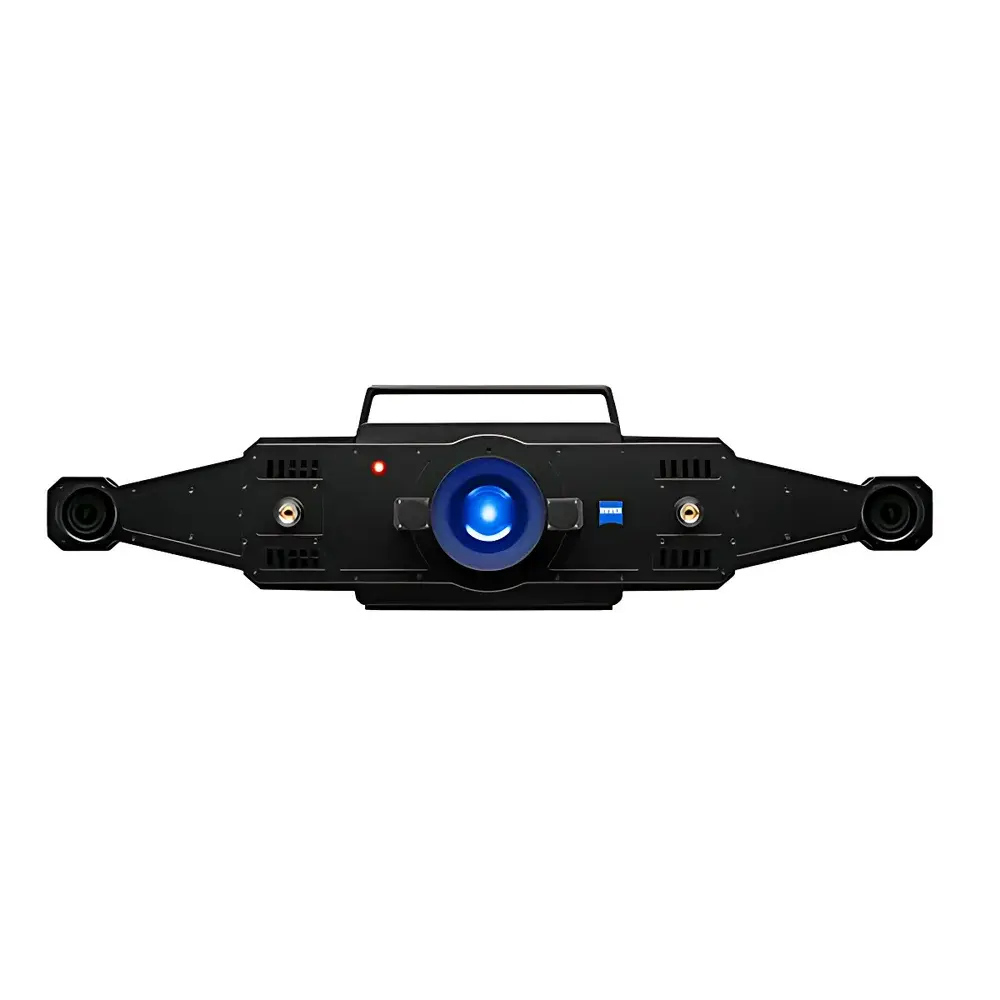
ZEISS ATOS LRX 3D Blue Light Scanning System
| Brand | ZEISS |
|---|---|
| Origin | Shanghai, China |
| Manufacturer Type | Original Equipment Manufacturer (OEM) |
| Product Category | Domestic |
| Model | ZEISS ATOS LRX |
| Pricing | Upon Request |
| Instrument Type | Structured Light 3D Scanner |
| Maximum Scan Area | 4 m² (up to 530 mm depth of field) |
| Operating Software | ZEISS INSPECT |
Overview
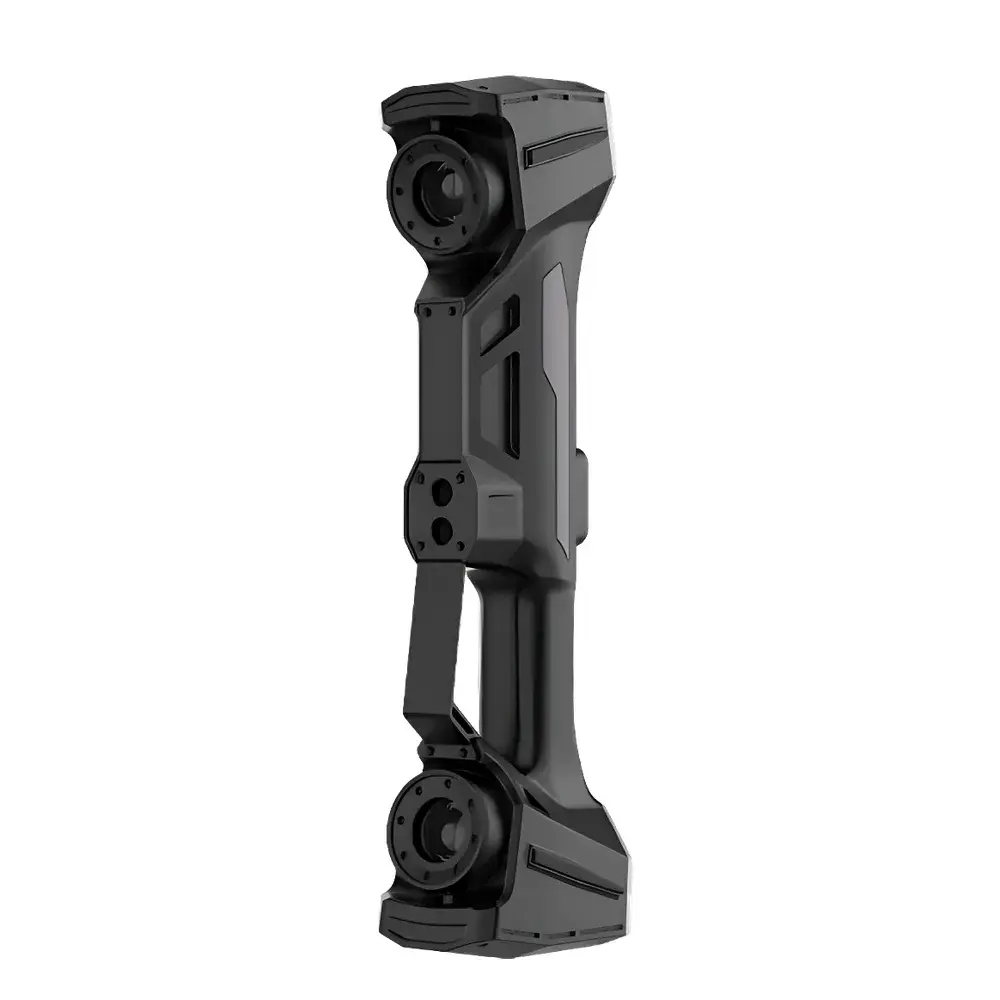
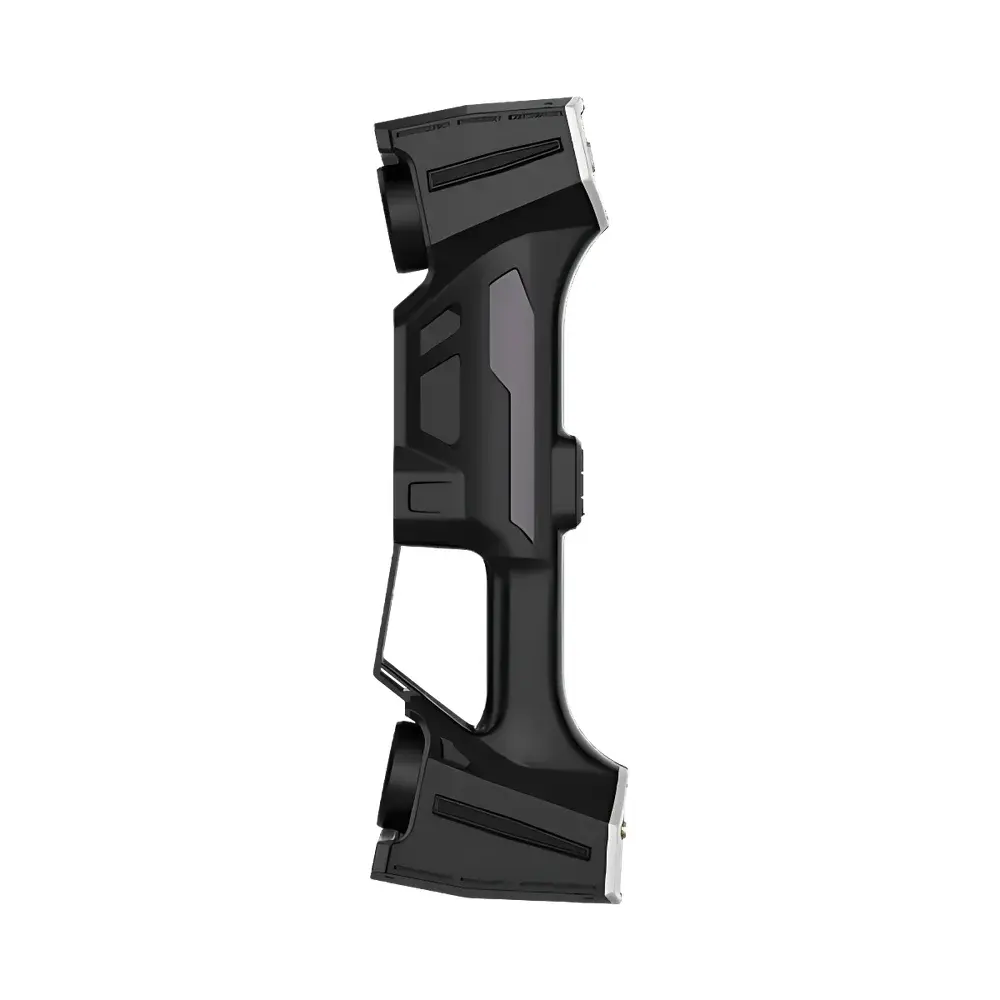
The ZEISS ATOS LRX is a high-precision, industrial-grade structured blue light 3D scanning system engineered for metrology-critical applications in automotive, aerospace, tooling, and advanced manufacturing environments. Unlike point-based or laser line triangulation systems, the ATOS LRX employs a calibrated, multi-projector structured light architecture operating in the visible blue spectrum (typically ~450 nm), enabling non-contact, full-field digitization with sub-pixel accuracy. Its optical design integrates dual high-resolution CMOS cameras and synchronized blue LED projectors to capture dense point clouds—up to 2 × 12 million coordinates per single exposure—across a maximum measurement area of 4 m², with an effective depth of field up to 530 mm. The system’s core metrological integrity is maintained through real-time self-calibration monitoring, thermal drift compensation, and traceable alignment to ISO 10360 and VDI/VDE 2634 Part 2 standards. Designed for integration into production-integrated quality control workflows, the ATOS LRX delivers NIST-traceable, repeatable measurements compliant with ASME B89.4.22 and ISO/IEC 17025-accredited laboratory requirements.
Key Features
- Structured blue light illumination: Enables robust performance on challenging surfaces—including dark, glossy, matte, or textured geometries—without spray application in most cases.
- Integrated real-time calibration monitoring: Onboard sensors continuously verify optical alignment, focus, and projector-camera geometry; automatic recalibration triggers if deviations exceed defined thresholds.
- Industrial-grade enclosure: IP54-rated housing with dust- and splash-resistant construction, rated for continuous operation in shop-floor environments (15–40 °C ambient, 20–80% RH non-condensing).
- Laser safety Class 2 compliance: Equipped with integrated radar-based proximity sensing that dynamically modulates light output intensity when operators approach within predefined safety zones—eliminating need for external interlocks or protective eyewear.
- Multi-sensor interoperability: Supports hybrid metrology workflows via optional tactile probe integration (e.g., ZEISS Tactile Probe Modules) and real-time photogrammetric tracking for large-part alignment.
- High-speed acquisition engine: Achieves full-field capture in under 1.5 seconds per scan, with typical point spacing down to 0.02 mm at optimal working distance.
Sample Compatibility & Compliance
The ATOS LRX accommodates parts ranging from small precision components (≥50 mm feature size) to large-scale assemblies (up to 4 m² surface coverage). It is routinely deployed for first-article inspection, GD&T validation (including profile, position, flatness, and form tolerances), reverse engineering of legacy tooling, and digital twin generation for CAE simulation. All measurement data are generated in accordance with ISO 17025 technical requirements for testing laboratories and support audit-ready documentation for FDA 21 CFR Part 11 (when used with ZEISS INSPECT’s electronic signature and audit trail modules). System validation protocols align with ASTM E2924 (Standard Guide for Validation of Optical 3D Scanning Systems) and VDI/VDE 2634 Part 2 (Optical 3D Measuring Systems – Testing of Optical Coordinate Measuring Machines).
Software & Data Management
The ZEISS INSPECT software platform serves as the unified interface for acquisition, alignment, comparison, GD&T evaluation, and automated reporting. It supports native import of CAD formats (STEP AP242, JT, IGES, CATIA V5/V6), provides real-time deviation color mapping against nominal geometry, and generates ISO-compliant inspection reports—including annotated cross-sections, statistical process control (SPC) charts, and Cpk/Ppk capability indices. Data management adheres to GLP/GMP principles: all user actions, parameter changes, and measurement results are time-stamped and logged with immutable audit trails. Optional modules enable direct integration with enterprise PLM (e.g., Teamcenter, Windchill) and MES platforms via RESTful APIs and standardized XML/JSON export schemas.
Applications
- Tool & die verification: Rapid validation of mold cavity surfaces, electrode geometry, and wear progression without disassembly.
- Composite part inspection: Full-field strain and deformation analysis of CFRP laminates during autoclave cure cycles.
- Powertrain component metrology: Cylinder head port geometry validation, turbine blade airfoil profiling, and gear tooth flank analysis.
- Large-structure assembly verification: Alignment and gap/flush analysis for body-in-white (BIW) stations and aircraft fuselage sections.
- Digital archiving & reverse engineering: High-fidelity digitization of heritage artifacts, legacy castings, or discontinued components for CAD reconstruction.
FAQ
Is the ZEISS ATOS LRX certified for use in regulated industries such as medical device manufacturing?
Yes—the system, when configured with ZEISS INSPECT’s 21 CFR Part 11-compliant modules and operated under documented SOPs, meets the data integrity and traceability requirements for FDA-regulated environments.
Can the ATOS LRX be used without surface preparation on highly reflective metal parts?
In many cases, yes—its optimized blue light wavelength and adaptive exposure control reduce specular interference; however, for ultra-glossy or mirror-finish surfaces, a thin, removable matte coating may still be recommended for highest accuracy.
Does the system support automated robotic integration?
Yes—ZEISS provides ROS-compatible drivers and EtherCAT interfaces for seamless integration with KUKA, ABB, and Universal Robots platforms, enabling fully automated multi-angle scanning cells.
What is the typical measurement uncertainty for a single scan under standard lab conditions?
According to ZEISS factory calibration certificates, volumetric uncertainty is ≤ (12 + L/100) µm (k = 2), where L is the measured length in mm, verified per VDI/VDE 2634 Part 2 Annex A.
How frequently must the system undergo recalibration?
The ATOS LRX performs continuous self-monitoring; formal recalibration is recommended annually or after any mechanical impact, transport, or environmental shift exceeding ±5 °C/hour, following ZEISS-certified service procedures.