
Zhongjiaojinyuan High-Temperature and High-Pressure Reference Electrode (Model: HT/HP-REF)
| Brand | Zhongjiaojinyuan |
|---|---|
| Origin | Beijing, China |
| Manufacturer Type | OEM Manufacturer |
| Product Origin | Domestic (China) |
| Model | HT/HP-REF |
| Pricing | Upon Request |
| Operating Temperature | 0–220 °C (optional up to 310 °C) |
| Operating Pressure | 0–2000 psi (0–13.7 MPa) |
| Sensing Element | Ag/AgCl |
| Potential Range | −2500 to +2500 mV |
| Accuracy | ±5 mV (at 25 °C) |
| Room-Temperature Impedance | <9 kΩ |
| KCl Solution Permeation Rate | 1 μL/week |
| Body & Fitting Material | ASTM A240 316L stainless steel |
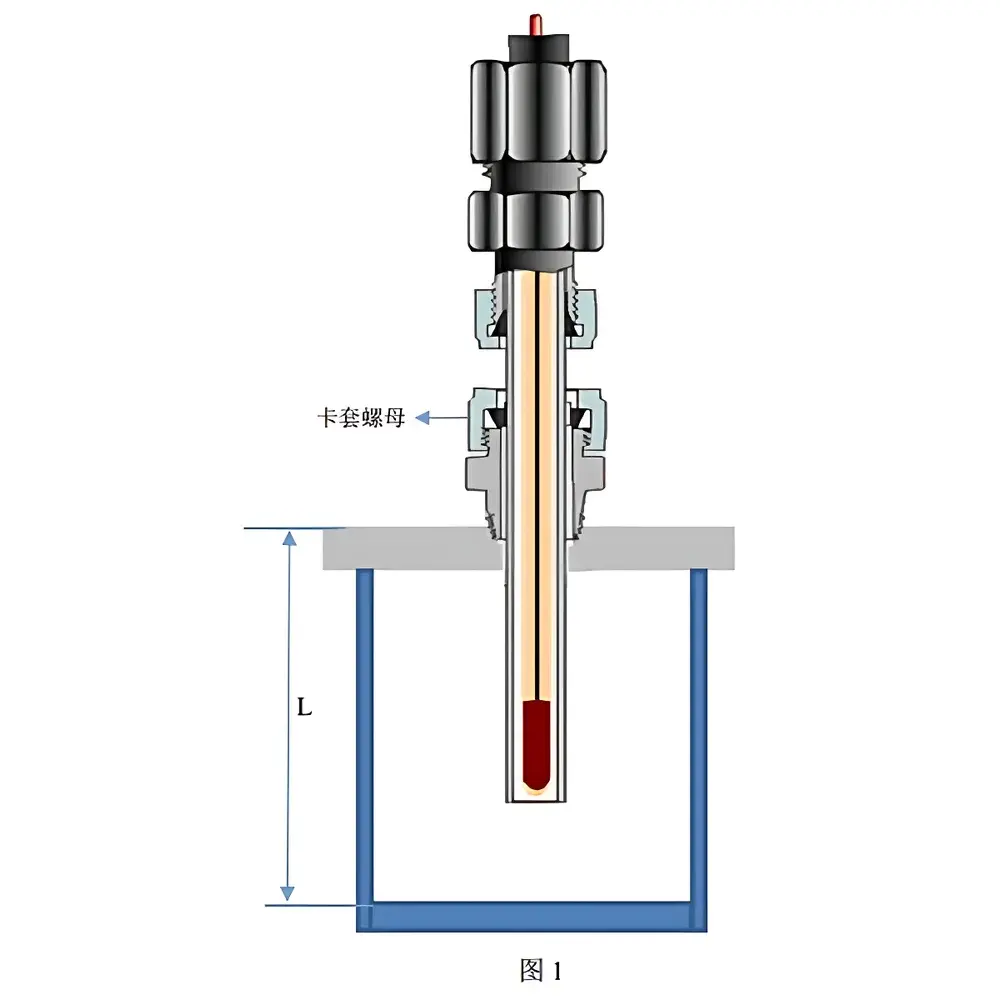
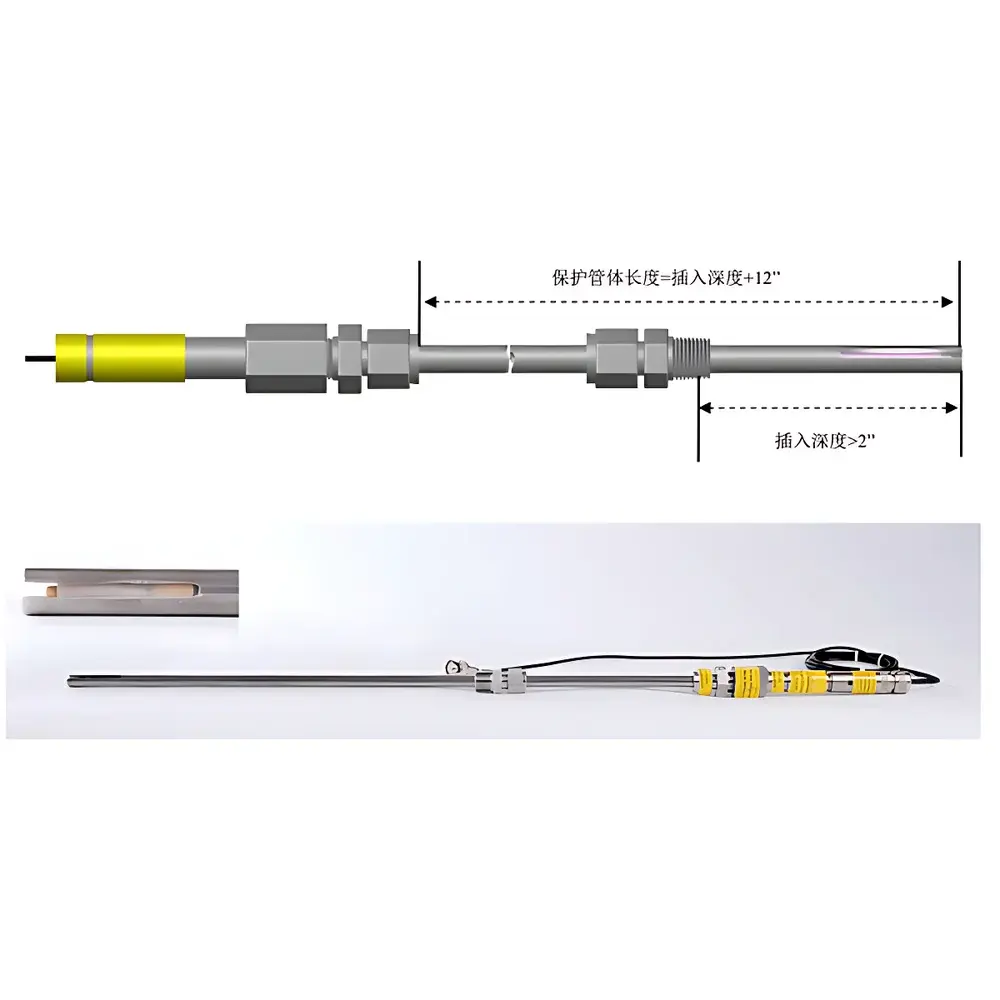
| Minimum Insertion Depth | >2 in (≥5 cm) |
Overview
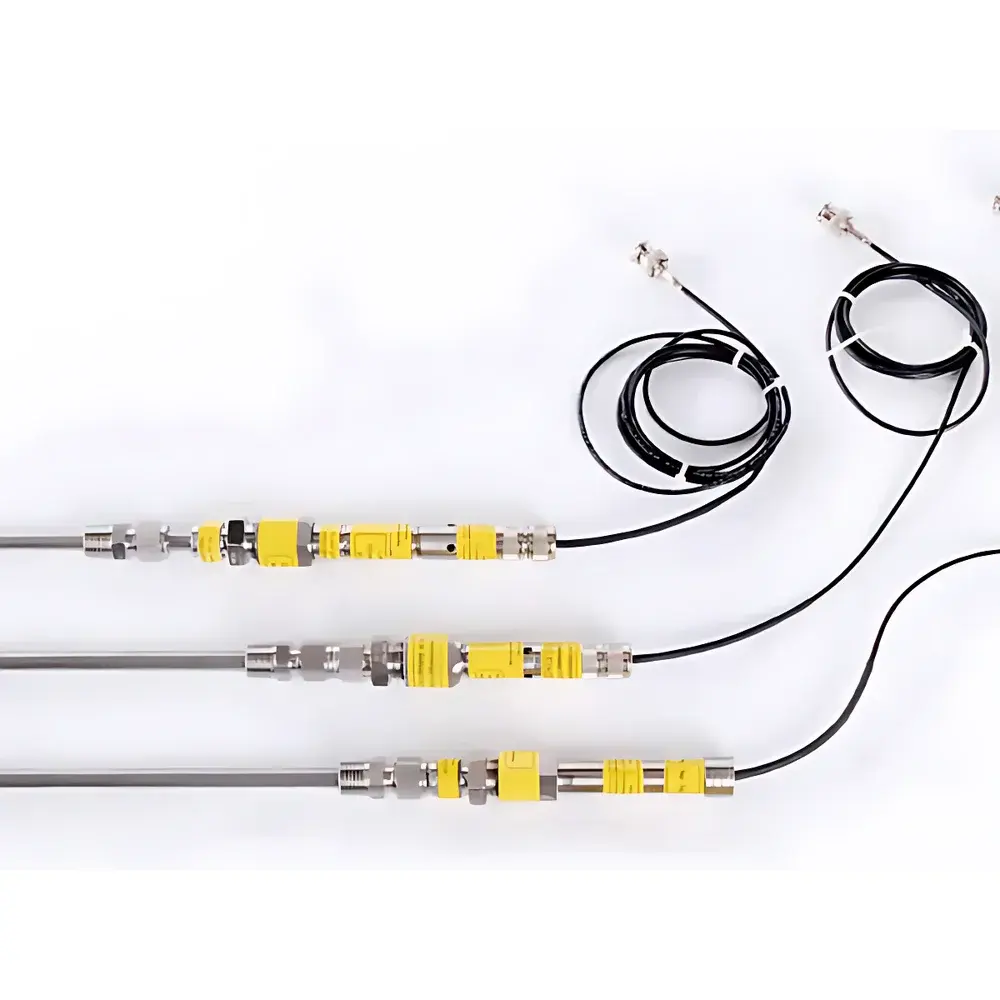
The Zhongjiaojinyuan HT/HP-REF is a rigorously engineered high-temperature and high-pressure reference electrode designed for electrochemical monitoring and potentiometric control in demanding process environments—including hydrothermal reactors, supercritical water oxidation systems, geothermal simulators, and high-pressure corrosion test cells. It operates on the fundamental principle of a stable, reproducible Ag/AgCl redox couple immersed in saturated KCl electrolyte, housed within a hermetically sealed, pressure-balanced architecture. Unlike conventional reference electrodes, the HT/HP-REF integrates a proprietary queon® polymeric sealant—patented for its exceptional thermal stability, chemical inertness, and compression resilience under sustained mechanical stress—ensuring long-term integrity at temperatures up to 310 °C and pressures up to 13.7 MPa. Its monolithic construction eliminates field assembly errors and minimizes interfacial failure risks common in multi-part high-pressure electrochemical sensors.
Key Features
- Patented queon® sealing system: Provides leak-tight isolation of the internal KCl reservoir across full operating temperature and pressure ranges, validated per ISO 15156-3 for sour service compatibility.
- Monolithic, pre-assembled design: Eliminates user-dependent assembly steps; reduces installation variability and human error during reactor integration.
- Stable liquid junction: Engineered ceramic frit and optimized KCl diffusion geometry suppress bubble formation—even under transient pressure gradients—ensuring continuous ionic continuity.
- Robust 316L stainless steel housing: Complies with ASTM A240 specifications; rated for cyclic thermal and pressure loading in aggressive aqueous, CO₂-rich, and mildly acidic media.
- Predictable long-term drift: Typical annual potential drift of 30–50 mV under continuous operation, consistent with NIST-traceable Ag/AgCl reference behavior in elevated-temperature electrolytes.
- Controlled electrolyte permeation: 1 μL/week KCl efflux rate maintains stable junction potential while minimizing contamination risk in closed-loop systems.
Sample Compatibility & Compliance
The HT/HP-REF is compatible with aqueous electrolytes, brines, organic-aqueous mixtures, and low-pH (<3) solutions typical in petroleum reservoir simulation and nuclear waste processing studies. It is not intended for use in strongly oxidizing halogen environments (e.g., free Cl₂, Br₂) or molten salt systems. The electrode meets mechanical design requirements aligned with ASME B31.4 and B31.8 for instrumentation in pipeline and process piping applications. While not certified to IEC 61508 or SIL standards, its failure modes are well characterized per ISO 13849-1 Annex D for functional safety assessment in laboratory-scale systems. All materials comply with RoHS Directive 2011/65/EU and REACH Annex XVII restrictions.
Software & Data Management
The HT/HP-REF functions as a passive analog sensor and interfaces directly with standard potentiostats, pH meters, and data acquisition systems supporting ±2.5 V differential input ranges. No embedded firmware or digital communication protocols are integrated—ensuring electromagnetic compatibility in high-noise reactor control rooms. For GLP/GMP-aligned workflows, users are advised to log insertion depth, calibration dates, and post-experiment potential checks in accordance with 21 CFR Part 11-compliant electronic lab notebooks (ELNs). Calibration traceability is maintained via documented comparison against NIST-traceable standard hydrogen electrodes (SHE) or certified secondary Ag/AgCl references (e.g., Metrohm 6.0733.100).
Applications
- Real-time corrosion potential (Ecorr) monitoring in autoclave-based stress corrosion cracking (SCC) tests (ASTM G36, G123).
- Potentiometric control of redox conditions in hydrothermal synthesis reactors (e.g., metal oxide nanoparticle production).
- In-situ pH and Eh measurement in simulated geothermal brine systems (ISO 17025-accredited testing labs).
- Electrochemical impedance spectroscopy (EIS) reference arm in high-pressure fuel cell durability studies.
- Long-duration potentiostatic hold experiments under supercritical water conditions (T > 374 °C, P > 22.1 MPa), using extrapolated calibration curves.
FAQ
What is the maximum safe pressure ramp rate during system pressurization?
For systems containing dissolved gases (e.g., CO₂, H₂, N₂), the recommended pressure change rate shall not exceed 200 psi/hr (1.38 MPa/hr) to prevent gas exsolution-induced mechanical damage to the internal Ag/AgCl element and KCl junction.
Can the electrode be reoriented after insertion?
No. Inversion or lateral tilting may induce air entrapment at the liquid junction, resulting in unstable potential output. If bubbles are suspected, the electrode must be held vertically and gently tapped or flicked to displace gas—never rotated.
Is recalibration required before every experiment?
Not necessarily. A pre- and post-experiment verification against a room-temperature reference electrode is sufficient if the measured potential shift remains ≤5 mV—consistent with ISO 80000-9:2019 guidance for reference electrode stability validation.
What constitutes irreversible electrode failure?
A sudden potential drop exceeding 20 mV beyond baseline drift, combined with measurable increase in impedance (>15 kΩ at 25 °C) or visible electrolyte leakage, indicates permanent seal degradation or junction clogging.
Does the electrode support FDA-regulated bioprocess monitoring?
While chemically compatible with pharmaceutical buffer systems, it lacks 3-A Sanitary Standards certification and is not validated for direct contact with sterile bioreactor broths under current cGMP Annex 1 guidelines.



