
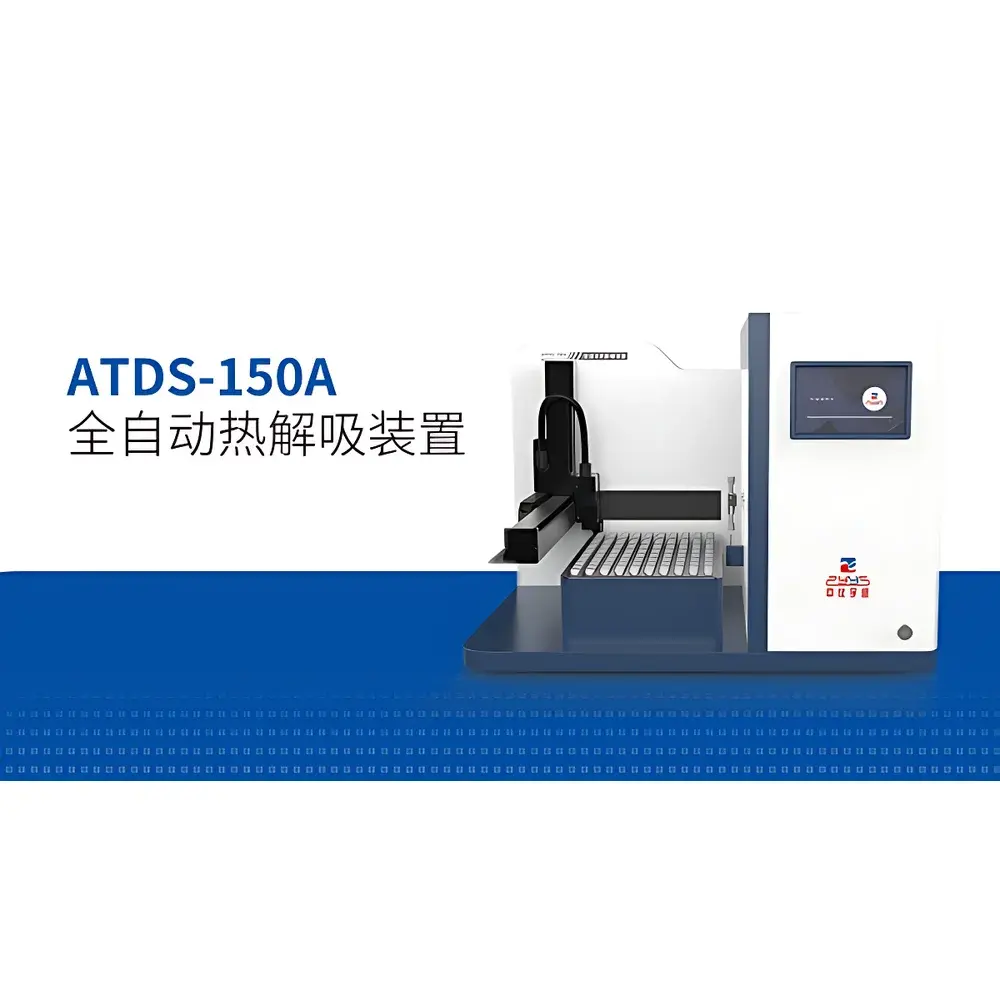
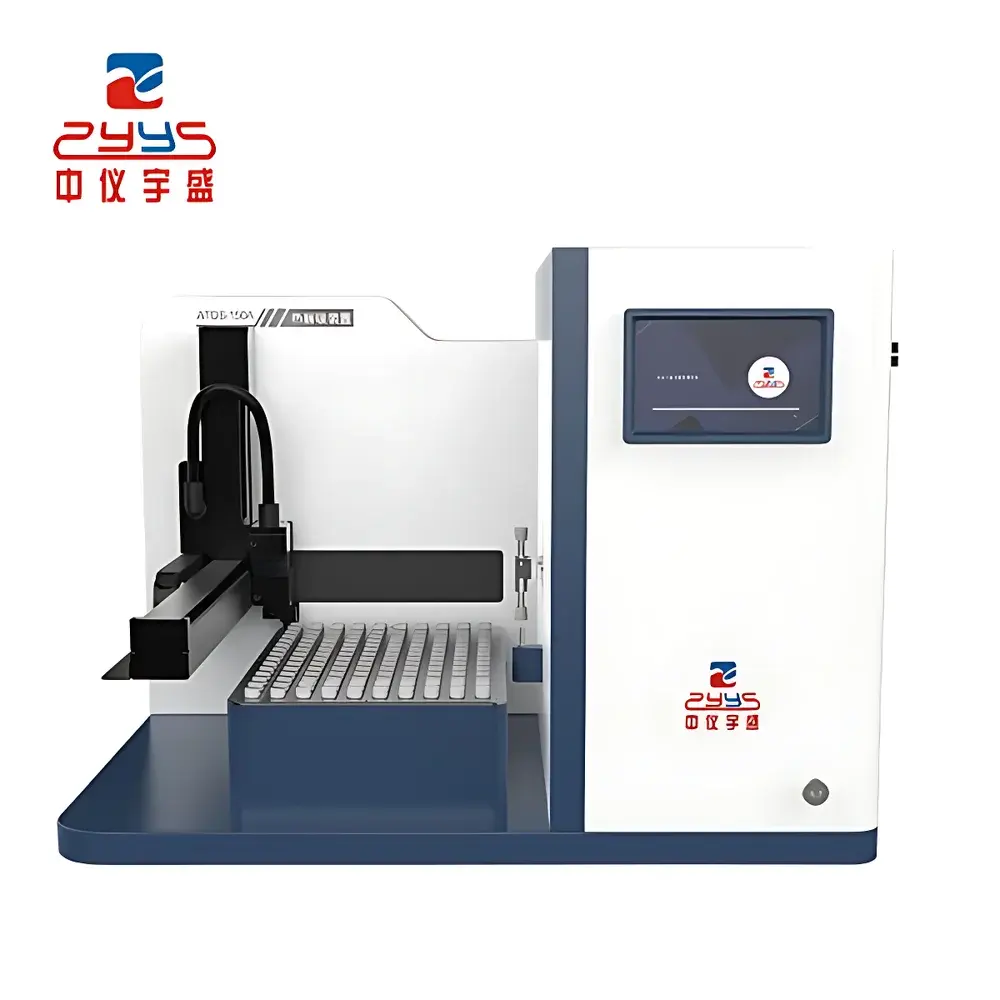
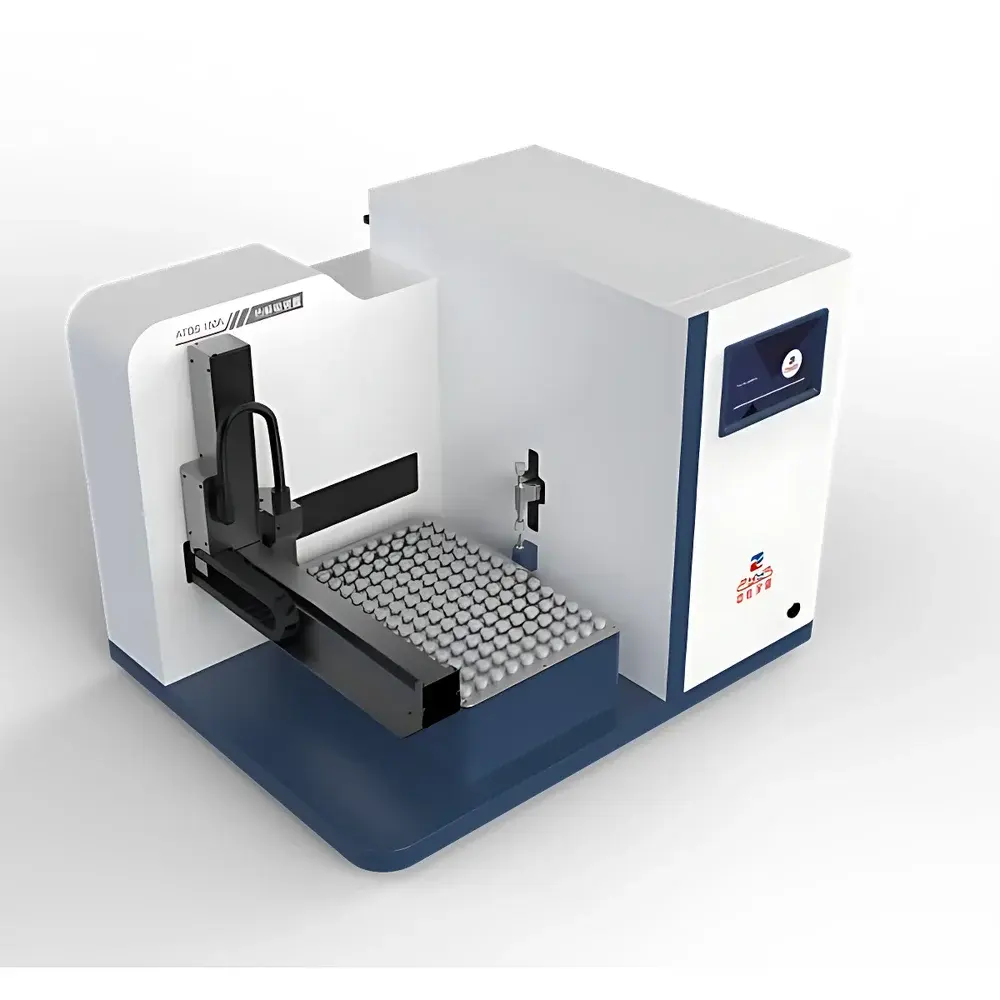
Zhongyi Yusheng ATDS-150A Fully Automated Thermal Desorber
| Brand | Zhongyi Yusheng |
|---|---|
| Origin | Beijing, China |
| Manufacturer Type | OEM Manufacturer |
| Instrument Type | Dual-Stage Thermal Desorber |
| Automation Level | Fully Automatic |
| Sample Capacity | 150 Positions |
| Control Interface | 7-inch Industrial Touchscreen |
| Temperature Zones | 4 Independently Controlled (Desorption Zone, Injection Valve, Transfer Line, Secondary Desorption/Cold Trap) |
| Cooling Method | Electronic Refrigeration for Cold Trap |
| Motion Accuracy | ±0.01 mm (XYZ Robotic Arm) |
| Gas Flow Control | Mass Flow Controller (MFC) |
| Compliance | ASTM D6196, ISO 16017-1, US EPA TO-17, HJ 583–2010, HJ 644–2013, HJ 734–2014, GB/T 18883–2022, GB 50325–2020 |
Overview
The Zhongyi Yusheng ATDS-150A is a fully automated dual-stage thermal desorber engineered for high-throughput, trace-level volatile organic compound (VOC) and semi-volatile organic compound (SVOC) analysis in environmental, occupational health, and indoor air quality laboratories. It operates on the principle of thermal desorption coupled with gas chromatography (GC) or gas chromatography–mass spectrometry (GC–MS), enabling quantitative recovery of analytes pre-concentrated on sorbent tubes without solvent extraction. The system integrates precise robotic sample handling, multi-zone independent temperature control, electronic cold trapping, and seamless instrument synchronization—ensuring reproducible desorption efficiency, minimal carryover, and compliance with international method standards including US EPA TO-17, ISO 16017-1, and HJ 644–2013. Designed for unattended operation over extended batches, the ATDS-150A supports method-driven workflows that encompass primary desorption, cryofocusing, secondary flash desorption, back-flushing, and internal standard introduction—all executed autonomously following pre-configured sequences.
Key Features
- Fully automated 150-position sample carousel with XYZ robotic arm for precise tube handling and positional calibration
- Cap-based sampling interface eliminating need for septa replacement; quick-connect fittings require no tools for installation or maintenance
- Integrated leak detection for each sample tube; automatic skipping of empty or defective positions
- Four independently heated zones: primary desorption oven, injection valve, transfer line, and secondary desorption/cold trap—each with PID-controlled accuracy ±0.5 °C
- Electronic refrigeration system for cold trap cooling to –30 °C, enabling efficient analyte focusing prior to GC injection
- Modular six-channel heating/two-channel cooling temperature control board with dual high-power heating circuits for rapid flash desorption (≥1000 °C/s ramp rate)
- 0.01 mm motion resolution via dedicated four-axis motion controller, ensuring repeatable robotic positioning and tube alignment
- Automatic back-flush of transfer line and injection valve to prevent cross-contamination between samples
- Dedicated airflow path for cold trap with tool-free, snap-in capture tube replacement
- Gas-tight modular architecture with physical separation of pneumatic and electrical systems for operational safety and EMC compliance
- Multi-cycle desorption capability: same tube can undergo sequential thermal programs at different temperatures to profile thermal release behavior
- Onboard mass flow controller (MFC) for accurate carrier gas, purge gas, and desorption gas regulation (range: 0–100 mL/min, accuracy ±1% FS)
- Programmable split functionality: primary split ratio adjustable from 1:1 to 1:100; optional secondary split module available
- Internal standard addition via calibrated gas-phase spiking during desorption cycle
- Sample preservation mode: retains partially desorbed tubes under inert atmosphere for reanalysis
- Built-in simulation mode for generating calibration curves using certified standard mixtures without field sampling
Sample Compatibility & Compliance
The ATDS-150A accepts industry-standard 6 mm OD × 89 mm stainless steel or glass sorbent tubes (e.g., Tenax TA, Carbopack B/C, Carboxen 1000), compatible with both single- and multi-bed configurations. It meets structural and performance requirements specified in ISO 16017-1 (Indoor, ambient and workplace air — Sampling and analysis of volatile organic compounds by sorbent tube/thermal desorption/capillary gas chromatography), US EPA Method TO-17, and Chinese national standards including HJ 583–2010, HJ 644–2013, HJ 734–2014, GB/T 18883–2022, and GB 50325–2020. Its hardware architecture and software logging features support GLP-compliant data integrity: full audit trail, user access control, electronic signatures, and 21 CFR Part 11–ready configuration options when deployed with validated LIMS or CDS integration.
Software & Data Management
Control and monitoring are managed through an embedded 7-inch industrial touchscreen running a real-time Linux OS. The interface provides live status visualization of all thermal zones, robotic position, gas flows, and method execution progress. Users configure methods—including desorption temperature ramps, hold times, cold trap parameters, split ratios, and GC synchronization triggers—via intuitive graphical editors. Batch queue management allows drag-and-drop reordering, priority assignment, and conditional logic (e.g., skip on failure). System logs record every operational event (start/stop, error codes, temperature deviations, motion faults) with timestamps and operator IDs. Remote diagnostics and firmware updates are supported via Ethernet or optional Wi-Fi module. Export formats include CSV, PDF reports, and native .tds files compatible with major chromatography data systems (CDS) including Thermo Chromeleon, Agilent OpenLab, and Shimadzu GCMSsolution.
Applications
The ATDS-150A serves as a core preconcentration platform in laboratories performing regulatory VOC monitoring across multiple domains: indoor air quality assessment per GB/T 18883–2022 and GB 50325–2020; workplace exposure evaluation aligned with GBZ/T 300 series (benzene, xylene, styrene, gasoline vapors); ambient air analysis per HJ 583–2010 and HJ 644–2013; emissions testing from building materials (GB 36246–2018) and consumer products; and vehicular cabin air screening per HJ/T 400–2007. Its dual-stage architecture and electronic cold trapping make it especially suited for low-concentration target analytes (pptv range) such as C2–C12 aliphatics, aromatics, oxygenates, and halogenated compounds. Research applications include thermal stability profiling, sorbent breakthrough studies, and method development for emerging contaminants.
FAQ
Does the ATDS-150A support direct integration with third-party GC and GC–MS systems?
Yes—the instrument includes configurable digital I/O and RS232/RS485 interfaces for bidirectional communication with major GC vendors (Agilent, Thermo Fisher, Shimadzu, PerkinElmer), enabling synchronized start/stop, status feedback, and method parameter handoff.
What sorbent tube types and dimensions are supported?
Standard 6 mm OD × 89 mm length tubes (e.g., SKC, Markes, Entech formats); compatibility extends to single-bed (Tenax TA), dual-bed (Carbopack B + Carbosieve SIII), and tri-bed configurations.
Is cold trap temperature programmable, and what is the minimum achievable temperature?
The electronically cooled cold trap operates from –30 °C to 400 °C, with setpoint resolution of 0.1 °C and stabilization time < 90 seconds.
How does the system handle method validation and data integrity requirements?
All critical parameters are logged with timestamps and user attribution; optional 21 CFR Part 11 compliance packages include role-based access, electronic signatures, and immutable audit trails—validated per IQ/OQ protocols.
Can the ATDS-150A perform sequential thermal desorption on the same tube?
Yes—users may define multiple thermal programs per tube position, allowing stepwise heating to investigate compound volatility distribution or thermal degradation profiles.





