
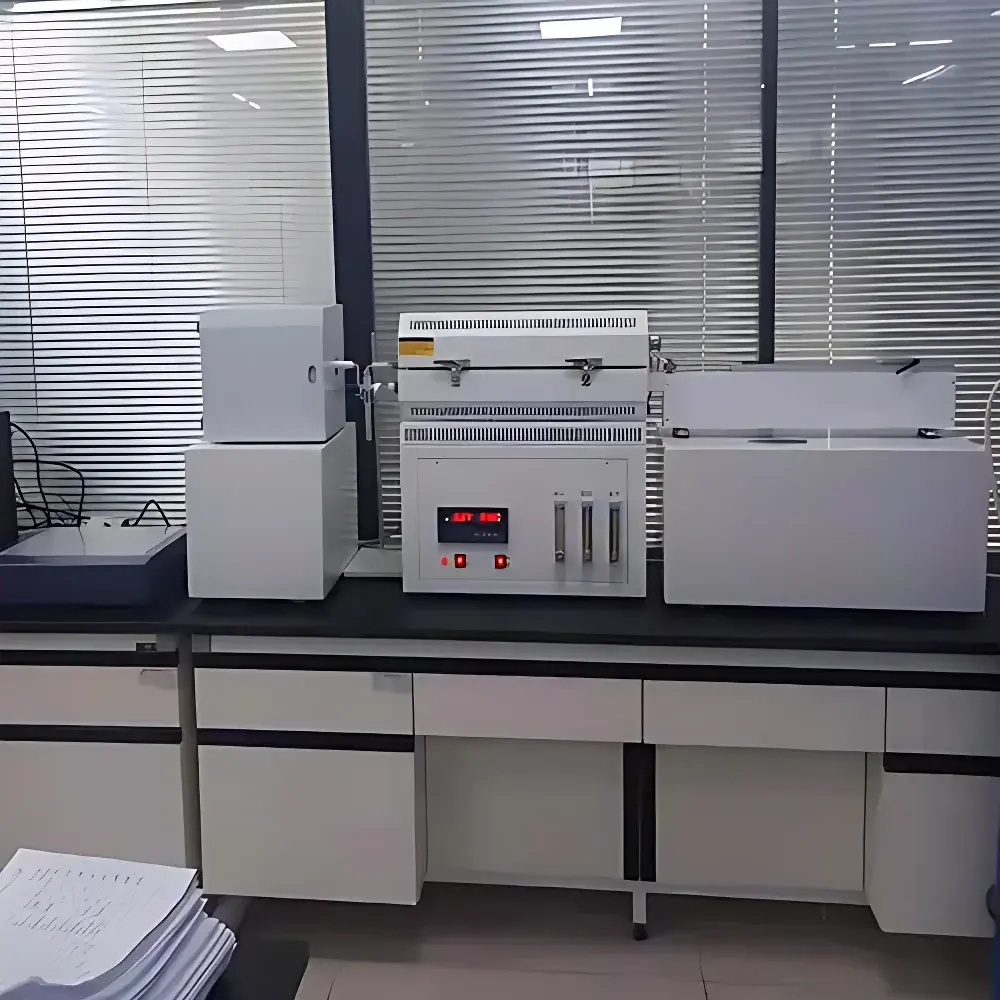
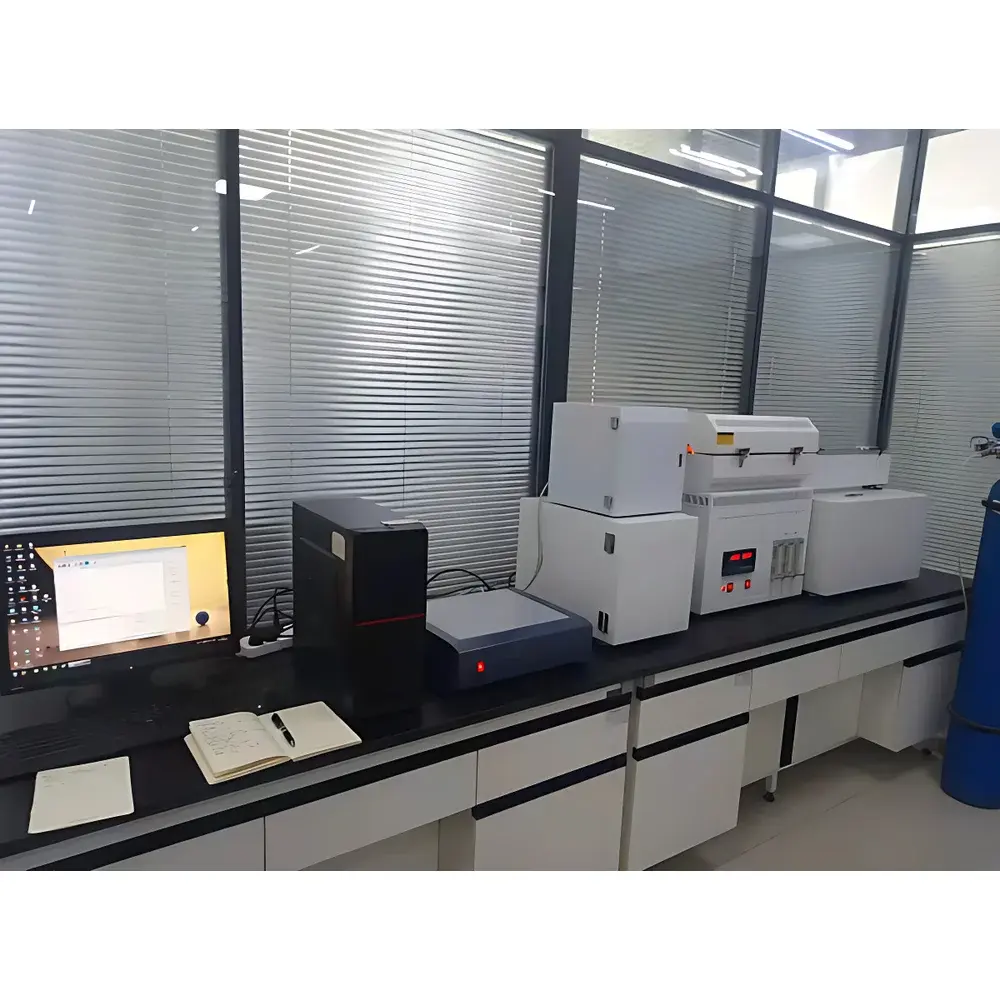
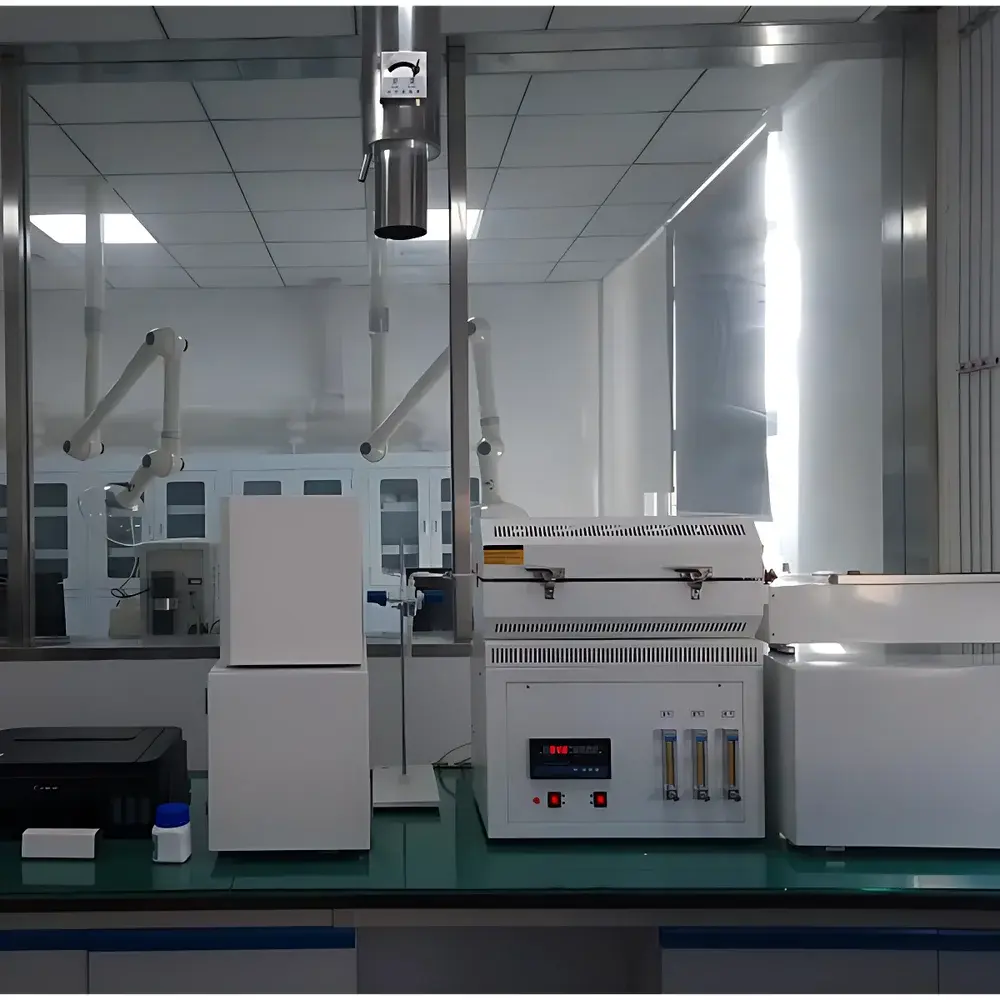
Zhuochi AOX-S Adsorbable Organic Halogens (AOX) Microcoulometric Analyzer
| Brand | Zhuochi |
|---|---|
| Origin | Zhejiang, China |
| Manufacturer Type | Authorized Distributor |
| Country of Origin | China |
| Model | AOX-S |
| Pricing | Upon Request |
| Measurement Principle | Combustion–Microcoulometric Titration |
| Furnace Temperature Range | 500–1000 °C |
| Temperature Accuracy | ±1% ±5 °C |
| Measurement Accuracy | <5% |
| Repeatability | <5% |
| Limit of Detection (LOD) | 0.1 µg/L (as Cl⁻ equivalent) |
| Resolution | Not specified |
Overview
The Zhuochi AOX-S Adsorbable Organic Halogens (AOX) Microcoulometric Analyzer is a dedicated benchtop system engineered for the precise quantification of adsorbable organic halogen compounds—including chlorinated, brominated, and iodinated organics—in aqueous environmental matrices. It operates in strict accordance with the Chinese national standard HJ 1214–2021, “Water Quality—Determination of Adsorbable Organic Halogens (AOX)—Microcoulometric Method,” and aligns with internationally recognized methodological frameworks such as ISO 9562 and DIN 38409 Part 37. The instrument employs a two-stage thermochemical process: first, sample adsorption onto activated carbon under controlled pH and flow conditions; second, high-temperature catalytic combustion (500–1000 °C) of the loaded carbon, converting all bound halogens to hydrogen halides (HX), which are then swept into an electrolytic cell for microcoulometric titration. This principle ensures stoichiometric detection of total halogen content (expressed as chloride equivalents), independent of individual halogen speciation.
Key Features
- Integrated dual-zone combustion furnace with independent temperature control for pre-combustion drying and main oxidation zones, enabling stable thermal ramping and reproducible halogen release kinetics
- Patented gas-flow–regulated temperature stabilization module, maintaining furnace setpoint accuracy within ±1% ±5 °C across the full operational range
- Dedicated quartz combustion tube with integrated catalyst bed (CuO/Pt) to ensure complete mineralization of refractory AOX species, including polyhalogenated aromatics and aliphatics
- Automated sample introduction and ash removal mechanism minimizing operator intervention and cross-contamination risk
- High-sensitivity microcoulometric detector featuring Ag/Ag⁺ reference electrode pair and real-time current integration with digital feedback control
- Modular column adsorption unit compliant with HJ 1214–2021 specifications—includes calibrated flow controller, pH-adjusted adsorption column, and standardized activated carbon cartridge (250 mg, mesh 20–40)
- Rugged industrial-grade chassis with integrated gas purification train (O₂, CO₂, and moisture scrubbers) to eliminate background interference
Sample Compatibility & Compliance
The AOX-S supports analysis of surface water, groundwater, wastewater effluents, leachates, and treated drinking water. Sample volumes range from 10 to 500 mL, adjustable via programmable peristaltic pump. All wetted components—including adsorption columns, combustion tubing, and electrolyte cells—are chemically inert (quartz, PTFE, and high-purity alumina) to prevent halogen loss or memory effects. The system meets essential regulatory design criteria for environmental laboratories: it supports audit-ready documentation workflows aligned with GLP principles, and its measurement traceability is established through certified reference materials (CRMs) such as NIST SRM 2372 (chlorinated hydrocarbon-spiked water). While not FDA 21 CFR Part 11–certified out-of-the-box, the instrument’s data acquisition architecture permits integration with validated LIMS platforms supporting electronic signatures and audit trails.
Software & Data Management
The embedded control software provides guided method setup, real-time furnace temperature profiling, coulometric current monitoring, and automatic endpoint recognition based on integrated charge thresholds. Raw data—including time-resolved current curves, temperature logs, and calibration history—are stored in vendor-neutral CSV and XML formats. Each analytical run generates a compliant report template referencing HJ 1214–2021 clause numbers, LOD verification results (0.1 µg/L Cl⁻ eq.), and uncertainty estimates derived from repeatability studies (<5% RSD). Optional USB-to-PC connectivity enables remote diagnostics and firmware updates without interrupting routine operation.
Applications
- Regulatory compliance testing for municipal and industrial wastewater discharge permits (e.g., China’s “Discharge Standard of Pollutants for Municipal Wastewater Treatment Plants” GB 18918–2002)
- Process monitoring in pulp and paper mills, pharmaceutical manufacturing, and pesticide formulation facilities where halogenated byproducts are process indicators
- Environmental impact assessment (EIA) studies evaluating AOX loadings in receiving waters near chemical production sites
- Research on natural attenuation of halogenated pollutants in sediment–water systems
- Validation of advanced oxidation processes (AOPs) targeting persistent organic pollutants (POPs) containing chlorine or bromine moieties
FAQ
What sample types are compatible with the AOX-S system?
Surface water, groundwater, raw and treated wastewater, landfill leachate, and industrial process water—provided suspended solids are removed by filtration (0.45 µm) prior to adsorption.
Does the system require external gas supplies?
Yes: high-purity oxygen (≥99.999%) is required for combustion; nitrogen (≥99.995%) serves as carrier and purge gas. Gas regulators and flow meters are included in the standard configuration.
How is method validation performed per HJ 1214–2021?
Validation includes recovery testing using 4-chlorophenol and hexachlorobenzene CRMs, blank subtraction using deionized water processed identically to samples, and ongoing precision checks via replicate analyses (n ≥ 7) demonstrating <5% RSD.
Can the AOX-S quantify individual halogens (Cl, Br, I) separately?
No—the method reports total AOX as chloride-equivalent mass concentration (µg/L Cl⁻ eq.) due to the non-selective conversion of all organic halogens to HX during combustion.
Is routine maintenance documented in the user manual?
Yes: the manual includes scheduled procedures for catalyst regeneration, electrolyte replacement (AgNO₃/HNO₃ solution), activated carbon cartridge exchange, and furnace thermocouple calibration verification every 200 operating hours.
Related Products







