
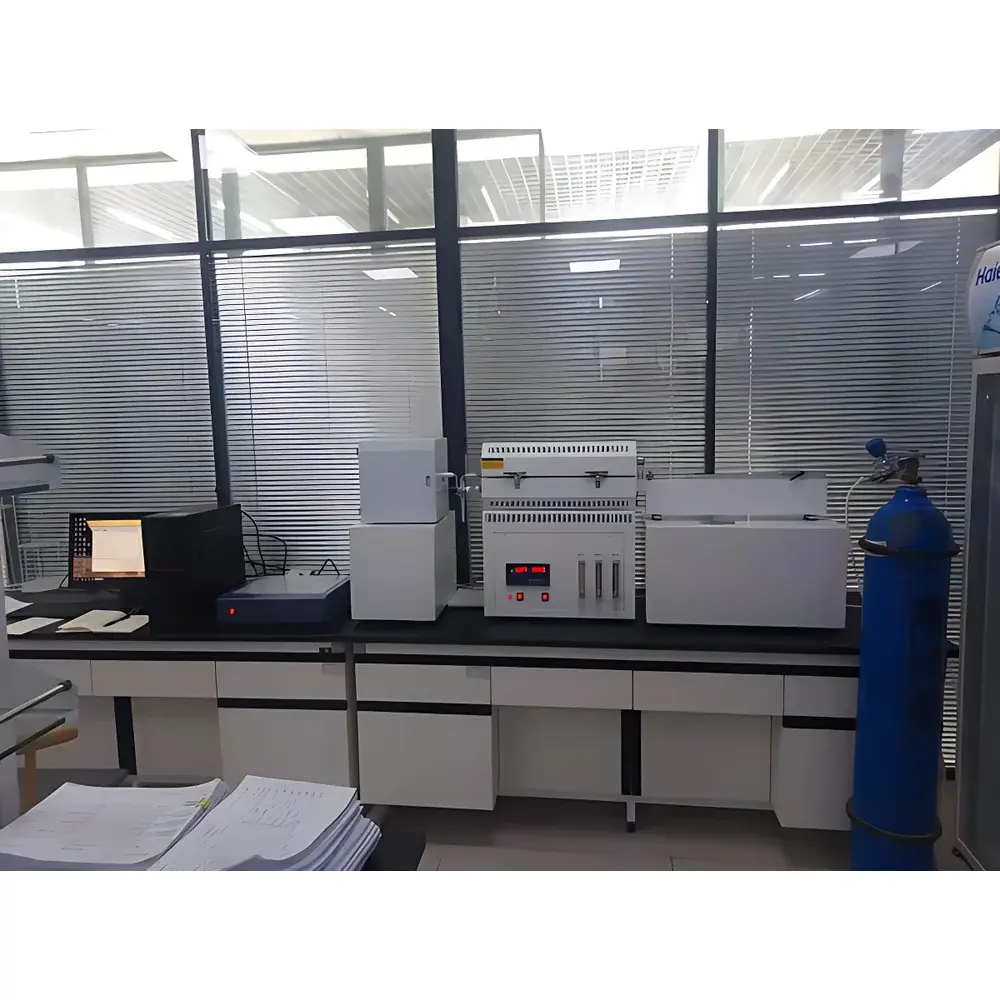
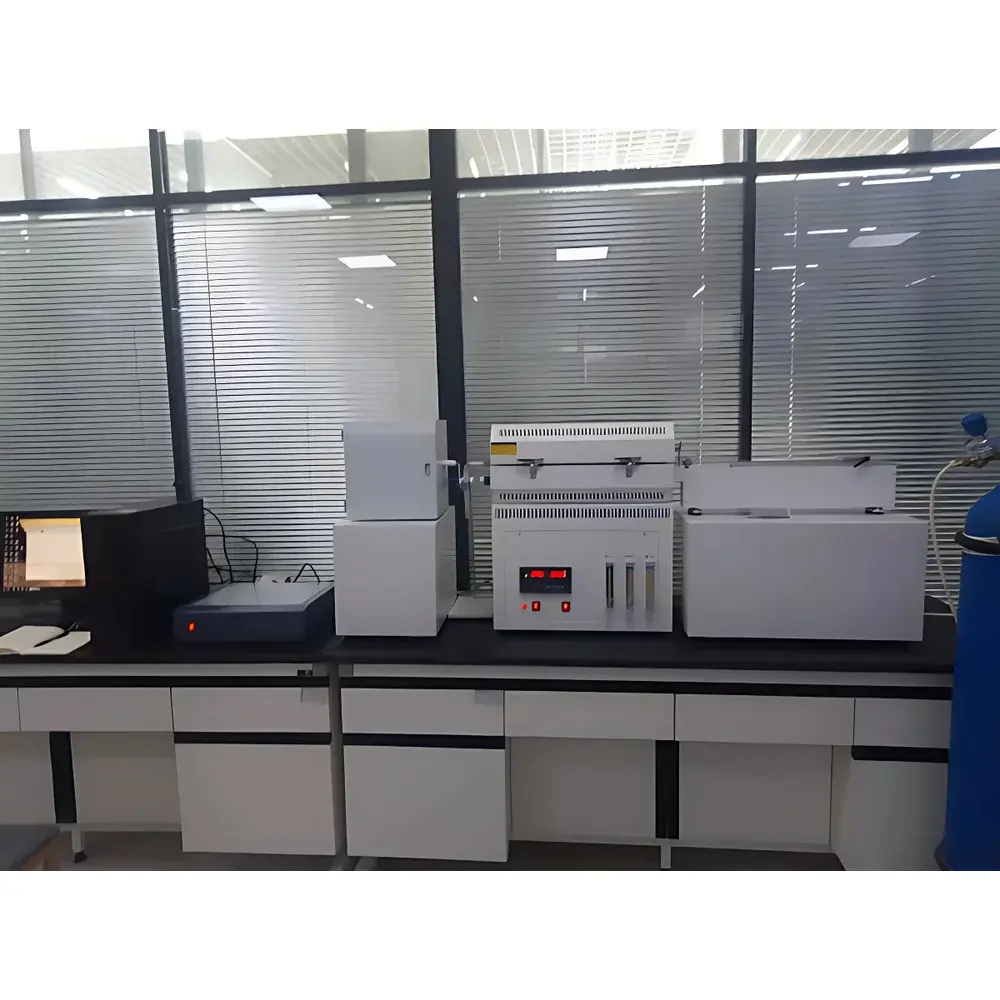
Zhuochi AOX-WK-S Microcoulometric Analyzer for HJ 1214–2021 Compliance
| Brand | Zhuochi |
|---|---|
| Model | AOX-WK-S |
| Origin | Zhejiang, China |
| Instrument Type | Microcoulometric AOX Analyzer |
| Compliance Standard | HJ 1214–2021 (Effective June 1, 2022) |
| Application | Adsorbable Organic Halogens (AOX) in Water |
| Detection Principle | Microcoulometric Titration after High-Temperature Combustion and Halogen Capture |
| Configuration | Complete System with Dual-Zone Combustion Furnace, Halogen Adsorption Column, Sample Introduction/Withdrawal Modules, and Integrated Coulometric Detector |
Overview
The Zhuochi AOX-WK-S Microcoulometric Analyzer is a dedicated, fully integrated system engineered to meet the rigorous analytical requirements of China’s national environmental standard HJ 1214–2021, “Determination of Adsorbable Organic Halogens (AOX) in Water—Microcoulometric Method,” effective since June 1, 2022. This instrument implements a standardized two-stage thermal oxidation–microcoulometric detection workflow: water samples are first acidified and passed through activated carbon to adsorb organic halogen compounds; the loaded carbon is then combusted at high temperature (900–1100 °C) under controlled oxygen flow, converting all halogens (Cl, Br, I) into hydrogen halides (HX). These gaseous species are swept through a silver nitrate–impregnated adsorption column, where halide ions are quantitatively captured and subsequently titrated via microcoulometric detection using a silver/silver chloride coulometric cell. The system delivers trace-level AOX quantification (typical detection limit < 5 µg/L as Cl) with high reproducibility and linearity across a dynamic range of 5–1000 µg/L, supporting routine compliance monitoring in municipal wastewater treatment plants, industrial effluent laboratories, and environmental testing centers.
Key Features
- Dual-zone combustion furnace with independent temperature control for pre-combustion drying (200–400 °C) and main oxidation (900–1100 °C), ensuring complete mineralization of refractory organohalogens.
- Integrated gas flow regulation module with mass flow controllers (MFCs) for precise O2 and carrier gas delivery, maintaining stoichiometric combustion conditions per HJ 1214–2021 Section 7.3.
- Custom-designed quartz combustion tube with optimized geometry and thermal shielding to minimize halogen loss and memory effects.
- Automated sample introduction and withdrawal mechanism compatible with standard 100–200 mg activated carbon cartridges, reducing operator variability and improving throughput.
- High-sensitivity microcoulometric detector featuring a dual-electrode Ag/AgCl coulometric cell, real-time current integration, and automatic endpoint recognition based on Faraday’s law.
- Rugged, modular architecture designed for laboratory environments subject to regulatory audit—components are accessible, serviceable, and traceably calibrated.
Sample Compatibility & Compliance
The AOX-WK-S supports analysis of surface water, groundwater, domestic sewage, industrial wastewater, and leachates per HJ 1214–2021 scope. It accommodates sample volumes from 100 mL to 1 L, with optional dilution or concentration steps prior to adsorption. All critical process parameters—including combustion temperature profiles, gas flow rates, adsorption column conditioning, and coulometric integration time—are programmable and logged to support GLP documentation. The system design aligns with ISO/IEC 17025:2017 requirements for method validation and is suitable for laboratories preparing for CNAS accreditation. While HJ 1214–2021 is a national Chinese standard, the underlying microcoulometric methodology is technically comparable to EPA Method 1650 and DIN EN ISO 9562, enabling cross-method data interpretation where justified by laboratory validation studies.
Software & Data Management
The embedded control software provides full instrument orchestration: furnace ramping, gas flow sequencing, coulometric signal acquisition, and real-time AOX concentration calculation (µg/L as Cl). Raw current-time curves, calibration verification logs, and sample run metadata are stored in timestamped binary files with SHA-256 checksums. Export options include CSV and PDF reports compliant with internal QA protocols. Audit trail functionality records all user actions (e.g., parameter changes, calibration events, report generation) with operator ID and timestamp—supporting basic 21 CFR Part 11 readiness when deployed on validated Windows OS platforms with domain authentication. No cloud connectivity or remote access features are included, preserving data sovereignty and minimizing cybersecurity exposure.
Applications
- Regulatory compliance testing for discharge permits under China’s “Water Pollution Prevention and Control Action Plan.”
- Performance evaluation of chlorine-resistant membrane filtration and advanced oxidation processes (AOPs) in water reclamation facilities.
- Screening of pulp/paper mill effluents, pharmaceutical manufacturing wastewater, and pesticide formulation runoff for persistent halogenated organics.
- Method development and inter-laboratory comparison studies targeting AOX speciation (e.g., distinguishing chlorinated vs. brominated contributions via selective trapping).
- Research into formation pathways of disinfection by-products (DBPs) in chlorinated drinking water distribution systems.
FAQ
Does the AOX-WK-S comply with international standards such as ISO 9562 or EPA 1650?
The system is configured and validated specifically for HJ 1214–2021. While its core microcoulometric detection principle is consistent with ISO 9562 and EPA 1650, formal equivalence requires laboratory-specific method validation per each standard’s acceptance criteria.
Is calibration traceable to NIM or other national metrology institutes?
Calibration standards (e.g., potassium hydrogen phthalate for carbon recovery, sodium chloride solutions for halogen response) are prepared from CRM-grade materials; furnace temperature sensors are calibrated using NIST-traceable thermocouples during factory commissioning.
What maintenance intervals are recommended for the combustion tube and adsorption column?
Quartz combustion tubes should be inspected visually after every 50 runs and replaced if etching or discoloration is observed; adsorption columns require regeneration every 10–15 analyses or immediately following high-AOX samples (>500 µg/L).
Can the system quantify individual halogens (Cl, Br, I) separately?
No—the method measures total halogen content as chloride-equivalent AOX. Speciation requires coupling with IC-MS or HR-GC/MS, which falls outside the scope of HJ 1214–2021 and this instrument’s design.
Is technical support available in English for international users?
Yes—application engineering documentation, operation manuals, and remote troubleshooting assistance are provided in English upon request, subject to contractual service agreement terms.
Related Products







