
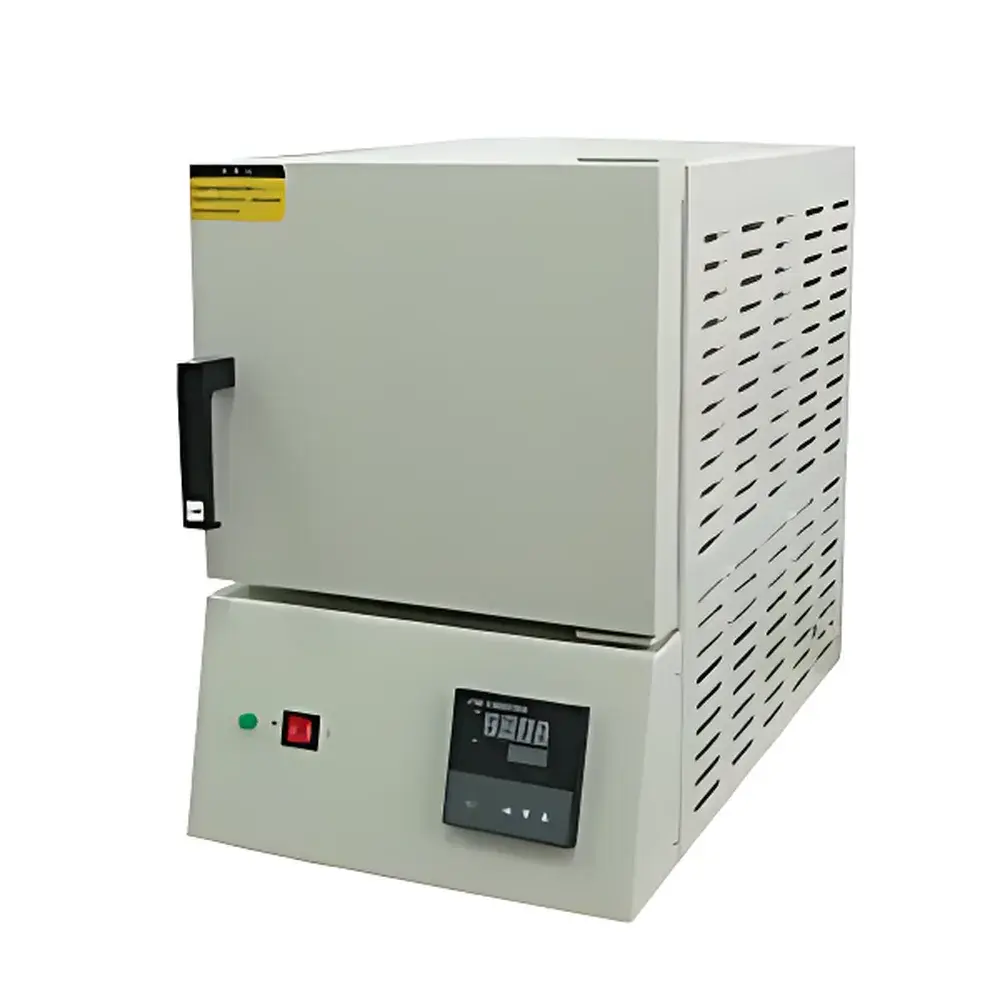
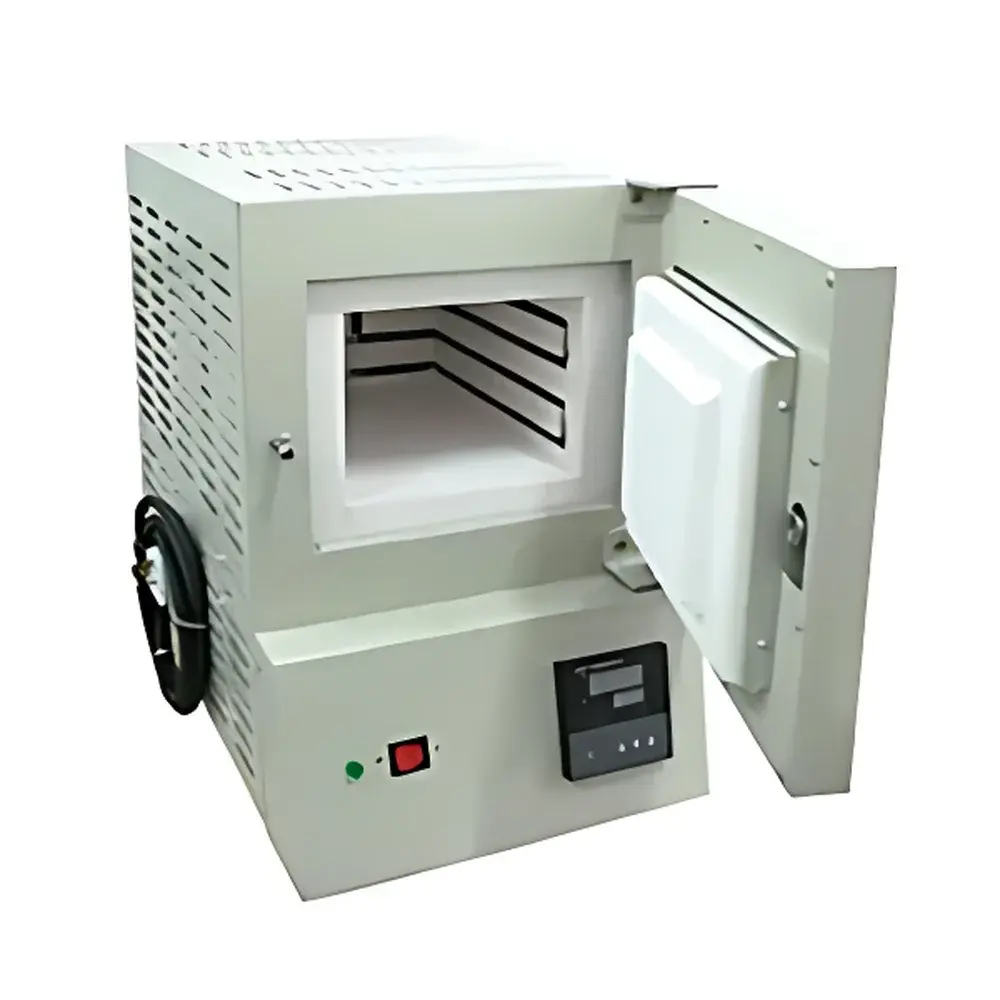
Zhuochi SX3-3-11 Ceramic Fiber Muffle Furnace
| Brand | Zhuochi |
|---|---|
| Origin | Zhejiang, China |
| Model | SX3-3-11 |
| Type | Box-Type Muffle Furnace |
| Max Temperature | 1100 °C |
| Temperature Uniformity | ±1 °C |
| Power Rating | 3 kW |
| Max Ramp Rate | ≤50 °C/min |
| Heating Method | Kanthal A1 Resistance Wire |
| Internal Chamber Dimensions | 300 × 200 × 150 mm |
| External Dimensions | 580 × 360 × 520 mm |
| Net Weight | ~32 kg |
| Voltage/Frequency | 220 V, 50 Hz |
| Temperature Sensor | K-type Thermocouple |
| Control System | LTDE 30-Stage Programmable PID Controller with SSR Output |
| Safety | Dual Independent Over-Temperature Protection (OT1 + OT2) |
| Insulation | High-Emissivity Low-Heat-Capacity Ceramic Fiber Board (Six-Sided Modular Assembly) |
Overview
The Zhuochi SX3-3-11 Ceramic Fiber Muffle Furnace is a precision-engineered box-type high-temperature furnace designed for laboratory-scale thermal processing, annealing, ashing, sintering, and heat treatment applications requiring stable operation up to 1100 °C. Unlike traditional refractory brick or cast-iron chamber furnaces, the SX3-3-11 employs a six-sided modular construction of ultra-lightweight, low-thermal-mass ceramic fiber insulation boards — enabling rapid thermal response, exceptional energy efficiency, and minimized thermal lag. Its heating system utilizes high-purity Kanthal A1 resistance wire wound in optimized geometry for uniform radiant heat distribution across the entire working chamber. The furnace operates on standard single-phase 220 V / 50 Hz mains power and is engineered for consistent temperature stability (±1 °C at 1000 °C), verified per ASTM E220 and ISO 9001 calibration traceability protocols.
Key Features
- Rapid Thermal Response: Achieves 1000 °C in under 30 minutes; maximum ramp rate programmable up to 50 °C/min with fine-grained control across the full 100–1100 °C range.
- High-Efficiency Insulation Architecture: Ceramic fiber chamber walls (density: ~240 kg/m³, service temperature: 1260 °C) reduce standby heat loss by >65% compared to conventional brick-lined furnaces of equivalent volume.
- Integrated Intelligent Control System: LTDE-series 30-segment programmable controller with dual-loop PID + SSR output regulation ensures repeatable thermal profiles, automatic soak-hold sequences, and seamless transition between ramp, hold, and cooldown phases.
- Dual-Layer Thermal Safety: Primary over-temperature cutoff (OT1) activates at 1150 °C; secondary independent mechanical limiter (OT2) engages at 1200 °C — both compliant with IEC 61000-4-5 surge immunity and EN 60519-2 electrical safety standards for industrial heating equipment.
- Plug-and-Play Deployment: Fully pre-wired assembly includes factory-calibrated thermocouple compensation, integrated solid-state relay drive, and rear-mounted terminal block — eliminating field wiring errors and reducing commissioning time to under 5 minutes.
- Robust Mechanical Design: Cold-rolled steel outer casing treated with phosphate conversion coating and electrostatically applied computer-gray polyester powder finish resists corrosion and abrasion in multi-user lab environments.
Sample Compatibility & Compliance
The SX3-3-11 accommodates a wide range of inert and semi-reactive sample types including metal oxides, ceramic precursors, polymer composites, geological specimens, and biological ash residues. Its muffle design isolates samples from direct flame or combustion gases, ensuring contamination-free thermal exposure. Chamber dimensions (300 × 200 × 150 mm) support standard crucibles (up to Φ100 mm × 80 mm height) and custom fixtures. All electrical components meet CE marking requirements (2014/30/EU EMC Directive, 2014/35/EU LVD Directive). The control architecture supports audit-ready operation under GLP and GMP frameworks via optional data logging integration (RS485 Modbus RTU interface available).
Software & Data Management
While the base unit operates autonomously via its front-panel LTDE controller, optional PC connectivity enables full thermal protocol management using Zhuochi’s proprietary FurnaceLink™ software (Windows 10/11 compatible). This application supports real-time temperature graphing, export of CSV-formatted time-stamped datasets (including ramp rate, dwell duration, and deviation logs), and automated report generation aligned with ISO/IEC 17025 documentation requirements. Firmware updates preserve calibration coefficients and retain user-defined programs across reboots. All operational events — including start/stop commands, program execution status, and over-temperature fault triggers — are timestamped and stored in non-volatile memory for regulatory review.
Applications
- Residue ashing of environmental soil and wastewater samples per EPA Method 3010A and ASTM D5630.
- Pre-treatment of catalyst supports and battery cathode materials prior to XRD or SEM analysis.
- Thermal gravimetric analysis (TGA) sample conditioning and binder burnout in advanced ceramics R&D.
- Calibration verification of thermocouples and RTDs using fixed-point reference materials (e.g., Al₂O₃, Zn, Sn).
- Controlled oxidation studies of metallic alloys under air or inert gas purge (requires optional quartz tube insert and gas manifold kit).
- Quality assurance testing of refractory linings, insulating coatings, and fire-rated building materials per UL 1709 and ASTM E119.
FAQ
Is the furnace suitable for use under inert or reducing atmospheres?
The standard SX3-3-11 is rated for ambient air operation only. For controlled-atmosphere applications, a quartz tube insert with flanged gas inlet/outlet ports and optional vacuum pump interface must be installed. Consult technical specifications for maximum permissible gas flow rates and pressure differentials.
What maintenance is required for long-term accuracy?
Annual verification of thermocouple calibration against NIST-traceable reference sources is recommended. Visual inspection of ceramic fiber integrity and resistance wire tension should occur every 200 operating hours. No lubrication or consumable replacement is required under normal usage conditions.
Can multiple furnaces be synchronized for parallel thermal profiling?
Yes — via RS485 daisy-chaining and Modbus RTU protocol, up to 32 units can be coordinated from a central SCADA node for batch process harmonization and cross-furnace statistical process control (SPC).
Does the controller support FDA 21 CFR Part 11 compliance?
The embedded LTDE controller does not include electronic signature or audit trail functionality natively. However, when paired with FurnaceLink™ software and Windows domain authentication, full Part 11 compliance — including role-based access control, immutable event logs, and digital signature capture — is achievable through validated configuration.



