
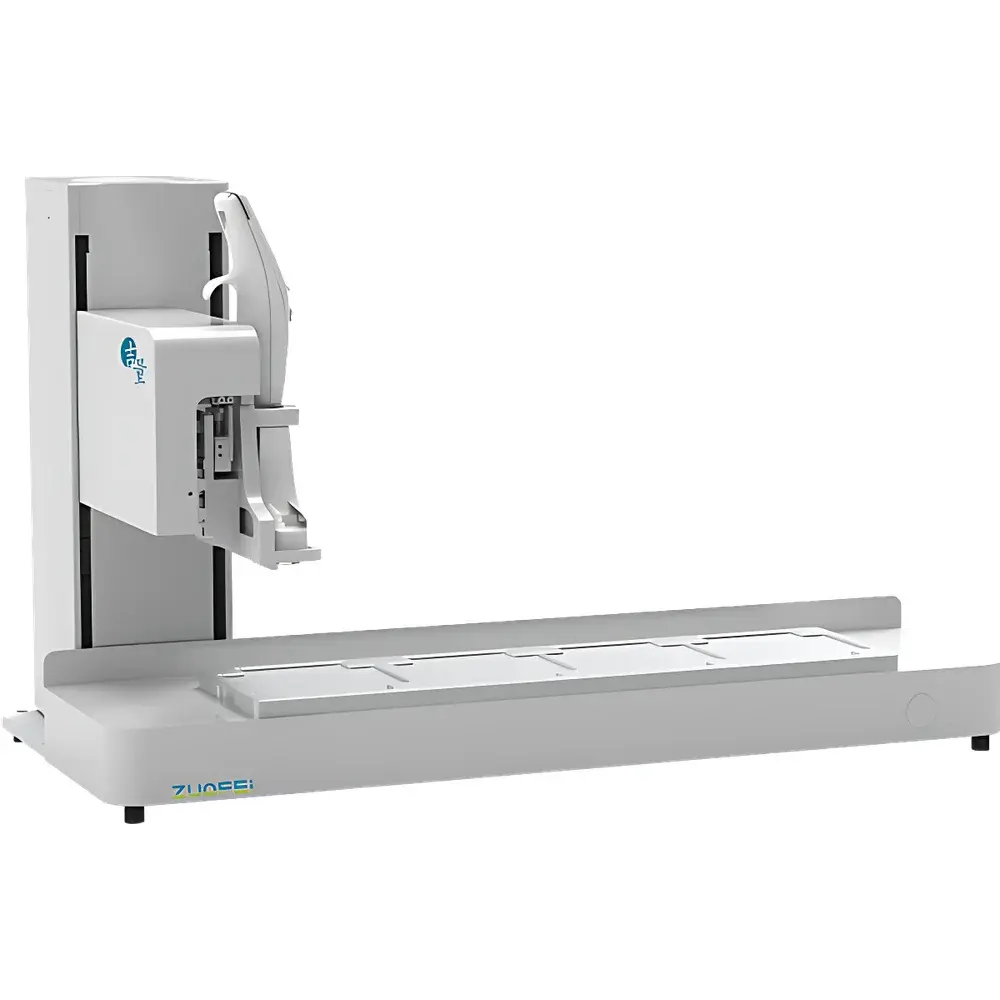
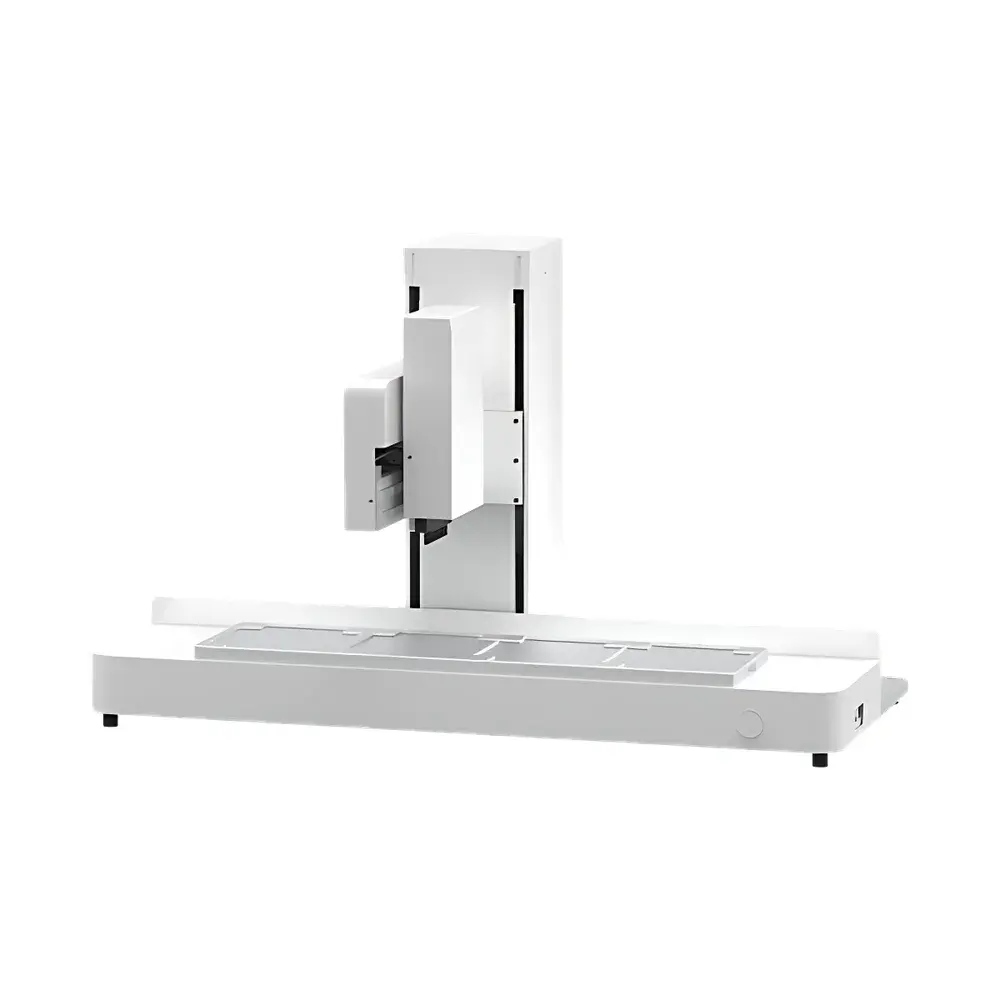
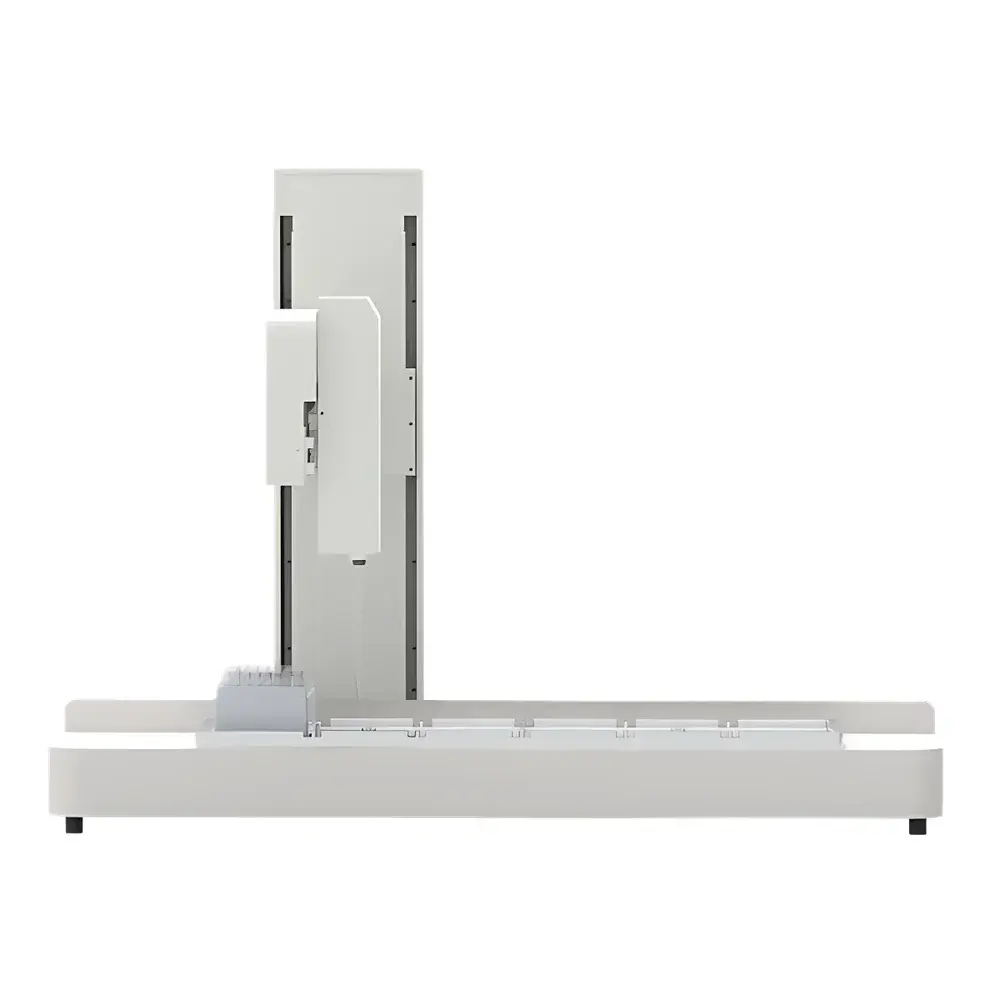
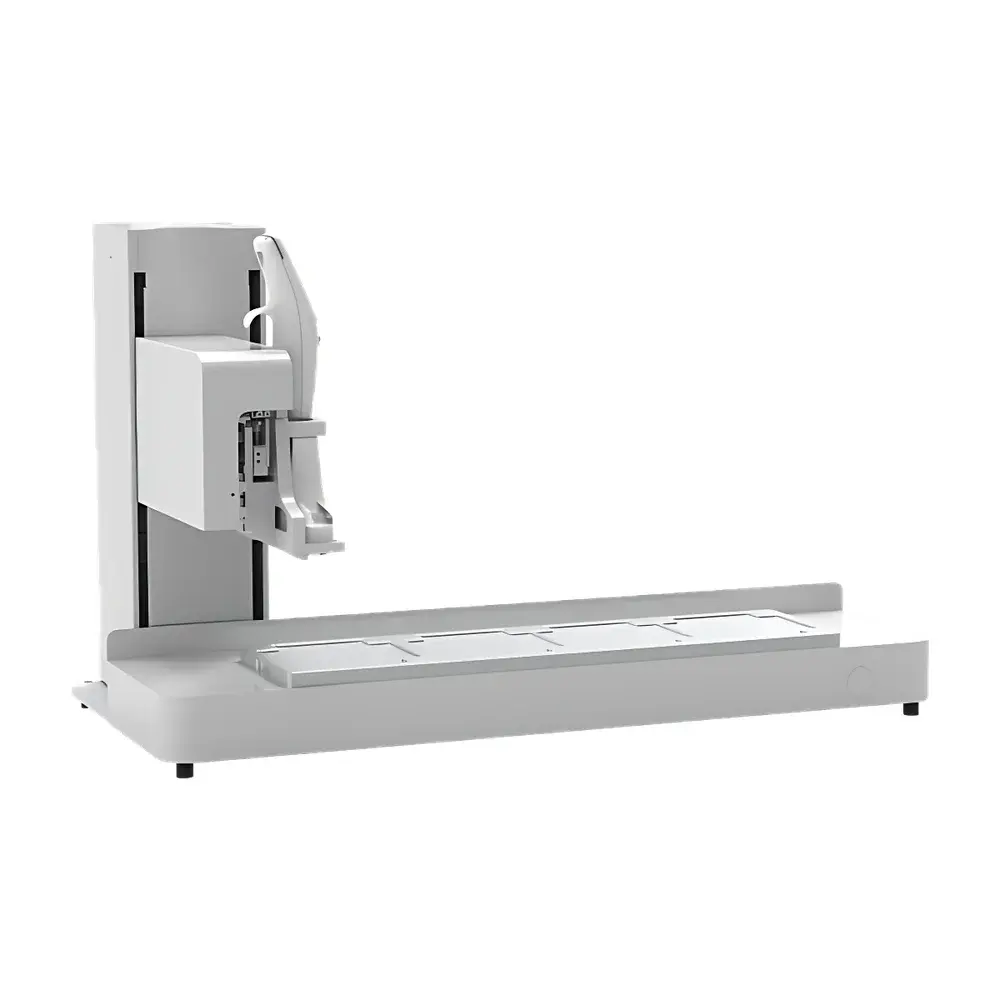
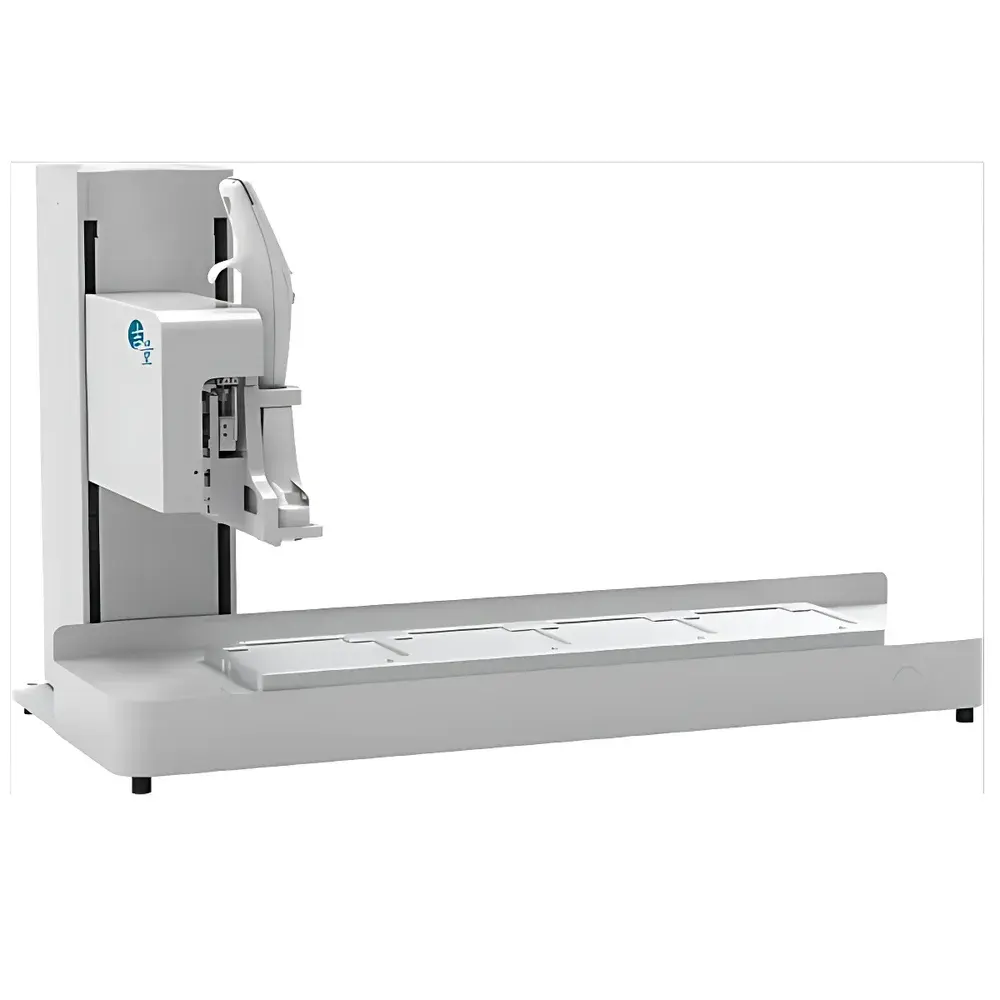
Zuofei Jiliang Automated Liquid Handling Workstation
| Brand | Zuofei |
|---|---|
| Origin | Shanghai, China |
| Manufacturer Type | Direct Manufacturer |
| Region Classification | Domestic (China) |
| Model | Jiliang |
| Price | ¥218,000 |
| Deck Positions | 4 (waste tip box does not occupy a deck position) |
| Pipetting Accuracy | ±0.1 µL |
| Pipetting Range | 0.5–1250 µL (up to 5000 µL per single channel) |
| Sample Throughput | 384 × 4 wells |
| Dimensions (W × D × H) | 777 × 360 × 467 mm |
Overview
The Zuofei Jiliang Automated Liquid Handling Workstation is an integrated, benchtop liquid handling platform engineered for precision, flexibility, and reproducibility in molecular biology, diagnostics, and drug discovery laboratories. Based on positive displacement and air displacement pipetting principles—optimized via high-resolution stepper motor control and closed-loop feedback calibration—the system delivers traceable volumetric accuracy across its full operational range. Its core architecture supports both fixed- and variable-pitch 8-channel pipetting heads, enabling seamless transitions between standard microplate formats (24-, 48-, 96-, and 384-well) and non-standard tube configurations (EP tubes, cryovials, collection tubes, centrifuge tubes). Designed for compliance-critical environments, the Jiliang workstation operates within ISO 8655-defined accuracy tolerances for low-volume liquid transfer and meets functional requirements aligned with CLSI EP10-A3 and ASTM E2758 standards for automated liquid handlers used in assay development and routine QC.
Key Features
- Modular 8-channel pipetting head with programmable spacing adjustment (4-, 6-, 8-, or 12-channel pitch), supporting heterogeneous plate-to-tube, tube-to-plate, and inter-plate transfers without manual reconfiguration.
- Ultra-low volume capability: reliable aspiration and dispensing down to 0.5 µL with ±0.1 µL absolute accuracy—validated using gravimetric analysis per ISO 8655-6 protocols.
- Extended dynamic range: single-channel operation extends to 5000 µL, accommodating both nanoliter-scale assay setup and milliliter-level reagent aliquoting in one system.
- Dedicated 4-position deck layout with non-dedicated waste tip ejection zone—maximizing usable workspace while preserving positional consistency for multi-step protocols.
- Open consumables compatibility: accepts third-party tips, plates, and tubes meeting ANSI/SLAS dimensional standards (e.g., ANSI/SBS-1-2004), eliminating vendor lock-in and reducing long-term operational cost.
- Robust mechanical architecture: aluminum alloy frame with vibration-damped base, rated for continuous operation at ambient temperatures of 5–40 °C and relative humidity up to 80% RH (non-condensing).
Sample Compatibility & Compliance
The Jiliang workstation accommodates a broad spectrum of sample containers—including 24/48/96/384-well plates, 0.2–2.0 mL microcentrifuge tubes, 1.4–2.0 mL cryovials, 5–10 mL collection tubes, and custom-format racks—without hardware modification. Its liquid handling logic supports complex workflows such as serial dilution (including ELISA-compatible 2-fold and 10-fold gradients), pooling (n-to-1), splitting (1-to-n), and intra-plate replication. From a regulatory perspective, the system’s firmware supports audit trail logging (user actions, protocol execution timestamps, error events), aligning with GLP and GMP documentation expectations. While not pre-certified for FDA 21 CFR Part 11, its software architecture permits integration with validated LIMS or ELN systems that enforce electronic signature and data integrity controls.
Software & Data Management
The workstation runs on Zuofei’s proprietary ZLH Control Suite—a Windows-based application offering drag-and-drop protocol builder, real-time status monitoring, and version-controlled method storage. Protocols are saved in XML format with embedded metadata (pipette calibration date, tip lot ID, operator ID), ensuring traceability. The software supports CSV import/export for sample mapping, integrates with common barcode scanners for sample tracking, and allows batch parameterization (e.g., variable dilution factors across rows/columns). Raw log files include timestamped event records (aspiration/dispense volumes, tip ejection cycles, deck position moves), suitable for internal validation reports or external audit preparation.
Applications
The Jiliang platform is routinely deployed in high-throughput assay preparation workflows including qPCR/RT-qPCR master mix assembly, ELISA plate coating and detection reagent addition, viral titer determination (e.g., hemagglutination assays for avian influenza or foot-and-mouth disease), antibody screening (AlphaLISA, TR-FRET), compound IC50 dilution series generation, NGS library normalization and pooling, and cell-based assay seeding (e.g., PBS + virus suspension + chicken RBC titration). In veterinary diagnostics, it enables standardized processing of serum, tissue homogenates, and swab eluates for multiplexed serological and nucleic acid testing. In biopharma R&D, it accelerates hit-to-lead transitions by automating small-molecule dose-response matrix setup and large-molecule formulation buffering steps.
FAQ
What pipette tips are compatible with the Jiliang workstation?
Standard universal-fit filtered and non-filtered tips (10–1000 µL range) from major third-party vendors are supported; tip compatibility is verified against ANSI/SLAS footprint specifications.
Can the system perform gradient dilutions across multiple plates simultaneously?
Yes—using multi-step pipetting routines with dynamic source well selection and volume scaling, the system executes parallel serial dilutions across up to four 384-well plates in a single run.
Is remote monitoring or network connectivity available?
The workstation includes Ethernet and USB ports; remote desktop access and file transfer are enabled via local network configuration, though cloud-based control is not natively supported.
Does the system support calibration verification according to ISO 8655?
Yes—built-in calibration routines guide users through gravimetric verification at multiple volumes; calibration logs are exportable and retain instrument-specific serial identifiers.
What maintenance intervals are recommended for long-term reliability?
Daily tip ejector cleaning, monthly lubrication of Z-axis lead screws, and semi-annual recalibration of pipetting motors and position encoders are advised per the maintenance schedule in the technical manual.



