
ZuoFei WenYao Automated Liquid Handling Workstation
| Brand | ZuoFei |
|---|---|
| Origin | Shanghai, China |
| Manufacturer Type | Original Equipment Manufacturer (OEM/ODM) |
| Regional Classification | Domestic (China) |
| Model | WenYao |
| Price Range | USD $14,000 – $42,000 |
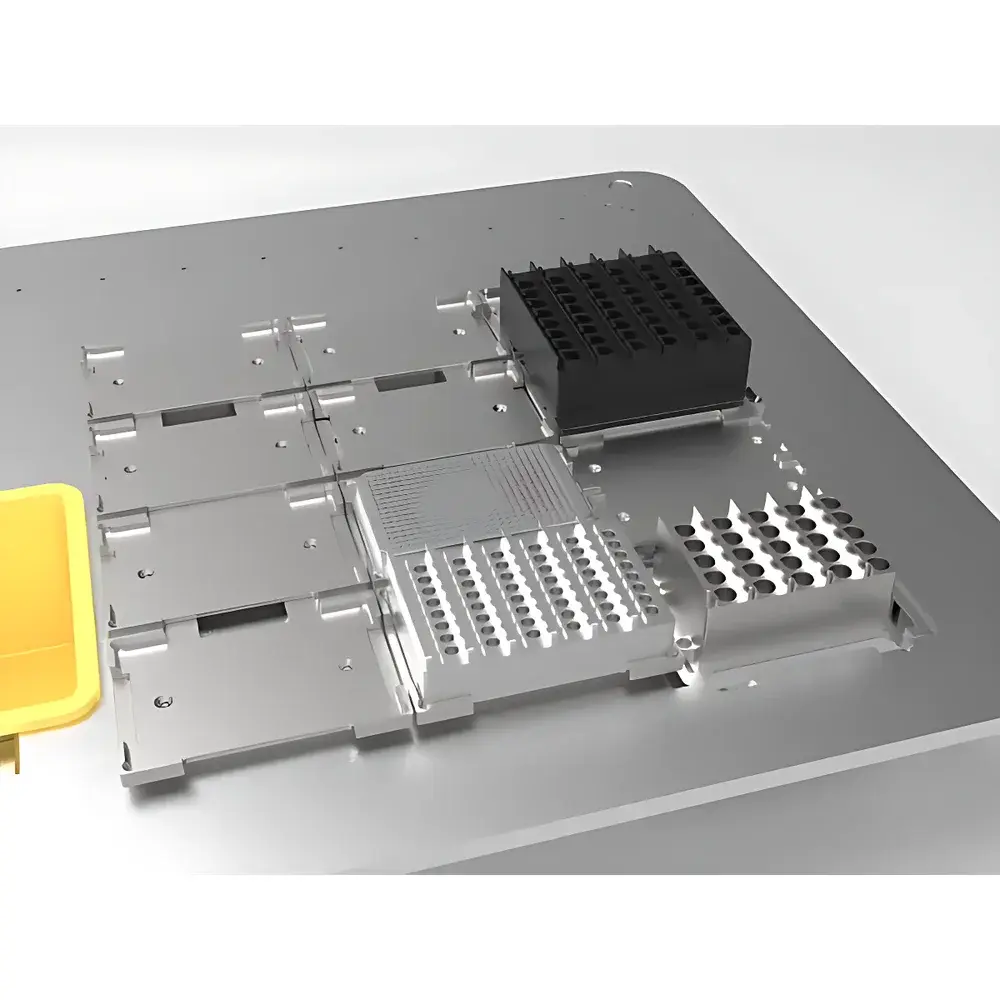
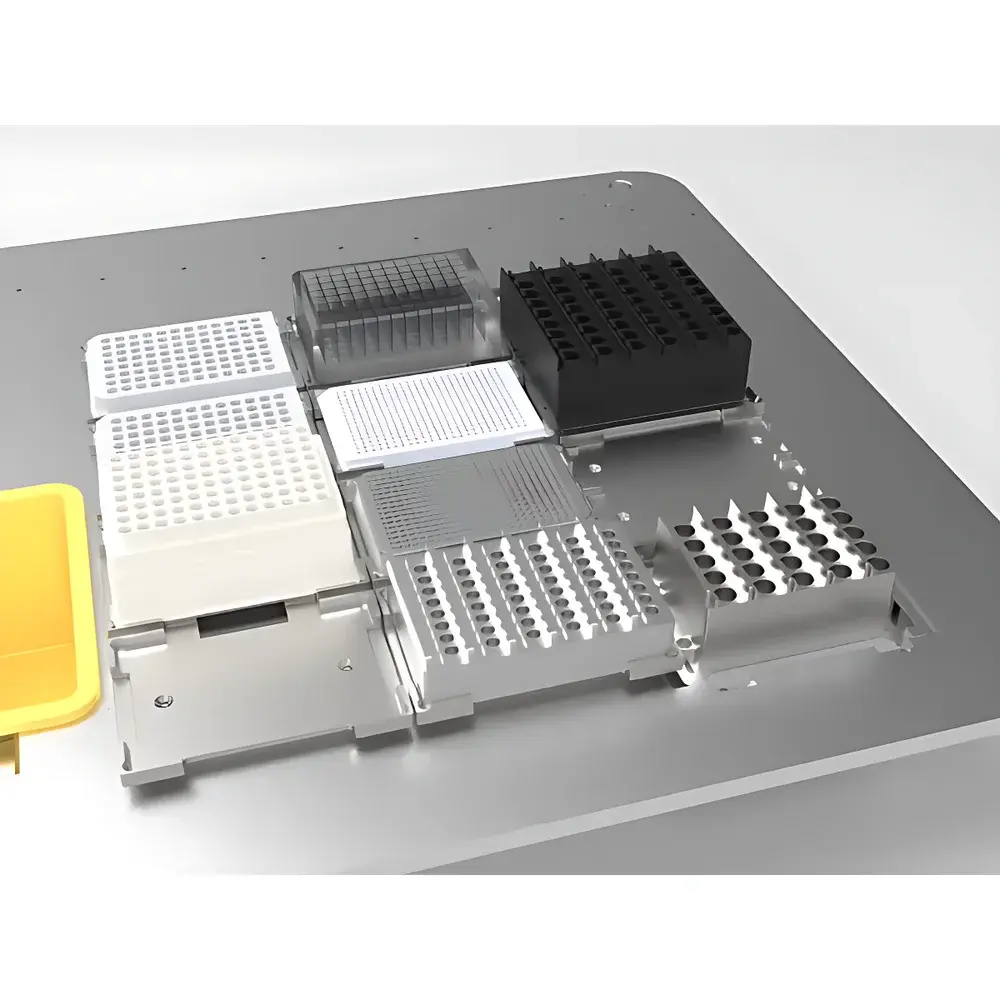
| Deck Capacity | 12 / 20 / 32 SBS-compliant positions (tip waste bin does not occupy deck position) |
| Pipetting Precision | ±0.1 µL (at specified volumes per channel configuration) |
| Pipetting Volume Range | 0.5–1250 µL (single-channel up to 5000 µL) |
| Sample Throughput | Up to 6,912 samples per run |
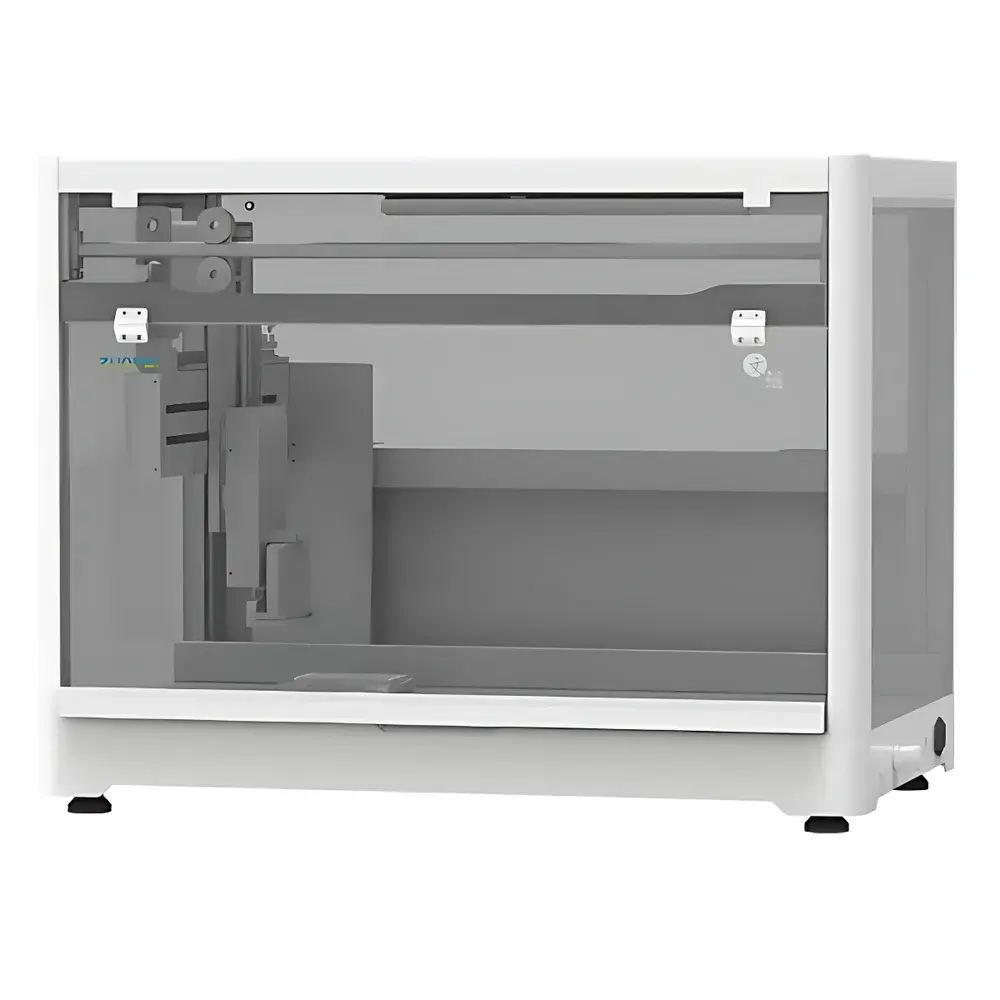
| Dimensions (W×D×H) | 730 × 634 × 756 mm |
Overview
The ZuoFei WenYao Automated Liquid Handling Workstation is an integrated, modular platform engineered for precision liquid transfer in life science laboratories. Built upon a robust Cartesian robotic architecture with high-resolution stepper motor control and optical tip detection, the system implements air-displacement pipetting principles compliant with ISO 8655-1:2022 and ASTM E2758–19 standards. Its design prioritizes reproducibility in low-volume transfers—particularly critical for molecular assay setup, NGS library preparation, and compound screening workflows where sub-microliter accuracy directly impacts data integrity. The workstation supports both fixed- and variable-pitch multichannel pipetting, enabling seamless transitions between 96-well and 384-well formats without manual hardware reconfiguration. Unlike proprietary closed-system platforms, WenYao adopts an open-hardware philosophy, allowing full compatibility with third-party SBS-standard consumables—including tubes, vials, deep-well plates, cryovials, and custom adapters—thereby reducing long-term operational cost and supply-chain dependency.
Key Features
- Modular deck architecture supporting 12, 20, or 32 SBS-compliant positions; tip disposal bin occupies zero deck slots, maximizing usable workspace.
- Dual-mode pipetting engine: selectable configurations include 4-, 8-, 24-, and 96-channel fixed-pitch heads; plus 4-, 6-, 8-, and 12-channel variable-pitch heads; and an independent 8-channel variable-spacing pipettor for heterogeneous plate layouts.
- Integrated safety subsystems: standard UV-C germicidal lamp (254 nm, 15-min cycle), optional HEPA-grade laminar airflow enclosure (ISO Class 5 compliant), and interlocked safety door with motion-sensing cutoff.
- Advanced liquid level sensing (LLS) with real-time pressure feedback across all channels, enabling reliable aspiration from low-volume reservoirs and viscous reagents without pre-wetting or calibration drift.
- Thermal and mechanical modularity: optional temperature-controlled deck (4–40 °C), orbital shaker (200–1200 rpm), magnetic bead separator, positive/negative pressure manifolds, and centrifuge integration via external docking interface.
- Full electromagnetic shielding and grounded chassis ensure stable operation in shared lab environments with adjacent electrophysiology or mass spectrometry instrumentation.
Sample Compatibility & Compliance
The WenYao platform accommodates all standard SBS-format vessels: 24-, 48-, 96-, and 384-well microplates (flat, round, V-bottom), 0.2–50 mL conical and cylindrical centrifuge tubes, 0.5–2.0 mL microcentrifuge tubes (EP tubes), cryogenic vials (1.0–2.0 mL), serum collection tubes, and custom reservoirs. Adapter kits support non-SBS geometries including PCR strip tubes and multi-compartment reagent bottles. All pipetting performance data are validated per ISO 8655-6:2022 using gravimetric analysis at traceable NIST-certified reference conditions (22 ± 2 °C, 40–60% RH). System firmware logs all pipetting events—including volume, source/destination coordinates, tip ID, and error flags—for full auditability under GLP and GMP frameworks. Optional 21 CFR Part 11-compliant software package provides electronic signatures, role-based access control, and immutable audit trails.
Software & Data Management
The WenYao Control Suite is a Windows-based application built on .NET 6 with native support for CSV, Excel (.xlsx), and JSON protocol import/export. Protocols are structured as hierarchical XML workflows with embedded error-handling branches (e.g., retry-on-failure, skip-on-error, pause-for-intervention). Real-time monitoring displays live coordinate positioning, pipette status, and liquid level feedback. Data export includes timestamped raw gravimetric validation reports, throughput analytics (samples/hour, % CV per channel), and QC summary dashboards compatible with LIMS integration via RESTful API. Software updates are delivered through signed firmware packages verified via SHA-256 checksums; no internet connectivity required during routine operation.
Applications
- Molecular biology: PCR/qPCR master mix assembly, NGS library normalization and pooling, cDNA synthesis, restriction digest setup, and CRISPR guide RNA complexing.
- Drug discovery: IC50 dilution series generation, dose-response matrix plating, high-content screening (HCS) plate replication, and AlphaLISA/ELISA reagent dispensing.
- Cell biology: Automated cell seeding (adherent and suspension), media exchange, cytokine stimulation arrays, and metabolic assay reagent addition (e.g., Seahorse XF).
- Clinical diagnostics: Extraction kit loading, RT-qPCR reaction setup for viral load quantification, tumor biomarker panel aliquoting, and IVD kit manufacturing QC testing.
- Biobanking & sample management: Biobank tube sorting, aliquot splitting, and cryovial barcoding-linked dispensing with traceable chain-of-custody logging.
FAQ
What regulatory standards does the WenYao workstation meet?
It complies with ISO 8655-1:2022 (volumetric accuracy), ISO 8655-6:2022 (gravimetric verification), and IEC 61000-6-2/6-3 (EMC immunity/emissions). Optional software modules support 21 CFR Part 11, EU Annex 11, and ISO/IEC 17025 requirements.
Can the system be integrated into existing laboratory automation infrastructure?
Yes—it features RS-232, USB 3.0, and Ethernet interfaces with Modbus TCP and LabVIEW-compatible drivers; physical integration with stackers, incubators, and readers is supported via standardized mechanical docking rails.
Is method validation support available?
ZuoFei provides IQ/OQ documentation templates, installation qualification checklists, and on-site operational qualification services performed by certified field application engineers.
What maintenance intervals are recommended?
Daily tip ejection path inspection, monthly optical sensor calibration, and annual full-axis mechanical recalibration—each logged automatically in the system’s maintenance history module.
Does the workstation support barcode scanning for sample tracking?
Yes—integrated 2D barcode reader (optional) supports GS1, Code 128, and DataMatrix symbologies; scanned IDs auto-populate destination plate maps and audit logs.



