
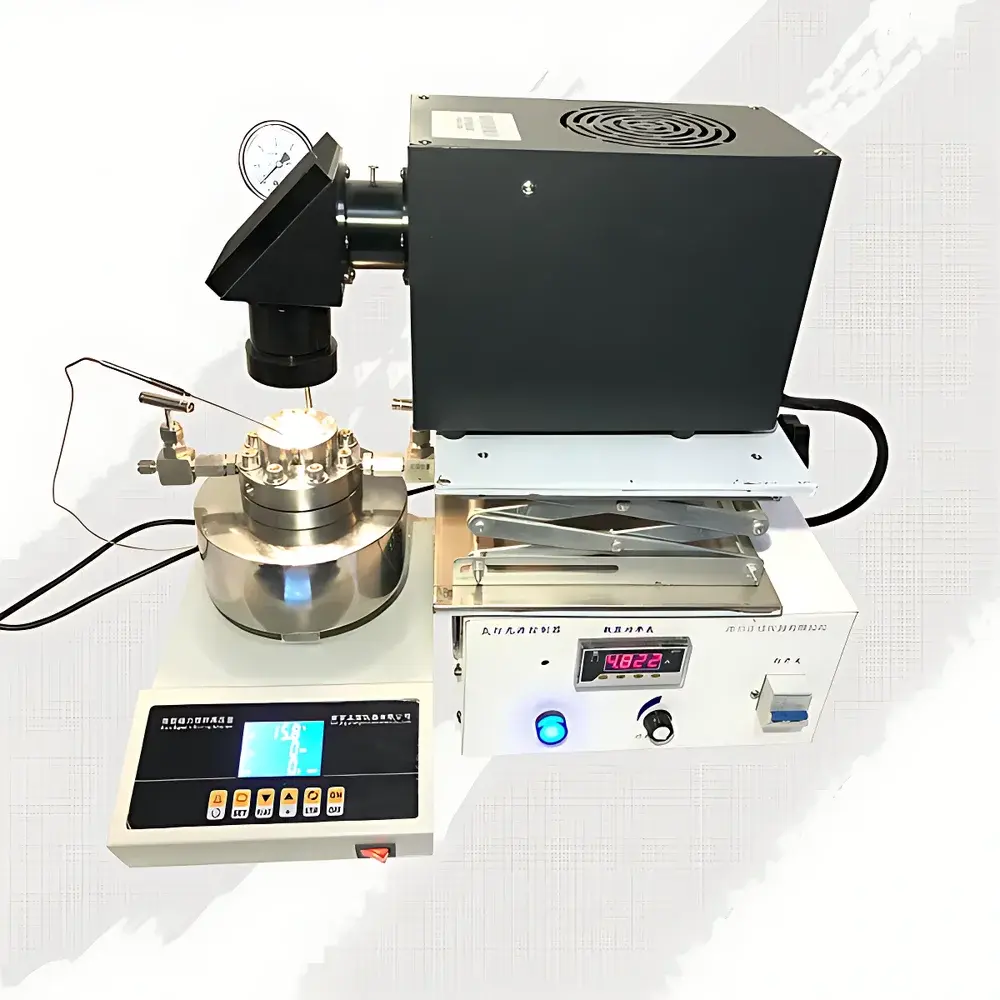
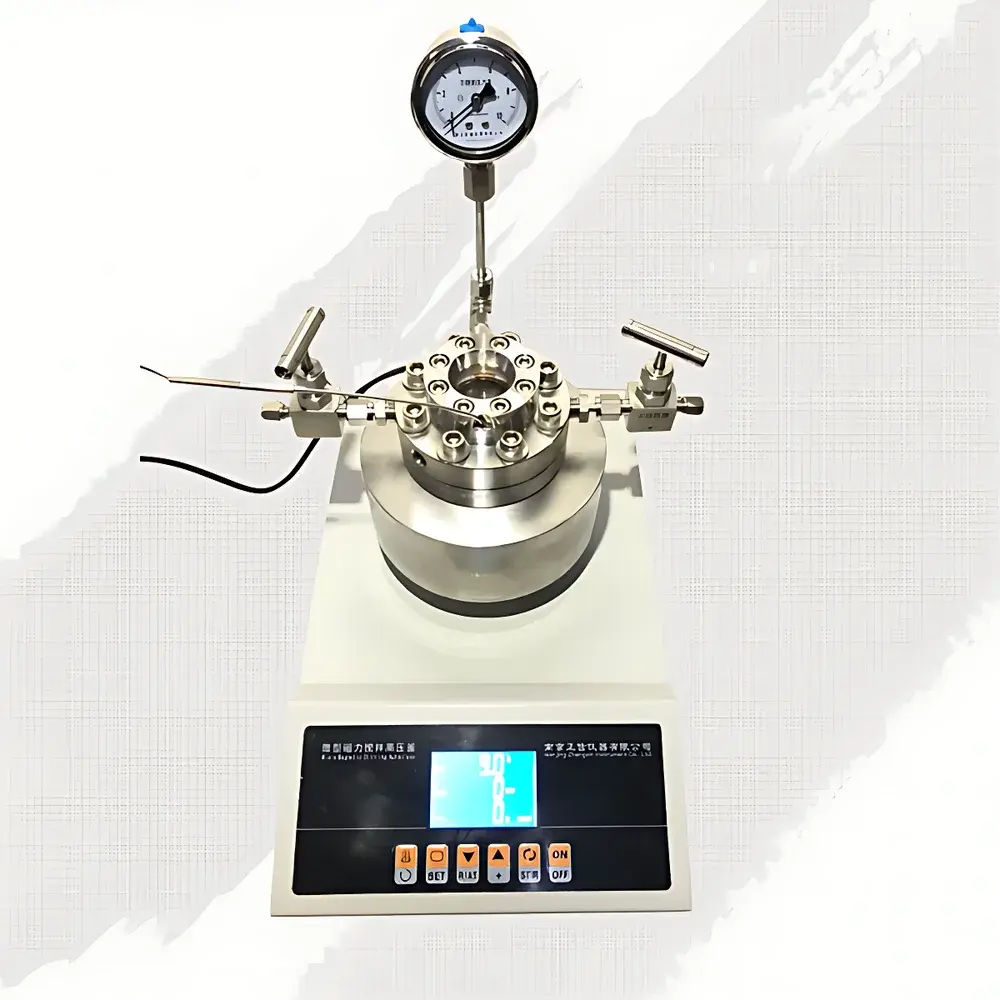
ZXYIQI EPSK-100ML Visible-Window Photocatalytic High-Pressure Reactor
| Brand | ZXYIQI |
|---|---|
| Origin | Jiangsu, China |
| Manufacturer Type | Authorized Distributor |
| Origin Category | Domestic |
| Model | EPSK-100ML |
| Price | USD 6,500 (FOB) |
| Usable Volume | 100 mL (adjustable range: 0.25–1000 mL) |
| Vessel Material | 316L Stainless Steel |
| Operating Pressure | –0.1 to 40 MPa |
| Vacuum Degree | –0.1 MPa |
| Window Material | Sapphire (standard), Quartz (optional for low-T/low-P) |
| Max. Operating Temperature | 350 °C |
| Heating Method | Embedded Modular Heater |
| Temperature Control | Dual-loop PID with K-type thermocouple (±1 °C accuracy) |
| Stirring | Magnetic suspension drive, 0–1000 rpm, bidirectional programmable |
| Sealing | Dual-stage (soft + hard metal seal) |
| Safety Features | Auto-pressure relief diaphragm (Hastelloy C-276), over-temperature/over-time audible & visual alarm, explosion-proof sapphire viewport |
| Compliance | Designed per GB/T 25982–2010 (Laboratory High-Pressure Reactors), ASME BPVC Section VIII Div. 1 design principles applied for pressure boundary components |
Overview
The ZXYIQI EPSK-100ML Visible-Window Photocatalytic High-Pressure Reactor is an engineered platform for controlled photochemical synthesis and catalytic evaluation under elevated temperature and pressure conditions. It operates on the principle of heterogeneous photocatalysis—where incident photons (primarily in the visible spectrum, 400–780 nm) excite electron–hole pairs in semiconductor catalysts (e.g., TiO₂, g-C₃N₄, or doped perovskites) immobilized within the reaction medium. The reactor’s integrated high-transmittance sapphire viewport (≥85% transmittance at 400–1100 nm, Vickers hardness ≥2000 HV) enables uniform irradiation while maintaining structural integrity up to 40 MPa and 350 °C. Unlike conventional batch reactors, the EPSK series incorporates a dual-path thermal management system and magnetically coupled stirring to eliminate shaft leakage—critical for gas-phase reactions involving CO₂, NOₓ, or CH₂O under inert or reducing atmospheres. Its modular architecture supports both fundamental kinetic studies and scalable process development aligned with ASTM E2500-18 (Guide for Specification, Design, and Verification of Pharmaceutical and Biopharmaceutical Manufacturing Systems) and ISO 14040-compliant life-cycle assessment protocols.
Key Features
- Optically optimized sapphire viewport (diameter ≥40 mm, thickness 10 mm) certified for >30,000 cycles at 30 MPa; optional quartz window available for UV-enhanced applications below 200 °C
- Dual-stage sealing system: PTFE-encapsulated metal gasket (soft seal) combined with precision-ground 316L alloy face seal (hard seal), validated per ISO 5208 leakage class A
- Intelligent dual-loop PID temperature control with independent heating/cooling channel logic—prevents thermal overshoot during exothermic photocatalytic oxidation or reduction events
- Magnetic suspension stirring mechanism using SmCo permanent magnets and brushless DC motor—rated for continuous operation at 1000 rpm under 40 MPa H₂ or CO₂ without lubricant degradation
- Hastelloy C-276 rupture disc integrated into the pressure relief path, calibrated to burst at 110% of maximum allowable working pressure (MAWP), compliant with PED 2014/68/EU Annex I essential safety requirements
- Modular heater assembly detachable from vessel body—enables rapid cooling via external heat exchanger integration or cryogenic quenching without disassembling the pressure boundary
Sample Compatibility & Compliance
The EPSK-100ML accommodates heterogeneous slurries, colloidal suspensions, and gas–liquid–solid triphasic systems—including aqueous TiO₂ dispersions, Ru-bipyridyl complexes in acetonitrile, or MOF-based CO₂ capture media. All wetted parts conform to USP Class VI biocompatibility standards; internal surface finish Ra ≤0.4 µm (electropolished 316L). Pressure containment complies with GB/T 25982–2010 and incorporates design margins consistent with ASME BPVC Section VIII Div. 1 Appendix 13 fatigue analysis. Optional GMP-ready configurations include 21 CFR Part 11–compliant electronic log generation, audit trail timestamps, and user-role access control for multi-user lab environments.
Software & Data Management
While the base unit features a local LCD interface with real-time display of T, P, rpm, and elapsed time, optional ZXYIQI ReactorLink™ firmware (v3.2+) enables USB/RS485 connectivity to Windows-based acquisition software. This software logs timestamped parameter sets at user-defined intervals (100 ms–60 s resolution), exports CSV/Excel-compatible datasets, and overlays irradiance intensity (measured via integrated Si photodiode sensor) with reaction progress curves. All data files are SHA-256 hashed and stored with immutable metadata—supporting GLP audit readiness and traceability per ISO/IEC 17025:2017 clause 7.5.2.
Applications
- CO₂ photoreduction to CH₃OH or CH₄ under simulated solar illumination (AM 1.5G) and 2–10 MPa partial pressure
- Photocatalytic NOₓ abatement in flue gas simulants (N₂/O₂/NO/CO₂ mixtures) at 150–250 °C
- Visible-light-driven formaldehyde mineralization in aqueous phase using plasmonic Ag@TiO₂ nanocomposites
- Photoelectrochemical water splitting with integrated counter-electrode feedthroughs (compatible with Pt or Ni foam electrodes)
- Kinetic isotope effect (KIE) studies using D₂O/¹³CO₂ isotopic tracers under controlled irradiance gradients
FAQ
Can the sapphire window withstand prolonged exposure to hydrofluoric acid-containing reaction mixtures?
No—sapphire is susceptible to HF etching. For such chemistries, specify PTFE or PPL-lined internal components and quartz viewport (limited to ≤200 °C and ≤10 MPa).
Is remote monitoring supported via Ethernet or Wi-Fi?
Standard configuration includes RS485; Ethernet/Wi-Fi gateway modules are available as add-on accessories (model RX-EM100) with Modbus TCP protocol support.
What validation documentation is supplied with the reactor?
Each unit ships with Factory Acceptance Test (FAT) report, pressure test certificate (hydrostatic at 1.5× MAWP), material traceability sheets (MTRs) for all pressure-retaining parts, and calibration certificates for embedded K-type thermocouples.
Can custom port layouts be fabricated based on client CAD drawings?
Yes—ZXYIQI offers OEM mechanical customization including non-standard flange patterns, additional thermowell ports, or integrated optical fiber feedthroughs (up to Ø6 mm), subject to structural FEA verification.
Does the system meet explosion protection requirements for Zone 1 hazardous areas?
The base EPSK does not carry ATEX or IECEx certification. For intrinsically safe operation in classified zones, consult ZXYIQI’s Ex-d certified enclosure retrofit kit (EPSK-EXD-100).



