
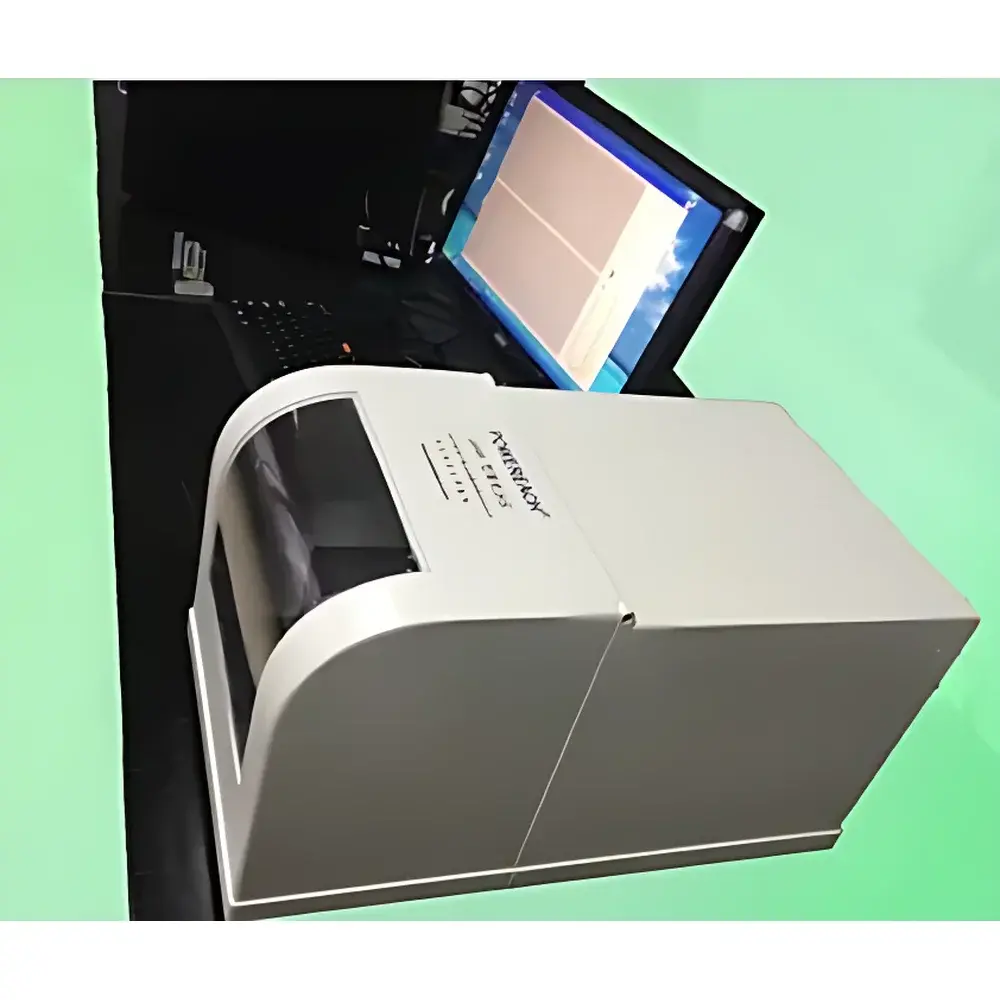
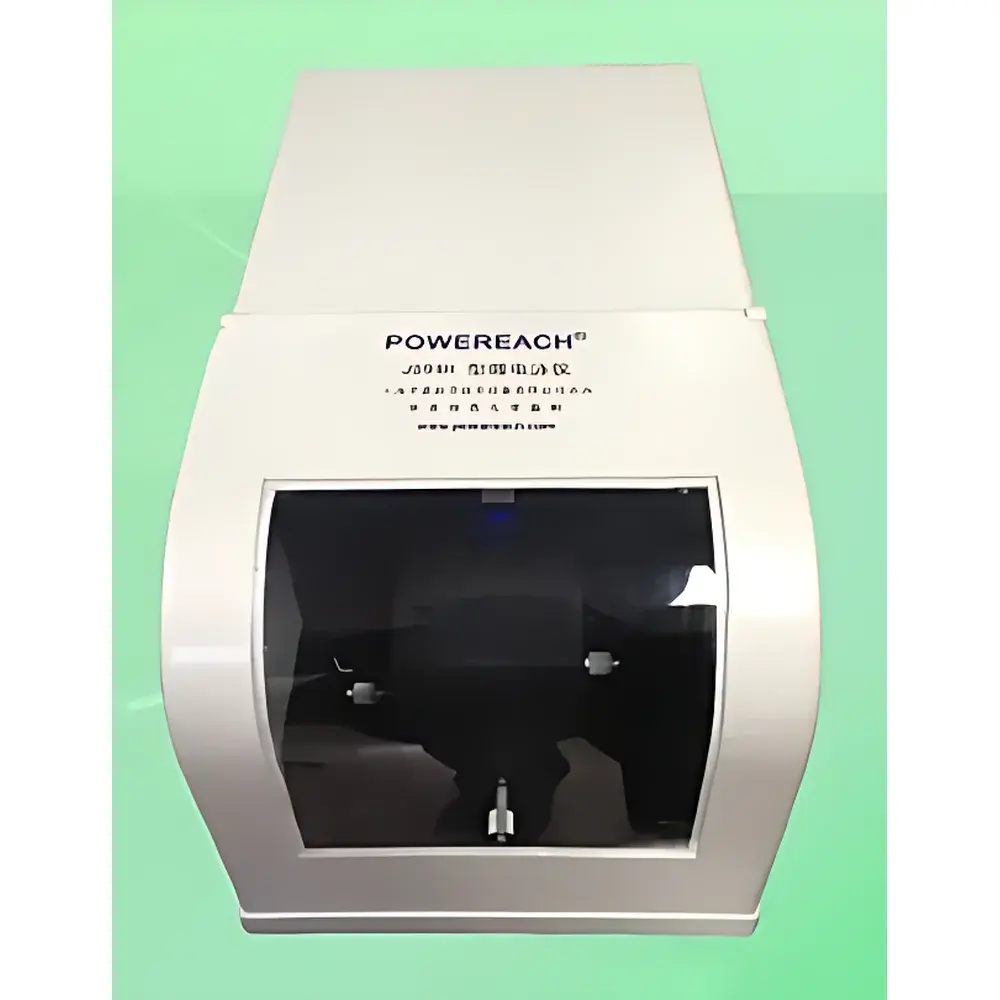
Zykx JS94HX Zeta Potential Analyzer for Flocculant Characterization
| Brand | Zykx |
|---|---|
| Model | JS94HX |
| Origin | Beijing, China |
| Type | Microelectrophoresis Instrument |
| Price Range | USD 7,000–14,000 |
| Particle Size Range | 0.5–20 µm (aqueous dispersions) |
| Zeta Potential Range | ±3000 mV |
| Measurement Accuracy | ±5% |
| pH Operating Range | 1.6–13.0 (0.1 resolution) |
| Temperature Control | 5–35 °C (±0.1 °C) |
| Sample Volume per Test | 0.5 mL |
| Optical System | Semiconductor-based blue/green LED illumination (low-power, <100 µW), 1200× magnification |
| Electrophoretic Cell | Integrated Ag/Pt/Ti electrodes in 0.5 cm-thick borosilicate glass cuvette |
| Voltage Polarity Switching | Adjustable from 0.30 to 1.20 s |
| Data Acquisition Time | 3–10 s per measurement |
| Compliance | Designed for GLP-aligned laboratory workflows |
Overview
The Zykx JS94HX Zeta Potential Analyzer is a precision microelectrophoresis instrument engineered for the quantitative characterization of interfacial electrokinetic properties in colloidal and particulate dispersions. It operates on the principle of laser Doppler electrophoresis—measuring particle velocity under a controlled electric field to calculate zeta potential (ζ) via the Henry equation and Smoluchowski approximation. This enables direct assessment of surface charge magnitude and sign at the solid–liquid interface, critical for evaluating colloidal stability, flocculation behavior, and surface functionalization efficacy. The system is specifically optimized for flocculant evaluation, where zeta potential serves as a key indicator of charge neutralization efficiency during coagulation–flocculation processes in water treatment, mineral processing, and pharmaceutical suspension formulation. Its design emphasizes reproducibility in low-volume aqueous systems (0.5–20 µm), with built-in thermal compensation and real-time environmental monitoring to minimize drift-induced uncertainty.
Key Features
- Integrated electrophoretic cell with 0.5 mm optical path quartz-glass cuvette and embedded Ag/Pt/Ti alloy electrodes—engineered for minimal polarization and high current stability across wide pH and ionic strength ranges.
- Low-power semiconductor optical system using dual-wavelength (blue and green) LEDs (<100 µW output), eliminating thermal convection artifacts while enabling high-contrast imaging of sub-micron particles at 1200× effective magnification.
- Computer-controlled bidirectional voltage switching (0.30–1.20 s polarity reversal interval), synchronized with high-speed image capture to suppress electrode polarization and improve measurement repeatability.
- Precision 3-axis alignment stage with calibrated crosshair target, ensuring accurate positioning of the measurement volume within the electroosmotic-free central region—eliminating stationary layer interference.
- Real-time temperature sampling via integrated Pt100 probe, feeding dynamic correction parameters into zeta calculation algorithms to maintain accuracy across 5–35 °C ambient conditions (±0.1 °C resolution).
- Minimal sample requirement of only 0.5 mL per analysis, with rapid cell rinsing capability and modular electrode assembly for extended service life and contamination control.
Sample Compatibility & Compliance
The JS94HX supports aqueous dispersions across broad pH (1.6–13.0, 0.1-step resolution) and conductivity ranges typical of industrial flocculant screening—e.g., polyacrylamide (PAM), polyaluminum chloride (PAC), ferric chloride, and natural coagulants such as chitosan or tannins. It accommodates suspensions containing inorganic oxides (SiO₂, Al₂O₃, Fe₃O₄), clays, activated carbon, and polymer-stabilized emulsions. The instrument’s architecture aligns with foundational standards for electrophoretic mobility measurement: ISO 13321 (Determination of particle size distribution — Part 2: Electrical sensing zone method and light scattering methods), ASTM D7826 (Standard Test Method for Zeta Potential of Colloidal Dispersions), and USP (Light Scattering and Electrophoretic Mobility). While not certified for regulated GMP production environments, its data structure—timestamped raw images, voltage logs, thermal profiles, and calculated ζ values—supports traceability in GLP-compliant research and QC laboratories.
Software & Data Management
Acquisition and analysis are performed via proprietary Windows-based software supporting automated batch processing, multi-sample comparative reporting, and export of ASCII-compatible datasets (CSV, TXT). Each measurement session records four synchronized grayscale frames (two forward, two reverse field directions), enabling vector-averaged mobility computation and outlier rejection. Software includes embedded calibration routines for mobility-to-zeta conversion using adjustable dielectric constant and viscosity inputs. All parameter settings (voltage, polarity timing, exposure duration, temperature offset) are saved with metadata. Audit trail functionality logs user ID, timestamp, instrument configuration, and manual overrides—facilitating internal validation and preparation for FDA 21 CFR Part 11–aligned review when paired with institutional electronic signature policies.
Applications
- Optimization of flocculant dosage in municipal and industrial wastewater treatment plants by correlating zeta potential shift with turbidity removal efficiency.
- Surface charge mapping of nanomaterials (e.g., TiO₂, ZnO, carbon nanotubes) before/after functionalization with polyelectrolytes or silanes.
- Stability assessment of oil-in-water emulsions in food, cosmetic, and agrochemical formulations under varying pH and salt conditions.
- Characterization of clay mineral reactivity in soil science and drilling fluid engineering, particularly regarding cation exchange capacity and swelling inhibition.
- Quality control of pigment dispersions in coatings and inkjet inks, where zeta potential directly influences shelf-life and jetting reliability.
- Research into isoelectric point (IEP) determination for protein–polymer conjugates and biohybrid nanoparticles used in targeted delivery systems.
FAQ
What dispersion media are compatible with the JS94HX?
Aqueous solutions only; non-aqueous solvents (e.g., ethanol, toluene) are not supported due to conductivity and optical refractive index constraints.
Can the instrument measure zeta potential of aggregated or flocculated samples?
Yes—provided aggregates remain suspended and within the 0.5–20 µm detection window; however, results represent ensemble average mobility and do not resolve subpopulation heterogeneity.
Is external temperature control required?
Not mandatory, but strongly recommended: measurements are most stable in a vibration-isolated, dust-free environment with ambient temperature held within ±1 °C of setpoint.
How is electrode fouling mitigated during long-term use?
Electrodes are chemically inert (Pt/Ti) and designed for periodic ultrasonic cleaning; the low-voltage, low-duty-cycle operation minimizes oxidation and deposition.
Does the software support statistical process control (SPC) charting?
Basic trend plotting is included; SPC-capable export formats (e.g., JMP, Minitab-ready CSV) allow integration with third-party quality management platforms.
Related Products



