
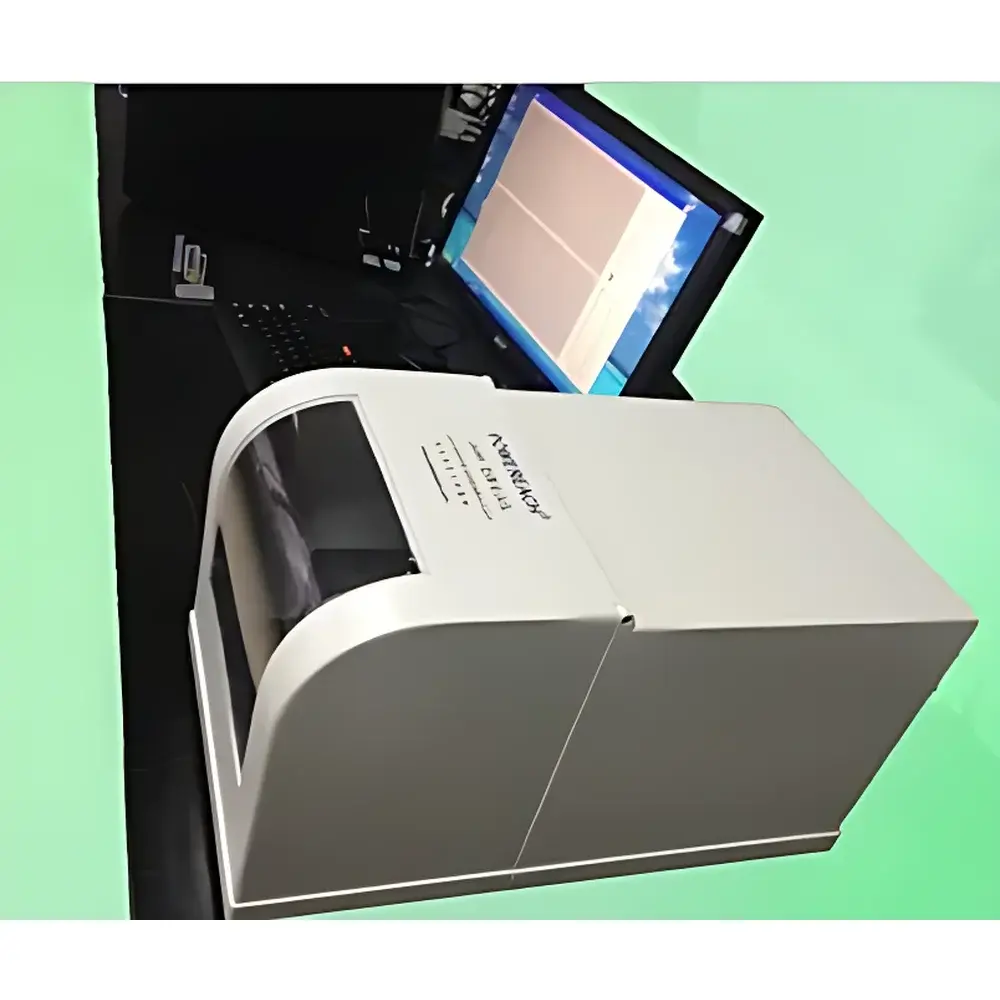
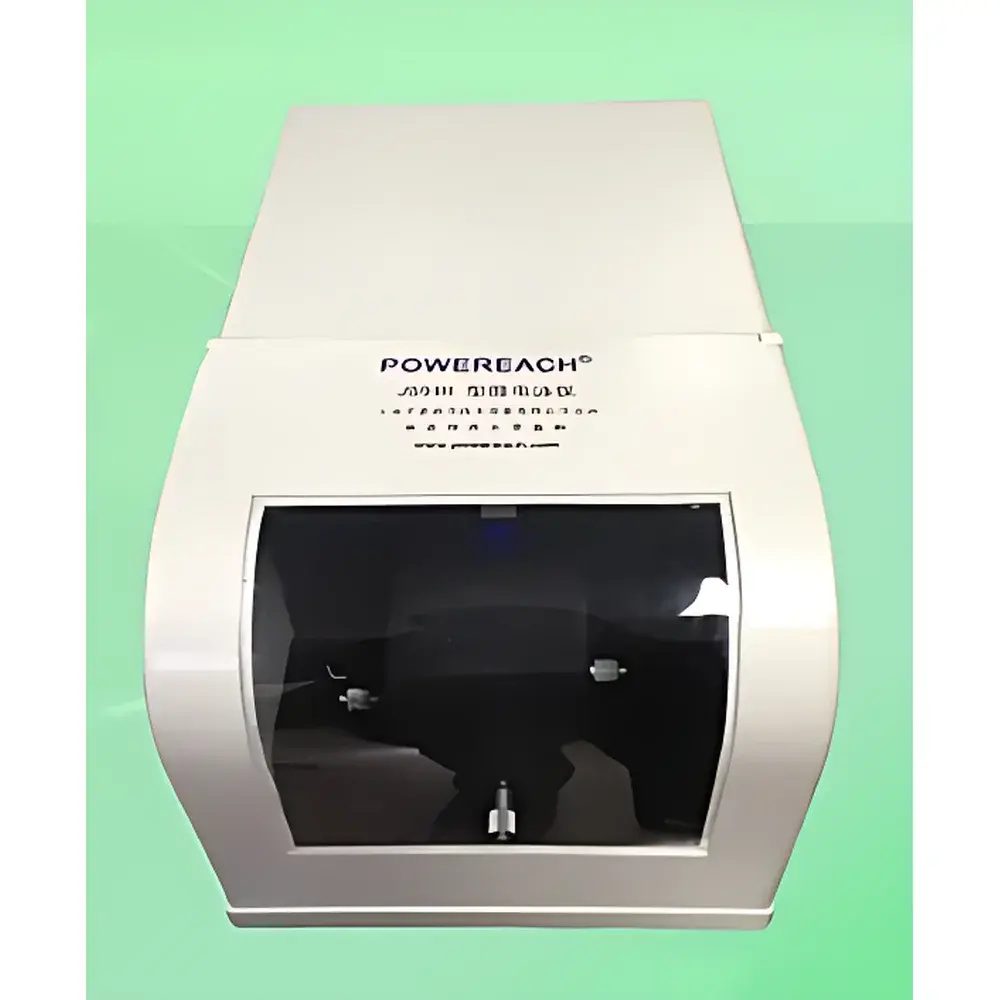
Zykx JS94KM Zeta Potential Analyzer
| Brand | Zykx |
|---|---|
| Origin | Beijing, China |
| Model | JS94KM |
| Zeta Potential Range | ±3000 mV |
| Accuracy | ±5% |
| pH Range | 0.00–14.00 |
| pH Resolution | 0.1 pH |
| Zeta Resolution | 1 mV |
| Temperature Range | −5.0 to 105.0 °C (±0.1 °C) |
| Optional Thermostatic Stage | −10 to 95 °C |
| Sample Volume per Measurement | 0.5 mL |
| Optical System | Semiconductor-based near-field blue/green LED illumination (λ ≈ 450–520 nm), 1200× digital magnification |
| Electrophoresis Cell | Integrated Ag/Pt/Ti electrodes in 0.5 cm-thick borosilicate glass cuvette |
| Voltage Polarity Switching Time | 0.30–1.20 s (adjustable) |
| Sampling Duration | 3–10 s |
| Power Supply | 220 V AC, 50 Hz, 150 W |
| Compliance | Designed for GLP-aligned operation |
Overview
The Zykx JS94KM Zeta Potential Analyzer is a precision electrophoretic instrument engineered for the quantitative determination of surface charge characteristics at solid–liquid and liquid–liquid interfaces. It operates on the principle of laser Doppler microelectrophoresis combined with high-resolution video microscopy, enabling direct observation and velocity tracking of dispersed particles or droplets under controlled electric fields. By measuring electrophoretic mobility and applying the Henry equation (with Smoluchowski or Hückel approximations as appropriate), the system calculates zeta potential values across a broad dynamic range (±3000 mV). This capability is essential for characterizing colloidal stability, predicting aggregation behavior, optimizing formulation pH, and investigating interfacial reaction mechanisms in aqueous and non-aqueous dispersions. The JS94KM is particularly suited for R&D laboratories and QC environments where reproducible, sample-efficient analysis of submicron to micrometer-scale particles (0.2–50 µm) is required—without reliance on proprietary reagents or consumables.
Key Features
- Integrated electrophoresis cell with embedded Ag/Pt/Ti electrodes housed in a 0.5 mm wall-thickness borosilicate glass cuvette—designed to minimize electro-osmotic flow and eliminate static layer artifacts.
- Near-field optical system utilizing low-power semiconductor LEDs (blue/green spectrum, ~450–520 nm) to reduce thermal perturbation and enhance contrast for particles down to 200 nm; achieves effective digital magnification up to 1200×.
- Real-time dual-directional image capture: four synchronized grayscale frames per measurement cycle enable robust particle velocity vector calculation and statistical validation of mobility distribution.
- Programmable voltage polarity switching (0.30–1.20 s interval) with adjustable field strength—minimizes electrode polarization while maintaining measurement repeatability and reducing analysis time to 3–10 seconds per run.
- High-precision temperature monitoring via immersed Pt100 probe; automatic compensation applied to mobility-to-zeta conversion algorithms in accordance with IUPAC-recommended dielectric constant and viscosity models.
- Modular thermostatic stage option (−10 to 95 °C) supports kinetic studies and temperature-dependent zeta profiling under ISO 13321 and ASTM D7826 guidelines.
Sample Compatibility & Compliance
The JS94KM accommodates aqueous and polar organic dispersions—including suspensions of metal oxides, polymer nanoparticles, liposomes, protein aggregates, and emulsion droplets—within the specified size range (0.2–50 µm). Its low sample volume requirement (0.5 mL per measurement) reduces material cost and waste generation, supporting sustainable lab practices. The instrument’s design aligns with foundational metrological standards for colloidal characterization: measurements are traceable to NIST-certified reference materials (e.g., polystyrene latex standards), and its operational parameters satisfy the reporting requirements of ISO 21785 (colloidal stability assessment) and USP (subvisible particle evaluation in parenterals). While not inherently 21 CFR Part 11-compliant out-of-the-box, the system supports audit-trail-enabled software configurations suitable for GMP-regulated environments when deployed with validated third-party data management platforms.
Software & Data Management
The analyzer is operated via Windows-based acquisition and analysis software featuring intuitive workflow navigation, real-time image preview, and automated mobility histogram generation. Raw image sequences, temperature logs, voltage profiles, and calculated zeta distributions are stored in vendor-neutral HDF5 format with embedded metadata (timestamp, operator ID, calibration status, environmental conditions). Export options include CSV, PDF reports, and XML-compatible datasets compatible with LIMS integration. Calibration routines include built-in verification using certified standard particles and user-defined reference buffers. Software updates follow a documented change control process compliant with ISO/IEC 17025 Clause 5.9, and version history is retained for full traceability during internal audits.
Applications
- Formulation development in pharmaceuticals (e.g., nanoparticle drug carriers, biologics stability screening)
- Surface modification optimization in advanced ceramics and pigment manufacturing
- Colloidal stability assessment of inkjet inks, coatings, and functional nanocomposites
- Environmental fate modeling of engineered nanomaterials in aquatic systems
- Teaching laboratory implementation for physical chemistry, colloid science, and materials engineering curricula
- Quality control of surfactant efficacy in personal care products and agrochemical emulsions
FAQ
What dispersion media are compatible with the JS94KM?
Aqueous buffers, saline solutions, ethanol/water mixtures, and other low-conductivity polar solvents are supported. High-ionic-strength media (>100 mM) may require dilution or use of specialized low-field protocols to maintain measurement fidelity.
Is the instrument suitable for non-spherical particles or aggregated systems?
Yes—the video-based tracking method does not assume spherical geometry; however, reported zeta values represent an ensemble average mobility-weighted surface charge, and interpretation should account for shape-induced electrophoretic retardation effects.
Can the system perform isoelectric point (IEP) titrations?
Yes. Automated pH titration mode allows sequential zeta measurement across a defined pH gradient (0.00–14.00), with interpolation of the IEP from the zero-crossing point of the zeta vs. pH curve.
Does the JS94KM support multi-sample batch processing?
Manual sample exchange is required between runs; however, the software permits pre-configured measurement templates and post-acquisition batch analysis of imported datasets.
What maintenance is required for long-term operational reliability?
Routine cleaning of the electrophoresis cell with deionized water and mild detergent is recommended after each use; electrode integrity checks and optical alignment verification should be performed quarterly or per ISO/IEC 17025 internal quality schedule.



