
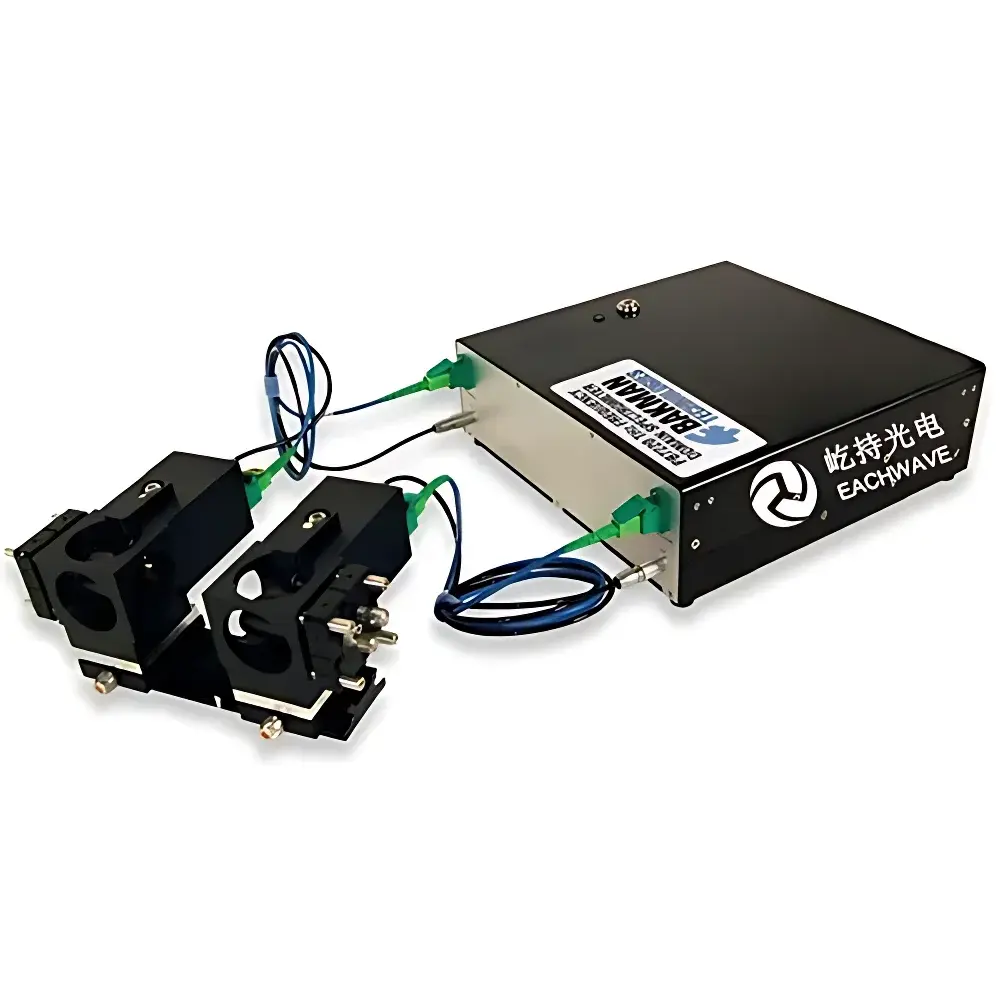
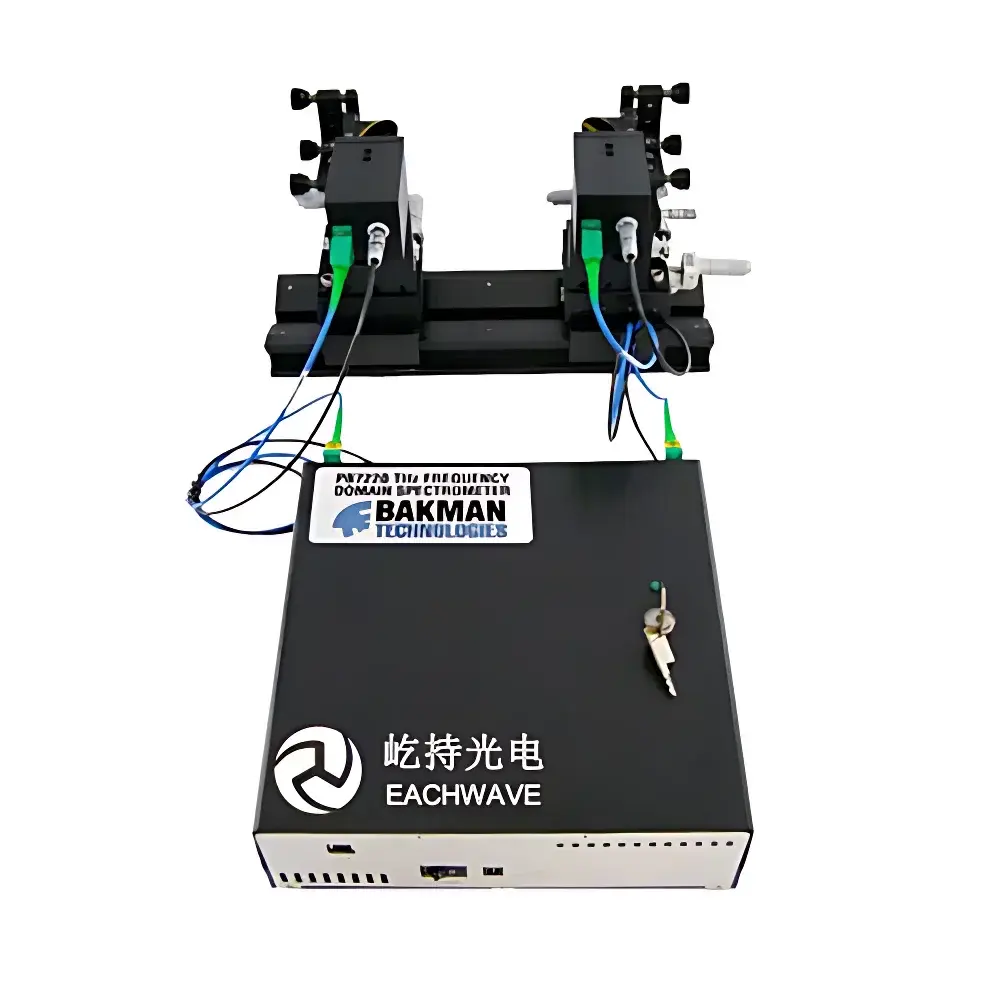
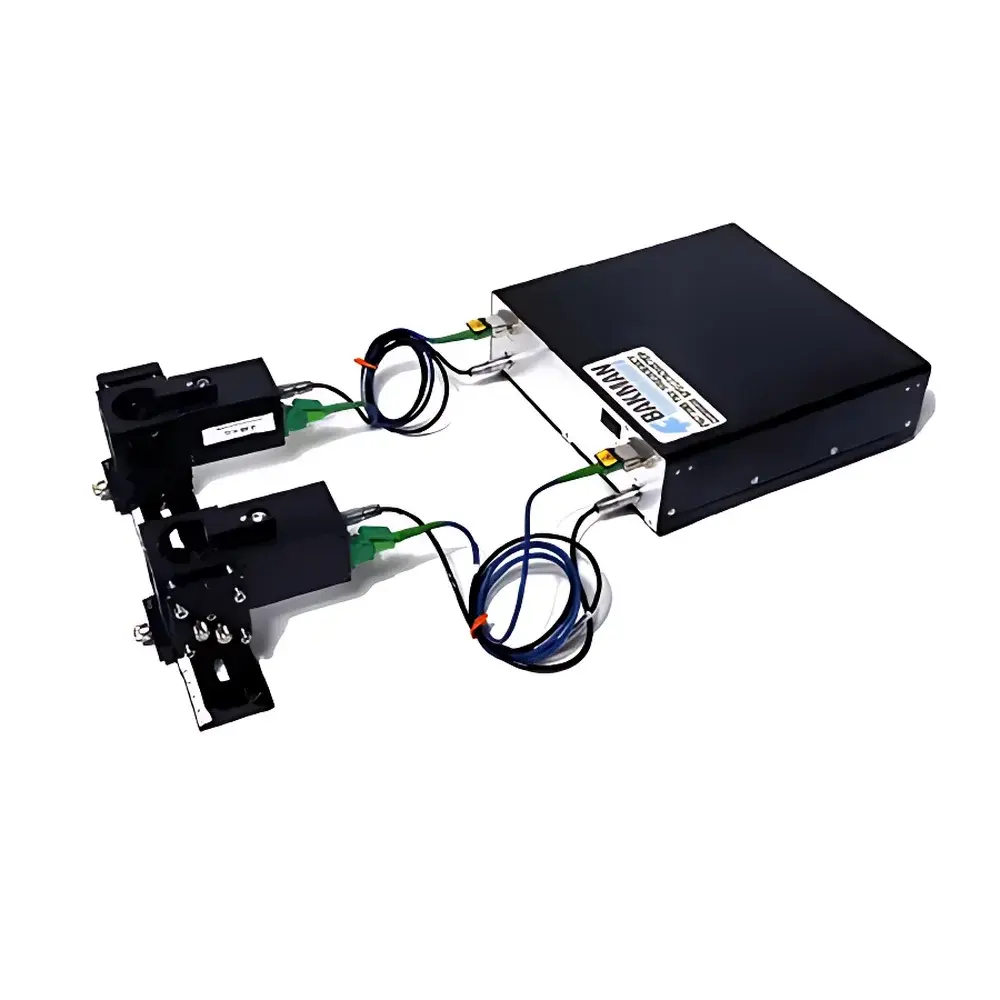
Brookman PB7220-2000-T Terahertz Frequency-Domain Spectrometer
| Brand | Brookman |
|---|---|
| Origin | USA |
| Manufacturer Type | Authorized Distributor |
| Import Status | Imported |
| Model | PB7220-2000-T |
| Pricing | Available Upon Request |
| System Bandwidth | 1.7–2.1 THz |
| Spectral Resolution | 0.1–5 GHz |
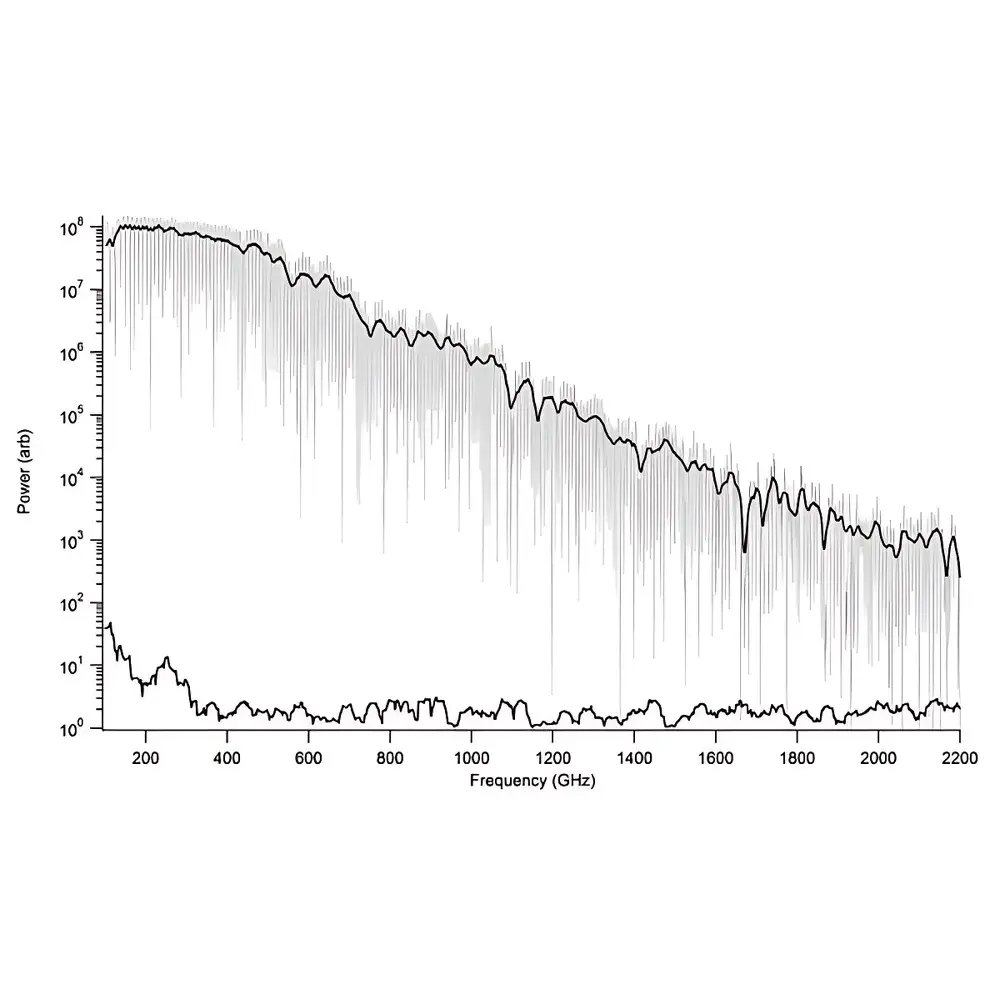
| Dynamic Range | 70 dB (at 100 GHz), 45 dB (at 1 THz), 40 dB (at 2 THz) |
| THz Beam Diameter (FWHM @ 0.5 THz) | 12 mm |
| Optical Path Length | 25 cm |
| Tuning Speed | 10 GHz/s |
| Electronic Chopper Frequency | 6 kHz |
| Dual-Channel Operation | Transmission + Reflection/Scattering Simultaneously |
Overview
The Brookman PB7220-2000-T Terahertz Frequency-Domain Spectrometer (THz-FDS) is a precision-engineered instrument designed for high-resolution, continuous-wave (CW) terahertz spectroscopy in the 1.7–2.1 THz range. Unlike time-domain systems that rely on ultrafast pulsed lasers and time-gated detection, this frequency-domain platform employs photomixing-based generation and coherent heterodyne detection using fiber-coupled distributed feedback (DFB) laser diodes. The system operates on the principle of optical heterodyning: two near-infrared DFB lasers—tuned with sub-MHz stability—are combined in a photoconductive antenna to generate monochromatic THz radiation via difference-frequency generation. This architecture delivers intrinsic narrow-linewidth emission, enabling direct, stepwise or continuous frequency sweeps with resolution down to 100 MHz (0.1 GHz), significantly exceeding the effective resolution limits of typical THz-TDS systems limited by time-window truncation and Fourier transform artifacts.
Key Features
- Dual-channel architecture supporting simultaneous transmission and reflection/scattering measurements—enabling real-time comparative analysis of complex sample geometries without reconfiguration;
- Fiber-coupled, butterfly-packaged DFB laser sources with active temperature and current stabilization, ensuring long-term frequency repeatability (< ±10 MHz over 8 h) and drift-compensated spectral calibration;
- Integrated photomixing emitter and detector antennas optimized for >70 dB dynamic range at 100 GHz, maintaining >40 dB sensitivity across the full 2.1 THz bandwidth;
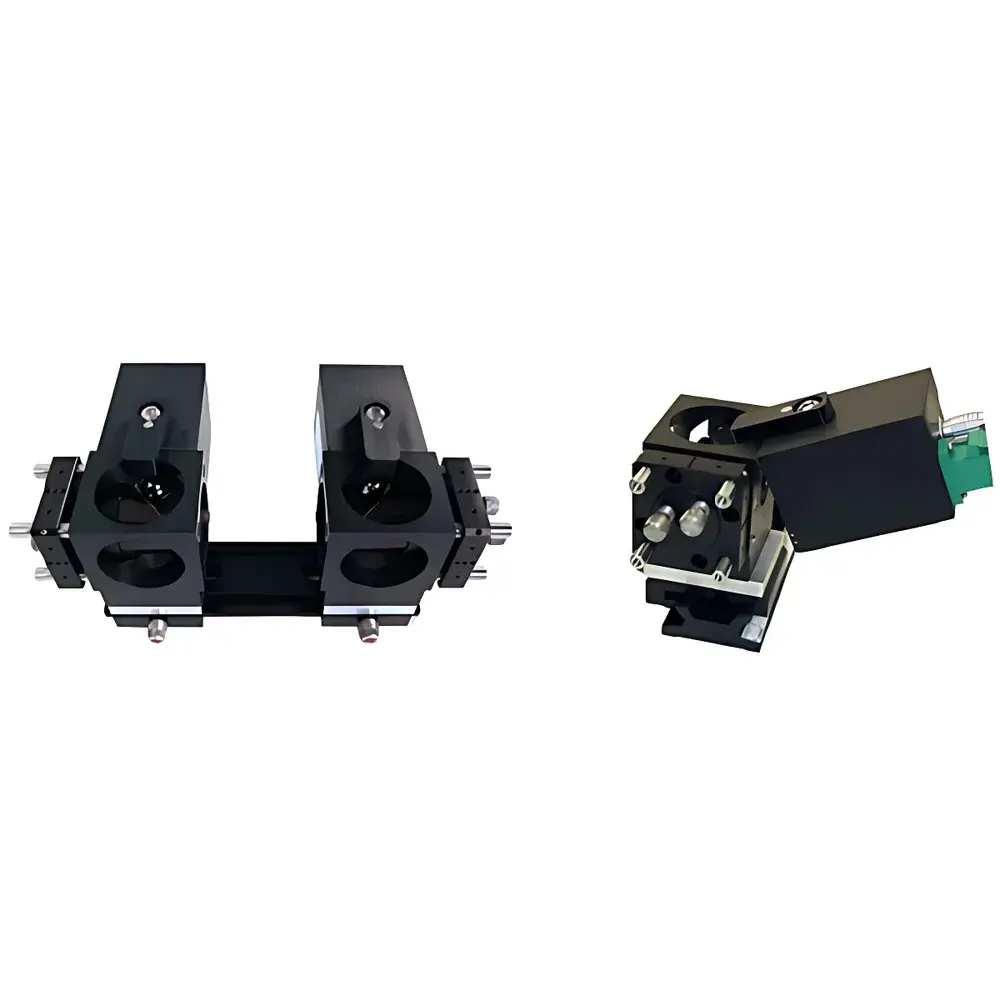
- Modular optical layout with adjustable THz beam path (25 cm fixed baseline), compatible with standard optomechanical mounts for custom collimation, focusing, or angle-resolved reflectometry setups;
- Real-time electronic chopper synchronization at 6 kHz, coupled with lock-in detection to suppress 1/f noise and ambient thermal background—critical for low-absorption gas-phase spectroscopy (e.g., atmospheric H2O vapor lines);
- One-button startup operation via embedded FPGA-controlled hardware interface, minimizing user-dependent alignment and calibration steps.
Sample Compatibility & Compliance
The PB7220-2000-T accommodates solid, liquid, and gaseous samples in transmission, reflection, or quasi-specular scattering configurations. Its 12-mm FWHM beam diameter at 0.5 THz enables uniform illumination of macroscopic specimens (e.g., pharmaceutical tablets, polymer films, semiconductor wafers) while retaining sufficient spatial resolution for microstructured metamaterials. For regulatory environments, the system supports audit-ready data acquisition compliant with 21 CFR Part 11 when deployed with optional validated software modules—including electronic signatures, change control logs, and secure user role management. All spectral metadata (laser wavelength, bias voltage, chopper phase, ambient temperature/pressure) are automatically embedded in HDF5-formatted output files, satisfying ISO/IEC 17025 documentation requirements for accredited testing laboratories.
Software & Data Management
Control and analysis are performed via the proprietary THz-SpectraSuite software suite (v4.2+), built on Qt/C++ with Python API support. The interface provides real-time spectrum visualization, automated peak identification against NIST THz spectral databases (e.g., HITRAN-derived water vapor line lists), and batch-processing workflows for multi-sample comparative studies. Raw interferograms (if acquired in hybrid mode) and calibrated absorbance/transmittance/reflection spectra are stored in vendor-neutral HDF5 containers, preserving provenance, instrument configuration, and environmental context. Export options include CSV, MATLAB .mat, and ASCII formats compatible with third-party chemometric tools (e.g., Unscrambler, Python scikit-learn). Data integrity is enforced through SHA-256 hashing of all acquired datasets and timestamped digital signatures aligned to UTC/NIST time servers.
Applications
- High-resolution rotational spectroscopy of polar gases (H2O, NH3, CH3OH) for atmospheric science and industrial process monitoring;
- Non-destructive evaluation of crystallinity, hydration state, and polymorphic composition in pharmaceutical dosage forms;
- Carrier dynamics and mobility mapping in 2D materials (graphene, TMDCs) and epitaxial semiconductor heterostructures;
- Security screening: identification of concealed explosives and illicit narcotics via characteristic phonon-mode absorption fingerprints;
- Quality assurance of dielectric coatings, multilayer packaging films, and aerospace composites under controlled humidity/temperature conditions.
FAQ
How does frequency-domain THz spectroscopy differ from time-domain (THz-TDS) in practice?
Frequency-domain systems like the PB7220-2000-T provide superior spectral resolution (≤100 MHz) and absolute frequency accuracy traceable to atomic clock-referenced lasers—making them preferred for quantitative gas-phase analysis and metrology applications where line shape fidelity is critical.
Can the system be integrated into an existing vacuum or cryogenic setup?
Yes—the fiber-coupled emitter/detector design allows feedthrough-compatible mounting; optional vacuum-compatible THz windows (HR-silicon, TPX) and cryostat-integrated sample stages are available as OEM accessories.
Is GLP/GMP-compliant validation documentation available?
Full IQ/OQ/PQ protocols, traceable calibration certificates (NIST-traceable power meters and wavemeters), and software validation reports (per ASTM E2500-13) are provided upon request for regulated environments.
What maintenance is required for long-term operational stability?
Annual laser wavelength recalibration and antenna responsivity verification are recommended; no consumables or periodic alignment adjustments are needed due to monolithic fiber-pigtailed architecture.
Does the system support external triggering or synchronization with other instruments?
Yes—TTL-compatible trigger I/O ports enable precise synchronization with pump-probe lasers, RF sources, or environmental chambers for time-resolved or stimulus-coupled measurements.
Related Products





