
TSE MotoRater System – Modular High-Speed 3D Gait and Kinematic Assessment Platform for Rodents
| Brand | TSE Systems |
|---|---|
| Origin | Germany |
| Model | TSE MotoRater System |
| Application Scope | Quantitative kinematic gait analysis, locomotor behavior phenotyping, neuromuscular function assessment in rats and mice |
| Imaging Configuration | Multi-angle synchronized high-speed video capture (ventral + bilateral views) |
| Tracking Method | Color-based markerless or marker-assisted anatomical point tracking |
| Output Metrics | Joint angle kinetics, stride parameters, inter-limb coordination, trunk/tail kinematics, swim stroke dynamics |
| Compliance | Designed to support GLP-compliant preclinical studies |
Overview
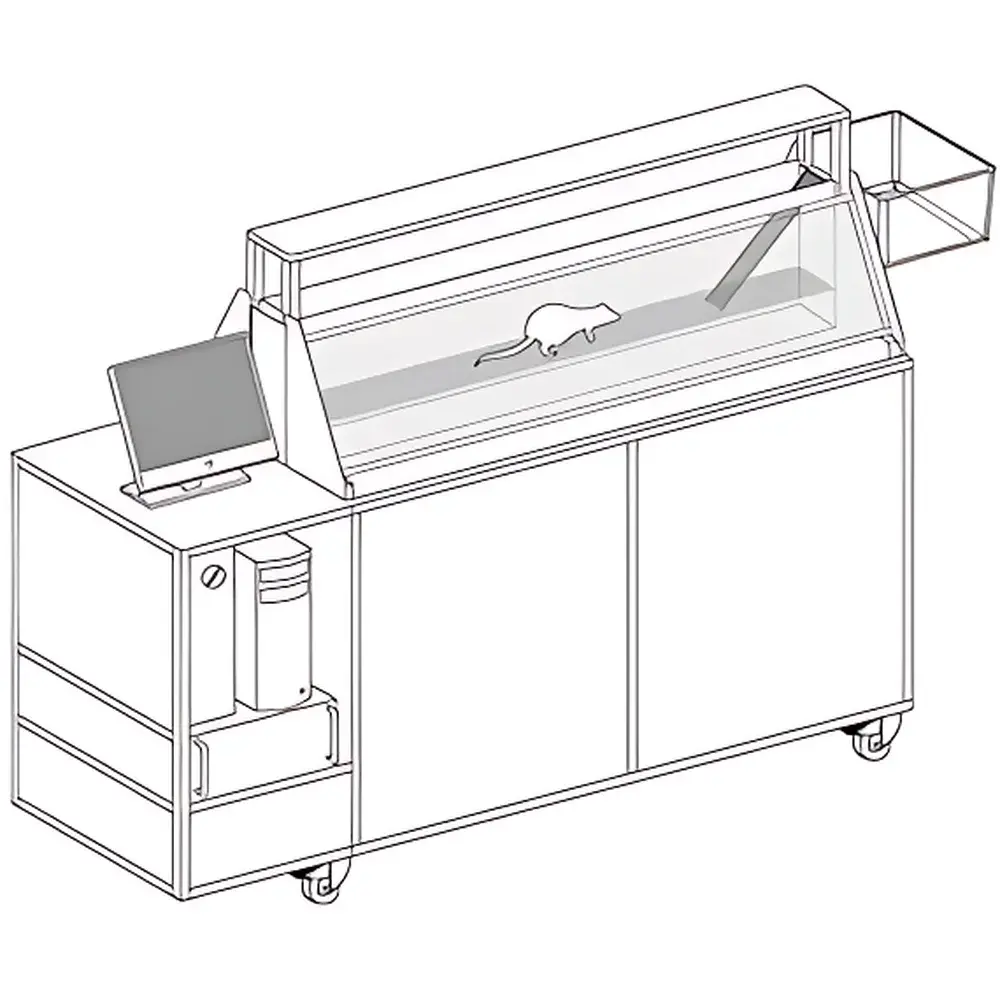
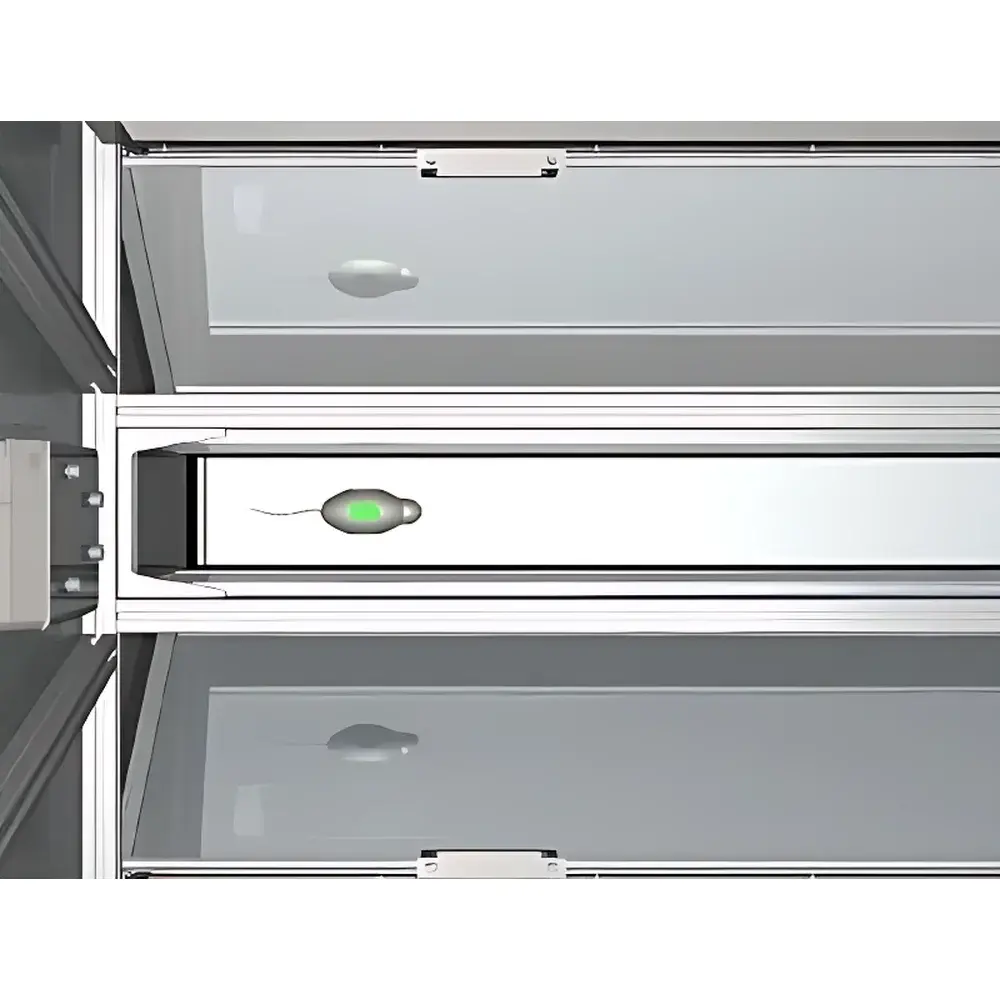
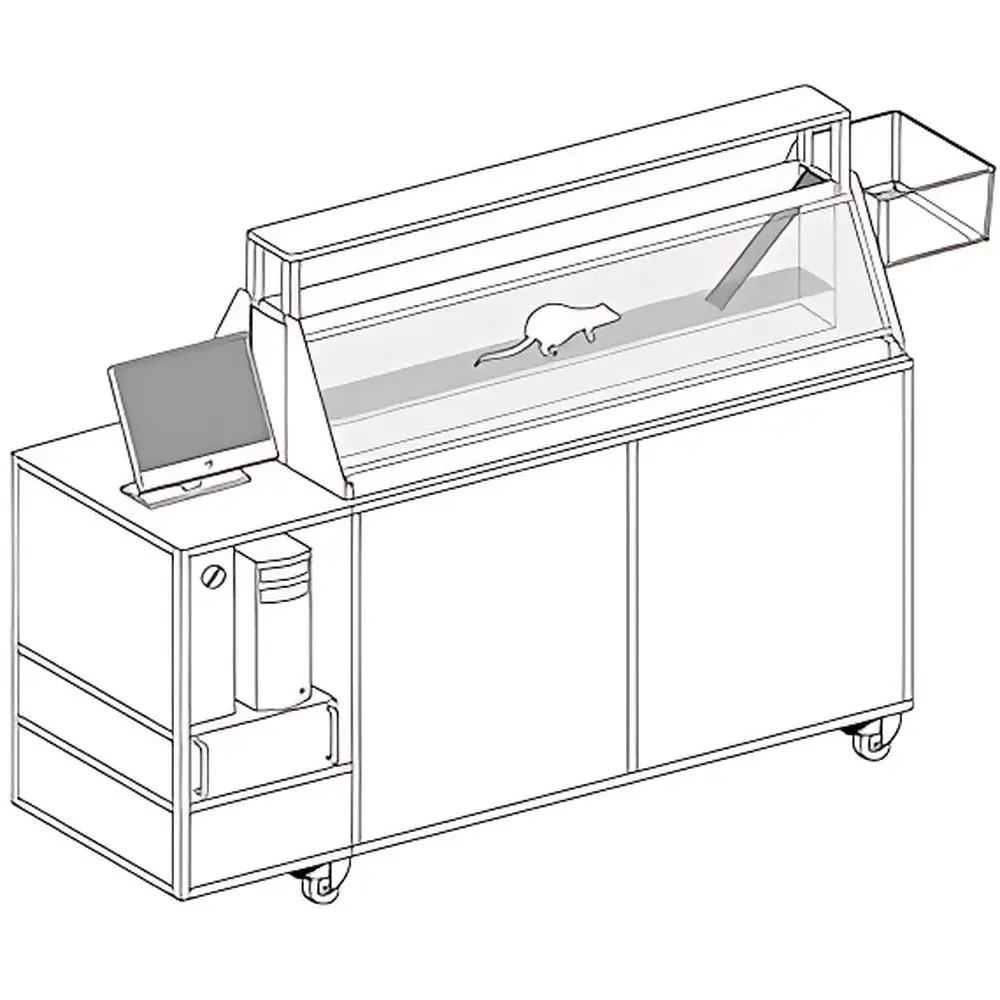
The TSE MotoRater System is a modular, high-speed 3D kinematic assessment platform engineered for standardized, objective, and quantitative evaluation of locomotor function in laboratory rodents. Unlike conventional scoring-based behavioral assays, the MotoRater employs synchronized multi-view high-speed videography—capturing ventral and bilateral perspectives simultaneously via calibrated mirror arrays—to reconstruct full-body movement trajectories in three dimensions. Its core measurement principle relies on anatomically informed motion tracking: using color-contrast or retroreflective markers placed at defined skeletal landmarks (e.g., iliac crest, knee joint, metatarsophalangeal joint, tail base), the system computes time-resolved positional data at frame rates up to 200 fps. This enables derivation of biomechanically relevant parameters—including stride length, stance/swing phase duration, interlimb coupling symmetry, joint flexion/extension angles, pelvic rotation amplitude, and tail oscillation frequency—without manual frame-by-frame annotation. The system is explicitly designed for longitudinal monitoring of motor deficits, recovery progression, or therapeutic intervention effects in models of spinal cord injury, Parkinson’s disease, cerebellar ataxia, peripheral neuropathy, and muscular dystrophy.
Key Features
- Modular test arena configuration supporting diverse locomotor paradigms: horizontal ladder traversal, narrow beam walking, open-field ambulation, shallow-water treadmill locomotion, and free-swim assessment—all within a single integrated hardware framework.
- Multi-angle optical setup with precision-machined mirror assemblies enabling simultaneous acquisition from ventral and left/right lateral planes without animal repositioning or camera recalibration.
- Real-time color-based tracking engine capable of resolving ≥12 anatomical points per subject, including forelimb (carpometacarpal, elbow), hindlimb (hip, knee, ankle, toe), pelvis (iliac crest), spine (thoracic/lumbar vertebrae), and tail segments.
- Automated gait event detection aligned with biomechanical definitions (e.g., initial contact, terminal swing, double support phase) per limb, compliant with established rodent gait nomenclature (e.g., ASB Gait Standards).
- Embedded calibration workflow with physical reference grid and dynamic distortion correction, ensuring sub-millimeter spatial accuracy across all imaging planes.
- Single-operator workflow architecture: full experimental session—from arena setup and animal acclimation to video capture, marker identification, and parameter extraction—executed by one trained technician.
Sample Compatibility & Compliance
The MotoRater System is validated for use with Sprague-Dawley and Wistar rats (150–500 g) and C57BL/6, BALB/c, and CD-1 mice (18–40 g). It accommodates both naïve and surgically/manipulated cohorts, including animals with implanted telemetry devices or external harnesses. All hardware components comply with IEC 61000-6-3 (EMC emissions) and IEC 61000-6-2 (immunity) standards. Software architecture supports audit trail generation, electronic signature integration, and user-access-level controls—enabling alignment with FDA 21 CFR Part 11 requirements for regulated preclinical studies. Data export formats (CSV, HDF5, C3D) conform to FAIR principles and are interoperable with MATLAB, Python (SciPy, OpenSim), and commercial biomechanics platforms.
Software & Data Management
The proprietary MotoRater Analysis Suite provides a unified interface for session management, trajectory reconstruction, parameter computation, and statistical visualization. Raw video streams are stored with embedded metadata (frame rate, lens distortion coefficients, lighting conditions, animal ID). The software implements automated outlier rejection based on kinematic plausibility thresholds (e.g., joint angle velocity > physiological limits) and supports manual correction of mis-tracked points using spline interpolation. Batch processing enables parallel analysis of ≥20 subjects per session. Exported datasets include timestamp-synchronized kinematic time series, gait cycle segmentation matrices, and inter-animal comparative reports formatted for ANOVA or mixed-effects modeling. All processing pipelines are version-controlled and reproducible via script-based execution (Python API available).
Applications
- Preclinical quantification of motor impairment severity and temporal evolution in neurodegenerative disease models (e.g., MPTP-induced parkinsonism, SOD1-G93A ALS mice).
- Evaluation of rehabilitative interventions including pharmacological agents, cell therapies, or neuromodulation protocols targeting corticospinal tract plasticity.
- Phenotypic screening of genetically modified rodent lines exhibiting subtle locomotor abnormalities undetectable by observational scoring.
- Biomechanical validation of orthopedic implants or nerve grafts through dynamic load-sharing and gait symmetry analysis.
- Swim kinematics profiling in depression/anxiety models, where altered stroke efficiency and propulsion asymmetry serve as translational biomarkers.
FAQ
What species and weight ranges are supported by the MotoRater System?
The system is optimized for rats (150–500 g) and mice (18–40 g), with arena modules and tracking sensitivity calibrated for these size classes.
Can the system operate without physical markers?
Yes—color-contrast tracking leverages natural fur/skin contrast; however, marker-assisted mode improves robustness in low-contrast strains (e.g., albino mice) or under variable lighting.
Is synchronization with electrophysiology or EMG possible?
Hardware trigger inputs support TTL synchronization with external devices (e.g., neural loggers, EMG amplifiers); timestamps are embedded into video metadata for post-hoc alignment.
How is system validation performed prior to study initiation?
TSE provides a traceable geometric calibration protocol using NIST-traceable grids, plus kinematic validation using robotic motion phantoms with known joint trajectories.
Does the software support GLP audit requirements?
Yes—the Analysis Suite generates immutable audit logs covering user actions, parameter changes, data exports, and software version history, meeting OECD GLP Annex III and ISO/IEC 17025 documentation standards.
Related Products



