
Agilent 7650A Automatic Liquid Sampler (ALS) for GC and GC/MS Systems
| Brand | Agilent Technologies |
|---|---|
| Origin | Shanghai, China |
| Manufacturer Type | Original Equipment Manufacturer (OEM) |
| Regional Classification | Domestic (China-manufactured) |
| Model | 7650A |
| Instrument Type | Gas Chromatography Autosampler |
| Maximum Sample Capacity | 50 vials |
| Syringe Options | 250 µL and 500 µL |
| Injection Modes | Single and Multi-injection |
| Priority Sample Insertion | Supported |
| Sample Overlap Capability | Yes |
| Needle Alignment | Fully Automated |
| Needle Illumination | Integrated LED lighting for visual verification and method development |
| Injection Technique | Fast, low-discrimination liquid-phase injection optimized for external standard calibration |
Overview
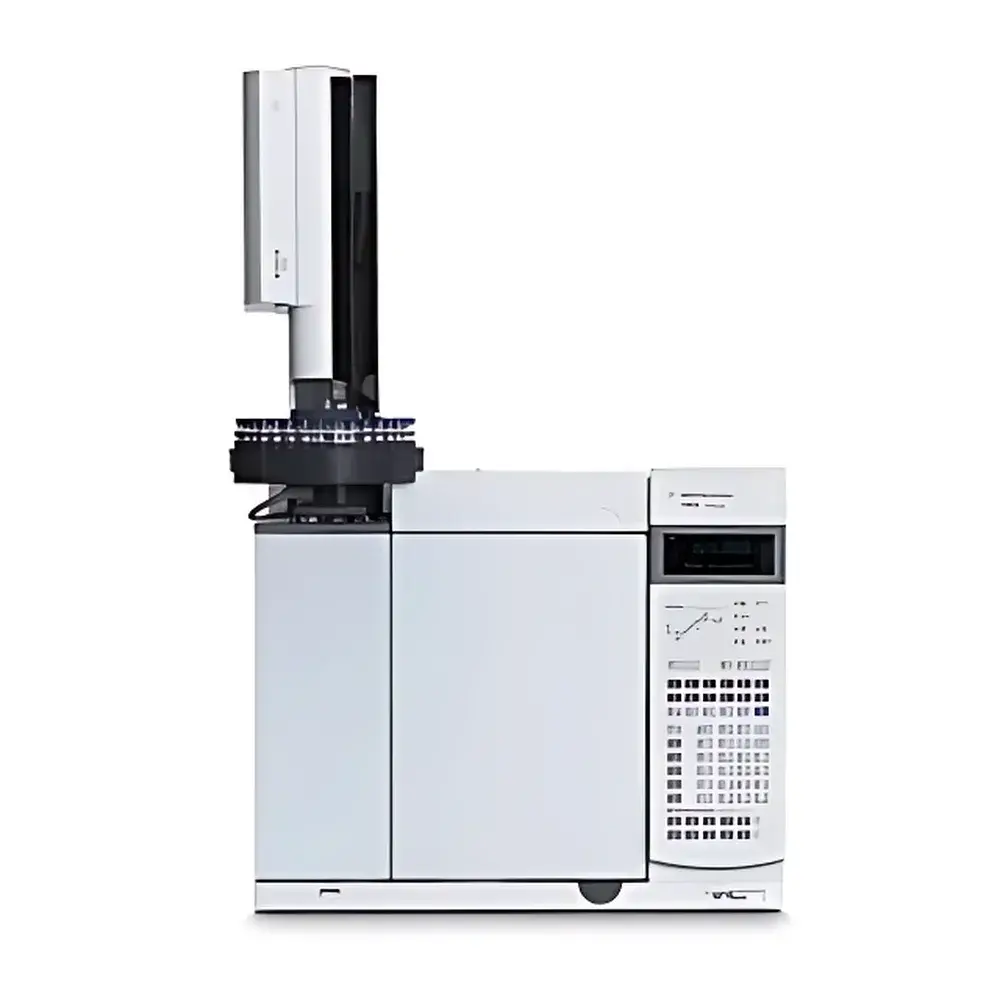
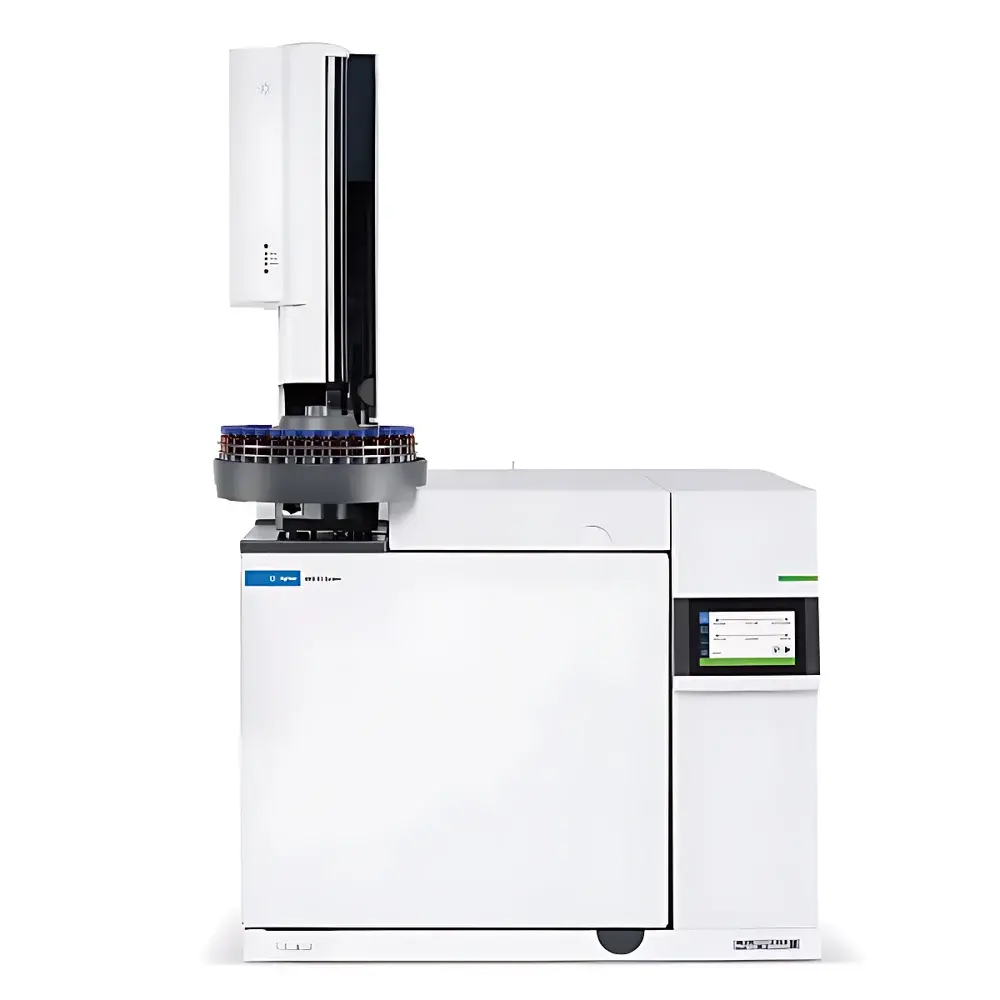
The Agilent 7650A Automatic Liquid Sampler (ALS) is a precision-engineered autosampling solution designed exclusively for integration with Agilent gas chromatography (GC) and gas chromatography–mass spectrometry (GC/MS) platforms. Built upon Agilent’s proprietary motion control architecture and thermal management design, the 7650A executes reproducible, low-memory liquid injections using syringe-based aspiration and dispense mechanics governed by precise stepper-motor actuation and pressure-compensated plunger positioning. Its core operational principle relies on programmable sequence execution with real-time coordination between the sampler and GC oven/valve timing—enabling sample overlap: the system aspirates and conditions the next vial while the current injection is undergoing chromatographic separation. This concurrency minimizes idle time and maximizes instrument utilization without compromising injection accuracy or carryover performance. The 7650A adheres to fundamental GC sampling requirements defined in ASTM D3699 (hydrocarbon analysis), ISO 17025-compliant laboratory workflows, and supports audit-ready operation under GLP and GMP environments when paired with compliant data systems.
Key Features
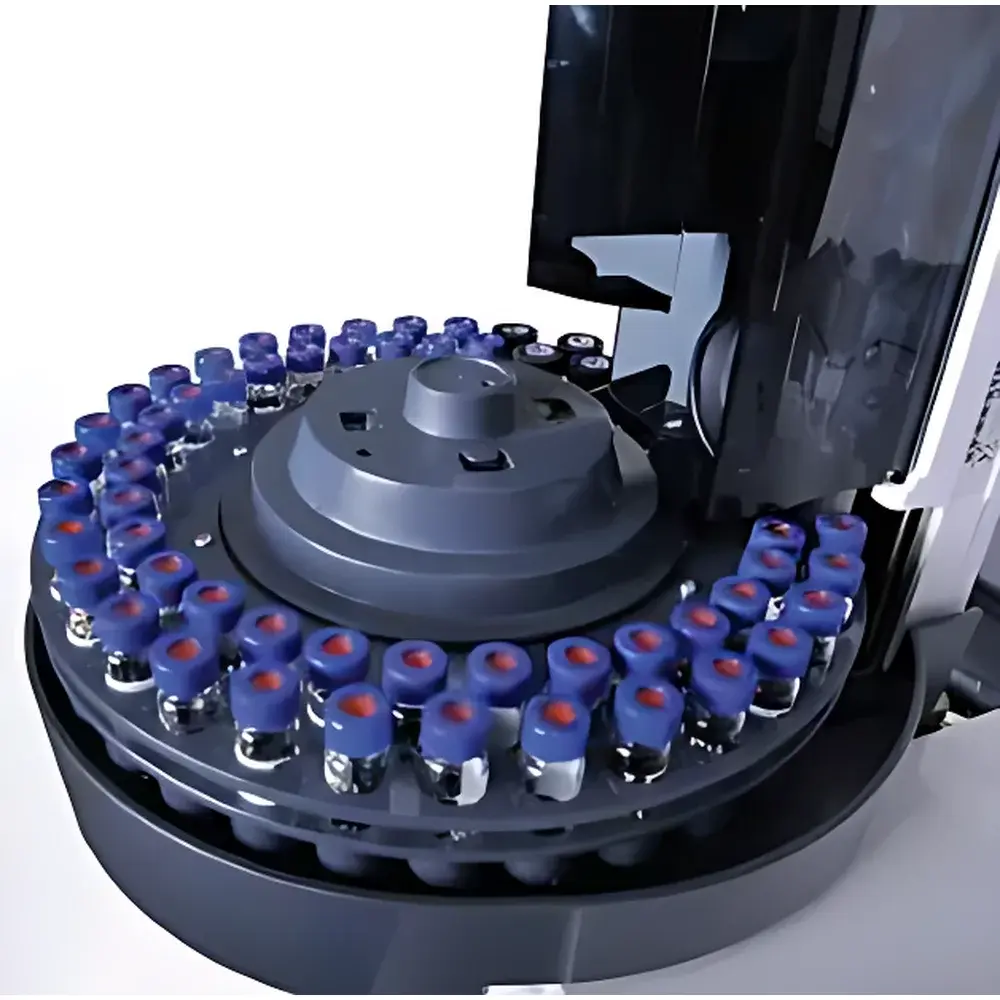
- 50-position sample tray capacity with configurable rack layouts—including support for stacked (triple-layer) vial configurations to maximize throughput per run
- Fully automated needle and injection port alignment using optical feedback and closed-loop positional correction, eliminating manual calibration drift
- Integrated LED illumination of the syringe holder and injection zone for real-time visual inspection during method development, troubleshooting, and maintenance
- Fast-actuation injection mechanism engineered to minimize needle discrimination—critical for accurate quantitation using external standard calibration protocols
- Support for both single and multi-injection modes, including programmable split injections and repeated draws from the same vial
- Compatibility with 250 µL and 500 µL glass syringes, enabling large-volume injection (LVI) applications such as trace-level environmental analysis or residual solvent testing
- Priority sample insertion functionality: users may inject high-priority samples into an active sequence without halting ongoing analysis—ideal for urgent QC release or failure investigation scenarios
Sample Compatibility & Compliance
The 7650A accepts standard 12 × 32 mm crimp-top or screw-cap vials (including Agilent-certified vials), as well as 10 mL and 20 mL headspace vials with optional adapters. It maintains compatibility with common GC solvents (e.g., hexane, methanol, acetonitrile, chloroform) and exhibits minimal adsorption or degradation for thermally labile analytes due to inert PTFE/sapphire flow path components. All firmware and mechanical operations comply with IEC 61000-6-2/6-4 electromagnetic compatibility standards. When operated within Agilent OpenLab CDS or MassHunter software environments, the 7650A supports 21 CFR Part 11-compliant electronic signatures, audit trails, and user-access controls required for regulated pharmaceutical and clinical laboratories.
Software & Data Management
The 7650A is natively controlled via Agilent OpenLab CDS (ChemStation Edition or Modern Version) and MassHunter Workstation Software. Method parameters—including vial position mapping, injection volume, wash cycle configuration, needle depth, and dwell times—are stored in encrypted method files with version history and change tracking. Sequence logs include timestamped records of every injection event, syringe actuation count, error codes, and maintenance alerts. Raw instrument events are exported in XML or CSV formats for LIMS integration, and all audit trail entries meet ALCOA+ principles (Attributable, Legible, Contemporaneous, Original, Accurate, Complete, Consistent, Enduring, Available).
Applications
- High-throughput residual solvent analysis per ICH Q3C guidelines in API and finished dosage form manufacturing
- Environmental monitoring of volatile organic compounds (VOCs) in water and soil extracts per EPA Methods 502.2, 524.4, and 8260D
- Flavor and fragrance profiling in food and beverage R&D, where reproducibility across 50+ sample batches is essential
- Forensic toxicology screening requiring unattended overnight runs with priority override for evidentiary samples
- Method validation studies demanding ≥1000 injection repeatability with <1.0% RSD for peak area under ISO/IEC 17025 clause 7.7
FAQ
Is the 7650A compatible with non-Agilent GC systems?
No—the 7650A communicates exclusively via Agilent’s proprietary hardware interface protocol and requires native driver support present only in Agilent OpenLab CDS and MassHunter software environments.
Does the 7650A support cold-on-column (COC) or programmed temperature vaporizer (PTV) injection?
No—it is configured solely for split/splitless liquid-phase injection into standard GC inlets; COC and PTV require dedicated inlet modules not supported by this ALS model.
Can the 7650A be upgraded to support headspace or SPME sampling?
No—those modalities require distinct mechanical architectures (e.g., pressurized vial handling, fiber desorption ovens); the 7650A is strictly a liquid-phase autosampler.
What maintenance intervals are recommended for long-term reliability?
Agilent recommends syringe replacement every 5,000 injections, O-ring inspection every 3 months, and full alignment verification after any mechanical impact or transport event.
Is remote monitoring or diagnostic capability available?
Yes—when connected to an Agilent GC with LAN-enabled electronics, the 7650A status (vial position, syringe health, error flags) is visible in real time through OpenLab Dashboard and supports SNMP-based alerting to networked IT infrastructure.





