
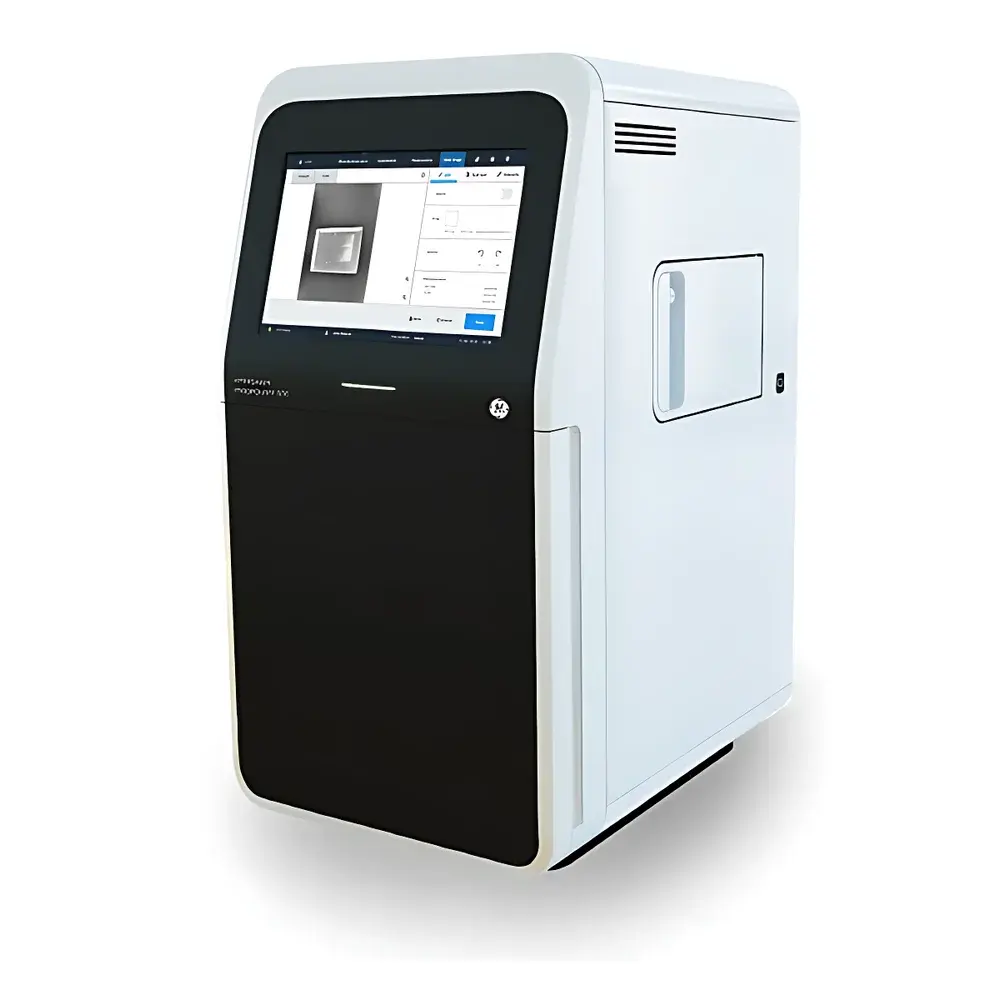
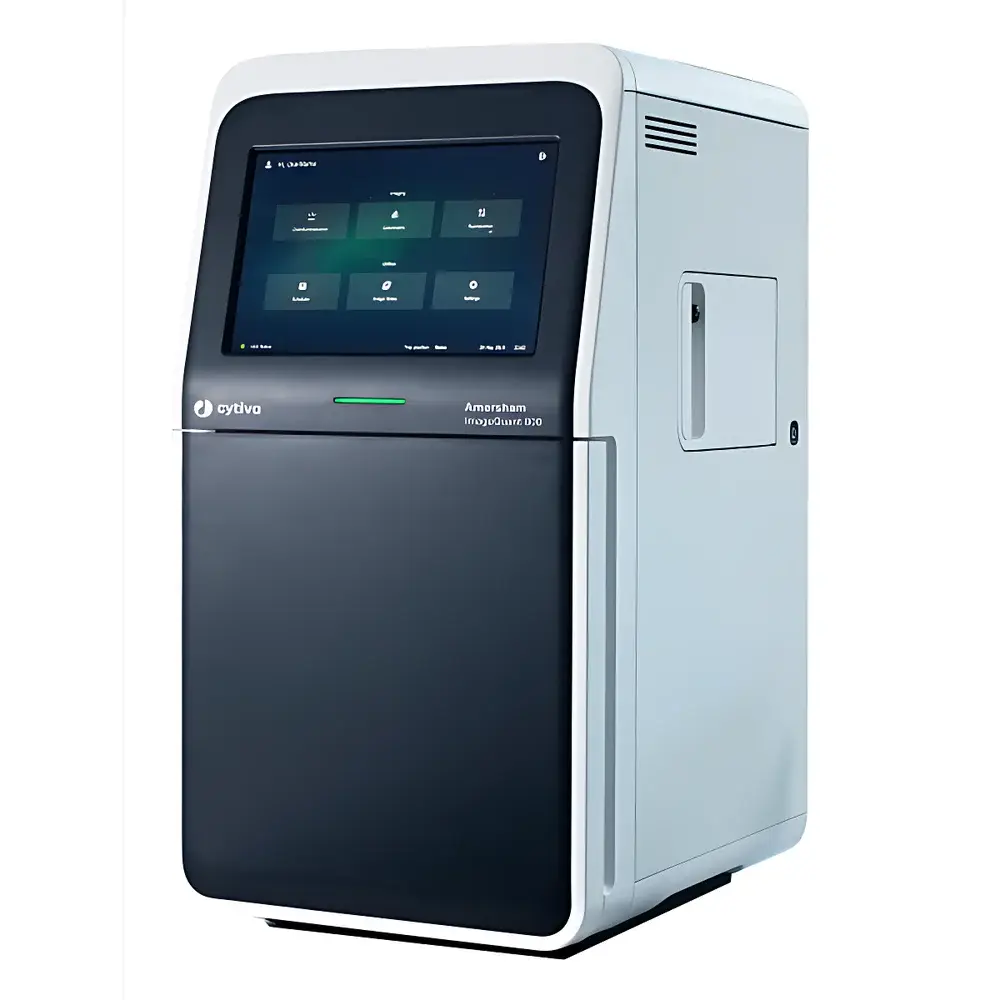
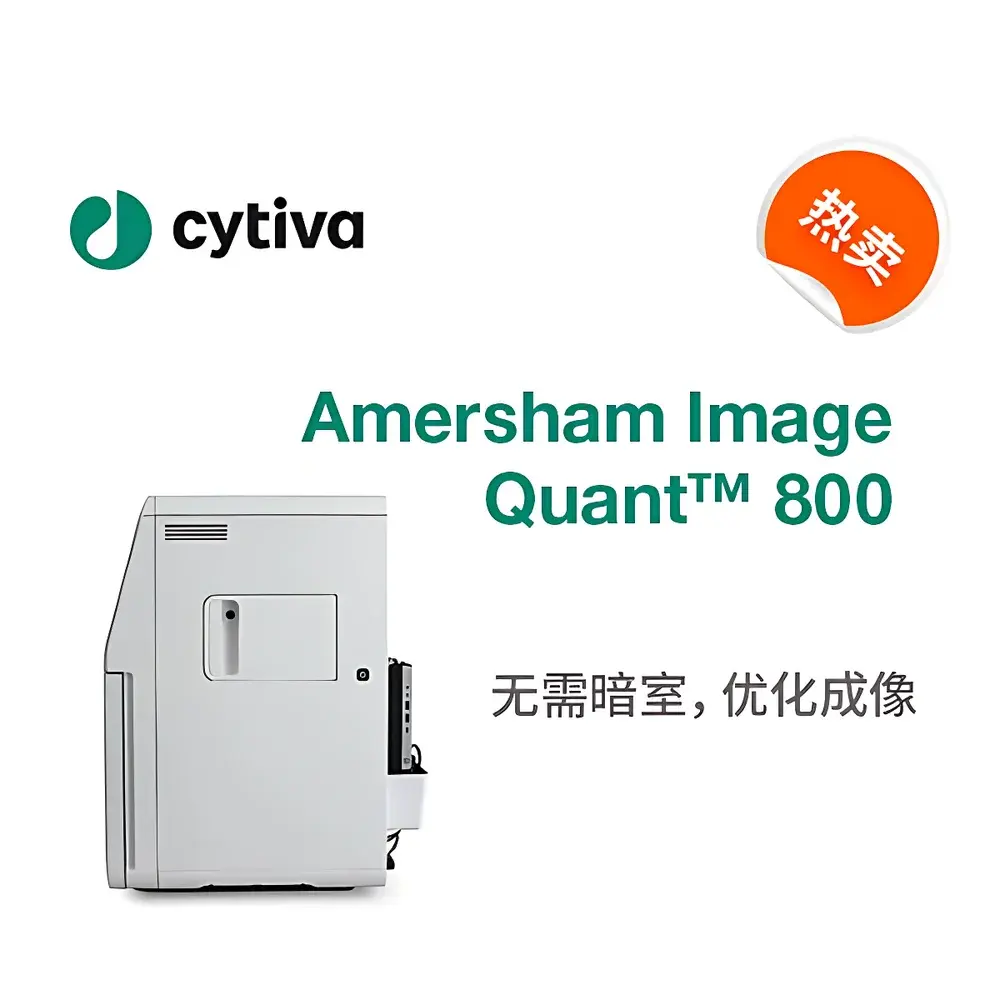
Cytiva Amersham ImageQuant 800 Multimodal Biomolecular Imager
| Brand | Cytiva |
|---|---|
| Origin | Japan |
| Model | Amersham ImageQuant 800 |
| Imaging Type | Chemiluminescence Gel Imager |
| CCD Resolution | 8.3 MP |
| Lens | Fujinon F0.74 |
| LED Channels | RGB, NIR-short, NIR-long, UV, Side-reflected white light, Transmitted white light |
| GxP Compliance Module | Optional FDA 21 CFR Part 11 / EU GMP Annex 11 Ready |
Overview
The Cytiva Amersham ImageQuant™ 800 Multimodal Biomolecular Imager is a high-performance, automated imaging platform engineered for quantitative detection and analysis of biomolecules across diverse electrophoretic and blotting workflows. Based on cooled scientific-grade CCD detection and optimized optical path design incorporating Fujinon F0.74 ultra-fast lens assembly, the system delivers exceptional sensitivity and wide dynamic range—critical for accurate quantification of low-abundance targets in Western blots, nucleic acid gels, and multiplexed fluorescence assays. Its core architecture integrates time-resolved chemiluminescence acquisition, multi-spectral fluorescence excitation/emission filtering, and real-time signal-to-noise optimization—enabling reproducible, publication-ready data generation without manual exposure tuning. Designed for rigorous life science research and regulated environments, the instrument supports both discovery-phase flexibility and compliance-driven operational integrity.
Key Features
- SNOW (Signal-to-Noise Optimized Workflow) imaging mode: Automatically acquires and averages multiple short-exposure frames to suppress CCD read noise and background scatter while dynamically terminating acquisition at peak SNR—eliminating saturation and optimizing sensitivity without user intervention.
- 8.3-megapixel scientific CCD sensor with thermoelectric cooling: Delivers high spatial resolution (capable of resolving bands spaced ≤0.5 mm apart) and low dark current for precise molecular weight estimation and densitometric quantification.
- Six independently controlled LED excitation sources: Includes RGB (470/530/630 nm), near-infrared short (740 nm) and long (830 nm), UV (365 nm), side-reflected white light (for color marker imaging), and transmitted white light (for OD-based gel documentation and normalization).
- Compact footprint with integrated 12.1-inch capacitive touchscreen and embedded control logic: Reduces bench space requirements while maintaining full local operation; external PC connectivity enables network integration, centralized image archiving, and remote scheduling via ImageQuant™ CONNECT software.
- GxP-ready optional module: Provides electronic audit trails, role-based Windows authentication, image authenticity verification (hash-based integrity check), and full 21 CFR Part 11 / EU GMP Annex 11 compliance—including electronic signatures, session logging, and immutable record retention.
Sample Compatibility & Compliance
The Amersham ImageQuant 800 accommodates standard and non-standard sample formats including mini and midi SDS-PAGE gels, transfer membranes (PVDF, nitrocellulose), microplates (6–384-well), Petri dishes, and blotting strips. Optional NP (No-Peak) lens accessory eliminates edge distortion and halo artifacts common in high-gain chemiluminescent imaging. All optical components meet ISO 13485-aligned manufacturing standards. The system complies with IEC 61010-1 for laboratory equipment safety and supports GLP/GMP-aligned validation protocols—including IQ/OQ/PQ documentation templates and calibration traceability to NIST-traceable standards.
Software & Data Management
ImageQuant™ TL software (v8.4 or later) provides end-to-end workflow management—from acquisition and background subtraction to band detection, molecular weight calculation, and relative quantification using internal loading controls or total protein normalization. Raw image files are saved in vendor-neutral TIFF format with embedded metadata (exposure time, gain, filter ID, lens aperture). ImageQuant™ CONNECT enables secure HTTPS-based remote access to live system status, queued acquisitions, and archived images—integrated with institutional LDAP/Active Directory and compatible with LIMS and ELN platforms. Audit logs record all user actions—including image modification history—with timestamped, tamper-evident digital signatures.
Applications
- Quantitative Western blotting: Detection of phosphorylated isoforms, low-expression transcription factors, and post-translational modifications using chemiluminescence or near-infrared fluorescence.
- DNA/RNA gel documentation: High-fidelity ethidium bromide, SYBR Safe, and GelRed-stained gel imaging with UV transillumination and automatic lane/band recognition.
- Multiplexed immunoassays: Simultaneous detection of ≥3 targets per blot using spectrally distinct fluorophores (e.g., Alexa Fluor 647 + IRDye 800CW + Cy3).
- Cell-based assay imaging: Quantitative analysis of reporter gene expression, viability dyes (Calcein AM/PI), and subcellular localization in adherent cultures imaged in situ.
- Quality control of recombinant proteins: Identity confirmation, purity assessment, and aggregate detection in SEC or native PAGE applications.
FAQ
What regulatory standards does the GxP module support?
The optional GxP module ensures compliance with FDA 21 CFR Part 11, EU GMP Annex 11, and ISO/IEC 17025 requirements—covering electronic records, signature validation, audit trail integrity, and data retention policies.
Can the system perform total protein normalization?
Yes—transmitted white light imaging enables stain-free total protein loading control, and the software supports both stain-based (e.g., Ponceau S) and label-free normalization algorithms.
Is remote instrument monitoring supported?
Yes—ImageQuant™ CONNECT provides real-time dashboard access to acquisition queue status, hardware health metrics, and recent image thumbnails via standard web browsers.
Does the system require external cooling or exhaust ventilation?
No—the CCD sensor uses solid-state thermoelectric cooling; no liquid coolant or external venting is required for standard operation.
How is image authenticity verified in regulated environments?
Each acquired image includes an SHA-256 hash stored in its metadata; the GxP module validates hash integrity upon file opening and logs any discrepancy in the audit trail.





