
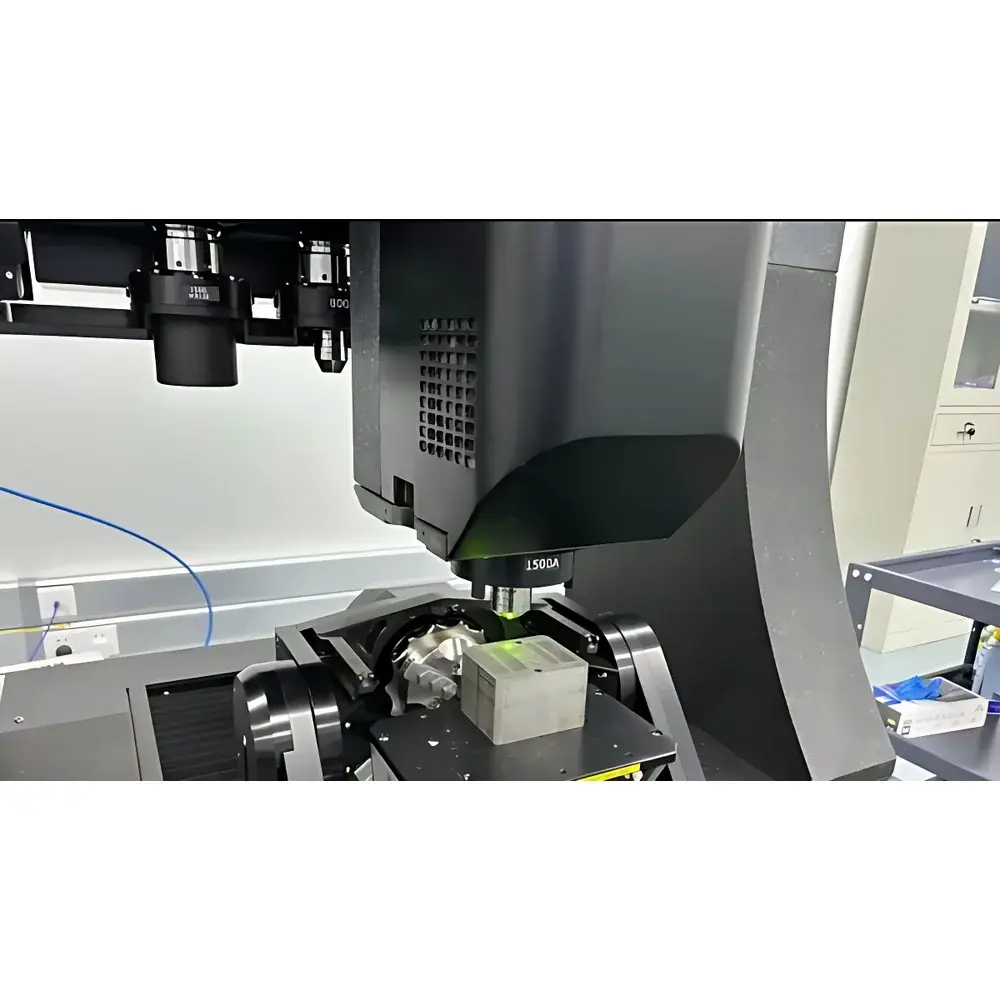
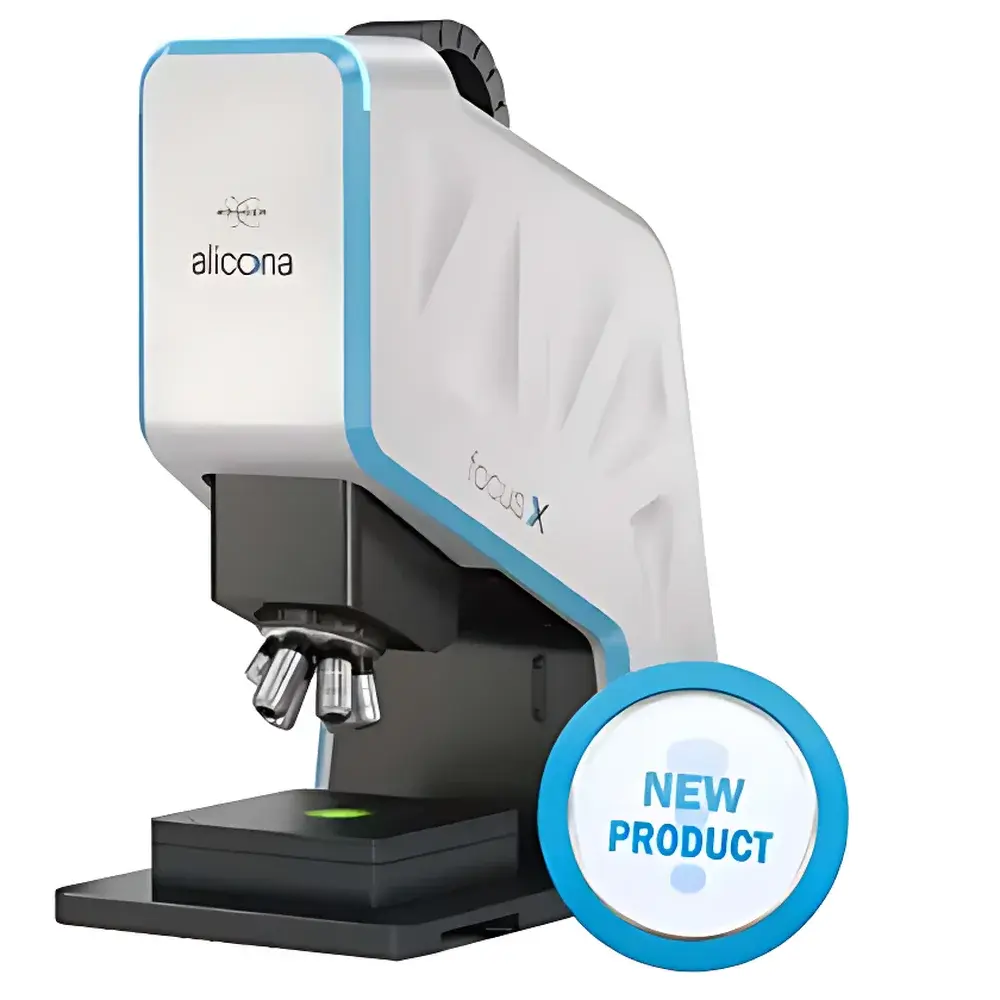
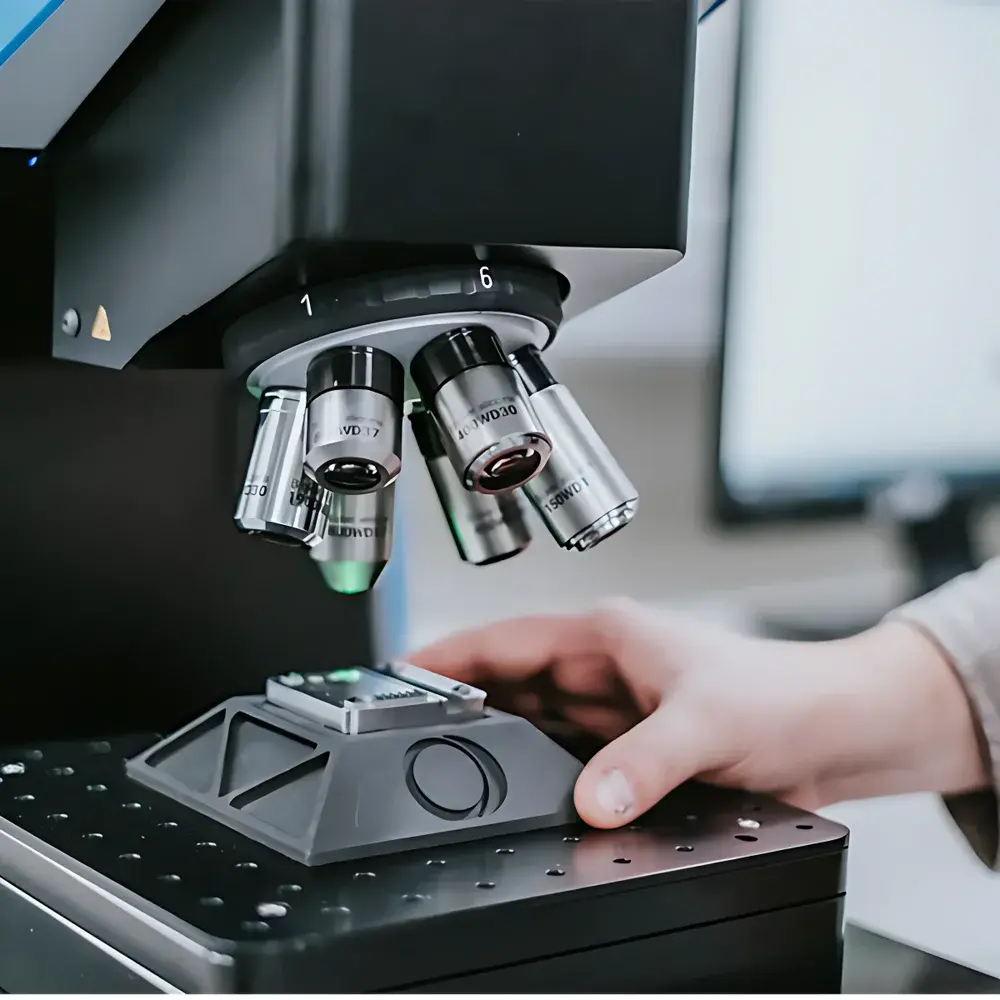
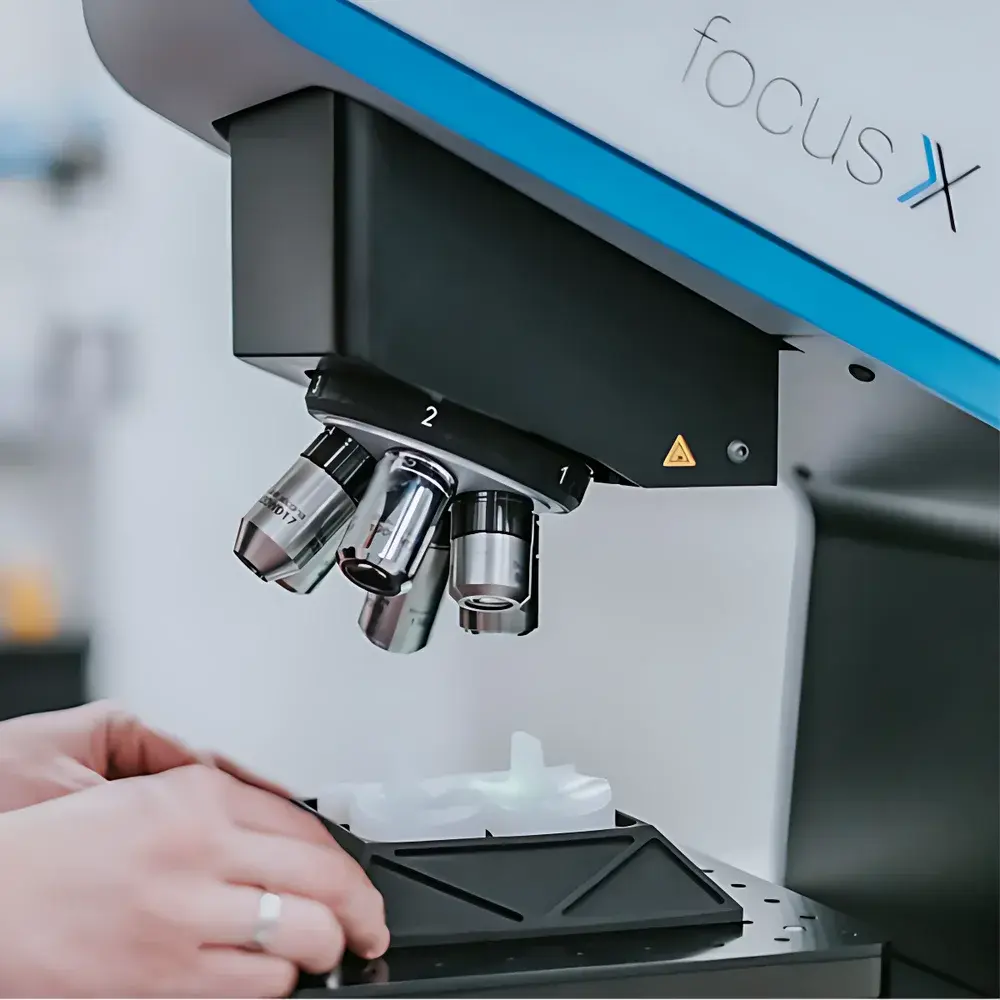
Bruker Alicona FocusX Optical 3D Surface Metrology System
| Brand | Alicona |
|---|---|
| Origin | Austria |
| Manufacturer Status | Authorized Distributor |
| Origin Category | Imported |
| Model | FocusX |
| Price | USD 245,000 (FOB Vienna, ex-works, configuration-dependent) |
Overview
The Bruker Alicona FocusX is a high-precision optical 3D surface metrology system engineered for non-contact, traceable measurement of geometry, form, position, and surface topography—including areal roughness (Sa, Sq, Sz), waviness, and micro-geometric features—across a broad spectrum of industrial and research applications. Based on Focus Variation technology—a proprietary optical principle combining extended-depth-of-field imaging with vertical scanning—the FocusX achieves sub-micrometer lateral resolution and nanometer-level vertical repeatability without requiring sample coating or vacuum environments. Unlike confocal or interferometric systems, Focus Variation maintains consistent accuracy on surfaces with varying reflectivity, steep flanks (>87°), deep grooves, and mixed-material topographies—making it uniquely suited for precision components in aerospace, medical device manufacturing, tooling, and additive manufacturing quality assurance.
Key Features
- Optical focus variation measurement engine enabling simultaneous acquisition of form and roughness data in a single scan
- Vertical resolution down to 10 nm and lateral resolution ≤ 0.4 µm (dependent on objective lens)
- Multi-objective turret supporting magnifications from 2.5× to 100×, enabling scalable field-of-view from 0.1 mm² to 120 mm²
- Automated Z-axis travel up to 200 mm with programmable step resolution of 5 nm
- Integrated motorized XY stage with 200 × 200 mm travel range and ±0.5 µm positioning repeatability
- Real-time autofocus and dynamic exposure control for stable imaging across heterogeneous surfaces (e.g., polished metal, matte ceramics, PVD-coated substrates)
- Compliance with ISO 25178-2 (areal surface texture), ISO 1101 (geometrical product specifications), and VDI/VDE 2634 Part 3 (optical 3D measuring systems)
Sample Compatibility & Compliance
The FocusX accommodates samples ranging from micro-components (<1 mm) to large machined parts (up to Ø150 mm × 50 mm height), including those with high aspect ratios, undercuts, and multi-material interfaces. Its optical design eliminates the need for conductive sputtering or environmental chamber integration—enabling direct measurement of as-manufactured surfaces per ISO 14289-1 (surface texture documentation). All measurement workflows support full traceability: calibrated reference artifacts (e.g., NIST-traceable step-height standards) are integrated into routine verification protocols. The system meets requirements for GLP-compliant laboratories and supports audit-ready documentation aligned with FDA 21 CFR Part 11 when deployed with Bruker’s optional AL3D-Secure software module.
Software & Data Management
Controlled via Alicona’s proprietary MeX software platform (v8.2+), the FocusX delivers standardized ISO 25178-compliant analysis—including filtration (Gaussian, Spline), parameter calculation (Sa, Sq, Sdr, Sk, Spk), and GD&T evaluation (flatness, parallelism, profile of a line/surface). MeX supports automated report generation in PDF/XLSX formats with embedded metadata (operator ID, timestamp, calibration status, instrument serial number). Raw point-cloud data (.al3d) is stored in vendor-neutral HDF5 format, ensuring long-term archival integrity and third-party interoperability (e.g., with PolyWorks, Geomagic Control X, or MATLAB-based custom algorithms). Optional AL3D-Cloud enables secure remote access, collaborative annotation, and version-controlled measurement recipe management across distributed facilities.
Applications
- Quantitative assessment of additive manufacturing surface integrity—including powder-bed fusion defects, layer bonding quality, and post-processing efficacy
- In-process validation of micro-milled dental implants, orthopedic joint surfaces, and stent struts per ISO 14289 and ASTM F3049
- Tool wear monitoring of cutting inserts and EDM electrodes via 3D wear volume computation
- Characterization of functional surfaces: tribological textures, laser-induced periodic surface structures (LIPSS), and micro-lens arrays
- Dimensional verification of turbine blade leading edges, fuel injector nozzles, and hermetic sealing surfaces where tactile probing is impractical
FAQ
Does the FocusX require operator expertise to generate ISO-compliant roughness reports?
No—MeX includes guided workflows with preconfigured ISO 25178 filter sets and parameter templates; one-click execution generates fully compliant reports with uncertainty estimation.
Can the FocusX measure highly reflective or transparent surfaces without artifacts?
Yes—adaptive illumination control and polarization filtering suppress specular glare and subsurface scattering, validated per VDI/VDE 2634 Part 3 on mirror-finished steel and fused silica.
Is calibration traceable to national metrology institutes?
Yes—Bruker Alicona provides factory calibration certificates traceable to PTB (Germany) and NIST (USA); on-site recalibration services include artifact-based verification using certified step-height and roughness standards.
What is the typical measurement throughput for a 10 mm × 10 mm area at 20× magnification?
Approximately 45–90 seconds depending on surface complexity and required vertical sampling density; high-speed mode reduces acquisition time by up to 40% with minimal impact on Sa reproducibility (Rr < 0.8%).
Does the system support automated batch measurement of identical parts?
Yes—MeX supports part program templating, fiducial-based alignment, and pass/fail decision logic with configurable tolerance limits and SPC chart export.



