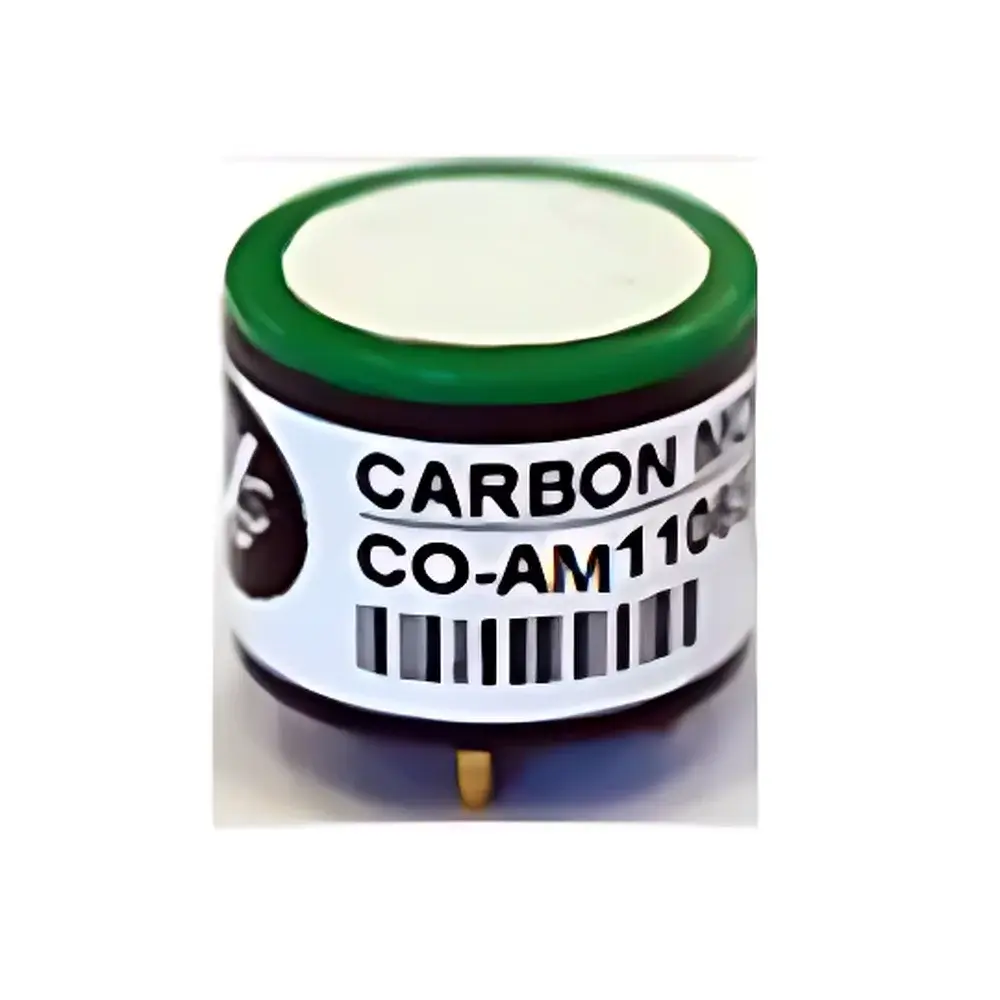
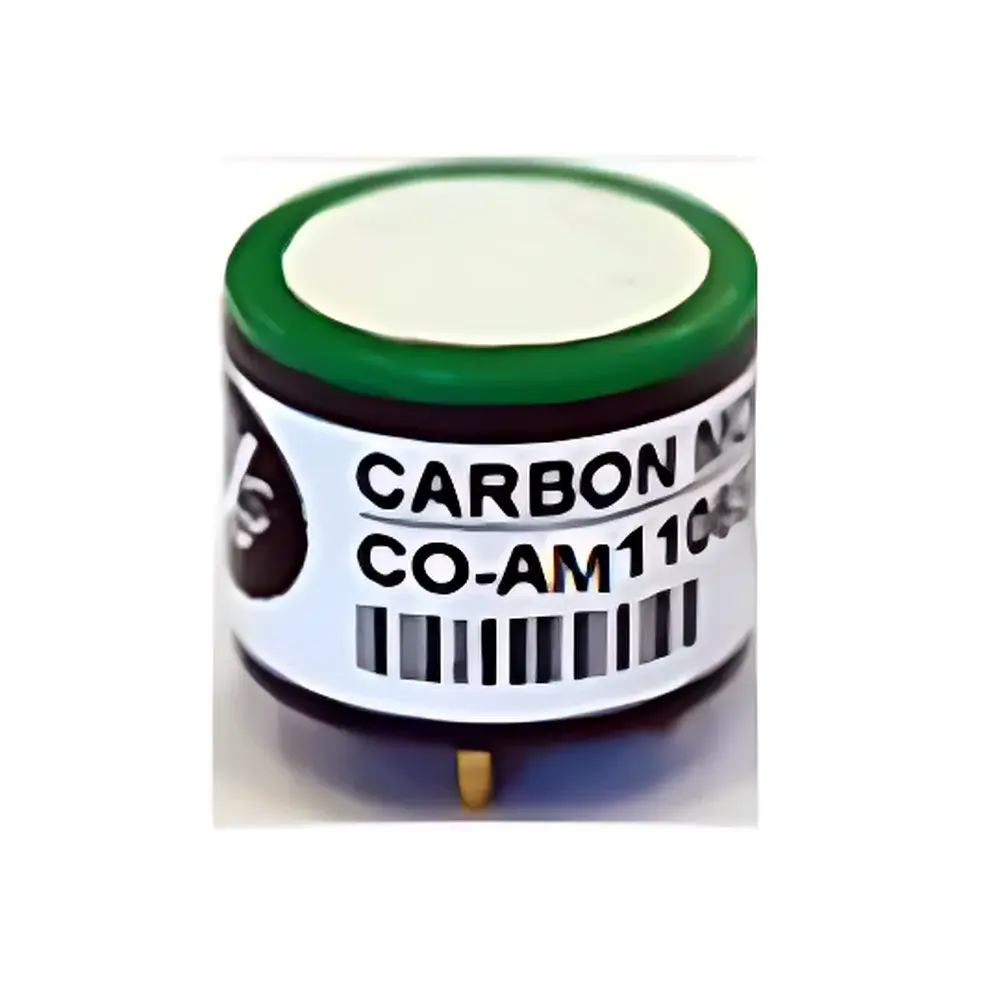
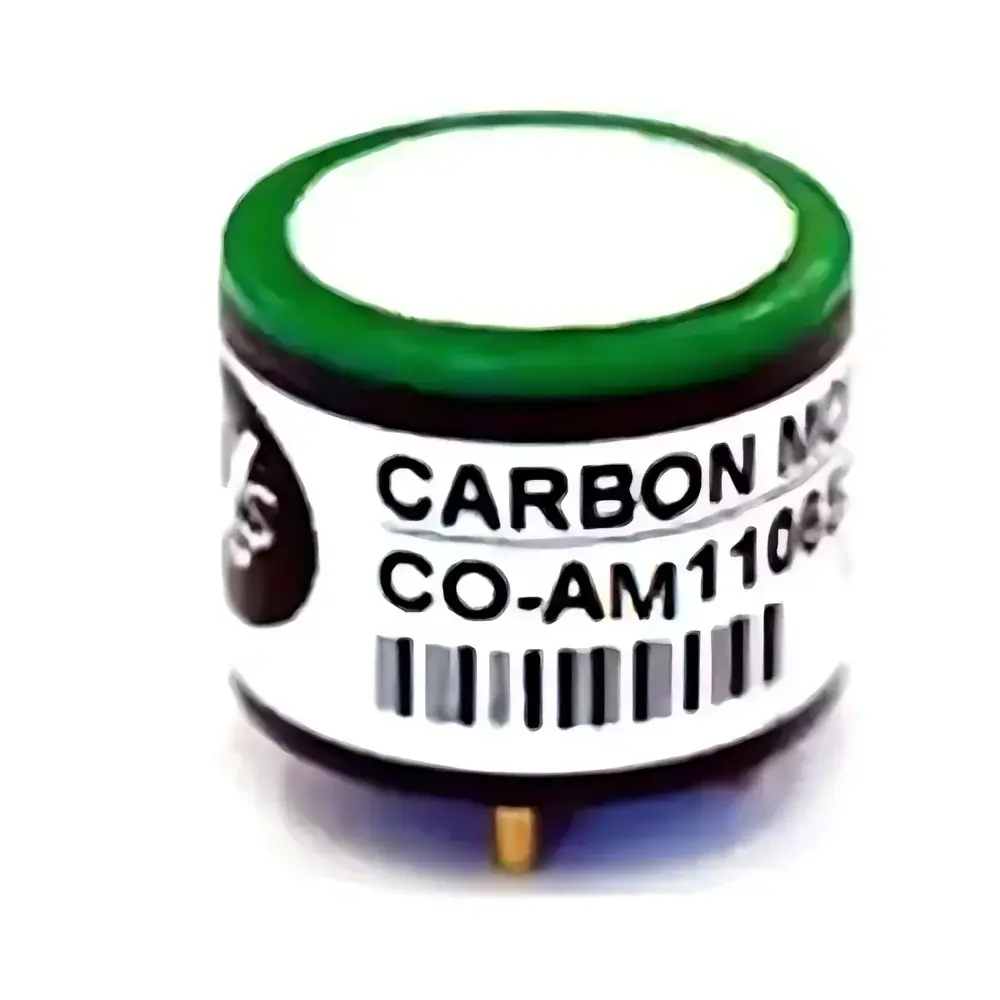
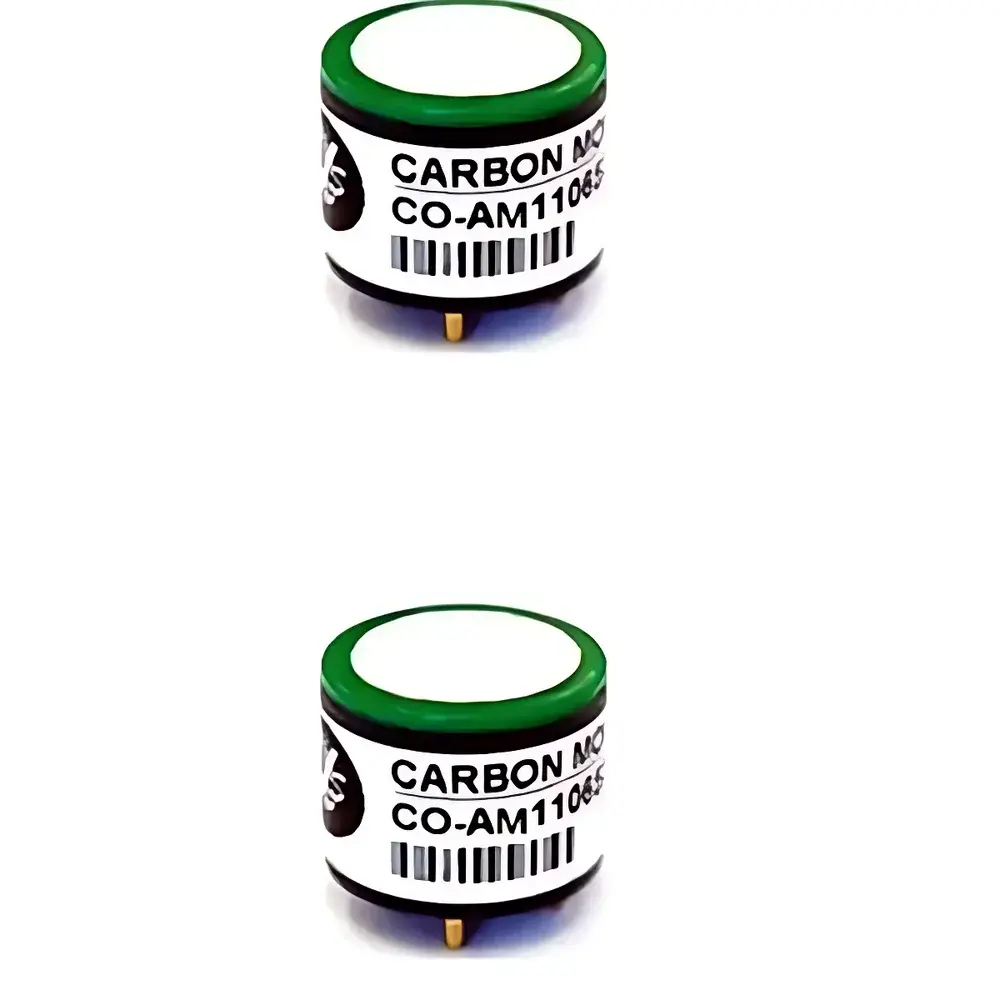
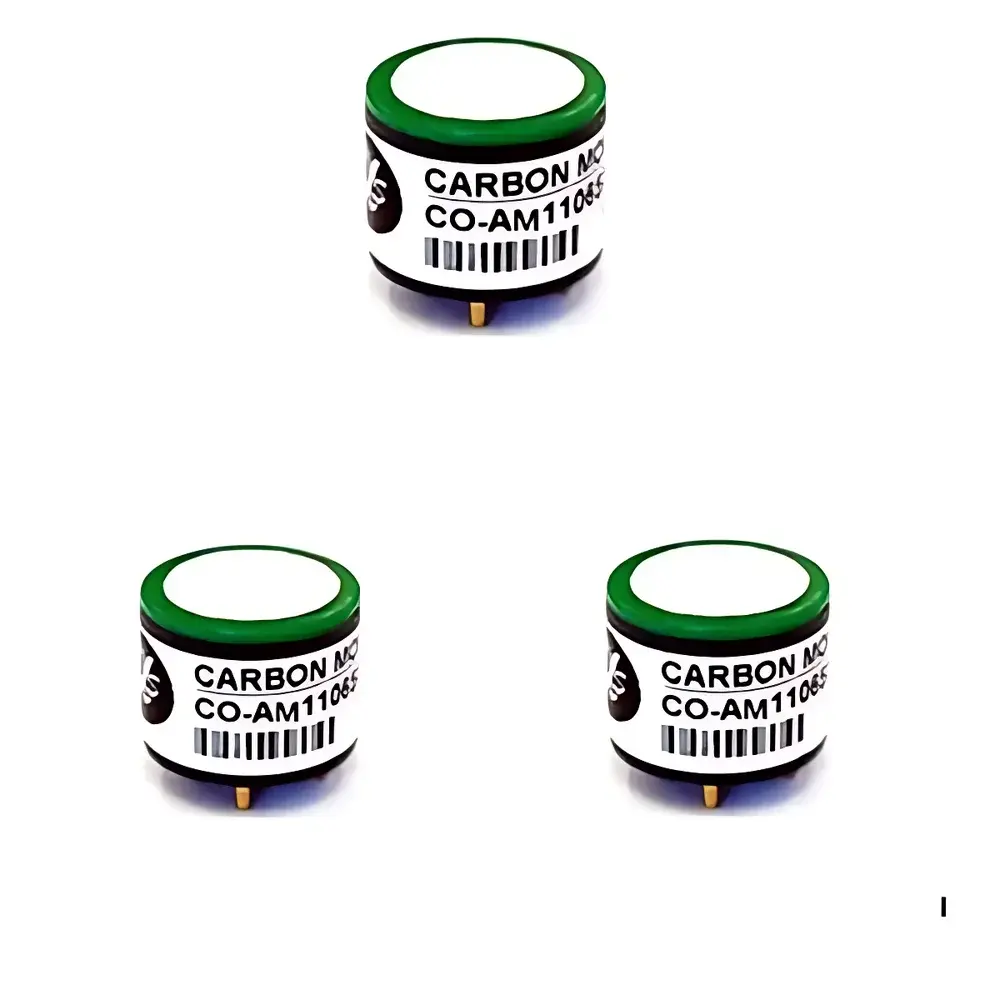
Alphasense CO-AM Electrochemical Carbon Monoxide Sensor
| Brand | Alphasense (UK) |
|---|---|
| Origin | United Kingdom |
| Model | CO-AM |
| Measurement Principle | Electrochemical |
| Target Gas | Carbon Monoxide (CO) |
| Full-Scale Range | 0–5000 ppm |
| Sensitivity | 55–90 nA/ppm |
| Response Time (t₉₀) | <25 s |
| Zero Current | <±15 nA |
| Full-Scale Linearity Error | ±15–25 ppm |
| Overload Capacity | 10,000 ppm |
| Resolution | 0.5 ppm |
| Operating Temperature | −30 to +50 °C |
| Operating Humidity | 15–90 % RH (non-condensing) |
| Load Resistance | 10–47 Ω |
| Expected Operational Lifetime | 24 months |
| Storage Shelf Life | 6 months |
| Diameter × Height | Φ20.2 × 16.5 mm |
| Compliance | CE-marked, RoHS-compliant, meets IEC 60079-29-1 for gas detection performance validation |
Overview
The Alphasense CO-AM is a high-stability, diffusion-type electrochemical sensor engineered for reliable, low-power detection of carbon monoxide (CO) in ambient air and industrial environments. Based on a three-electrode electrochemical cell architecture, the CO-AM operates via selective oxidation of CO at the working electrode in an aqueous electrolyte, generating a current proportional to gas concentration. This principle ensures inherent linearity across its full 0–5000 ppm range and enables direct integration into portable monitors, fixed-gas detection systems, and environmental air quality networks. Designed and manufactured in the UK under strict ISO 9001-controlled processes, the CO-AM complies with IEC 60079-29-1 for performance verification of toxic gas sensors and conforms to RoHS and CE directives. Its compact cylindrical form factor (Φ20.2 × 16.5 mm) and low operating current (<100 µA typical) make it suitable for battery-powered instrumentation requiring long-term field deployment.
Key Features
- Stable electrochemical output with sensitivity of 55–90 nA/ppm — calibrated per batch and traceable to NPL (National Physical Laboratory) standards
- Rapid response time (t₉₀ < 25 seconds) enabling real-time monitoring in dynamic environments such as confined space entry or indoor air quality assessment
- Low zero-current drift (<±15 nA) and full-scale linearity error limited to ±15–25 ppm — critical for compliance with occupational exposure limit (OEL) monitoring per OSHA PEL and ACGIH TLV protocols
- Robust mechanical design with integrated hydrophobic membrane and optimized diffusion barrier, delivering consistent performance across 15–90% RH (non-condensing)
- Extended operational lifetime of up to 24 months under continuous operation at 23°C and 50% RH — validated via accelerated aging tests per Alphasense internal protocol AP-008
- Compatible with standard 10–47 Ω load resistors and common analog signal conditioning circuits — supports seamless integration into 4–20 mA transmitters, microcontroller-based data loggers, and multi-gas platforms
Sample Compatibility & Compliance
The CO-AM is intended for measurement of CO in clean, non-corrosive, non-explosive ambient air. It exhibits minimal cross-sensitivity to common interferents: <2% signal response to 500 ppm H₂; <1% to 100 ppm NO₂; negligible response to CH₄, CO₂, SO₂, and VOCs below 100 ppm. The sensor is not recommended for use in environments containing high concentrations of sulfur compounds, chlorine, or acidic vapors, which may permanently poison the catalytic electrode. All units are CE-marked and RoHS-compliant. Performance validation aligns with IEC 60079-29-1 Annex B requirements for toxic gas sensors used in safety-critical applications. For regulatory reporting under EPA Method TO-11A or EN 14662, the CO-AM must be deployed within a system-level calibration and verification framework meeting ISO/IEC 17025 requirements.
Software & Data Management
While the CO-AM itself is an analog transducer, its output is fully compatible with industry-standard gas detection firmware stacks supporting linearization, temperature compensation (via optional integrated thermistor), and baseline correction algorithms. When integrated into certified instruments, the sensor supports audit-ready data logging compliant with FDA 21 CFR Part 11 (where applicable), including electronic signatures, change tracking, and secure storage of calibration records. Alphasense provides comprehensive technical documentation — including datasheets, application notes (e.g., AN-201: “Temperature Compensation Strategies for Electrochemical Sensors”), and calibration certificate templates — to support GLP/GMP-aligned deployment in pharmaceutical cleanrooms or occupational hygiene programs.
Applications
- Portable personal CO monitors for fire service, mining, and HVAC maintenance personnel
- Fixed-point indoor air quality (IAQ) systems in schools, hospitals, and office buildings — aligned with ASHRAE Standard 62.1 ventilation guidelines
- Industrial process safety systems for boiler rooms, parking garages, and generator enclosures
- Environmental monitoring networks measuring urban CO gradients and traffic-related pollution trends
- OEM integration into multi-gas detectors (e.g., CO + H₂S + O₂ configurations) for oil & gas, wastewater, and municipal infrastructure applications
FAQ
What is the recommended calibration frequency for the CO-AM in continuous operation?
For occupational safety applications, quarterly bump testing and semi-annual full calibration against NIST-traceable CO standards are advised. In stable environmental monitoring deployments, annual calibration with documented drift analysis is acceptable per ISO 14644-2.
Can the CO-AM operate reliably at −30°C?
Yes — the sensor maintains functional electrochemical activity down to −30°C, though response time increases by ~15% at the lower extreme; condensation must be prevented via proper housing design.
Is the CO-AM compatible with digital interface protocols such as UART or I²C?
No — it is an analog current-output device only. Digital functionality requires external ADC and microcontroller implementation.
Does Alphasense provide factory calibration certificates with each CO-AM unit?
Batch-level calibration data is supplied with every order; individual unit certificates are available upon request for regulated applications.
How should unused CO-AM sensors be stored prior to installation?
Store in original sealed packaging at 20–25°C and 30–50% RH; maximum shelf life is six months from date of manufacture — beyond this, reconditioning and recalibration are required before deployment.