
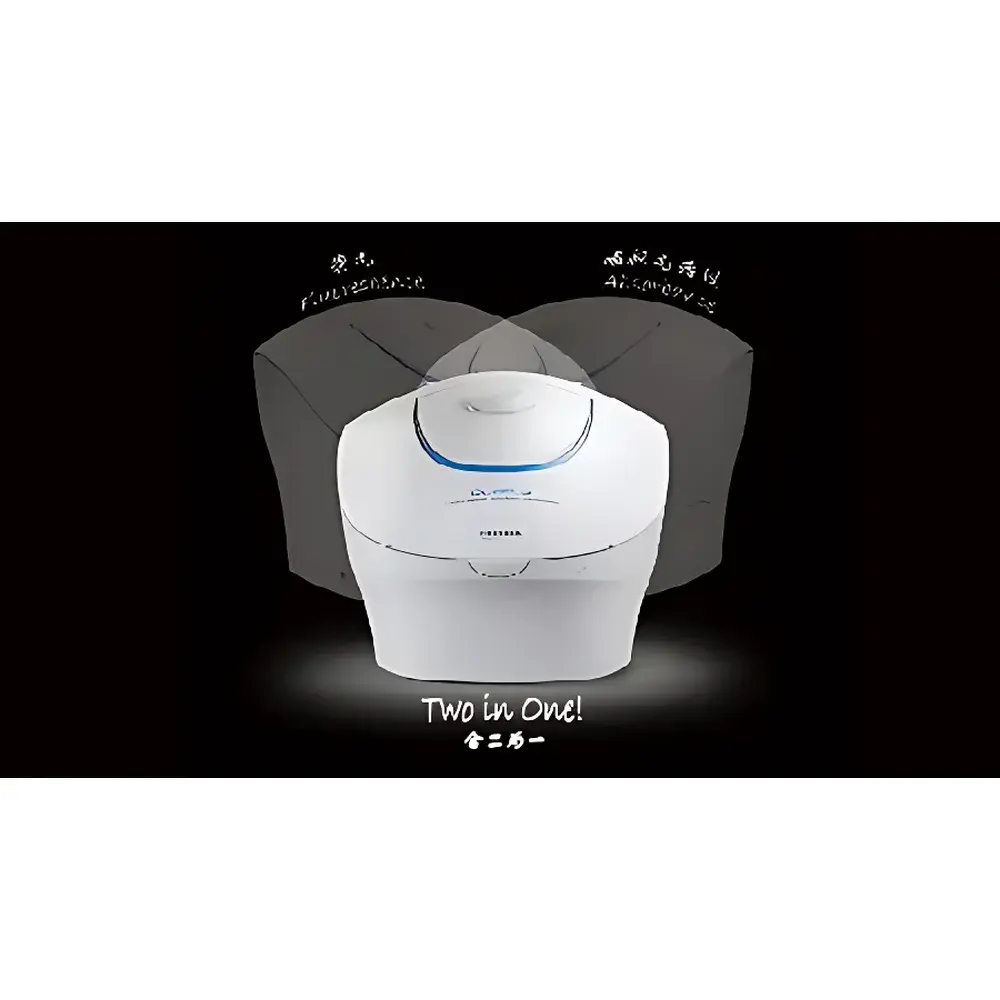
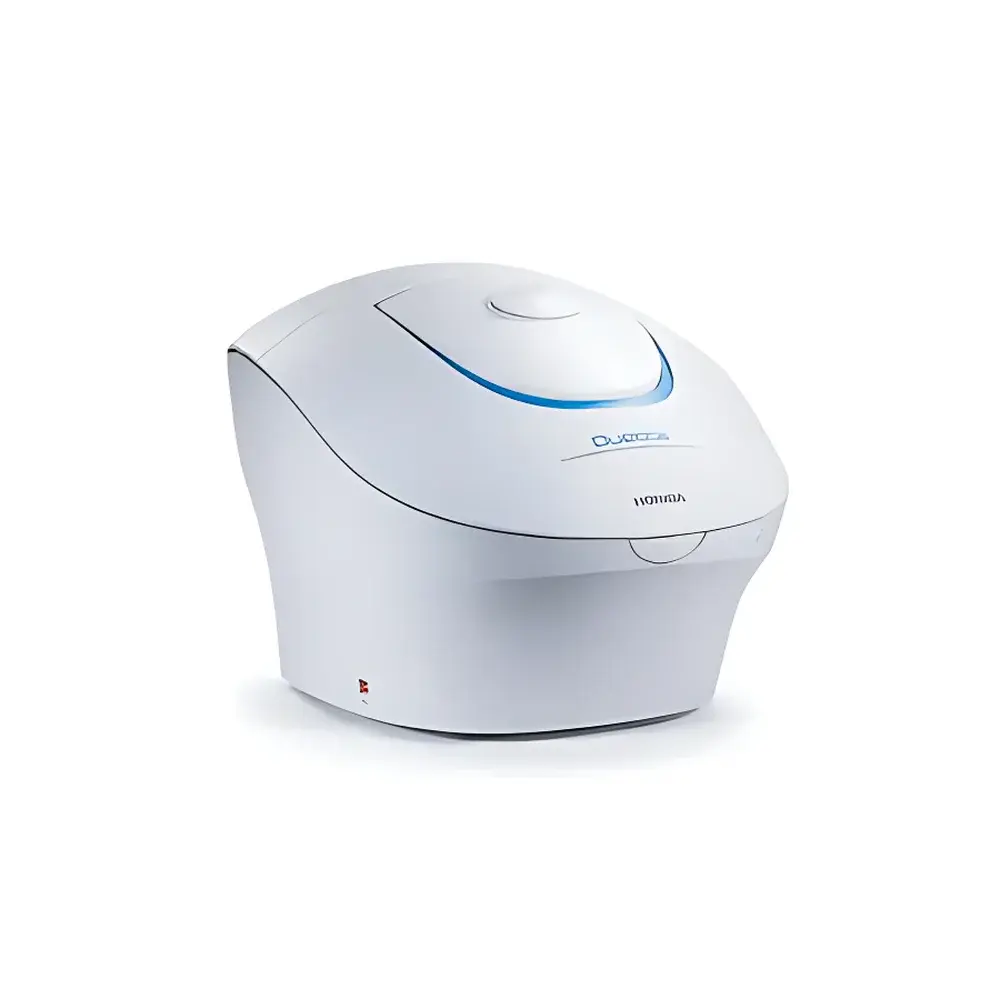
HORIBA Duetta Dual-Mode Fluorescence and Absorption Spectrometer
| Brand | HORIBA |
|---|---|
| Origin | Canada |
| Manufacturer Type | Original Equipment Manufacturer (OEM) |
| Import Status | Imported |
| Model | Duetta |
| Wavelength Range (Fluorescence) | 250–1100 nm |
| Detection Technology | Back-Illuminated CCD |
| Sensitivity (Water Raman S/N) | >6000:1 |
| Dispersion Element | Holographic Grating |
| Slit Width / Spectral Bandpass | Variable, software-controlled |
| Wavelength Accuracy | ±0.5 nm |
| Internal Correction | Automated primary and secondary inner-filter effect compensation |
| Core Technology | A-TEEM™ (Absorbance-Transmitted Excitation-Emission Matrix) |
Overview
The HORIBA Duetta Dual-Mode Fluorescence and Absorption Spectrometer is an integrated optical platform engineered for simultaneous, co-registered acquisition of absorbance and fluorescence spectra across the ultraviolet–visible–near-infrared (UV-Vis-NIR) spectral range (250–1100 nm). Unlike conventional sequential or hybrid instruments, the Duetta employs a single optical path with dual detection architecture—combining a high-throughput holographic grating monochromator and a thermoelectrically cooled, back-illuminated CCD detector—to capture full excitation-emission matrices (EEMs) in under 100 ms per scan. Its measurement principle is rooted in synchronous dual-beam spectroscopy: one beam passes through the sample for absorbance quantification (via ratioed reference/sample intensities), while the orthogonal fluorescence emission is dispersed and imaged onto the CCD in parallel. This architecture eliminates temporal misalignment between absorption and fluorescence signals, enabling rigorous inner-filter effect correction at the point of acquisition—not as a post-processing approximation.
Key Features
- True simultaneous absorbance and fluorescence measurement within a single instrument platform, eliminating inter-instrument calibration drift and sample repositioning errors
- Back-illuminated CCD detector with high quantum efficiency (>90% at 600 nm) and low read noise (<5 e⁻ RMS), enabling rapid full-spectrum acquisition (250–1100 nm) in ≤100 ms
- A-TEEM™ technology: proprietary algorithmic framework that integrates corrected absorbance data directly into EEM normalization, yielding chemically faithful molecular fingerprints independent of concentration-dependent artifacts
- Automated, real-time correction of both primary and secondary inner-filter effects using measured absorbance at excitation and emission wavelengths
- Variable slit control for dynamic optimization of spectral resolution vs. signal-to-noise ratio; typical resolution ≤1.5 nm FWHM across UV-Vis-NIR range
- Wavelength accuracy certified to ±0.5 nm (NIST-traceable calibration standards included), with long-term stability maintained via internal wavelength reference LED
Sample Compatibility & Compliance
The Duetta accommodates standard 1 cm quartz cuvettes (pathlengths 0.1–10 mm available), microvolume cells (down to 2 µL), and fiber-optic probes for in situ or remote measurements. It supports liquid, colloidal, and dissolved organic/inorganic samples—including humic substances, proteins, pharmaceutical intermediates, and nanomaterial dispersions. The system complies with ISO/IEC 17025 requirements for analytical instrument validation and meets key elements of FDA 21 CFR Part 11 for electronic records and signatures when operated with audit-trail-enabled software configurations. All optical calibrations are traceable to NIST SRM 2035 (absorbance) and SRM 2036 (fluorescence), supporting GLP/GMP-aligned laboratory workflows.
Software & Data Management
Controlled exclusively via HORIBA’s EzSpec™ touch-optimized software, the Duetta provides intuitive gesture-based navigation, real-time spectral preview, and context-aware parameter guidance. EzSpec™ implements role-based user accounts, encrypted method storage, and configurable electronic audit trails compliant with 21 CFR Part 11 Annex 11. Raw data are saved in vendor-neutral HDF5 format, preserving metadata (wavelength arrays, integration time, temperature, slit width, correction flags) for FAIR (Findable, Accessible, Interoperable, Reusable) data stewardship. Optional modules include A-TEEM™ Quantitative Analysis Suite (for PARAFAC-assisted component deconvolution), Kinetic Profiling Toolkit (for time-resolved EEM series), and Regulatory Reporting Pack (generating IQ/OQ/PQ documentation templates).
Applications
The Duetta serves advanced research and quality control applications where molecular speciation, conformational dynamics, or matrix complexity demand correlated optical response data. Key use cases include: characterization of dissolved organic matter (DOM) in environmental water studies; quantification of protein folding/unfolding via intrinsic tryptophan fluorescence coupled with UV absorbance; excipient–API interaction screening in preformulation; fingerprinting of crude oil fractions and bio-oils; validation of nanoparticle surface functionalization via ligand-specific fluorescence quenching; and rapid authentication of botanical extracts using A-TEEM™ spectral libraries. Its ability to resolve overlapping fluorophores in heterogeneous mixtures—without chromatographic separation—makes it particularly valuable for high-throughput screening in biopharma and food safety laboratories.
FAQ
How does A-TEEM™ differ from conventional EEM correction methods?
A-TEEM™ uses experimentally measured absorbance at every excitation/emission coordinate to perform pixel-level inner-filter correction—eliminating assumptions about Beer–Lambert linearity or uniform pathlength that plague traditional algorithms.
Can the Duetta replace both a standalone UV-Vis spectrophotometer and a fluorescence spectrometer?
Yes—when configured with appropriate accessories (e.g., integrating sphere for diffuse transmittance/reflectance), it satisfies ISO 6425, ASTM E275, and USP requirements for both absorbance and fluorescence quantification.
Is the CCD detector sensitive enough for low-concentration biological samples?
With water Raman S/N >6000:1 (at 1 s integration, 5 nm slits), it detects sub-nanomolar concentrations of labeled biomolecules and native fluorophores such as NADH and FAD under standard cuvette conditions.
Does the system support automated temperature-controlled measurements?
Yes—compatible with Peltier-based cuvette holders (−10 °C to +105 °C) and third-party circulating baths; temperature metadata is embedded in all acquired spectra.
What validation documentation is provided for regulated environments?
HORIBA supplies Factory Acceptance Test (FAT) reports, Installation Qualification (IQ) checklists, and Operational Qualification (OQ) protocols aligned with ISO/IEC 17025 and ICH Q2(R2) guidelines.






