
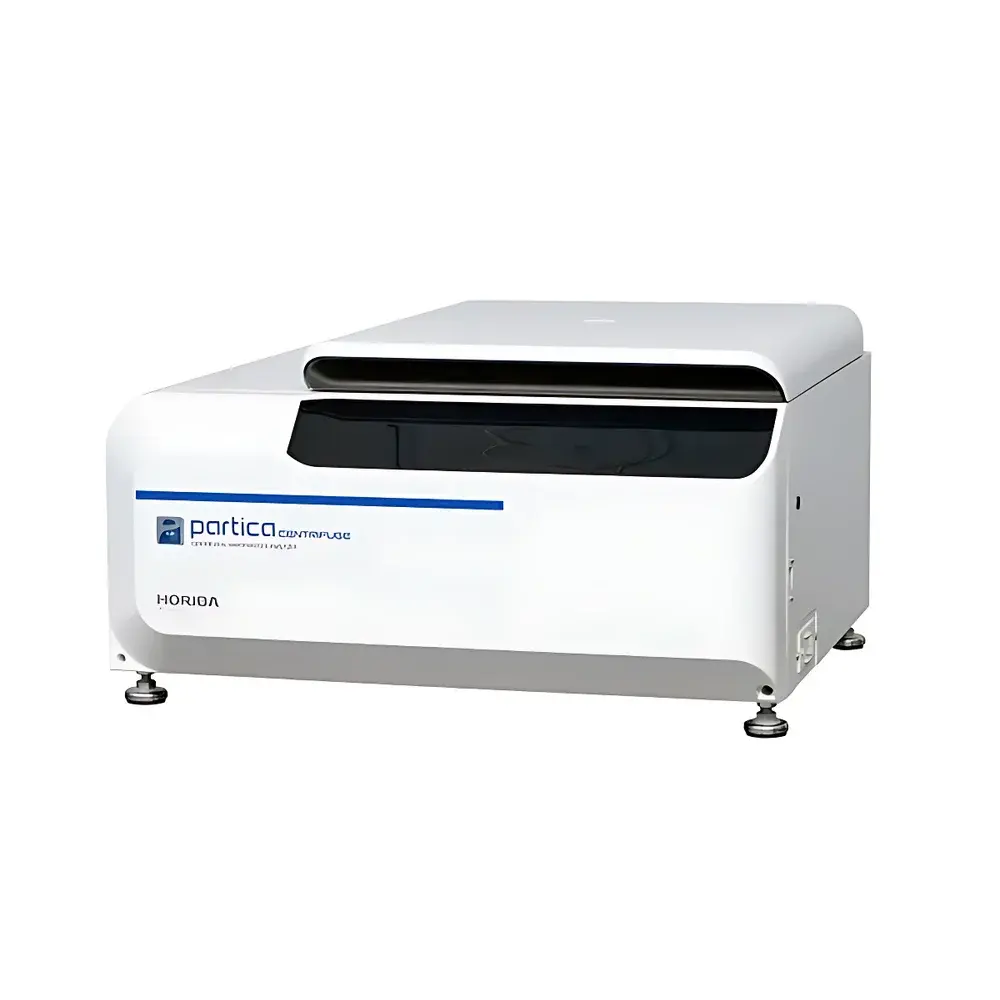
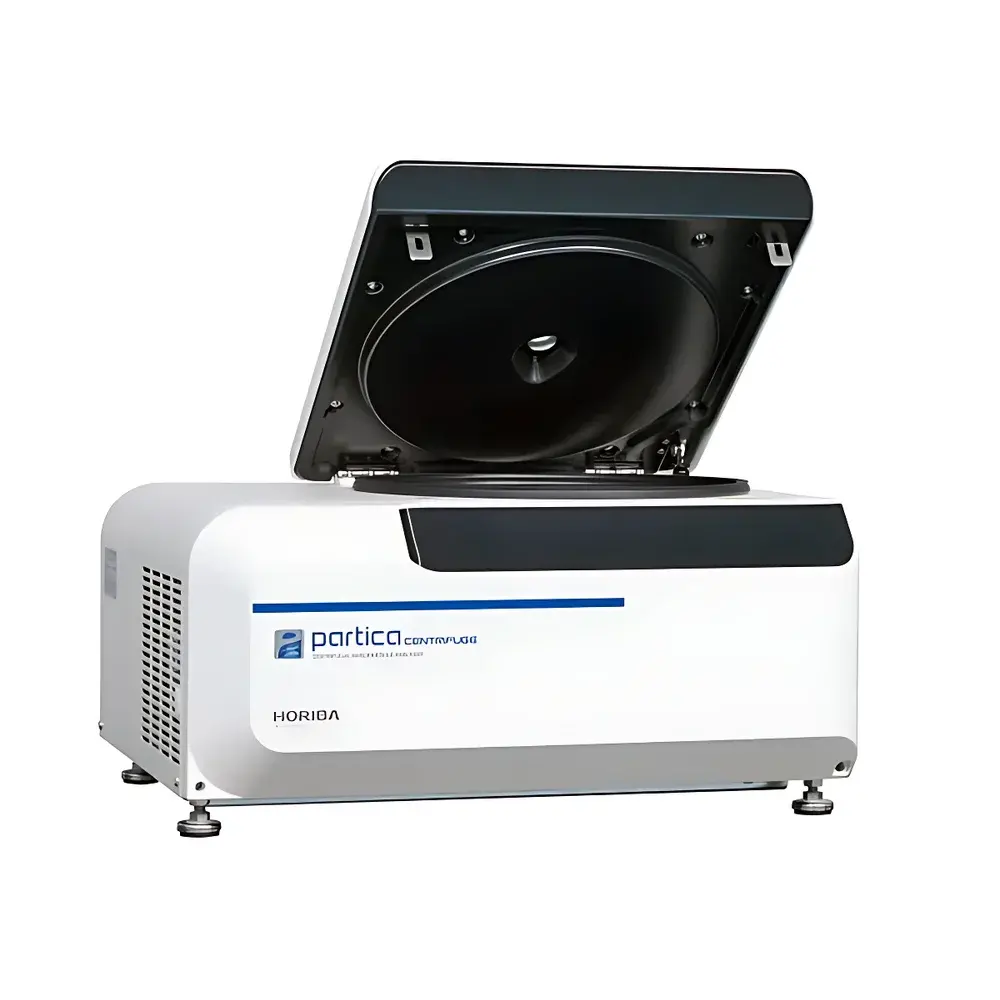
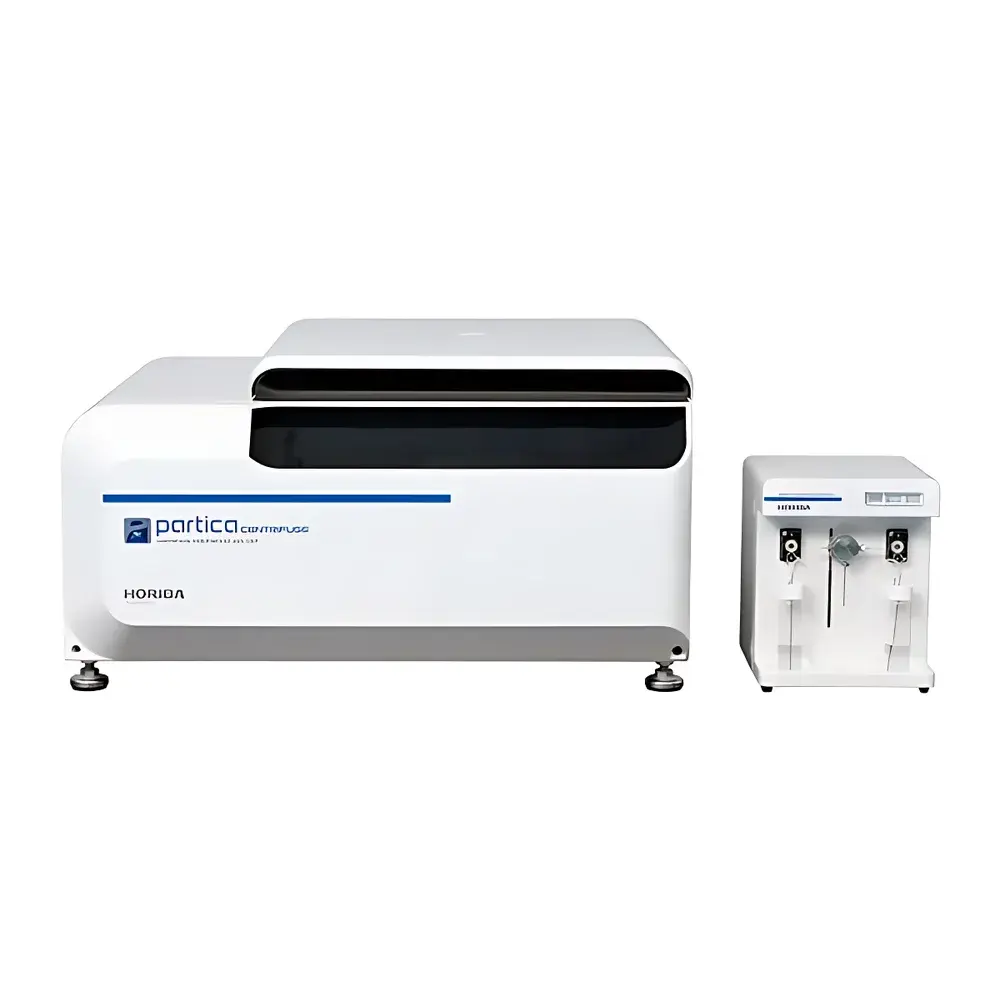
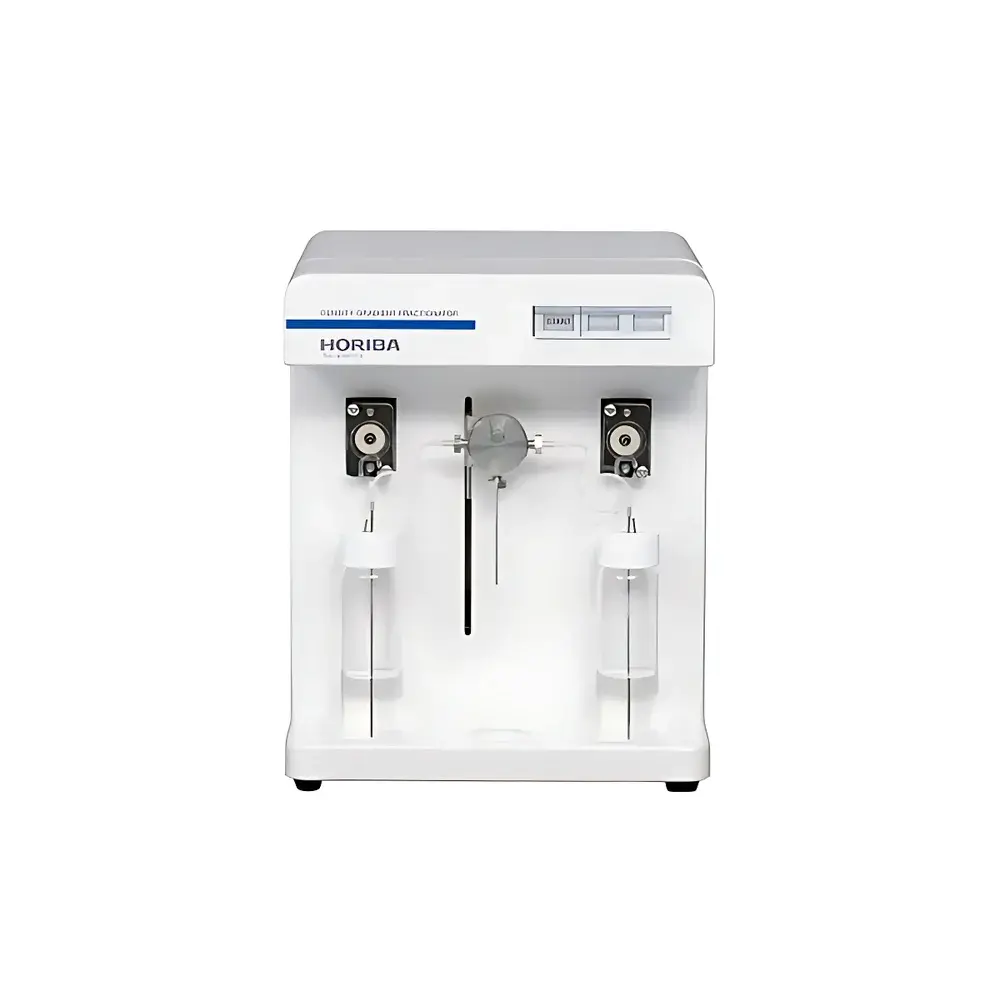
HORIBA Partica CENTRIFUGE CN-300 Centrifugal Sedimentation Particle Size Analyzer
| Brand | HORIBA |
|---|---|
| Origin | Japan |
| Manufacturer Type | Original Equipment Manufacturer (OEM) |
| Product Origin | Imported |
| Model | Partica CENTRIFUGE CN-300 |
| Measurement Principle | Centrifugal Sedimentation |
| Measured Range | 10 nm – 40 µm |
| Maximum Centrifugal Force | 30,000 × g |
| Temperature Control | Integrated Peltier Cooling for Sample Cell and Rotor |
| Measurement Modes | Density Gradient Mode & Homogeneous Mode |
| Sample Volume | As low as 2 µL (undiluted) or 10 µL (diluted) |
| Compliance | IEC 61010-1:2010 / IEC 61010-2-020:2016 |
Overview
The HORIBA Partica CENTRIFUGE CN-300 is a high-resolution centrifugal sedimentation particle size analyzer engineered for precise, reproducible measurement of particle size distribution (PSD) across a broad dynamic range—from 10 nanometers to 40 micrometers. Unlike optical or laser-based techniques, the CN-300 relies on the fundamental physical principle of Stokes’ law under controlled centrifugal acceleration: particles sediment at velocities proportional to their hydrodynamic diameter, density difference relative to the dispersant, and local effective gravitational field. By applying up to 30,000 × g in a temperature-stabilized rotor chamber, the instrument achieves exceptional resolution—particularly critical for detecting low-abundance subpopulations such as trace aggregates, process contaminants, or secondary nucleation events. Its dual-mode operation—density gradient and homogeneous—enables method flexibility: density gradient mode enhances separation fidelity for polydisperse systems, while homogeneous mode supports rapid analysis of narrow-distribution samples with minimal preparation.
Key Features
- Ultra-broad measurement range (10 nm – 40 µm) validated against NIST-traceable silica standards
- Peltier-controlled thermal management of both sample cell and rotor assembly, maintaining ±0.1 °C stability to minimize viscosity drift and ensure repeatability
- Low-volume capability: accurate analysis from as little as 2 µL of undiluted, high-concentration dispersions (e.g., pigment pastes, inkjet inks, ceramic slurries)
- Disposable or reusable cuvette-style sample cells—designed for rapid loading, easy cleaning, and minimal carryover risk between runs
- Acoustically optimized mechanical architecture delivering <55 dB(A) operational noise—suitable for shared laboratory environments
- Compliance with IEC 61010-1:2010 and IEC 61010-2-020:2016 safety standards for laboratory electrical equipment
Sample Compatibility & Compliance
The CN-300 accommodates aqueous and organic dispersions—including volatile solvents—when paired with compatible density gradient media (e.g., sucrose, glycerol, or cesium chloride solutions). It routinely characterizes challenging industrial materials: carbon black suspensions, metal oxide nanoparticles, polymer latexes, pharmaceutical nanosuspensions, and battery electrode slurries. All measurements adhere to principles outlined in ISO 13321:2022 (particle size analysis by sedimentation methods) and support GLP/GMP workflows through audit-ready metadata logging. Optional software modules enable 21 CFR Part 11 compliance for electronic records and signatures in regulated environments.
Software & Data Management
HORIBA’s proprietary Partica Analysis Software provides real-time visualization of sedimentation profiles, automatic baseline correction, and deconvolution algorithms based on constrained regularization. Raw intensity vs. time data are converted into volume-, number-, or surface-area-weighted distributions using Mie theory or equivalent sphere approximations. Export formats include CSV, XML, and PDF reports compliant with internal QA templates. Batch processing, method templating, and user-level access control support multi-operator laboratories. Data integrity is preserved via timestamped acquisition logs, instrument parameter snapshots, and full traceability from raw signal to final PSD.
Applications
- Quality control of pigment dispersions in inkjet inks and coatings—quantifying primary particle size and detecting micron-scale agglomerates without dilution artifacts
- Stability assessment of nanomedicine formulations—monitoring aggregation onset during accelerated storage testing
- Development of lithium-ion battery cathode slurries—correlating particle size distribution with coating uniformity and electrochemical performance
- Characterization of catalyst nanoparticles—resolving bimodal distributions arising from synthesis heterogeneity
- Regulatory submission support for FDA or EMA filings—providing orthogonal, first-principles-based PSD data complementary to DLS or SEM
FAQ
What physical principle does the CN-300 use to determine particle size?
It applies centrifugal sedimentation governed by Stokes’ law under precisely controlled acceleration and temperature—measuring transit time of particles through a defined detection zone.
Can the CN-300 measure undiluted, highly concentrated samples?
Yes—its density gradient mode enables direct analysis of samples such as uncut inkjet black pigment at concentrations exceeding 20 wt%, with only 2 µL required per run.
How does temperature control improve measurement reliability?
By stabilizing solvent viscosity within ±0.5% over extended runs, it eliminates thermal drift in sedimentation velocity calibration—critical for sub-100 nm resolution.
Is method validation support available for regulated industries?
HORIBA provides IQ/OQ documentation packages, reference standard protocols (e.g., NIST SRM 1980), and optional 21 CFR Part 11-compliant software configuration.
What maintenance is required for long-term operational stability?
Annual rotor balance verification and optical path calibration are recommended; the Peltier cooling system requires no consumables and has a rated service life exceeding 20,000 hours.



