
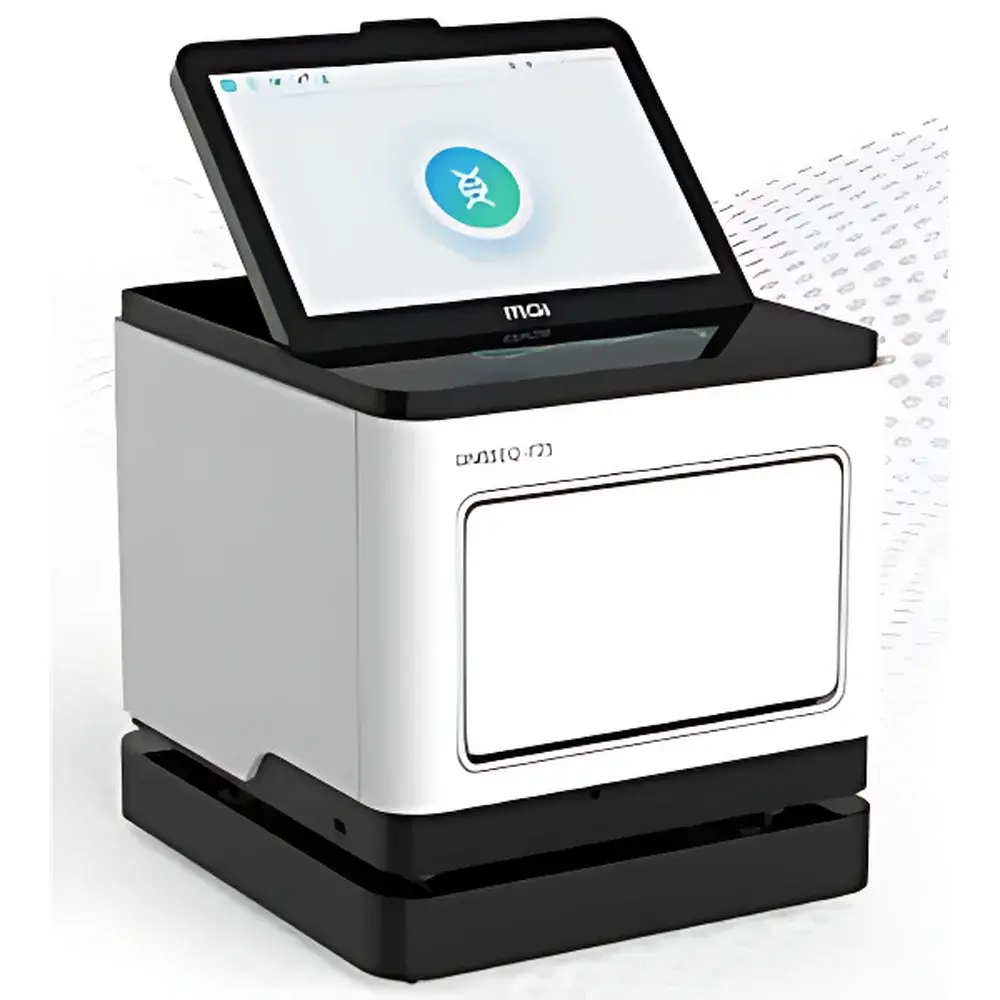
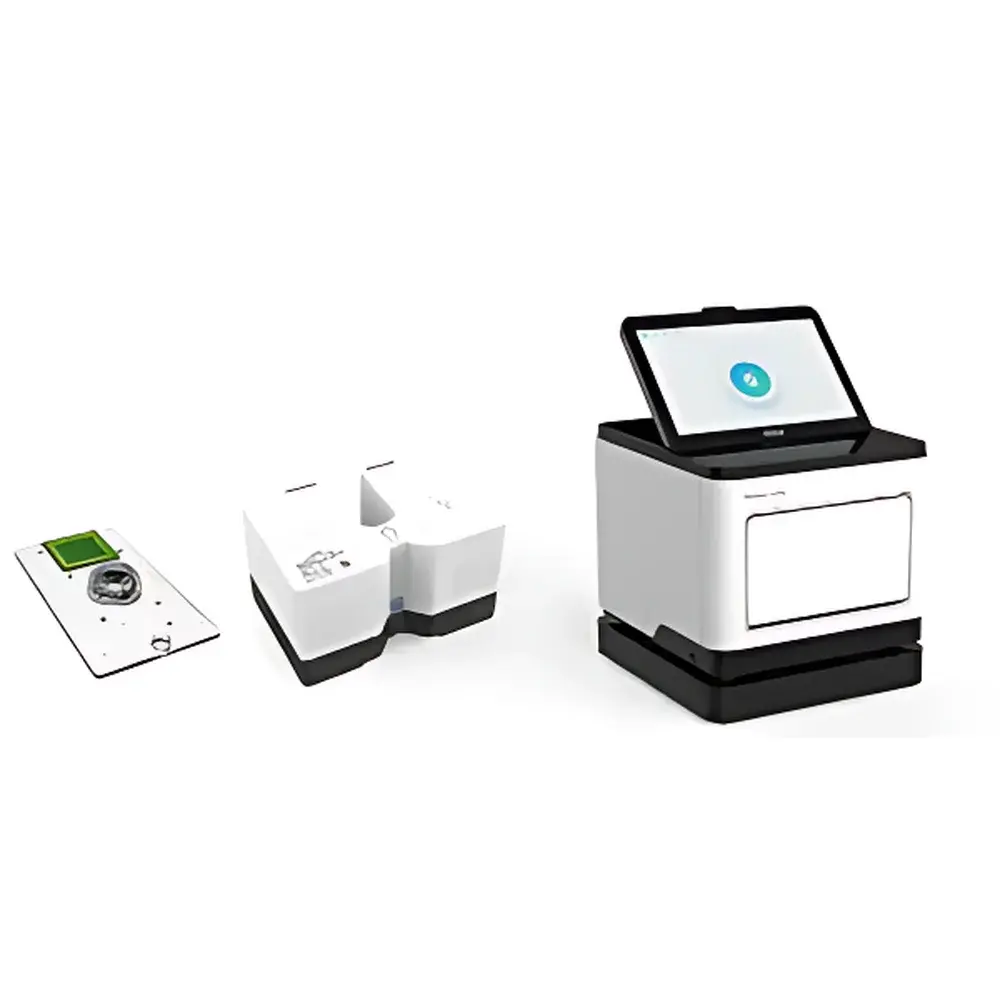
DNBSEQ-E25 Desktop Gene Sequencer by MGI
| Brand | MGI |
|---|---|
| Origin | Guangdong, China |
| Model | DNBSEQ-E25 |
| Instrument Type | Short-Read Sequencing Platform |
| Form Factor | Benchtop |
| Read Length Options | Single-End 100 bp (SE100), Rapid SE100 mode |
| Core Technology | DNA Nanoball (DNB) Sequencing with Patterned Flow Cell and Self-Illuminating Chemistry |
| Signal Detection | Integrated On-Chip Photodetector Array |
| Footprint | 0.1 m² |
| Power Consumption | Low-power architecture optimized for decentralized deployment |
Overview
The DNBSEQ-E25 is a compact, benchtop-scale short-read sequencing platform developed by MGI (BGI Group), engineered for precision, operational simplicity, and low infrastructure dependency. It implements MGI’s proprietary DNA Nanoball (DNB) sequencing chemistry coupled with a patterned flow cell and microfluidic cartridge-based sample loading. Unlike conventional sequencing-by-synthesis platforms requiring external laser excitation and complex optical path alignment, the DNBSEQ-E25 utilizes a self-illuminating nucleotide incorporation system—where each reversible terminator-labeled nucleotide emits detectable photons upon covalent incorporation, eliminating the need for external excitation sources. Signal acquisition is performed via an integrated on-chip photodetector array embedded directly within the flow cell substrate, enabling high signal-to-noise ratio detection without bulky optics or thermal stabilization subsystems. This architecture supports rapid turnaround times, minimal lab footprint requirements (<0.1 m²), and compatibility with standard biosafety level 2 (BSL-2) laboratory environments—making it suitable for decentralized deployment in clinical microbiology labs, field diagnostic units, and academic core facilities where space, power, and technical overhead are constrained.
Key Features
- Benchtop form factor with footprint of only 0.1 m²—designed for integration into existing lab workbenches without dedicated instrument rooms.
- Microfluidic cartridge-based DNB loading and reagent delivery: all sequencing reagents are pre-packaged in single-use cartridges; no manual pipetting onto flow cells or fluidic line priming required.
- Self-illuminating sequencing chemistry: nucleotides carry intrinsic fluorophores activated upon incorporation—no external lasers, dichroic mirrors, or emission filters needed.
- Integrated photodetector array: CMOS-based pixel sensors are monolithically fabricated on the flow cell surface, enabling direct photon capture and reducing optical crosstalk and alignment drift.
- Rapid SE100 mode: delivers completed sequencing runs in under 12 hours from library loading to FASTQ output, with built-in base-calling and QC metrics.
- Low-power operation (<150 W typical): compatible with uninterruptible power supplies (UPS) and mobile deployment scenarios including transportable biocontainment units.
Sample Compatibility & Compliance
The DNBSEQ-E25 accepts standard Illumina-compatible dual-indexed libraries prepared using MGI-certified library prep kits (e.g., MGIEasy PCR-Free DNA Library Prep Set). It supports input DNA ranging from 1 ng to 1 µg (fragment size 150–800 bp) and is validated for amplicon, metagenomic, and whole-genome sequencing applications at sub-megabase scale. The system complies with IEC 61010-1:2010 for electrical safety of laboratory equipment and meets EMC standards per CISPR 11 Class B. While not FDA-cleared as an IVD device, its data output conforms to FASTQ v1.9 and SAM/BAM v1.6 specifications, supporting downstream analysis pipelines compliant with CLIA, CAP, and ISO/IEC 17025 requirements. Audit trails, user access logs, and run parameter archiving are enabled through the onboard MGI ZTRON software, facilitating GLP/GMP-aligned documentation practices.
Software & Data Management
The DNBSEQ-E25 operates exclusively with MGI’s ZTRON v3.x software suite, installed on an embedded industrial-grade computing module. ZTRON provides real-time monitoring of cluster density, phasing/pre-phasing metrics, Q30 distribution, and cycle-by-cycle intensity decay. Raw image data is processed locally using FPGA-accelerated base calling and demultiplexing, with optional encrypted cloud sync to MGI Cloud (via TLS 1.3) for centralized storage and collaborative analysis. All software modules support role-based access control (RBAC), electronic signatures per 21 CFR Part 11 Annex 11, and immutable audit logs covering user login, protocol modification, and result export events. Local data retention policies can be configured to auto-purge raw images after successful FASTQ generation—reducing local storage burden while preserving traceability.
Applications
- Pathogen identification and antimicrobial resistance (AMR) profiling in clinical microbiology labs, particularly for fast-turnaround detection of bacterial/fungal/viral targets in blood, sputum, or CSF samples.
- Small genome resequencing (e.g., mitochondrial DNA, plasmids, bacteriophage genomes, viral quasispecies) with high coverage uniformity and low duplication rates.
- Targeted NGS panels for oncology research (e.g., hotspot mutation screening across <50 genes) and inherited disease carrier screening.
- Educational and training environments: low barrier to entry enables hands-on NGS workflow instruction without requiring cleanroom-grade infrastructure.
- Field-deployable surveillance: validated for operation under ambient temperature fluctuations (15–30 °C) and non-stabilized power inputs (±10% voltage variance).
FAQ
Is the DNBSEQ-E25 compatible with third-party library preparation kits?
Yes—libraries prepared using Illumina TruSeq-style adapters and dual indexing schemes are supported, provided they meet MGI’s input fragment size and adapter dimer removal specifications.
Does the system require external calibration or daily optical alignment?
No—optical components are fixed and factory-calibrated; the integrated photodetector array eliminates moving parts and alignment sensitivity.
Can sequencing data be exported in BAM or VCF format directly from the instrument?
FASTQ is the native output; BAM/VCF generation requires post-run processing using MGI’s ESDA or open-source tools such as BWA-MEM and GATK, both validated in MGI’s reference pipeline documentation.
What maintenance is required beyond cartridge replacement?
No consumable optics cleaning or fluidic line flushing is needed; routine maintenance consists solely of cartridge disposal and weekly system self-diagnostic execution via ZTRON.
Is remote monitoring supported?
Yes—ZTRON includes secure HTTPS-based remote dashboard access with real-time run status, error alerts, and historical run metadata retrieval.




