
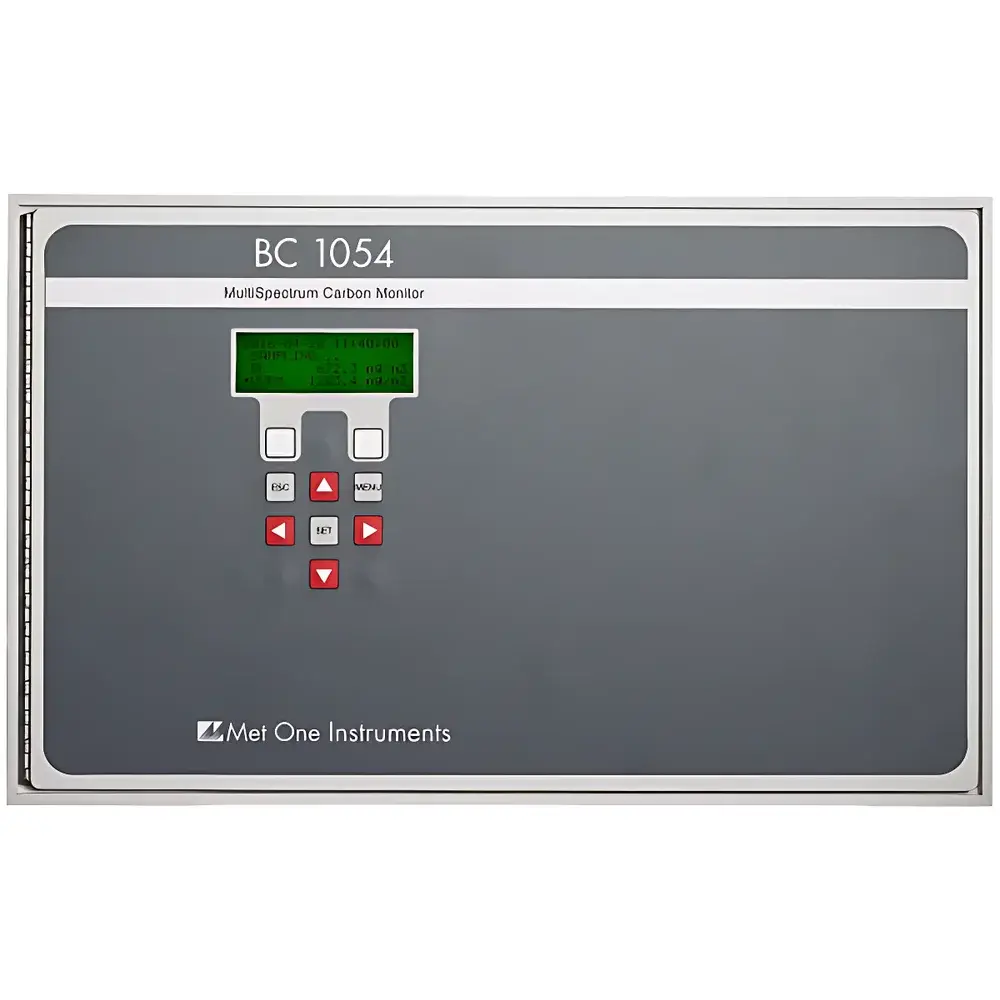
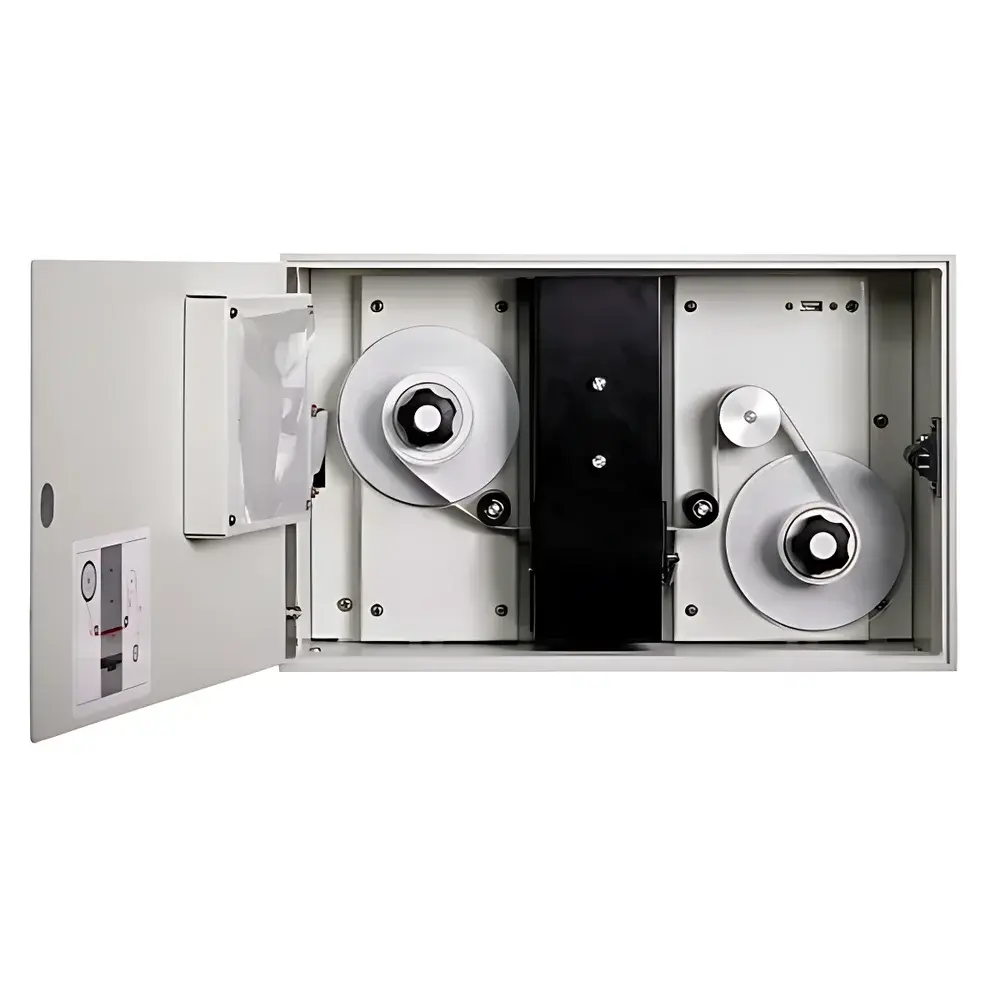
Met One BC 1054 Multi-Spectral Black Carbon Monitor
| Brand | MET ONE |
|---|---|
| Origin | USA |
| Manufacturer Type | Authorized Distributor |
| Product Category | Stack Emission Heavy Metal & Black Carbon Analyzer |
| Model | BC 1054 |
| Measurement Principle | Optical Absorption (Multi-Wavelength Aethalometer Principle) |
| Measurement Range | <1 ng/m³ to >100,000 ng/m³ (effective) |
| Detection Limit | 0.1 ng/m³ |
| Filter Tape Replacement Interval | 24 hours |
| Operating Temperature Range | 1–40 °C |
| Operating Relative Humidity Range | 10–90 % RH (non-condensing) |
| Operating Pressure Range | 80–106 kPa |
| Wavelengths | 370, 430, 470, 525, 565, 590, 660, 700, 880, 950 nm |
| Time Resolution | Standard 1 min |
| Sample Flow Rate | 2 or 5 L/min (user-selectable) |
| Inlet Compatibility | TSP, PM₁₀, PM₂.₅, PM₁ |
| Calibration Method | Factory-calibrated in smoke chamber against traceable NIST-traceable reference standards per ASTM D6216 and ISO 12103-1 |
| Data Output | Analog (4–20 mA), RS-232/RS-485, Ethernet (TCP/IP), Modbus RTU/TCP |
| Compliance | Designed for EPA Reference Method equivalency assessment |
Overview
The Met One BC 1054 Multi-Spectral Black Carbon Monitor is an optically based, continuous ambient and stack emission monitoring instrument engineered for high-fidelity, real-time quantification of light-absorbing carbonaceous aerosols—commonly referred to as black carbon (BC). It operates on the well-established aethalometer principle: incident light at ten discrete wavelengths (370–950 nm) passes through a continuously advancing quartz-fiber filter tape that accumulates airborne particulate matter. As particles deposit, optical attenuation is measured via dual-beam photodetectors, enabling calculation of wavelength-resolved absorption coefficients. These are converted to mass concentrations using empirically validated, wavelength-dependent calibration constants aligned with the Magee Scientific AE series—ensuring inter-instrument comparability and compatibility with long-term climate and air quality datasets. Unlike single-wavelength instruments, the BC 1054’s multi-spectral capability supports source apportionment modeling (e.g., fossil fuel vs. biomass burning) via spectral absorption Ångström exponent (AAE) analysis and enables correction for scattering interference using multi-angle or co-located nephelometer inputs.
Key Features
- Simultaneous 10-channel optical absorption measurement at 370, 430, 470, 525, 565, 590, 660, 700, 880, and 950 nm—enabling robust spectral characterization and AAE derivation
- User-selectable time resolution: standard 1-minute averaging; optional 1-second high-speed mode for transient emission event capture
- Integrated inlet heating (standard) to minimize semi-volatile artifact and maintain consistent particle phase state during sampling
- Tape-saver mode dynamically adjusts filter advancement rate under high-BC conditions, extending tape life and reducing maintenance frequency
- Single-mass-flow-controller architecture eliminates need for external flow splitters—improving system stability and simplifying calibration verification
- Real-time volumetric flow measurement with automatic temperature/pressure compensation ensures concentration calculations reflect actual sampling conditions
- Ruggedized industrial enclosure rated IP54, designed for unattended outdoor deployment or stack-side integration
- Native support for analog (4–20 mA), serial (RS-232/RS-485), and Ethernet (Modbus TCP, HTTP API) communication protocols
Sample Compatibility & Compliance
The BC 1054 accepts standard 47-mm quartz-fiber filter tapes compatible with EPA Method IO-3.1 and ISO 12103-1 test dust protocols. Its inlet is configurable for total suspended particulates (TSP), PM₁₀, PM₂.₅, or PM₁ size cuts via interchangeable cyclones or impactors—ensuring alignment with regulatory monitoring requirements. Factory calibration is performed in a controlled smoke chamber using NIST-traceable carbon black aerosols, with full documentation traceable to ISO/IEC 17025-accredited procedures. While not an EPA Federal Reference Method (FRM) device, the BC 1054 meets performance criteria outlined in ASTM D6216 for optical black carbon monitors and supports method validation for site-specific compliance reporting. When integrated with secure, audit-ready data loggers, it satisfies FDA 21 CFR Part 11 and EU Annex 11 requirements for electronic records and signatures in environmental QA/QC workflows.
Software & Data Management
The BC 1054 includes embedded firmware with onboard data storage (≥30 days at 1-min resolution) and intuitive web-based configuration interface accessible via Ethernet. The optional CloudModem service provides TLS-encrypted data upload to secure AWS-hosted infrastructure, supporting role-based access control, automated backup, and RESTful API integration with enterprise LIMS or SCADA platforms. Post-processing software (Windows/macOS) implements widely adopted correction algorithms—including the Weingartner (2003) loading compensation model and Virkkula (2007) multiple-scattering correction—to account for filter artifact and enhance quantitative accuracy. All raw attenuation signals, flow logs, temperature/pressure metadata, and diagnostic flags are retained for full traceability—essential for GLP audits and scientific reproducibility.
Applications
- Ambient air quality networks requiring long-term BC trend analysis and regulatory reporting
- Urban roadside and near-source monitoring for traffic emission characterization
- Climate research campaigns evaluating BC radiative forcing and snow/ice albedo reduction
- Industrial stack monitoring for combustion process optimization and fugitive emission detection
- Source apportionment studies leveraging multi-wavelength absorption signatures and AAE diagnostics
- Visibility impairment assessment in national parks and Class I areas per US Clean Air Act requirements
- Co-location with BAM-1020 beta attenuation monitors, optical particle counters, or meteorological sensor suites for integrated aerosol property analysis
FAQ
What calibration standards are used during factory calibration?
All BC 1054 units undergo smoke chamber calibration using NIST-traceable carbon black aerosols, with absorption cross-sections referenced to consensus values published in the Aerosol Science and Technology literature. Calibration reports include uncertainty budgets per GUM guidelines.
Can the BC 1054 operate in freezing temperatures?
The specified operating range is 1–40 °C. For sub-zero deployments, optional heated enclosure kits and insulated inlet lines are available to maintain internal thermal stability and prevent condensation.
Is the instrument suitable for stack gas measurements?
Yes—when paired with appropriate high-temperature probe assemblies, dilution systems, and isokinetic sampling controllers, the BC 1054 meets ASTM D6216 Annex A2 guidance for hot/wet stack applications.
How is filter loading artifact corrected?
The instrument applies real-time, tape-position-dependent compensation using the Virkkula algorithm, and raw attenuation data is exported for offline application of advanced correction models including the Drinovec (2015) and R2 correction frameworks.
Does the BC 1054 support remote firmware updates?
Firmware updates are performed via secure HTTPS upload through the embedded web server or via USB flash drive—no cloud dependency required for critical field maintenance.







