
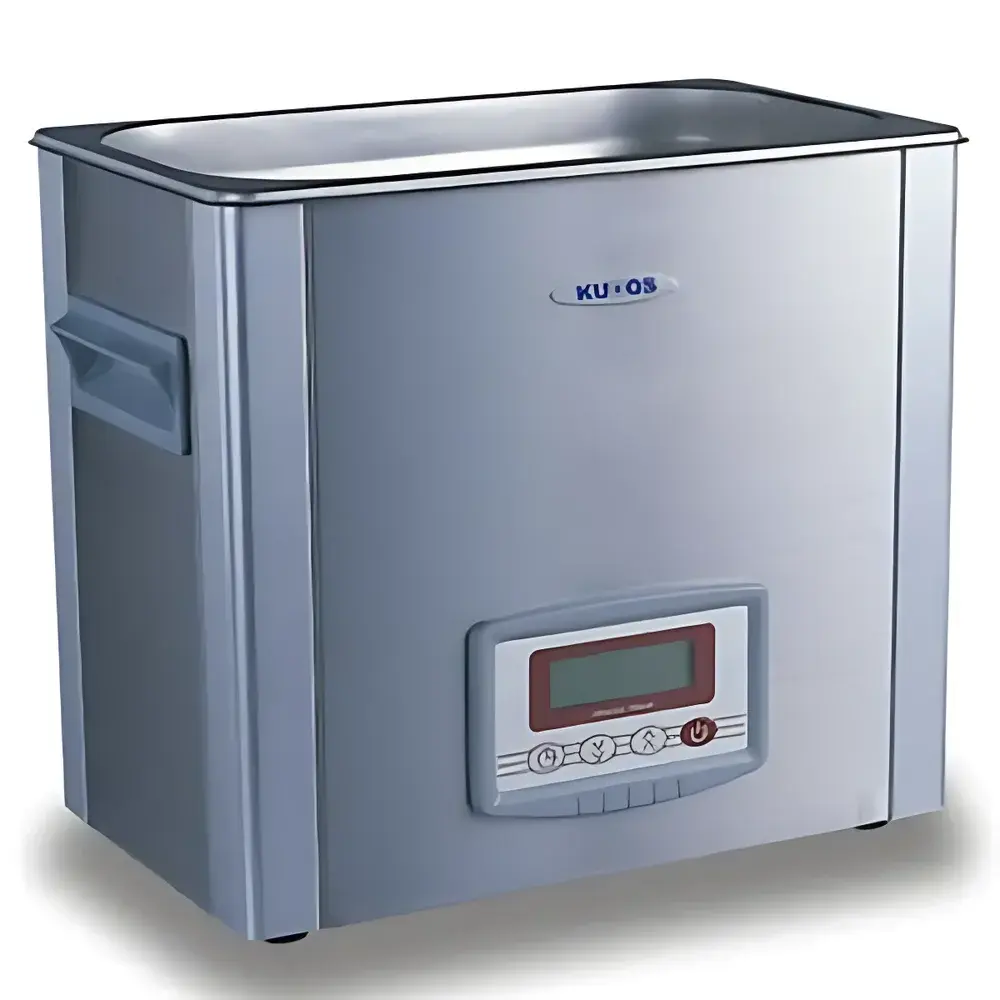
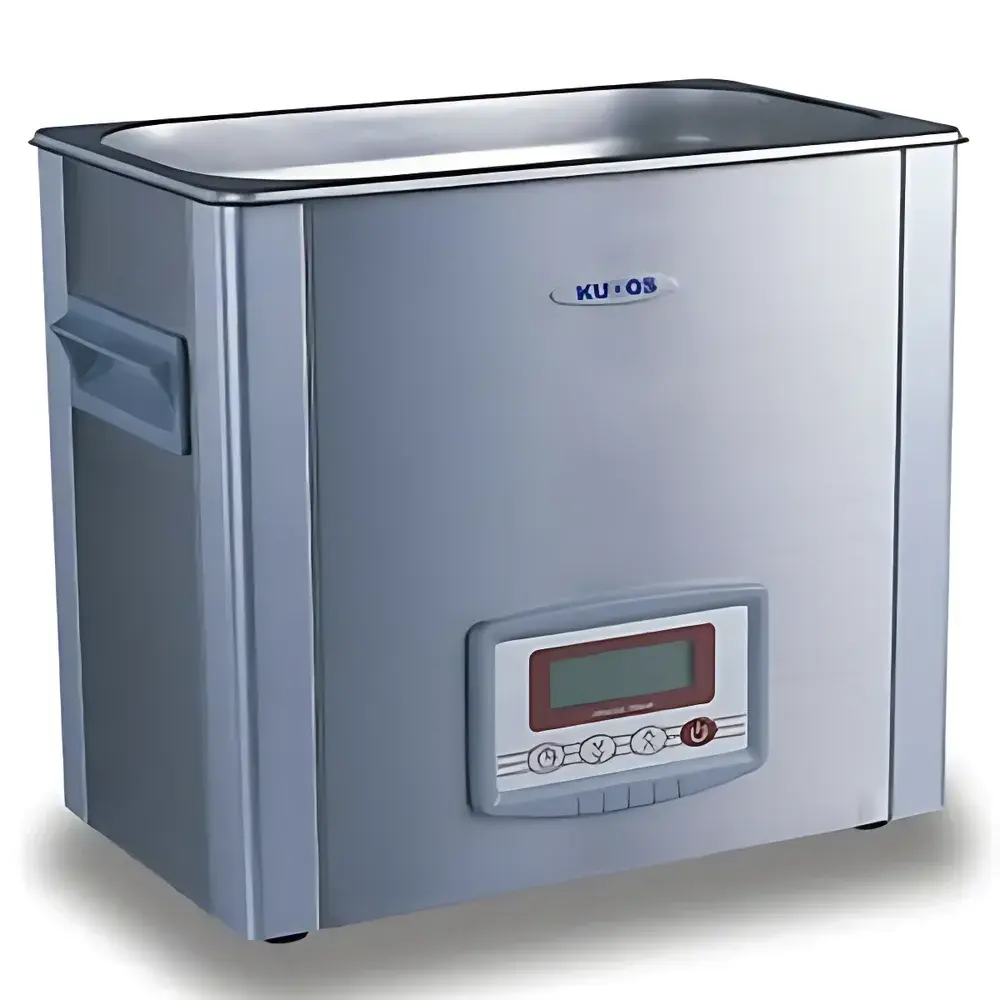
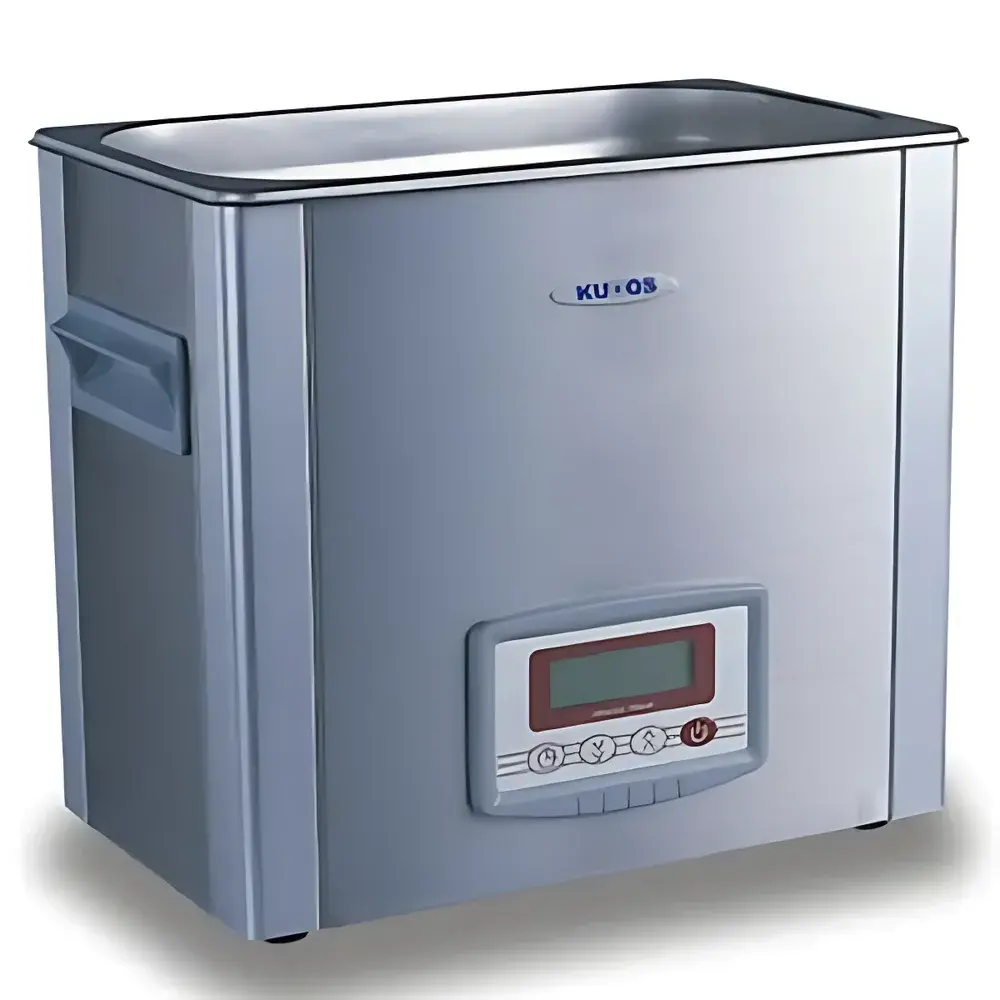
Kedao SK2200H High-Frequency Ultrasonic Cleaner
| Brand | Kedao |
|---|---|
| Origin | Shanghai, China |
| Model | SK2200H |
| Capacity | 3 L |
| Ultrasonic Frequency | 53 kHz |
| Ultrasonic Power | 100 W |
| Adjustable Power | No |
| Adjustable Temperature | No |
| Timer Range | 1–99 min |
| Lid Type | None (Open-top) |
| Drain/Inlet | Manual Control |
| Tank Material | 304 Stainless Steel |
| Dimensions (L×W×H) | 240 × 140 × 100 mm (tank) |
| Net Weight | 3.7 kg |
| Gross Weight | 4.5 kg |
| Standard Accessory | Stainless Steel Rack |
Overview
The Kedao SK2200H High-Frequency Ultrasonic Cleaner is an entry-level, benchtop ultrasonic cleaning system engineered for precision laboratory applications requiring consistent cavitation energy at elevated frequencies. Operating at a fixed frequency of 53 kHz, the unit leverages high-frequency acoustic energy to generate controlled micro-cavitation in aqueous or mild solvent-based media. Unlike lower-frequency cleaners (e.g., 25–40 kHz), the 53 kHz output produces smaller, more densely distributed cavitation bubbles—enhancing surface interaction while minimizing mechanical erosion on delicate substrates such as optical lenses, microfluidic chips, semiconductor wafers, and thin-film-coated instrumentation components. The device is designed for non-continuous, time-limited cleaning cycles (1–99 min), making it suitable for routine decontamination, particle removal, and pre-analytical sample preparation in QC labs, academic research facilities, and electronics manufacturing support environments. Its compact 3 L tank volume and open-top configuration prioritize accessibility and rapid liquid exchange over noise attenuation or thermal regulation.
Key Features
- Stable 53 kHz ultrasonic transducer array bonded to a 304 stainless steel tank for corrosion resistance and acoustic uniformity.
- Digital LED timer with precise 1-minute increments (1–99 min), enabling repeatable exposure control without analog drift.
- Fixed 100 W nominal ultrasonic power output—optimized for energy efficiency and thermal stability during short-duration cycles.
- Benchtop footprint (270 × 160 × 240 mm) compatible with standard fume hoods and laminar flow cabinets.
- Included 304 stainless steel rack for vertical sample positioning and improved acoustic coupling across heterogeneous loads.
- Manual fill-and-drain operation with no integrated pump or solenoid valves—reducing maintenance complexity and fluid cross-contamination risk.
Sample Compatibility & Compliance
The SK2200H accommodates a broad range of sample geometries and materials, including glassware (vials, cuvettes, pipette tips), metal fixtures (surgical instruments, calibration standards), ceramic substrates, and polymer-based microdevices. It is not intended for use with flammable solvents or highly viscous media due to the absence of temperature regulation and explosion-proof certification. While the unit itself carries no CE, UL, or IEC 61000-6-3 certification, its construction adheres to baseline mechanical safety principles outlined in ISO 13857 (safety distances) and EN 61010-1 (laboratory electrical equipment). Users deploying this instrument in regulated environments (e.g., ISO/IEC 17025-accredited labs or GMP-adjacent workflows) must validate cleaning efficacy per internal SOPs—typically using particulate counting (ISO 14644-1 Class 5–8), residue testing (e.g., TOC or conductivity), or visual inspection under 10× magnification.
Software & Data Management
The SK2200H operates as a standalone hardware platform with no embedded firmware, network interface, or data logging capability. All operational parameters—including elapsed time—are displayed via a backlit LCD panel with no memory retention or audit trail functionality. Consequently, it does not comply with FDA 21 CFR Part 11 requirements for electronic records or signatures. For laboratories requiring traceability, external documentation (e.g., paper logbooks or LIMS-integrated task entries) must be employed to record batch identifiers, cycle start/end timestamps, operator initials, and post-cycle verification outcomes. No proprietary software drivers, USB connectivity, or remote control protocols are supported.
Applications
- Routine cleaning of HPLC vials, GC autosampler syringes, and electrophoresis combs prior to analytical runs.
- Removal of organic residues and sub-micron particulates from MEMS sensors and photomask blanks.
- Preparation of TEM grids and AFM cantilevers by eliminating adsorbed hydrocarbons and surfactants.
- Assisted dissolution of powdered reagents in buffer preparation workflows where gentle agitation is preferred over vortexing.
- De-gassing of low-viscosity solvents (e.g., isopropanol, ethanol/water mixtures) prior to filtration or coating processes.
- Supporting ASTM D2621 (standard test method for ultrasonic cleaning effectiveness) through standardized challenge-soil validation protocols.
FAQ
Is the SK2200H suitable for cleaning delicate optical components?
Yes—its 53 kHz frequency generates fine-scale cavitation with reduced implosion force, lowering the risk of pitting or coating delamination on coated lenses and laser optics.
Can the unit be operated continuously for extended periods?
No—the timer is capped at 99 minutes, and the absence of active cooling limits duty cycle to ≤30 min ON / 15 min OFF to prevent transducer overheating.
Does the cleaner include temperature control?
No—temperature is ambient only; users requiring heated baths must integrate an external thermostatic water bath or select a model with integrated heating.
What is the recommended cleaning solution for general labware?
A 1–2% aqueous solution of non-ionic detergent (e.g., Alconox® Liquinox® or Decon® 90) is validated for most glass and stainless-steel items; avoid chlorinated or strongly alkaline formulations unless verified for compatibility.
How often should the tank be descaled?
In hard-water regions, descaling with 5% citric acid solution is advised every 20–30 operating hours to maintain transducer coupling efficiency and prevent calcium carbonate buildup on the tank bottom.



