
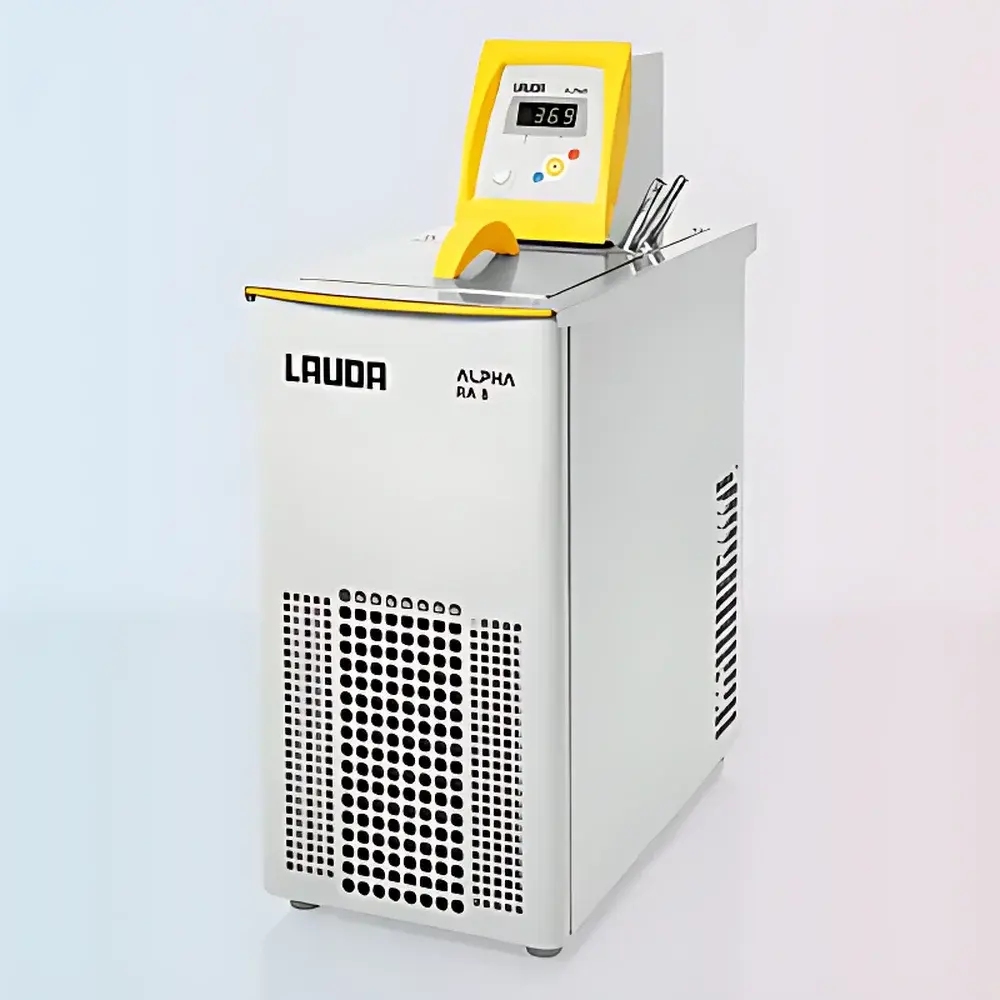
Beckman Coulter Avanit J Series High-Performance Floor-Standing Refrigerated Centrifuge
| Brand | Beckman Coulter |
|---|---|
| Origin | USA |
| Instrument Type | Floor-standing centrifuge |
| Category | Refrigerated high-speed centrifuge |
| Max Speed | 26,000 rpm |
| Max RCF | 82,000 × g |
| Max Capacity | 4 × 1000 mL |
| Drive System | Switched Reluctance Motor |
| Cooling Range | –10 °C to +40 °C |
| Heat Dissipation | ≤2.0 kW/h |
| Rotor Options | >30 interchangeable rotors including fixed-angle, swinging-bucket, continuous-flow, and microplate carriers |
| Compliance | Designed for GLP/GMP environments |
Overview
The Beckman Coulter Avanit J Series is a high-performance, floor-standing refrigerated centrifuge engineered for demanding preparative and process-scale applications in biopharmaceutical development, academic research, and clinical laboratories. Utilizing a robust switched reluctance drive (SRD) system, the Avanit J delivers rapid acceleration and deceleration profiles—reaching 20,000 rpm in under two minutes—while maintaining exceptional torque stability across wide speed ranges. Its refrigerated operation (–10 °C to +40 °C) ensures thermal integrity of temperature-sensitive biological samples during extended runs. The system achieves a maximum relative centrifugal force (RCF) of 82,000 × g at 26,000 rpm, enabling efficient separation of subcellular organelles, viral particles, macromolecular complexes, and clarified fermentation broths. Unlike conventional induction-motor-based centrifuges, the SRD architecture eliminates brushes and reduces mechanical wear, resulting in higher operational reliability and lower long-term maintenance requirements.
Key Features
- Switched Reluctance Drive (SRD): Delivers precise speed control, high starting torque, and energy-efficient operation with minimal heat generation (≤2.0 kW/h).
- Smart FRS (Friction Reduction System): Dynamically optimizes chamber airflow to minimize aerodynamic drag, accelerating time-to-target speed by up to 35% compared to legacy systems.
- Ultra-Lightweight Rotors: Includes the JLA-8.1000 fixed-angle rotor (6 kg mass), capable of processing four 1,000 mL bottles in under 10 minutes; JLA-10.500 (8.9 kg) and JLA-16.250 (10.3 kg) rotors reduce operator handling fatigue and improve safety during rotor exchange.
- HEPA-Filtered Exhaust Option: Integrated HEPA filtration ensures that expelled air meets biosafety containment standards (BSL-2 equivalent), critical for viral or pathogen processing workflows.
- Ergonomic Footswitch Control: Enables hands-free start/stop functionality—particularly advantageous during multi-step protocols requiring frequent centrifugation cycles.
- Modular Rotor Library: Over 30 validated rotor configurations—including continuous-flow, zonal, enzyme-linked immunosorbent assay (ELISA) plate, and high-capacity fixed-angle variants—support scalability from benchtop purification to pilot-scale bioprocessing.
Sample Compatibility & Compliance
The Avanit J accommodates sample volumes ranging from 1.5 mL microtubes to 4 × 1,000 mL bottles per run, making it suitable for both analytical preps and large-volume harvests. It supports ISO 22870-compliant point-of-care laboratory environments and meets key mechanical safety standards including IEC 61010-1 and UL 61010-1. When operated with Beckman Coulter’s Biomek® or CytoFLEX®-integrated automation platforms, the instrument complies with FDA 21 CFR Part 11 requirements for electronic records and signatures. All rotor certifications are traceable to NIST-calibrated reference standards, and full audit logs—including rotor history, speed calibration, temperature setpoints, and run parameters—are retained locally and exportable in CSV or PDF formats for GLP/GMP documentation.
Software & Data Management
The Avanit J operates via Beckman Coulter’s intuitive CentriLog™ touchscreen interface, which stores up to 1,000 user-defined protocols with password-protected access levels. Protocols include programmable ramp/deceleration profiles, automatic brake selection (soft/standard/brake-off), and real-time monitoring of RCF, temperature, and elapsed time. Optional integration with Beckman Coulter’s LabX® software enables centralized fleet management, remote diagnostics, and automated report generation compliant with ISO/IEC 17025 documentation frameworks. All data exports support timestamped metadata, digital signatures, and version-controlled protocol revisions—essential for regulatory submissions and internal quality audits.
Applications
- Virus and subviral particle isolation for vaccine development and gene therapy vector purification.
- Large-scale preparation of mitochondria, lysosomes, and other organelles from mammalian and plant tissues.
- Downstream processing of microbial and mammalian cell culture harvests, including clarification of high-viscosity fermentation broths.
- Protein precipitation and recovery following ammonium sulfate or PEG fractionation.
- Blood component separation (e.g., platelet-rich plasma, buffy coat isolation) under controlled temperature conditions.
- Cell washing and pelleting in cell therapy manufacturing, including CAR-T and stem cell expansion workflows.
FAQ
What is the minimum and maximum sample volume supported per run?
The Avanit J accepts tubes and bottles ranging from 1.5 mL to 2,250 mL, depending on rotor configuration. With the JLA-16.250 rotor, users can process up to 6 × 1,000 mL or 4 × 2,250 mL in a single run.
Does the Avanit J support continuous-flow centrifugation?
No—the Avanit J is designed exclusively for batch-mode operation. Continuous-flow applications require dedicated instruments such as the Beckman Coulter J26 XP or Optima XPN series.
Can the Avanit J be validated for GMP manufacturing environments?
Yes—when equipped with CentriLog firmware v3.2+, optional LabX connectivity, and calibrated rotors with NIST-traceable certificates, the system supports IQ/OQ/PQ validation protocols aligned with Annex 15 and USP guidelines.
Is rotor imbalance detection built into the system?
Yes—the Avanit J features real-time vibration sensing and automatic shutdown if imbalance exceeds ISO 21501-4 Class 5 thresholds, preventing damage to the drive assembly and ensuring personnel safety.
How does the Smart FRS system reduce run time?
By dynamically adjusting internal airflow resistance during acceleration, Smart FRS lowers effective rotor inertia, allowing faster attainment of target speed without increasing motor load or thermal stress.



