
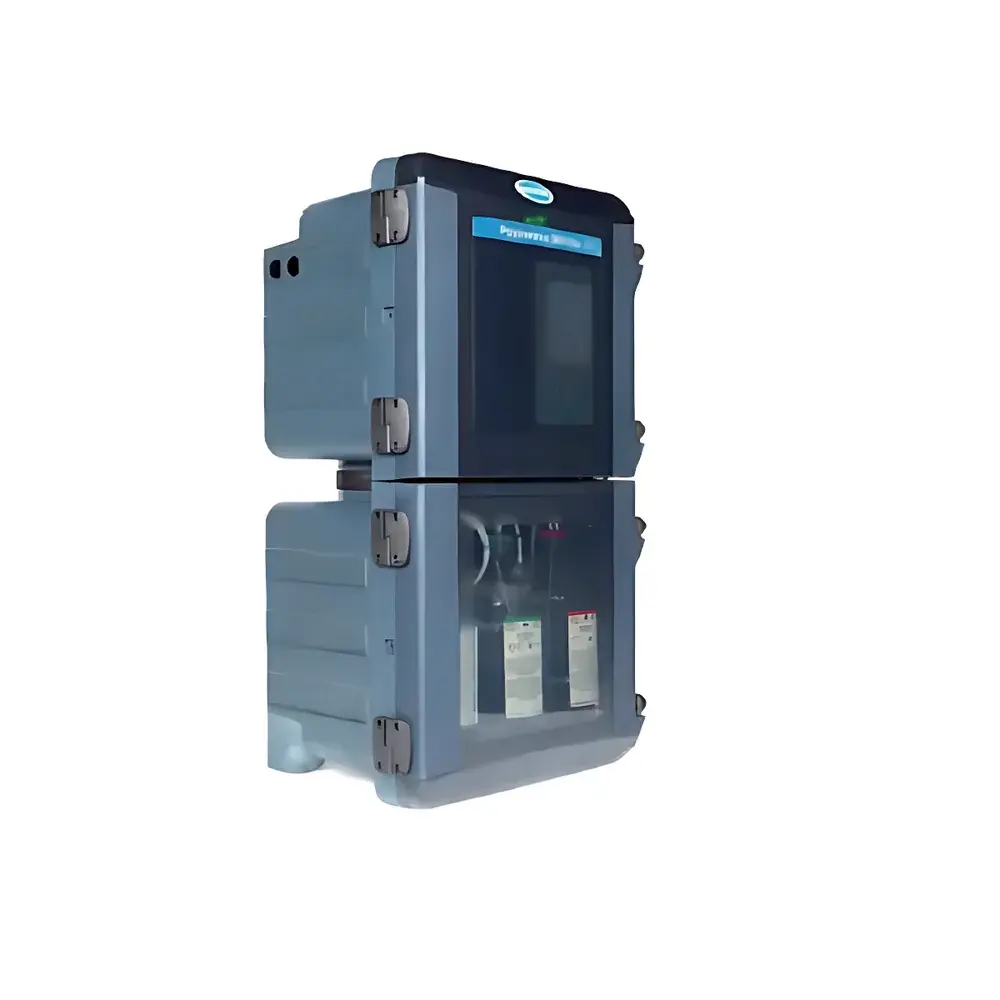
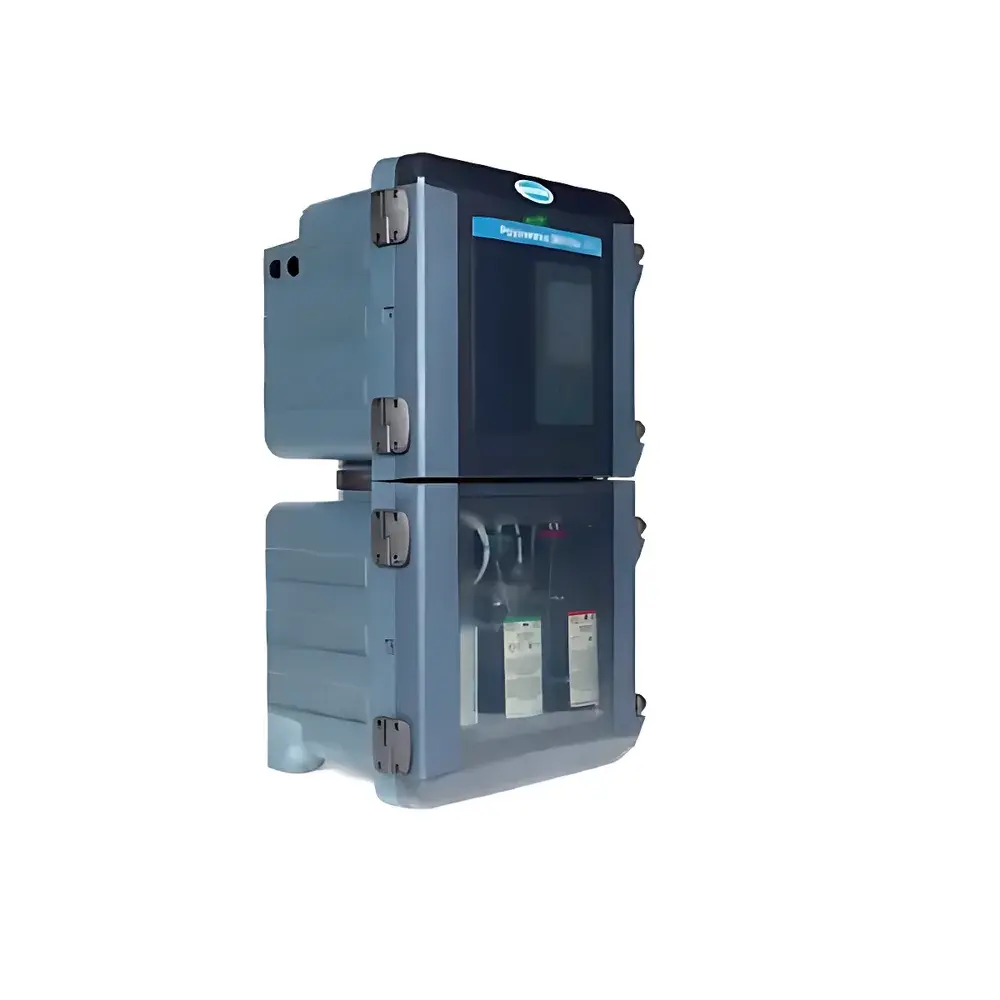
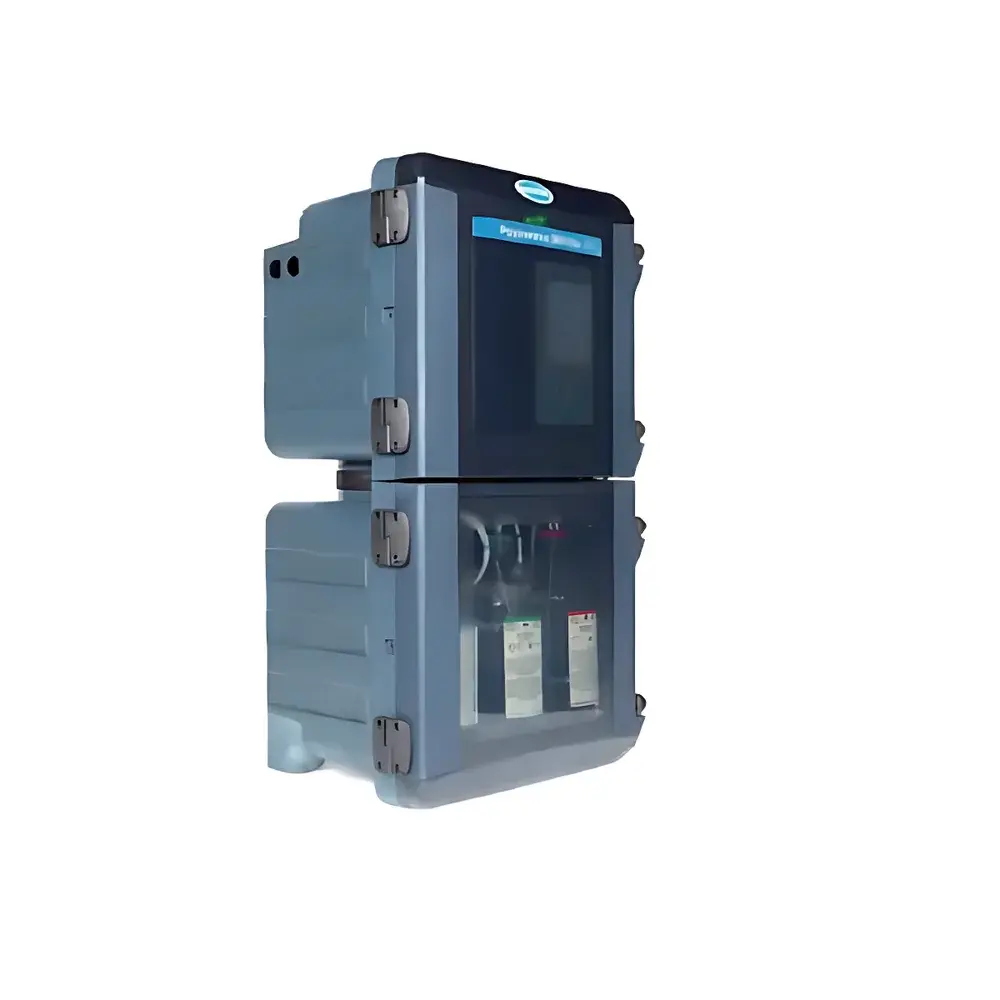
HACH Polymetron 9610sc Online Silica Analyzer
| Brand | HACH |
|---|---|
| Origin | USA |
| Manufacturer Type | Authorized Distributor |
| Origin Category | Imported |
| Model | Polymetron 9610sc |
| Price | Upon Request |
| Measurement Range | 0.5–5000 µg/L as SiO₂ |
| Accuracy | ±1% or ±1 µg/L (0–500 µg/L), ±5% (500–5000 µg/L) |
| Repeatability | ±0.5 µg/L or ±1% (whichever is greater) |
| Detection Limit | 0.5 µg/L |
| Response Time | ~9 min at 25°C |
| Sample Pressure | 2–87 psi |
| Sample Temperature | 5–50°C |
| Flow Rate | 55–300 mL/min |
| Sampling Channels | 1, 2, 4, or 6 |
| Cycle Time | ~15 min |
| Reagent Consumption | ~2 L per reagent per 90 days |
| Power Supply | 100–240 V AC, 50/60 Hz |
| Output Signals | Four 4–20 mA isolated analog outputs |
| Enclosure Rating | IP56 |
| Dimensions (H×W×D) | 804 × 452 × 360 mm |
| Weight | 20 kg (empty), 36.3 kg (fully loaded with reagents) |
| Mounting Options | Wall-mount, panel-mount, or benchtop |
| Tubing | Sample & bypass drain: 6 mm |
| Air purge inlet | 6 mm (1/4 in) |
| Chemical waste line | 9.5 mm (3/8 in) |
| Compatible Controllers | SC200, SC1000 |
Overview
The HACH Polymetron 9610sc Online Silica Analyzer is a laboratory-grade, colorimetric process analyzer engineered for continuous, real-time quantification of dissolved silica (as SiO₂) in ultrapure and industrial water streams. It operates on the principle of molybdenum blue spectrophotometry: soluble silicate reacts with molybdate ions under acidic conditions to form heteropoly-molybdosilicic acid; phosphates—common interferents—are selectively masked by oxalic acid; subsequent reduction with ammonium iron(II) sulfate yields an intense blue chromophore proportional to silica concentration. Absorbance is measured precisely at 815 nm using a stable LED light source and precision optical path, enabling trace-level detection down to 0.5 µg/L. Designed for mission-critical applications where silica scaling or corrosion poses operational risk—including boiler feedwater, condensate, steam, and demineralized water systems—the 9610sc delivers metrological rigor aligned with ASTM D859 and ISO 10523 standards for silica determination in low-conductivity waters.
Key Features
- Prognosys predictive diagnostics engine continuously monitors fluidic integrity, reagent stability, optical path clarity, and reaction kinetics—flagging potential failures before they impact data continuity or trigger unscheduled downtime.
- Low-reagent consumption architecture: only ~2 L per reagent required for 90 days of uninterrupted operation at standard 15-minute cycle intervals, minimizing maintenance frequency and chemical handling exposure.
- Dual manual sampling interface: “Grab-in” allows direct introduction of external reference or validation samples without interrupting the primary process stream; “Grab-out” enables retrieval of analyzed sample for independent lab verification—supporting method cross-validation and GLP-compliant audit trails.
- Flexible channel configuration supporting 1-, 2-, 4-, or 6-stream multiplexed monitoring via programmable valve sequencing—ideal for multi-point boiler water surveillance or distributed utility networks.
- Robust IP56-rated enclosure with corrosion-resistant wetted materials (e.g., PFA, ETFE, borosilicate glass) ensures long-term reliability in harsh plant environments including turbine halls and chemical dosing rooms.
- Four fully isolated 4–20 mA analog outputs support integration into DCS, PLC, or SCADA systems with configurable scaling, alarm thresholds, and fault reporting per channel.
Sample Compatibility & Compliance
The Polymetron 9610sc is validated for use with low-turbidity, low-organic-content aqueous matrices typical of power generation and microelectronics ultrapure water (UPW) loops. It accommodates inlet pressures from 2–87 psi and temperatures between 5–50°C, with flow rates maintained at 55–300 mL/min via integrated flow control. Sample compatibility extends to high-purity deionized water, reverse osmosis permeate, condensate, and low-silica boiler feedwater. The analyzer meets key regulatory expectations for continuous emission and process monitoring: its firmware supports audit-trail logging compliant with FDA 21 CFR Part 11 requirements when paired with SC1000 controllers; measurement uncertainty profiles align with ISO/IEC 17025 calibration traceability frameworks; and its analytical methodology satisfies USP <643> and EP 2.2.24 for silica in pharmaceutical water systems.
Software & Data Management
The 9610sc operates natively with HACH’s SC200 and SC1000 universal controllers, providing intuitive web-based configuration via embedded HTML5 interface accessible over secure HTTP/HTTPS. All measurement data—including raw absorbance values, temperature-compensated concentration outputs, diagnostic logs, reagent expiration alerts, and cycle timing metadata—are timestamped and stored locally with 30-day rolling buffer capacity. Data export is supported via Modbus TCP, Ethernet/IP, or optional 4G LTE telemetry modules. When deployed in regulated environments, the system enables electronic signature workflows, user role-based access control (RBAC), and automated report generation (PDF/CSV) aligned with GMP Annex 11 and ICH Q9 quality risk management principles.
Applications
- Power generation: Continuous monitoring of silica in boiler feedwater, drum blowdown, condensate return, and superheated steam to prevent silica deposition on turbine blades and heat exchanger surfaces.
- Pharmaceutical manufacturing: Real-time verification of silica compliance in purified water (PW) and water-for-injection (WFI) distribution loops per USP and EP monographs.
- Microelectronics: Ultrapure water (UPW) surveillance in semiconductor fab tool feeds where sub-ppb silica excursions can cause wafer defectivity and yield loss.
- Chemical processing: Control of silica carryover in ion exchange regeneration rinses and mixed-bed polishing stages.
- Desalination plants: Monitoring silica breakthrough in RO permeate and post-treatment polishing beds to safeguard downstream EDI and electrodeionization units.
FAQ
What is the minimum detectable silica concentration?
The instrument achieves a detection limit of 0.5 µg/L as SiO₂ under standard operating conditions (25°C, optimal reagent freshness, clean optics).
How does temperature affect measurement accuracy?
Response time and reaction kinetics are temperature-dependent; built-in NTC thermistor compensation adjusts timing and baseline correction algorithms across the 5–50°C operating range.
Can the 9610sc be integrated into existing DCS infrastructure?
Yes—via four configurable 4–20 mA analog outputs or digital protocols including Modbus TCP and Ethernet/IP, with engineering units and alarm states fully programmable.
Is routine calibration required?
The analyzer performs automatic zero and span verification using factory-certified standards; manual calibration is recommended quarterly or after reagent replacement, following HACH Method 8187.
What maintenance tasks are performed during scheduled service?
Typical tasks include optical window cleaning, peristaltic pump tubing replacement, filter inspection, reagent reservoir refilling, and Prognosys diagnostic log review—all documented in the onboard service history log.




