
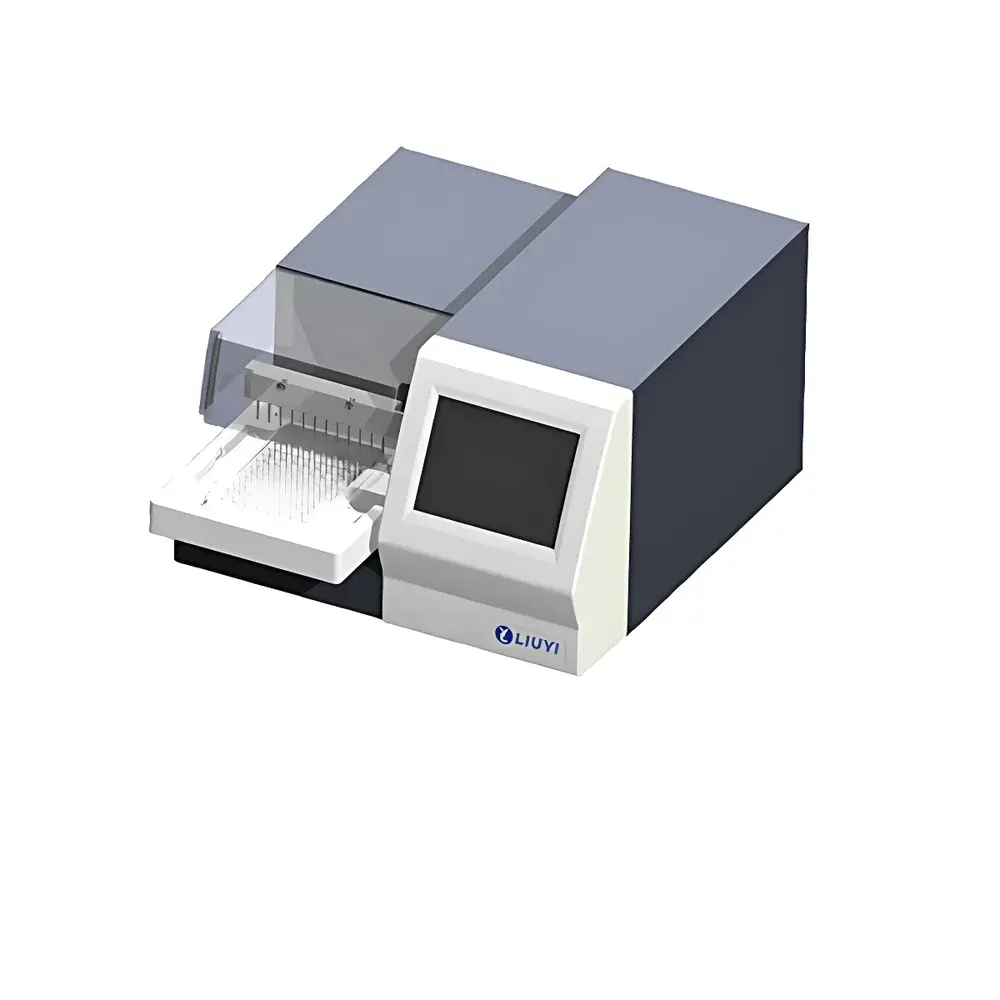
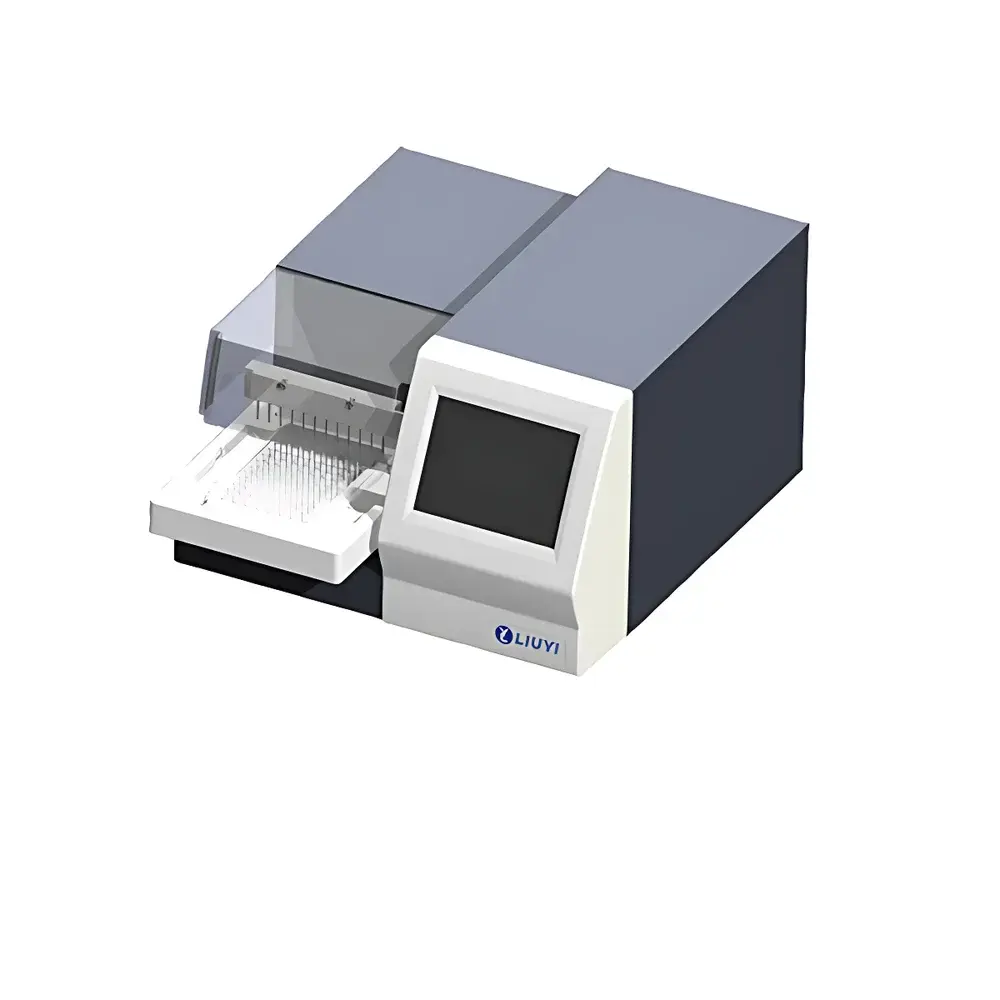
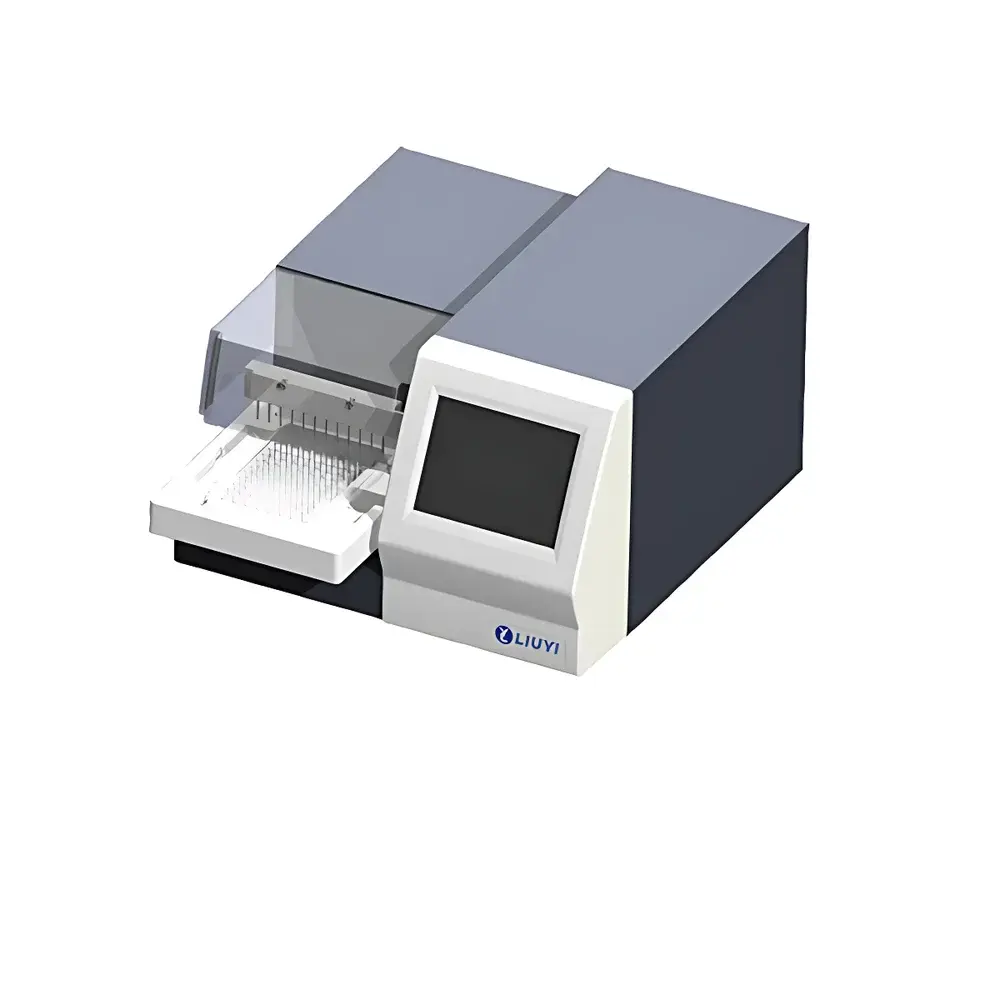
LY WD-2103B Non-Medical Automated Microplate Washer
| Brand | LY |
|---|---|
| Origin | Beijing, China |
| Manufacturer Type | Authorized Distributor |
| Product Category | Domestic |
| Model | WD-2103B |
| Instrument Type | Multifunctional Plate Washer |
| Wash Head Configuration | One 8-pin and one 12-pin removable wash head |
| Wash Head Design | Dual-row needle configuration |
| Wash Fluid Channels | Dual-row needle architecture (standard 1-channel |
| Soaking Time Range | 0–24 hours adjustable |
| Wash Cycles | 0–99 cycles programmable |
| Residual Liquid Volume | ≤1 µL per well (average) |
| Orbital Shaking Function | 3-level intensity (low/medium/high), shaking duration 0–24 h adjustable |
Overview
The LY WD-2103B is a non-medical, benchtop automated microplate washer engineered for high-reproducibility plate processing in research, quality control, and industrial testing laboratories. It operates on a gravity-fed, non-vacuum/non-positive-pressure fluid handling principle—eliminating reliance on external vacuum pumps or pressurized air systems—thereby reducing maintenance complexity and enhancing long-term operational stability. The instrument employs dual-row needle architecture with independently configurable 8-pin and 12-pin wash heads, enabling precise, low-shear liquid delivery and aspiration across standard 96-well and 384-well microplates. Its vertical dual-needle design supports multiple washing geometries—including single-row, cross-row, and full-plate modes—as well as center-injection rinse and dual-point aspiration protocols, minimizing cross-contamination risk and preserving well bottom integrity during repeated cycles. Designed strictly for *in vitro* laboratory use, the WD-2103B complies with IEC 61010-1 safety standards for electrical equipment for measurement, control, and laboratory use, and is explicitly excluded from medical device classification under ISO 13485 and FDA 21 CFR Part 820.
Key Features
- Dual-configurable wash heads: One detachable 8-pin and one 12-pin stainless-steel needle array, compatible with flat-bottom, U-bottom, and V-bottom microplates.
- Programmable soaking: Adjustable soak duration from 0 to 24 hours—critical for antigen-antibody dissociation, cell membrane permeabilization, or detergent-based residue removal in ELISA, immunoassay, and cytotoxicity workflows.
- Three-tier orbital shaking: Mechanically actuated plate agitation with user-selectable intensity (Level 1–3) and time (0–24 h), optimized for uniform reagent mixing without splashing or well-to-well carryover.
- Intelligent fluid management: Standard single-channel wash fluid input; optional expansion to four independent fluid channels enables sequential or parallel reagent delivery without manual bottle swapping—ideal for multi-step assay protocols (e.g., blocking → primary Ab → secondary Ab → substrate).
- Robust human-machine interface: 5.6-inch industrial-grade color TFT-LCD touchscreen with intuitive icon-driven navigation, supporting 200 user-defined wash programs with real-time preview, on-the-fly parameter modification, and secure storage of plate geometry profiles (20 predefined formats, including ANSI/SLAS-compliant layouts).
- Wide-input power architecture: AC 100–240 V, 50–60 Hz auto-ranging power supply ensures stable operation in global laboratory environments without external voltage regulators.
Sample Compatibility & Compliance
The WD-2103B accommodates all common microplate formats: ANSI/SLAS-standard 96-well (flat, U, V), 384-well, and strip-based configurations. Its non-contact, low-pressure aspiration mechanism prevents scratching of sensitive polymer surfaces (e.g., polystyrene, polypropylene, cyclo-olefin copolymer). All wetted components are constructed from chemically resistant 316 stainless steel and PTFE-lined tubing, compatible with aqueous buffers, mild detergents (e.g., Tween-20, Triton X-100), ethanol, and 0.1 M NaOH for decontamination. The system meets CE marking requirements under Directive 2014/30/EU (EMC) and 2014/35/EU (LVD), and conforms to GLP documentation standards via timestamped program logs and audit-trail-capable parameter history (when integrated with external LIMS). Not intended for clinical diagnostics or regulatory submissions requiring FDA 510(k) clearance or ISO 13485 certification.
Software & Data Management
The embedded firmware supports full local program lifecycle management: creation, validation, versioning, and deletion of wash protocols with parameter locking options. Each stored method includes metadata fields for operator ID, date/time stamp, plate type, and cycle verification flags. The system generates CSV-formatted run logs (accessible via USB export) containing start/stop timestamps, actual residual volume estimates (based on aspiration pressure feedback), and error codes for traceability. While the device does not natively support FDA 21 CFR Part 11 electronic signature functionality, its deterministic execution and immutable log structure enable compliance-ready integration into validated workflows when paired with compliant third-party data acquisition software.
Applications
The WD-2103B serves core workflows in academic research (e.g., high-throughput screening, kinase assays, receptor binding studies), food safety labs (aflatoxin, pesticide residue ELISAs), agricultural biotechnology (plant pathogen serology), feed quality control (mycotoxin detection), and environmental monitoring (waterborne pathogen immunoassays). Its extended soaking and programmable shaking capabilities make it particularly suited for challenging matrices—such as viscous serum samples, lysate-rich cell supernatants, or particulate-laden environmental extracts—where conventional washers risk incomplete residue removal or well clogging.
FAQ
Is the WD-2103B certified as a medical device?
No. It is classified as a non-medical laboratory instrument and carries no regulatory clearance for clinical diagnostics or patient-related use.
Can the wash heads be autoclaved?
The stainless-steel needle arrays are removable and compatible with standard laboratory autoclaving (121°C, 20 min, saturated steam); however, the main chassis and electronics must not be exposed to sterilization conditions.
Does the system support ASTM E2714 or ISO 22119-compliant validation?
While not pre-validated, the instrument’s deterministic mechanics, calibrated fluid delivery, and full parameter logging provide foundational evidence required for user-performed IQ/OQ/PQ protocols aligned with those standards.
What is the maximum allowable viscosity for wash solutions?
Optimal performance is maintained for aqueous solutions up to 10 mPa·s; higher viscosities may require reduced aspiration speed or extended dwell times to maintain ≤1 µL residual volume specification.
How is waste fluid level monitored?
An integrated capacitive sensor triggers an audible and visual alert when the 2 L waste reservoir reaches 95% capacity, preventing overflow and ensuring uninterrupted batch processing.




