
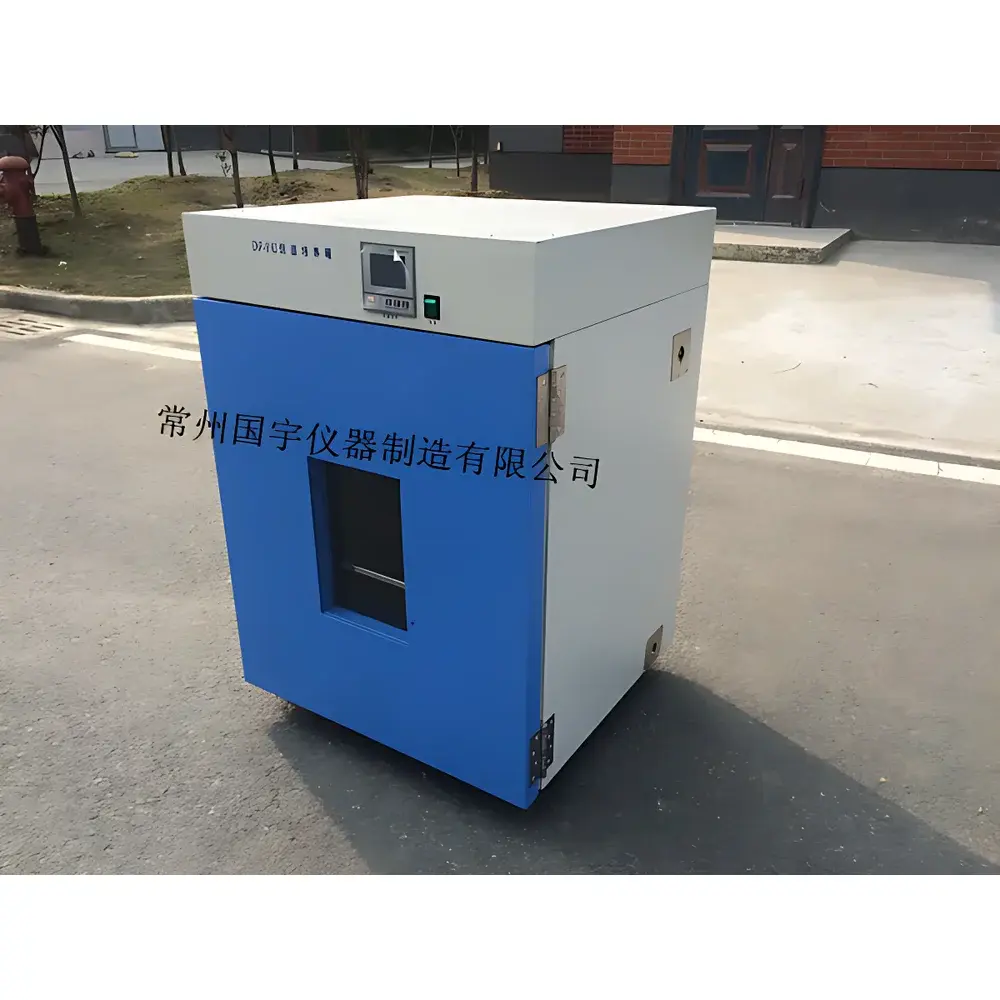
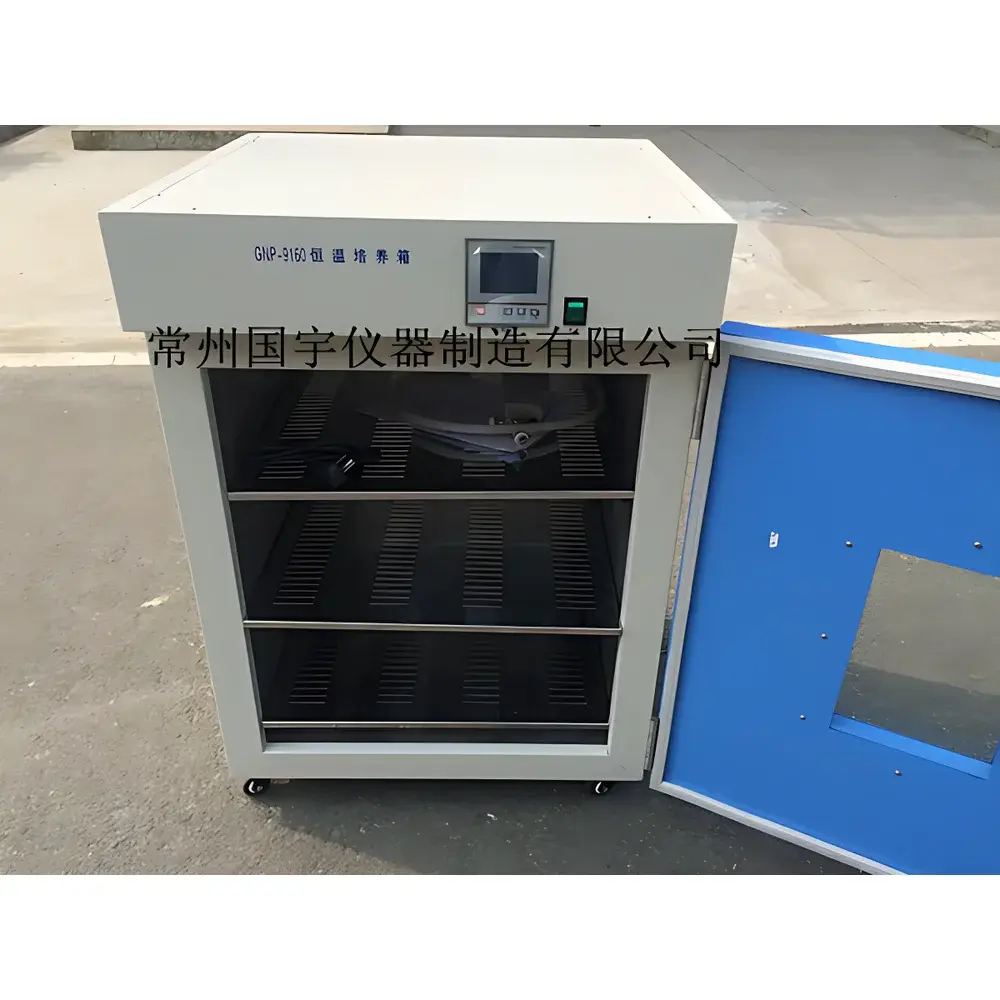
CZGY GNP Series Water-Jacketed Constant Temperature Incubator
| Brand | CZGY |
|---|---|
| Origin | Jiangsu, China |
| Manufacturer Type | Direct Manufacturer |
| Model | GNP |
| Price Range | USD 280–560 (FOB) |
| Air Circulation | Forced Convection |
| Control Method | Digital PID Temperature Control |
| Temperature Range | Ambient +5°C to 65°C |
| Temperature Control Accuracy | ±0.5°C |
| Temperature Uniformity | ±0.5°C |
| Temperature Fluctuation | ±0.3°C |
| Display | LCD with 0.1°C Resolution |
| Alarm Functions | Over-Temperature, Low/High Water Level, Timer Expiry |
| Power Consumption | 320–770 W (model-dependent) |
| Construction | Cold-Rolled Steel Exterior with Electrostatic Powder Coating |
| Safety Features | Dual Exhaust Vents (non-blockable), Overflow & Inlet Water Valves (top/bottom on right side), Permanent Overflow Valve Open Position |
Overview
The CZGY GNP Series Water-Jacketed Constant Temperature Incubator is engineered for stable, long-term thermal environments required in microbiological cultivation, cell propagation, enzyme activity studies, and stability testing of biological reagents. Unlike forced-air incubators, the GNP employs a water-jacketed heating architecture—where temperature-controlled water circulates within an outer chamber surrounding the inner stainless-steel workspace. This design delivers superior thermal inertia, minimizing internal fluctuations during door openings or ambient temperature shifts. The system operates via precision digital PID control, continuously adjusting heater output based on real-time feedback from multiple calibrated NTC sensors distributed across the chamber walls and core zone. With a working range from ambient +5°C to 65°C and a certified uniformity of ±0.5°C (at 37°C per ISO 13408-1 Annex B methodology), the GNP meets foundational requirements for GLP-compliant microbial growth studies and routine QC incubation in pharmaceutical, clinical, and academic laboratories.
Key Features
- Robust dual-wall construction: cold-rolled steel exterior with electrostatic powder coating ensures mechanical durability and corrosion resistance; 304 stainless-steel interior prevents contamination and facilitates cleaning and sterilization.
- Optimized thermal management: water-jacket design provides high thermal mass and low thermal conductivity between chamber and environment—critical for maintaining setpoint stability under variable lab conditions.
- Intuitive human-machine interface: large-backlit LCD display shows setpoint, actual chamber temperature, timer status, and alarm codes; all parameters adjustable via membrane keypad with tactile feedback.
- Comprehensive safety architecture: independent over-temperature cutoff (mechanical backup), automatic low/high water-level detection with audible/visual alerts, and non-resettable thermal fuse integrated into the water-heating circuit.
- Engineered airflow: tangential blower with adjustable speed ensures homogeneous distribution without turbulent shear—validated per ASTM E1282-19 for incubator air velocity profiling.
- Service-accessible design: rear-mounted dual exhaust ports remain unobstructed during operation to prevent pressure buildup; overflow and inlet water valves located on right side for routine maintenance without disassembly.
Sample Compatibility & Compliance
The GNP accommodates standard Petri dishes (up to 150 mm), multi-well plates (6–96-well), culture flasks (T25–T225), and glass serum bottles. Its stainless-steel chamber and smooth, crevice-free corners support validated cleaning protocols using 70% ethanol, hydrogen peroxide vapor (HPV), or saturated steam (121°C, 15 min). While not certified for ISO Class 5 environments, the unit complies with key functional standards including IEC 61010-1 (safety of laboratory equipment), ISO 13408-1 (aseptic processing—incubator performance verification), and USP (microbiological control of cleanrooms—thermal stability criteria). It supports audit-ready documentation when used with external loggers meeting FDA 21 CFR Part 11 requirements for electronic records.
Software & Data Management
The GNP operates as a standalone instrument with embedded firmware—no proprietary software required for basic operation. All operational logs (temperature history, alarm events, timer cycles) are stored internally for up to 30 days and exportable via optional RS-485 interface (Modbus RTU protocol) to third-party SCADA or LIMS platforms. When integrated with compliant data acquisition systems, the incubator supports full traceability: timestamped temperature readings at 1-minute intervals, user ID tagging for parameter changes, and immutable audit trails for GLP/GMP workflows. Firmware updates are performed via USB port using signed binary files to ensure integrity and version control.
Applications
- Bacterial and fungal culture maintenance (e.g., E. coli, S. aureus, C. albicans) per CLSI M07-A10 guidelines.
- Cell line passaging and viability assays requiring precise 37°C environments with minimal CO2-independent thermal drift.
- Enzyme kinetics studies where reaction rates are highly sensitive to ±0.3°C fluctuation.
- Stability testing of vaccines, monoclonal antibodies, and diagnostic reagents under ICH Q5C conditions.
- Agricultural seed germination trials and plant tissue culture under controlled photoperiod-agnostic thermal regimes.
- Environmental microbiology: MPN enumeration, coliform recovery, and bioremediation strain acclimation.
FAQ
What is the purpose of the two water valves on the right side?
The upper port is a permanently open overflow valve to prevent over-pressurization; the lower port is the manual fill inlet. Never seal the overflow valve—its continuous venting ensures safe expansion of heated water.
Can the GNP be used for CO2-dependent cell culture?
No—the GNP lacks gas regulation, humidity control, and CO2 sensor integration. It is designed exclusively for temperature-critical, non-gas-sensitive applications.
Is calibration certificate included with shipment?
A factory calibration report (traceable to NIM, China) is provided with each unit. Full ISO/IEC 17025 calibration with uncertainty budget requires third-party service.
How often should the water jacket be refilled or replaced?
Deionized water must be added before initial startup and topped up monthly. Replace entirely every 6 months or if discoloration or mineral deposits appear—use only distilled or deionized water to prevent scaling.
Does the GNP meet FDA or EU regulatory requirements for GMP labs?
It satisfies essential design and safety clauses of FDA 21 CFR Part 11 (when paired with compliant data logging) and EU Annex 11 (data integrity), but final qualification depends on site-specific IQ/OQ/PQ protocols executed by the end user.
Related Products




