
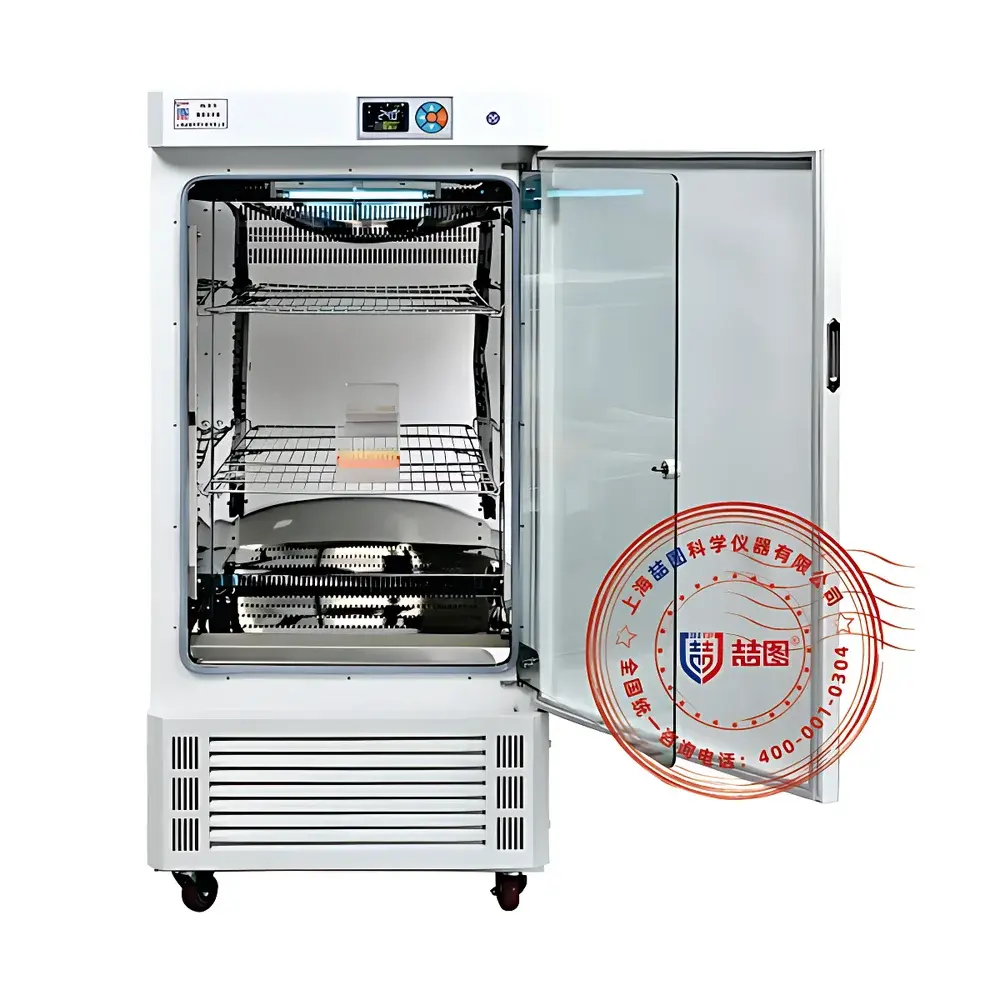
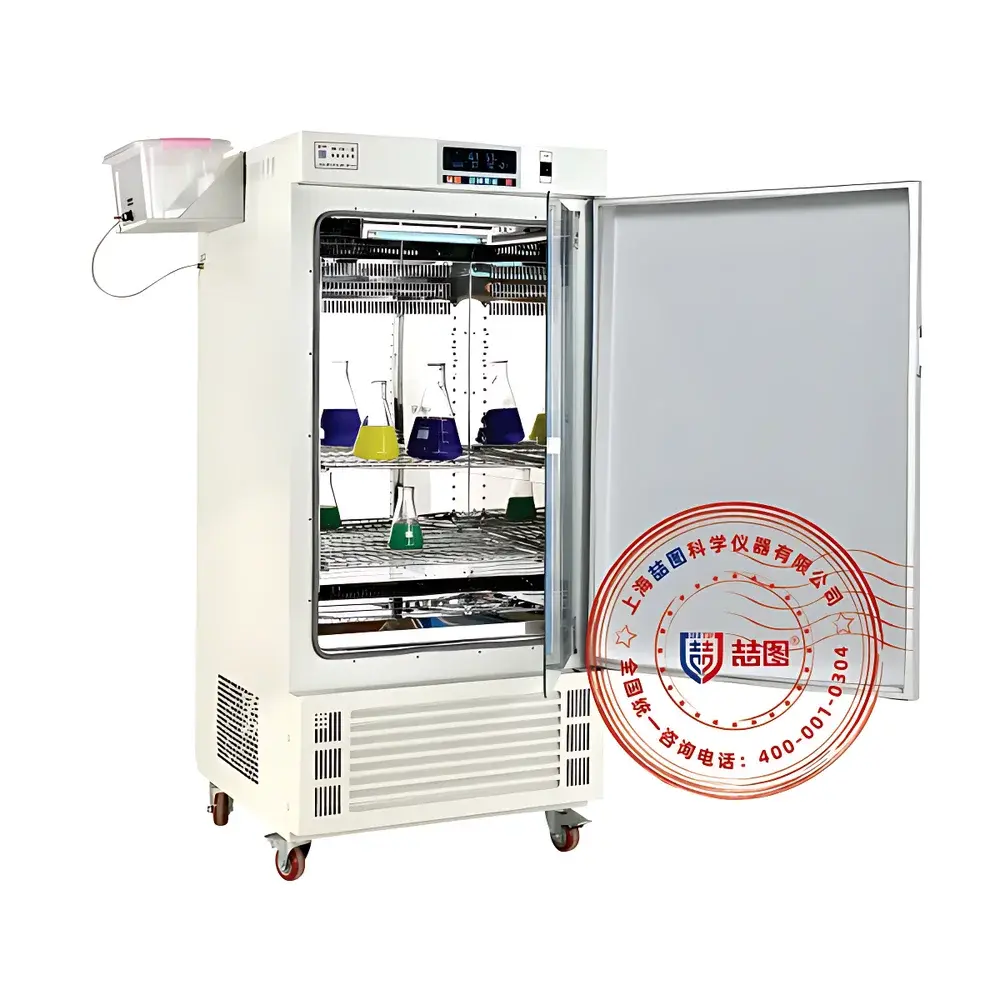
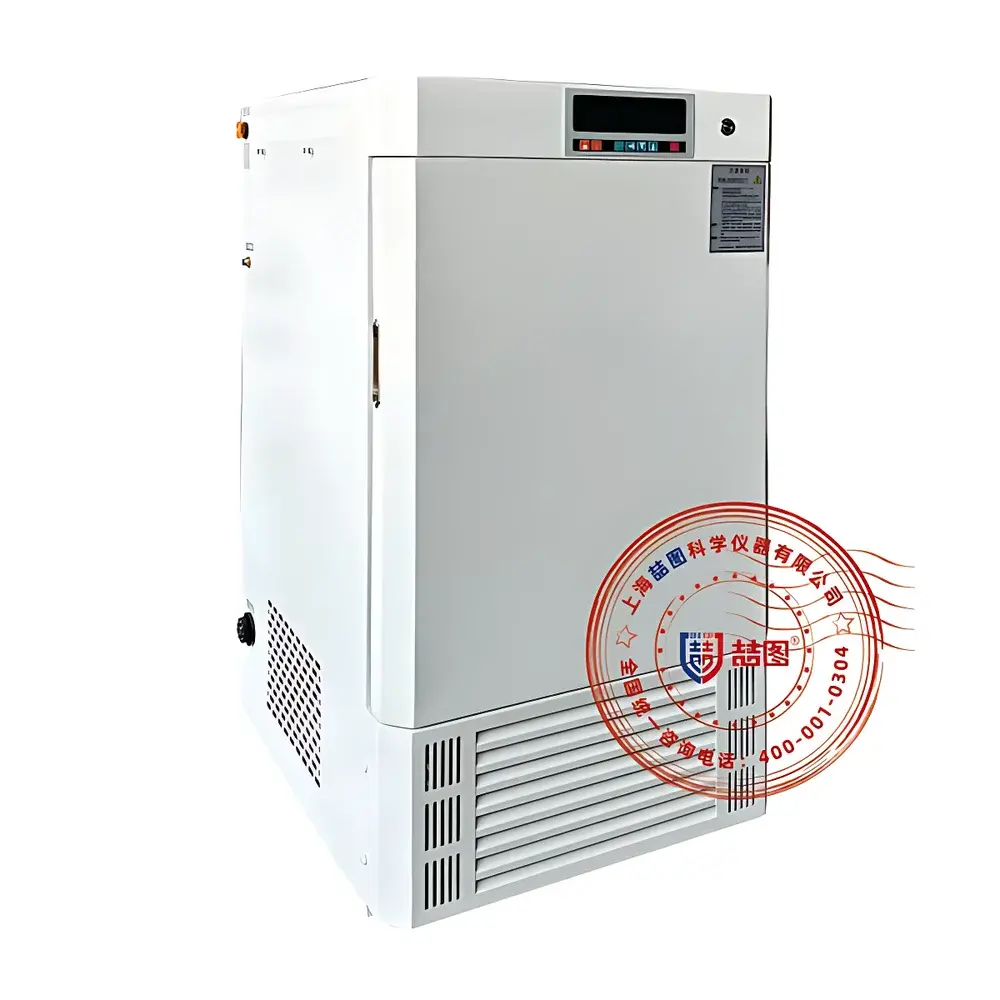
DRETOP ZMJ-250F-I Mold Incubator
| Brand | DRETOP |
|---|---|
| Origin | Shanghai, China |
| Manufacturer Type | Direct Manufacturer |
| Product Category | Domestic |
| Model | ZMJ-250F-I |
| Price Range | USD 1,400 – 7,000 |
| Control Interface | Digital Touchscreen |
| Air Circulation | Forced Convection |
| Temperature Range | 0–65 °C |
| Temperature Fluctuation | ±0.5 °C |
| Temperature Uniformity | ±1 °C (empty chamber, @25 °C) |
| Humidity Control | Not equipped |
| Capacity | 250 L |
| External Dimensions (W×D×H) | 720×745×1558 mm |
| Internal Dimensions (W×D×H) | 580×500×850 mm |
Overview
The DRETOP ZMJ-250F-I Mold Incubator is a precision-engineered forced-air incubation system designed specifically for the controlled cultivation of filamentous fungi, yeasts, and other eukaryotic microorganisms requiring stable thermal environments. Unlike general-purpose incubators, this unit adheres to the operational requirements defined in ISO 8573-1 (air quality for microbiological applications), ASTM D3273 (standard test method for resistance to fungus on plastic materials), and USP microbial enumeration guidelines—making it suitable for BOD determination, mycological strain maintenance, environmental stress testing, and antimicrobial efficacy evaluation. Its temperature control architecture employs a microprocessor-based P.I.D. algorithm with real-time feedback compensation, ensuring high reproducibility across repeated cycles. The absence of humidity regulation distinguishes the F-series from the II-series models; however, its robust thermal stability and uniform airflow distribution meet the minimum conditioning criteria for non-hygrosensitive mold assays per CLSI M38-A3 and EP17-A2 protocols.
Key Features
- Intelligent digital touchscreen interface with full-screen parameter visualization and intuitive icon-driven navigation—designed for rapid operator training and GLP-compliant documentation.
- High-efficiency hermetic refrigeration system utilizing R134a-free eco-friendly refrigerant (R600a), compliant with EU F-Gas Regulation (EU) No 517/2014 and EPA SNAP program requirements.
- Optimized internal air dynamics via dual axial-flow fans and laminarized duct geometry—achieving ≥95% volumetric air exchange per minute while maintaining ≤±1 °C spatial uniformity at 25 °C (empty load).
- Stainless steel interior chamber (SUS304) with removable, autoclavable shelving and seamless corner welds—facilitating validated cleaning procedures per ISO 14644-1 Class 8 cleanroom standards.
- Dual-door observation window: outer magnetic seal gasket + inner tempered glass panel—minimizing thermal leakage and enabling continuous visual monitoring without chamber disturbance.
- Integrated UV-C germicidal lamp (254 nm, 15 W) with safety interlock—automatically deactivates upon door opening and supports scheduled sterilization cycles aligned with ISO 15223-1 labeling conventions.
- Power failure recovery logic with non-volatile memory retention—preserves setpoints, runtime logs, and alarm history during grid interruption or controller reset.
Sample Compatibility & Compliance
The ZMJ-250F-I accommodates standard microbiological sample formats including Petri dishes (up to 150 mm diameter), multi-well plates (6–96-well), slant tubes, and liquid culture flasks (≤1 L). Its chamber geometry permits simultaneous loading of up to six adjustable shelves (two included, four optional), each rated for 15 kg static load. The unit complies with IEC 61010-1:2010 safety standards for laboratory equipment and meets EMC requirements per EN 61326-1:2013. While not certified for ISO 13485 medical device manufacturing, its construction and traceability features—including factory calibration certificates (NIST-traceable reference thermistors) and optional RS485 Modbus RTU interface—support integration into GMP-aligned QC workflows under FDA 21 CFR Part 11 when paired with validated third-party data acquisition software.
Software & Data Management
The embedded firmware supports time-stamped event logging (temperature excursions, door openings, UV cycle completion) stored in internal flash memory (10,000-entry capacity). Optional RS485 communication enables bidirectional integration with LIMS platforms or SCADA systems using standard Modbus RTU protocol. For standalone validation, users may export CSV-formatted logs via USB port (Type-A, FAT32 formatted). The system does not include cloud connectivity or proprietary software suites; instead, it prioritizes interoperability with industry-standard tools such as LabVIEW™, MATLAB® Instrument Control Toolbox, or open-source Python-based PyModbus libraries—ensuring audit trail integrity and long-term data portability.
Applications
- Mycological research: Aspergillus niger, Penicillium chrysogenum, and Fusarium spp. propagation under standardized ISO 7218:2017 conditions.
- Pharmaceutical stability testing: Accelerated mold growth assessment per ICH Q1A(R2) guidelines for packaging material evaluation.
- Environmental microbiology: Water and soil sample incubation for total fungal count (TFC) analysis per APHA Standard Methods 9260B.
- Industrial biotechnology: Seed train expansion of fungal expression hosts (e.g., Trichoderma reesei) prior to bioreactor inoculation.
- Materials science: Fungal resistance screening of polymers, coatings, and composites per ASTM G21-15 and JIS Z 2801:2012.
FAQ
Does the ZMJ-250F-I support humidity control?
No. This model lacks integrated humidification hardware and is intended for applications where ambient relative humidity suffices. For regulated RH operation (55–85% RH), consider the ZMJ-250-II series.
What is the maximum allowable ambient operating temperature?
The unit is rated for continuous operation in rooms maintained at 15–30 °C with ≤70% non-condensing RH, per IEC 60068-2-1/2 environmental classification.
Can external sensors be connected for independent verification?
Yes—via the optional RS485 interface or dedicated 2-mm test port (available as accessory)—enabling connection to calibrated NIST-traceable thermistors or data loggers.
Is the UV sterilization cycle programmable?
UV activation is manual-only; however, timer-based scheduling can be implemented externally using relay-controlled power modules compatible with the unit’s dry-contact alarm output.
What validation documentation is provided?
Each unit ships with a Factory Calibration Report (temperature accuracy verified at 25 °C and 37 °C using Fluke 1523 reference thermometer), CE Declaration of Conformity, and RoHS compliance certificate. IQ/OQ protocol templates are available upon request.




