
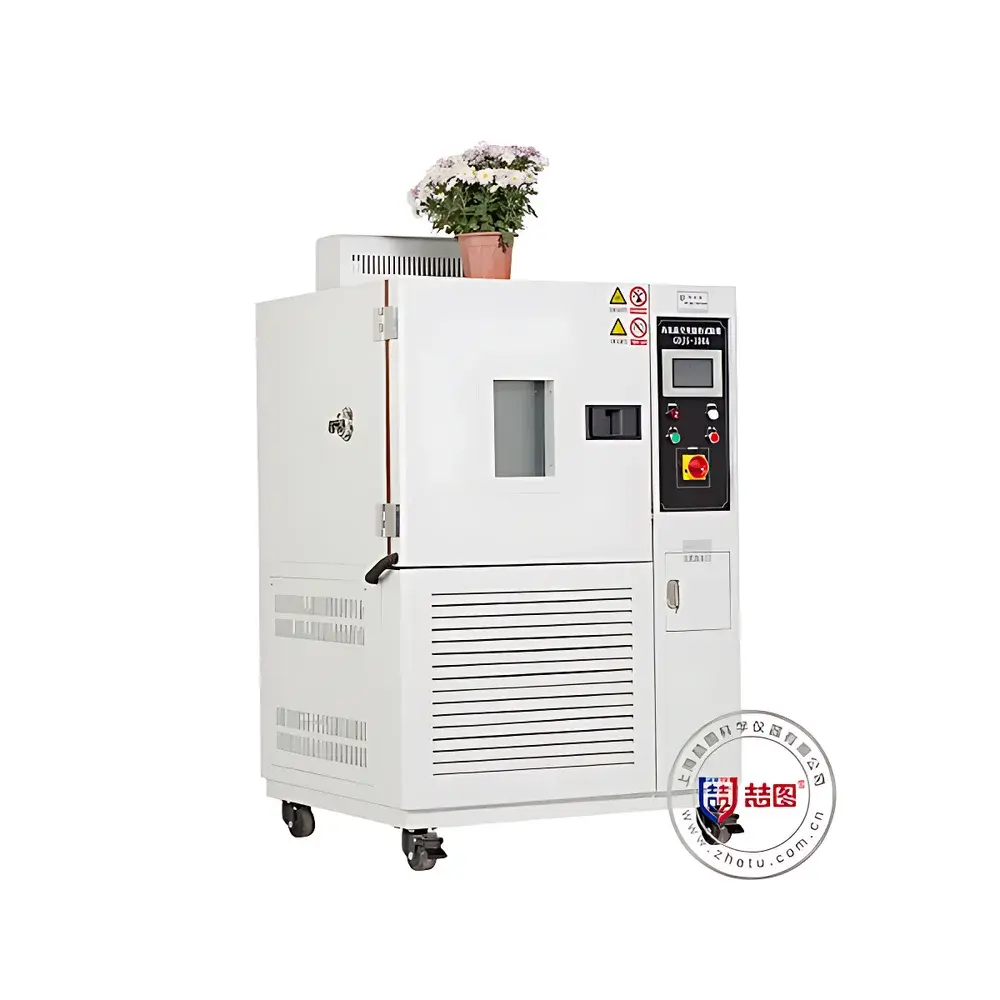
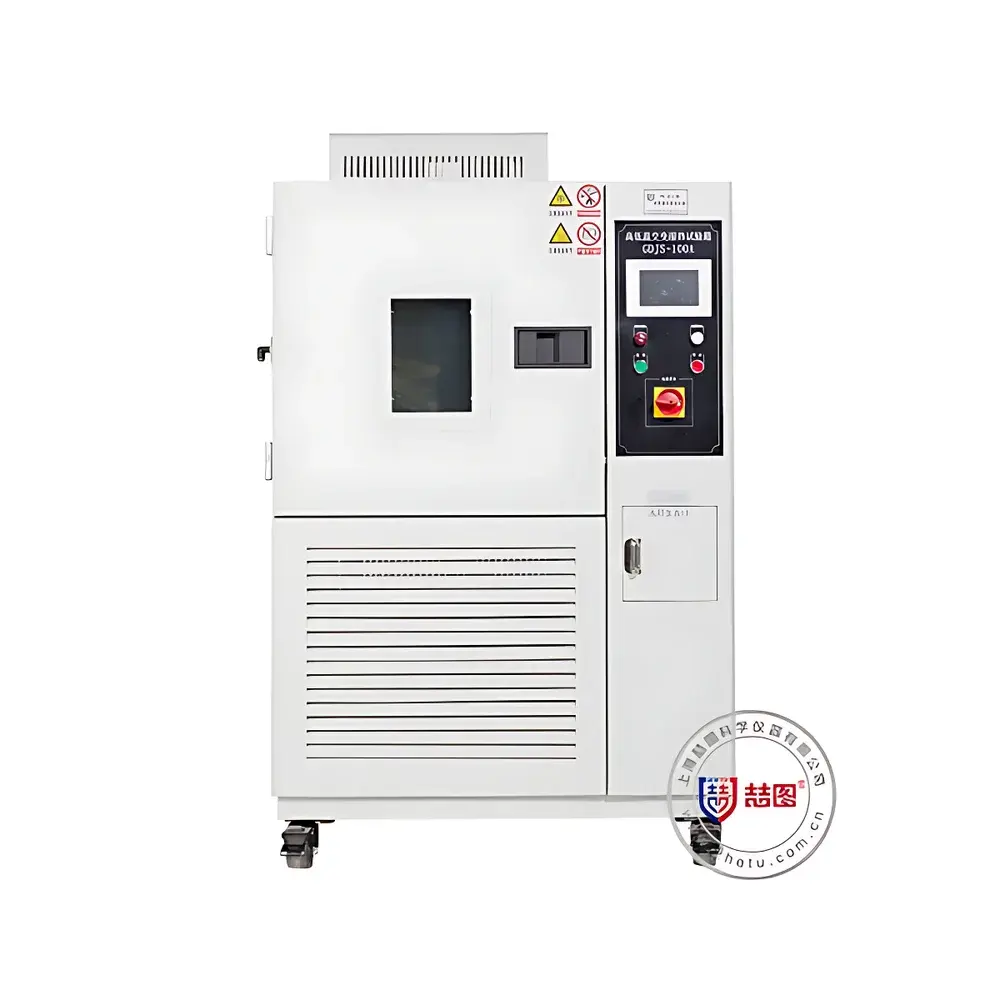
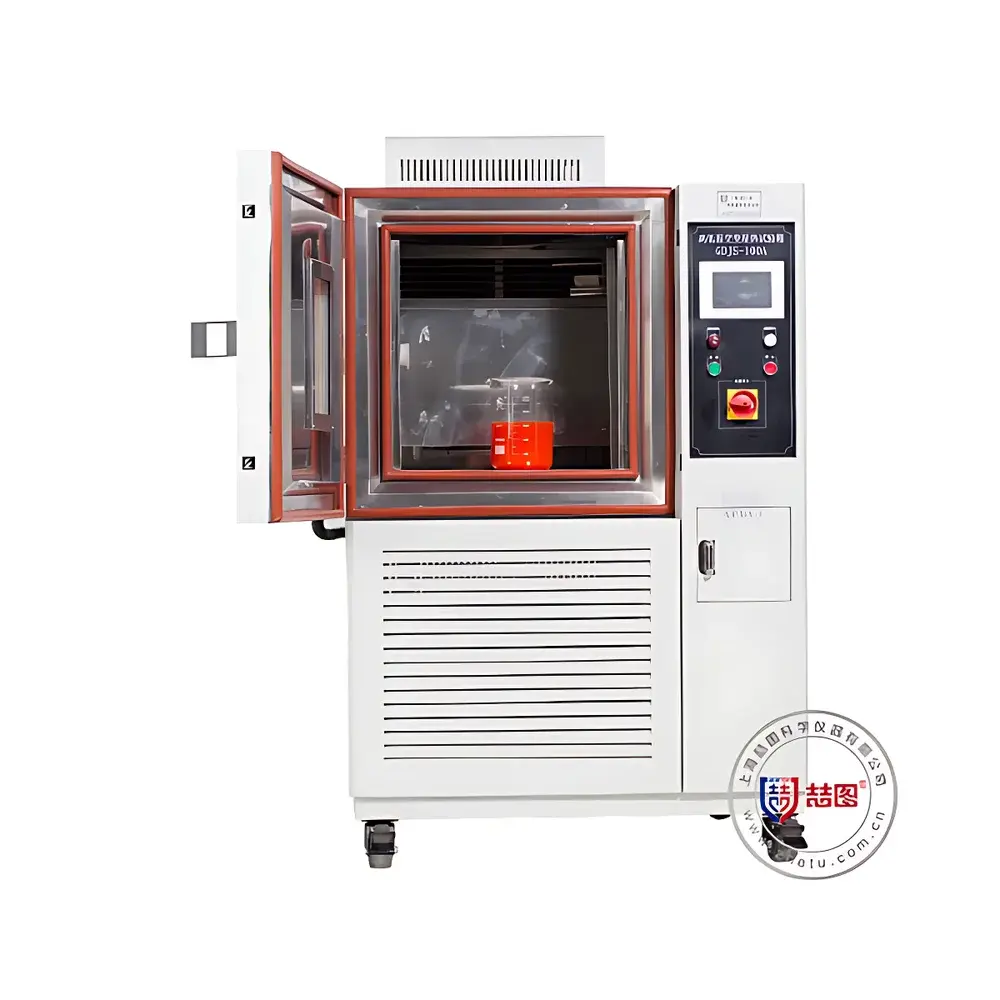
DRETOP THS-C400-I High-Low Temperature Environmental Test Chamber
| Brand | DRETOP |
|---|---|
| Origin | Shanghai, China |
| Manufacturer Type | Direct Manufacturer |
| Model | THS-C400-I |
| Temperature Range | −60 °C to +120 °C |
| Cooling Method | Compressor-Based Refrigeration |
| Explosion-Proof | Standard (Non-Explosion-Proof) |
| Temperature Fluctuation | ±0.5 °C |
| Temperature Uniformity | ≤2.0 °C |
| Temperature Deviation | ±2.0 °C |
| Heating Rate | 1–3 °C/min (adjustable) |
| Cooling Rate | 0.7–1 °C/min (adjustable) |
| Internal Chamber Dimensions (W×D×H) | 800 × 600 × 850 mm |
| Power Supply | AC 380 V / 50 Hz |
| Rated Input Power | 6.0–7.0 kW |
Overview
The DRETOP THS-C400-I High-Low Temperature Environmental Test Chamber is an engineered environmental simulation system designed for rigorous thermal stress evaluation of industrial components and finished products under controlled, repeatable conditions. It operates on the principle of forced-air convection combined with dual-stage refrigeration and precision resistive heating to achieve stable, programmable temperature profiles across a wide operational range (−60 °C to +120 °C). Unlike basic thermal ovens or static incubators, this chamber integrates independent control loops for heating, cooling, and—when configured with humidity modules—moisture regulation, enabling true high-low temperature cycling, step-and-hold, ramp-and-soak, and multi-segment environmental profiles. Its architecture complies with fundamental requirements outlined in IEC 60068-2-1 (cold testing), IEC 60068-2-2 (dry heat), and ASTM D3418 (thermal transition analysis of polymeric materials), making it suitable for pre-compliance screening in R&D, quality assurance, and production validation workflows.
Key Features
- Industrial-grade 7-inch full-color TFT touchscreen HMI with intuitive icon-based navigation, supporting up to 1000 programmable test sequences, each containing up to 100 individual segments (temperature setpoints, ramp rates, dwell times, and optional humidity targets).
- Multi-level user access control with password-protected administrator, engineer, and operator roles; configurable permissions for parameter editing, data export, program execution, and system configuration.
- Independent PID-controlled heating (NiCr alloy heaters) and cooling (imported hermetic scroll compressor with eco-friendly R404A/R23 cascade refrigerant system) circuits—minimizing cross-interference and improving thermal response fidelity.
- Optimized double-wall air circulation design featuring centrifugal forced-air blower, directional ducting, and adjustable baffle plates—ensuring ≤2.0 °C temperature uniformity and rapid recovery (<3 min) after door opening per IEC 60068-3-5.
- Double-layer tempered safety glass observation window with integrated anti-frost heating film and LED interior lighting—preventing condensation while enabling real-time visual monitoring without thermal disturbance.
- Stainless steel 304 inner chamber with seamless arc-welded corners, removable adjustable shelves, and silicone rubber door gasket rated for continuous operation from −60 °C to +150 °C without hardening or adhesion loss.
- Standard 50 mm diameter cable/port access hole (with brass sealing collar) for live electrical, pneumatic, or signal feedthrough during testing—compatible with external data loggers, power supplies, or sensor interfaces.
- Comprehensive safety architecture including over-temperature cut-off (dual independent sensors), compressor/airflow fault detection, phase-loss protection, ground-fault circuit interruption (GFCI), and automatic power recovery after grid interruption.
Sample Compatibility & Compliance
The THS-C400-I accommodates samples up to 800 × 600 × 850 mm in volume and is routinely deployed for thermal validation of electronic assemblies (PCBs, connectors, displays), automotive ECUs and lighting modules (LED headlights, ADAS sensors), consumer electronics (smartphones, wearables), aerospace composites, and medical device housings. Its mechanical and thermal design adheres to structural integrity standards referenced in ISO 17025-accredited laboratories for environmental testing. While not intrinsically explosion-proof, the unit meets IP20 enclosure rating per IEC 60529 and is CE-marked for EMC (EN 61326-1) and Low Voltage Directive (2014/35/EU) compliance. Optional RS485 Modbus RTU or USB 2.0 interface enables integration into centralized lab management systems supporting GLP/GMP audit trails.
Software & Data Management
The embedded controller supports native CSV export of time-stamped temperature (and humidity, if equipped) data at user-defined intervals (1 s to 60 min resolution). Exported files are compatible with Excel, MATLAB, and Python pandas for statistical process control (SPC) analysis. Remote supervision is enabled via built-in Ethernet port and cloud-ready firmware—allowing concurrent access by up to five users through web browsers (Chrome, Edge, Safari), iOS/Android mobile apps, or Windows desktop clients. All remote sessions are logged with timestamps, user IDs, and action types (e.g., “Program Start”, “Setpoint Change”, “Data Export”)—meeting traceability requirements under FDA 21 CFR Part 11 when paired with organizational electronic signature policies.
Applications
- Thermal cycling reliability assessment per JEDEC JESD22-A104 (Temperature Cycling) and MIL-STD-810H Method 502.7.
- High-temperature storage life testing of lithium-ion battery cells and BMS modules.
- Low-temperature functional verification of MEMS accelerometers, pressure transducers, and optical sensors.
- Material coefficient of thermal expansion (CTE) characterization using dimensional metrology fixtures inside the chamber.
- Pre-conditioning of adhesives, conformal coatings, and potting compounds prior to peel strength or shear testing.
- Environmental stress screening (ESS) of avionics subassemblies before HALT/HASS qualification.
FAQ
What is the maximum sample weight the THS-C400-I can accommodate without compromising thermal uniformity?
The chamber has no specified static load limit; however, for optimal airflow and temperature uniformity, total sample volume should remain below 40% of internal chamber volume (i.e., ≤160 L). Dense or thermally massive samples may require extended stabilization periods—verified via internal PT100 sensor mapping per IEC 60068-3-5.
Can the THS-C400-I be upgraded to include humidity control post-purchase?
No—humidity capability requires factory-integrated steam generator, water reservoir, and dedicated humidification PID loop. Units ordered as “THS-C400-I” are dry-temperature-only models. Humidity-capable variants are designated as “THS-C400-IH” and must be specified at time of order.
Does the system support automated calibration verification?
Yes—the controller supports manual probe offset adjustment and includes a built-in self-diagnostic mode that validates sensor linearity and heater/cooler actuator response. For accredited calibration, third-party NIST-traceable PT100 probes and dry-block calibrators are recommended per ISO/IEC 17025 procedures.
Is the software compliant with FDA 21 CFR Part 11 for regulated industries?
The embedded firmware provides audit trail logging, electronic signatures (via role-based login), and data immutability upon export—but full Part 11 compliance requires site-specific validation documentation, procedural controls, and IT infrastructure alignment (e.g., network security, backup policy), which fall outside the scope of the instrument’s out-of-box functionality.
What maintenance intervals are recommended for long-term reliability?
Compressor oil and refrigerant levels should be verified annually; air intake filters cleaned quarterly; door gasket inspected biannually for compression set; and internal chamber surfaces wiped with non-abrasive ethanol solution after corrosive or particulate-laden tests. Full preventive maintenance is advised every 24 months by DRETOP-certified service engineers.



