
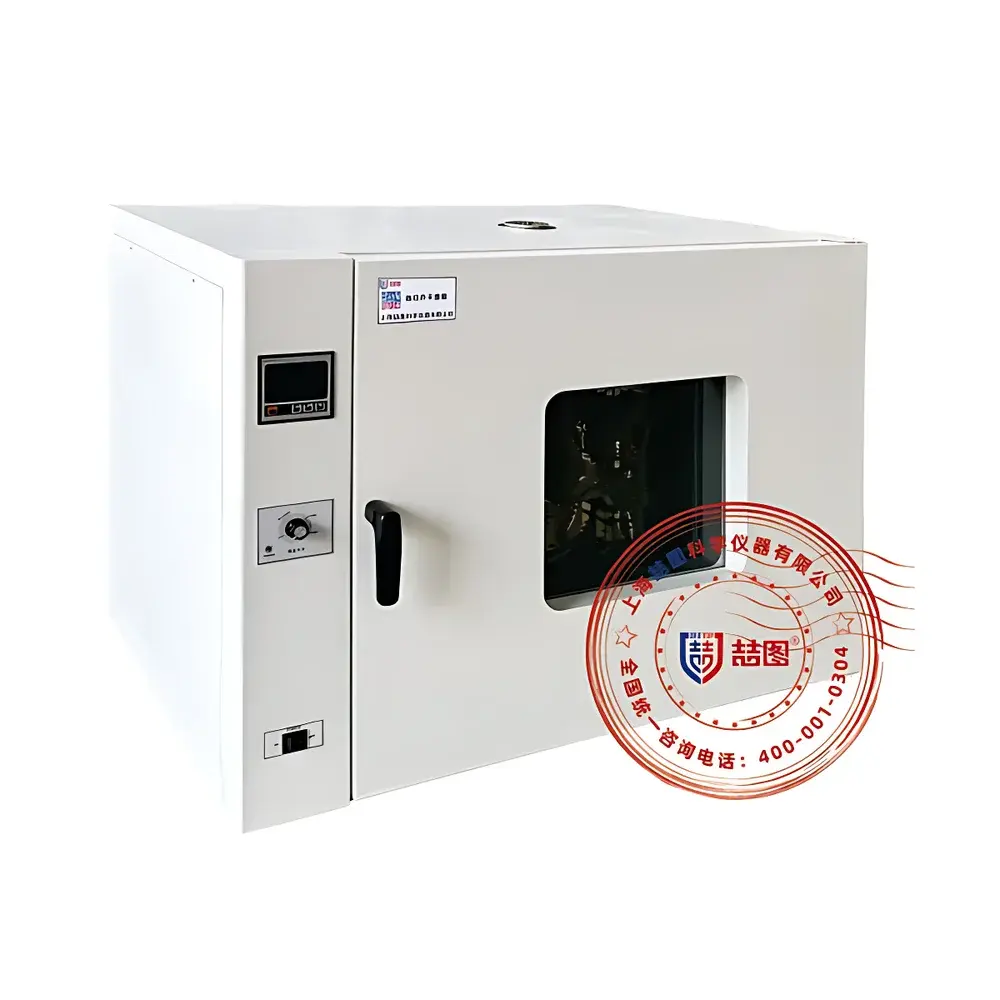
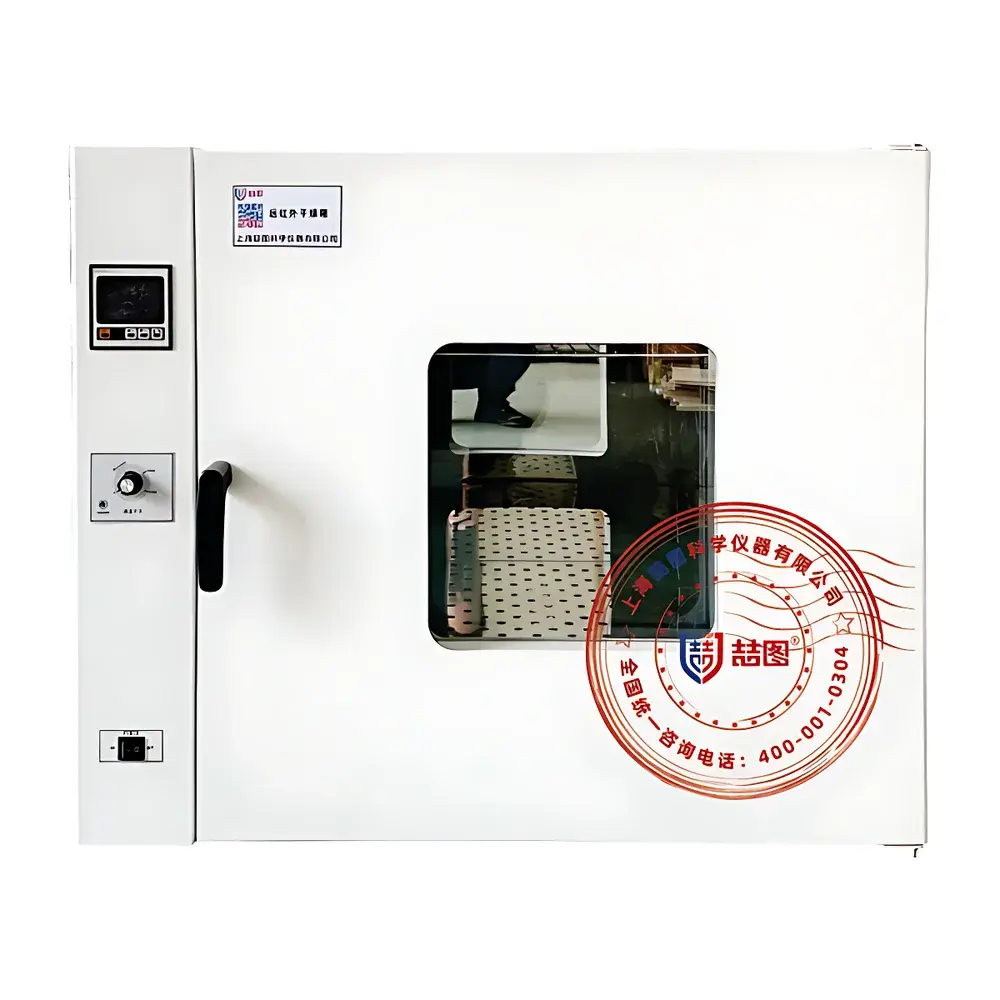
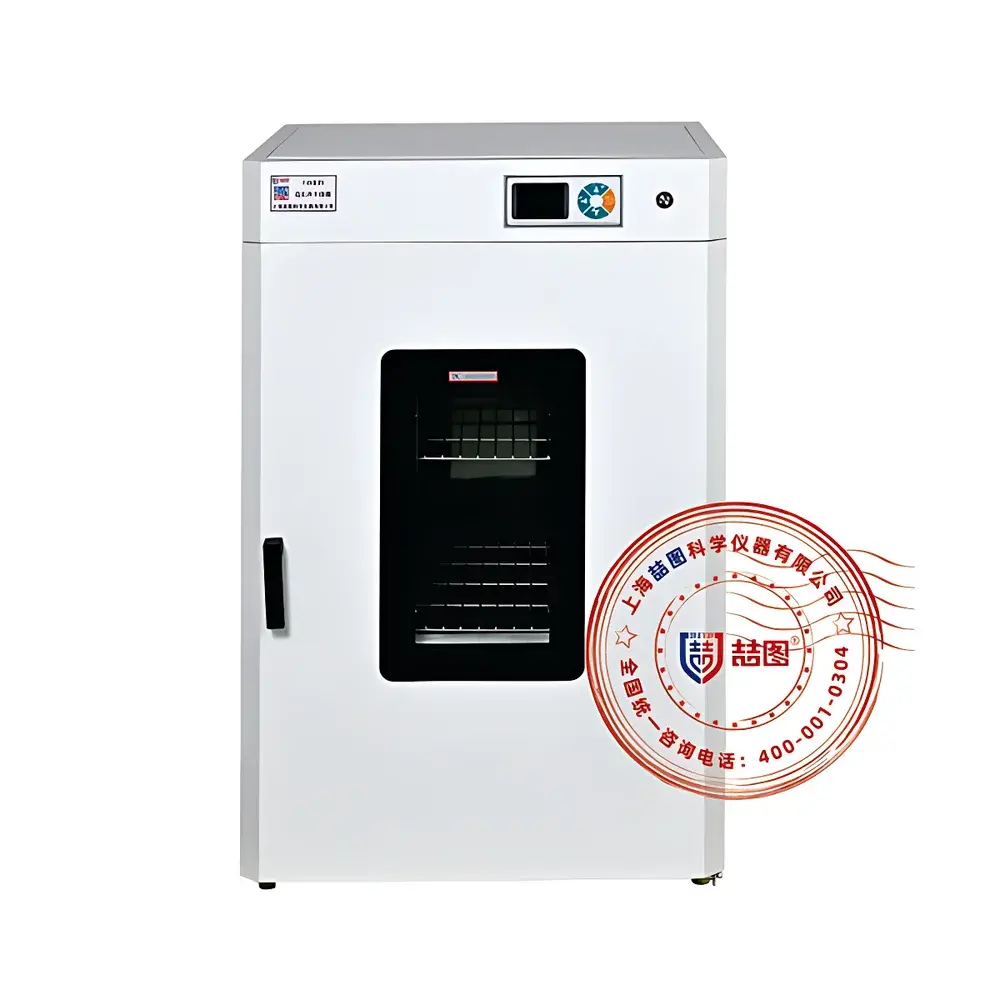
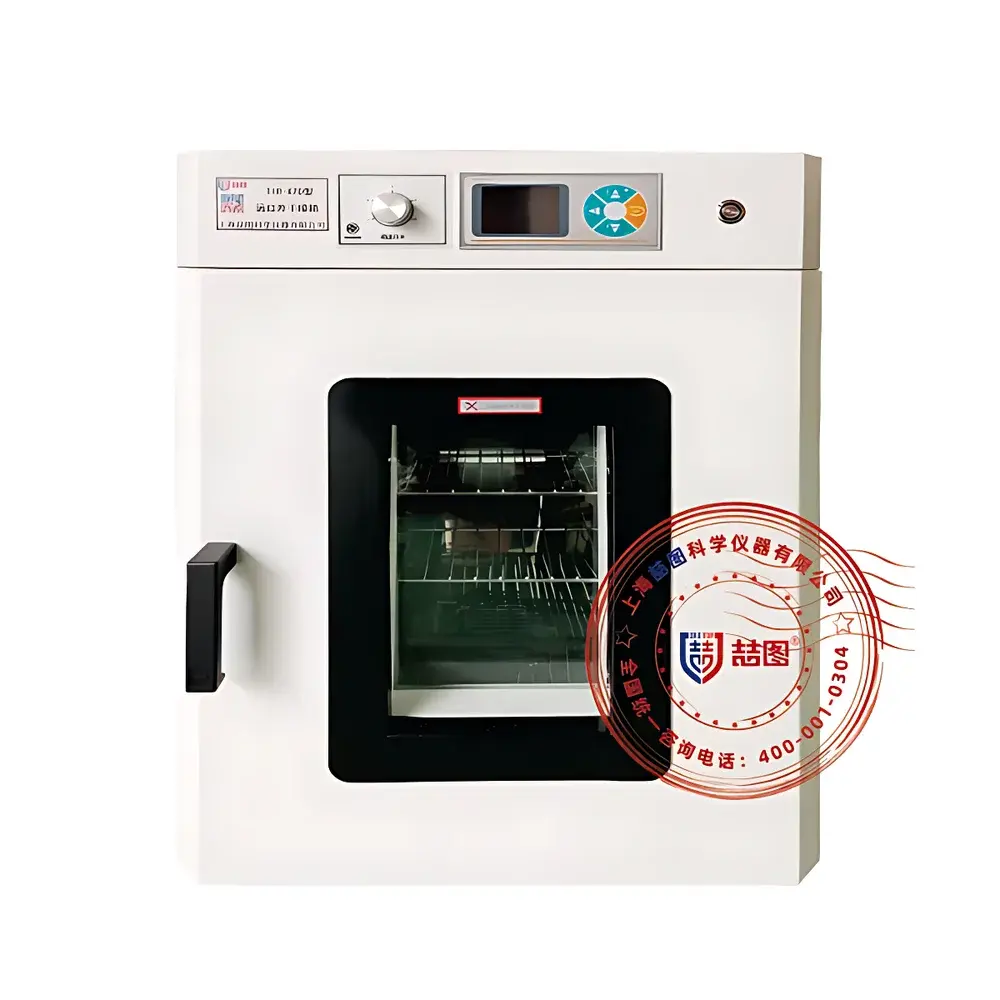
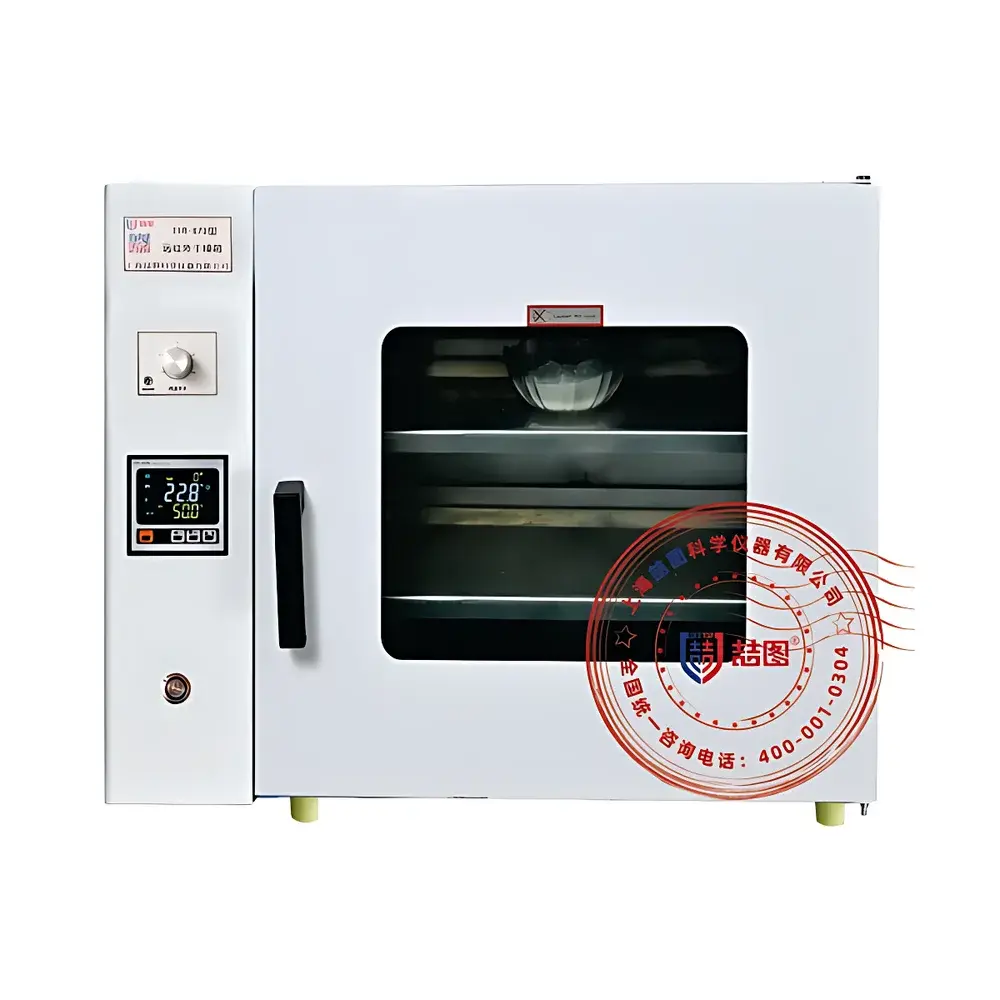
DRETOP TIR-148BP Far-Infrared Drying Oven
| Brand | DRETOP |
|---|---|
| Origin | Shanghai, China |
| Manufacturer Type | Direct Manufacturer |
| Model | TIR-148BP |
| Instrument Type | General-Purpose Drying Oven |
| Temperature Range | RT + 10°C to 300°C |
| Temperature Uniformity | ±2.5°C (at 100°C with fan enabled) |
| Temperature Fluctuation | ±1°C |
| Temperature Resolution | 0.1°C |
| Internal Chamber Dimensions (W×D×H) | 600 × 450 × 550 mm |
| External Dimensions (W×D×H) | 915 × 630 × 725 mm |
| Inner Chamber Material | Stainless Steel |
| Heating Method | Far-Infrared Radiant Heating |
| Working Ambient Temperature | 5–45°C |
| Fan Control | Continuously Variable Speed (including off position) |
| Power Supply | AC 220 V, 50 Hz |
| Rated Power | 2600 W |
| Nominal Volume | 148 L |
| Standard Shelving | 2 Adjustable Stainless Steel Trays |
| Timer Range | 1–9999 minutes |
Overview
The DRETOP TIR-148BP Far-Infrared Drying Oven is an engineered solution for precise, uniform thermal processing in research laboratories, quality control environments, and industrial R&D settings. Unlike conventional convection ovens that rely solely on forced air circulation—often disruptive to delicate or powdered samples—the TIR-148BP integrates far-infrared radiant heating elements with a fully adjustable, low-turbulence air circulation system. This hybrid thermal delivery architecture ensures rapid, energy-efficient heating with minimal thermal inertia while preserving sample integrity. The oven operates on the principle of selective molecular excitation: far-infrared radiation (wavelength range ~3–10 µm) penetrates surface layers and induces vibrational resonance in organic and hygroscopic materials, enabling efficient moisture removal without excessive surface desiccation or particle displacement. Its design meets foundational requirements for thermal stability in ASTM E145-22 (Standard Specification for Gravity-Convection and Forced-Ventilation Ovens) and supports GLP-compliant workflows through traceable temperature control and data retention capabilities.
Key Features
- Intelligent microprocessor-based PID temperature controller with digital LCD display, offering real-time monitoring of setpoint, actual temperature, and elapsed time across a single screen using tri-color backlighting for intuitive status recognition.
- Self-diagnostic function with alphanumeric fault code display (e.g., E01 = sensor open circuit; E02 = overtemperature alarm), reducing downtime and simplifying maintenance protocols.
- Far-infrared heating elements coupled with silicon-controlled rectifier (SCR) or solid-state relay (SSR) power modulation for high-resolution thermal regulation and minimized overshoot.
- Optimized internal airflow architecture featuring a 3D-refractive thermal field design—comprising strategically angled reflective surfaces and directional ducting—to enhance spatial temperature homogeneity without inducing high-velocity turbulence.
- Double-layer door with large-area tempered glass viewport and high-temperature silicone rubber gasket (rated to 350°C), ensuring visual sample monitoring and long-term sealing integrity under repeated thermal cycling.
- Adjustable stainless steel shelving system with tool-free height positioning, supporting flexible load configuration and compatibility with standard laboratory ware (e.g., Petri dishes, weighing boats, crucibles).
Sample Compatibility & Compliance
The TIR-148BP accommodates a broad spectrum of non-volatile, thermally stable specimens—including pharmaceutical granules, polymer pellets, soil samples, botanical extracts, ceramic precursors, and metal oxide powders—without risk of dispersion during drying. Its fan-off mode eliminates convective disturbance, making it suitable for applications where particle morphology preservation is critical (e.g., SEM sample preparation, catalyst characterization). The chamber’s 304 stainless steel construction complies with ISO 8573-1 (compressed air purity classes) for cleanroom-adjacent use and resists corrosion from common solvents and saline residues. While not certified for explosion-proof operation, the unit incorporates dual overtemperature protection: primary PID-based cut-off and independent mechanical limit switch, satisfying IEC 61000-6-2 (immunity) and IEC 61000-6-4 (emission) electromagnetic compatibility standards.
Software & Data Management
The base configuration supports manual operation with programmable timer functionality (1–9999 min). Optional upgrades include USB data export (via FAT32-formatted flash drive), RS-485 Modbus RTU interface for integration into SCADA or LIMS platforms, and a multi-segment programmable controller enabling up to 32 ramp/soak cycles with slope-defined heating rates. All firmware versions maintain audit-trail-capable event logging—including start/stop timestamps, temperature deviations exceeding ±1.5°C, and alarm activations—aligned with FDA 21 CFR Part 11 principles for electronic records when paired with validated software extensions. Data output formats include CSV and XML, facilitating post-processing in MATLAB, Python (Pandas), or commercial statistical packages.
Applications
- Moisture content determination per USP and AOAC 950.46 protocols, particularly for heat-sensitive herbal matrices where conventional hot-air drying causes volatile loss.
- Pre-drying of filter membranes and chromatography media prior to gravimetric analysis or solvent exchange procedures.
- Curing of thin-film coatings and printed electronics substrates requiring controlled radiant energy input to avoid interfacial delamination.
- Accelerated aging studies of packaging materials under ISO 11607-1 environmental stress conditions.
- Conditioning of reference standards and calibration weights in metrology labs per ISO/IEC 17025:2017 clause 7.2.2 (environmental monitoring).
FAQ
What distinguishes far-infrared heating from conventional convection in this oven?
Far-infrared radiation directly energizes molecular bonds in the sample rather than heating ambient air first—reducing thermal lag, improving energy transfer efficiency, and minimizing surface cracking in brittle or layered materials.
Can the TIR-148BP be used for sterilization or depyrogenation?
No. It is not designed for microbiological kill validation or endotoxin reduction; its temperature uniformity and documentation features do not meet ISO 17665 or USP requirements for sterilization process qualification.
Is the stainless steel interior electropolished or passivated?
The inner chamber uses standard 304 stainless steel sheet with a #4 brushed finish; electropolishing is available as a custom order upon request.
Does the optional RS-485 interface support Modbus TCP/IP conversion?
The native interface is RS-485 (2-wire, half-duplex); TCP/IP bridging requires an external protocol gateway compliant with Modbus TCP v1.1.
How often should the temperature sensor be calibrated?
We recommend annual verification against a NIST-traceable reference thermometer (±0.2°C accuracy) in accordance with ISO/IEC 17025 internal calibration procedures.



