
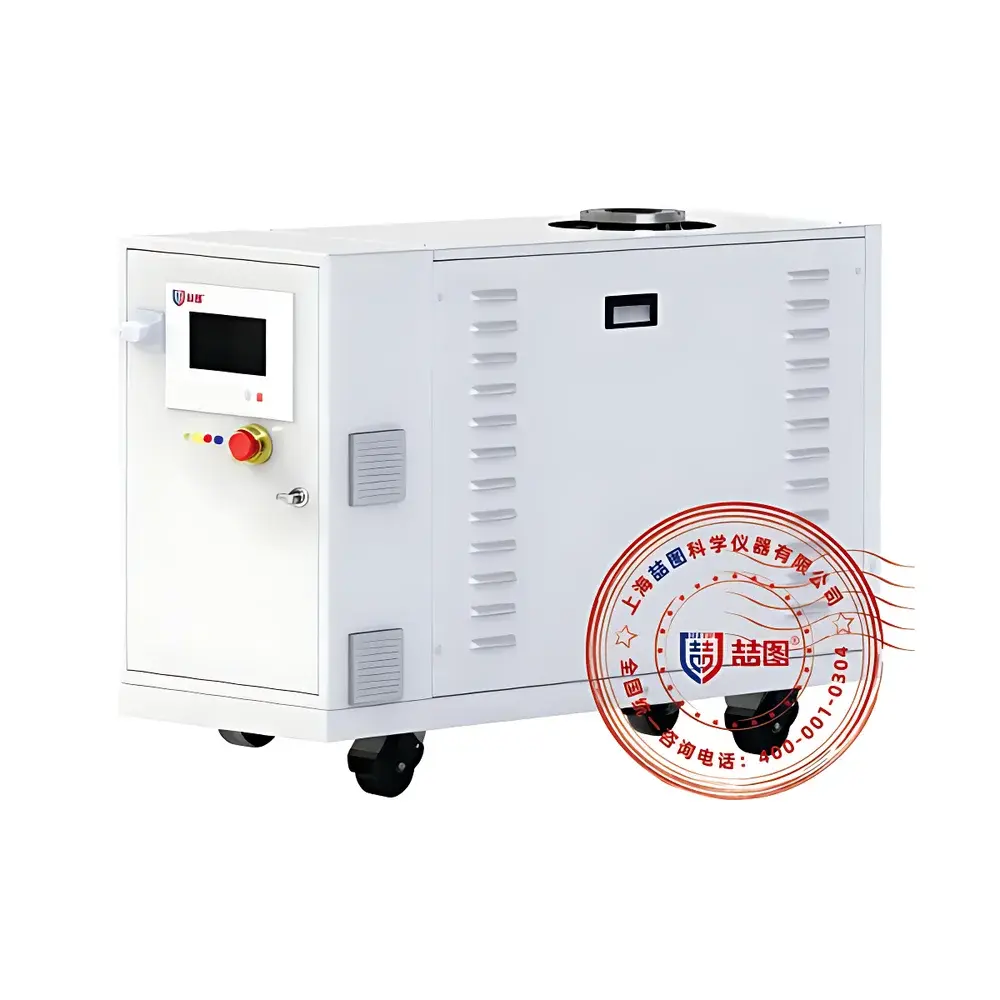
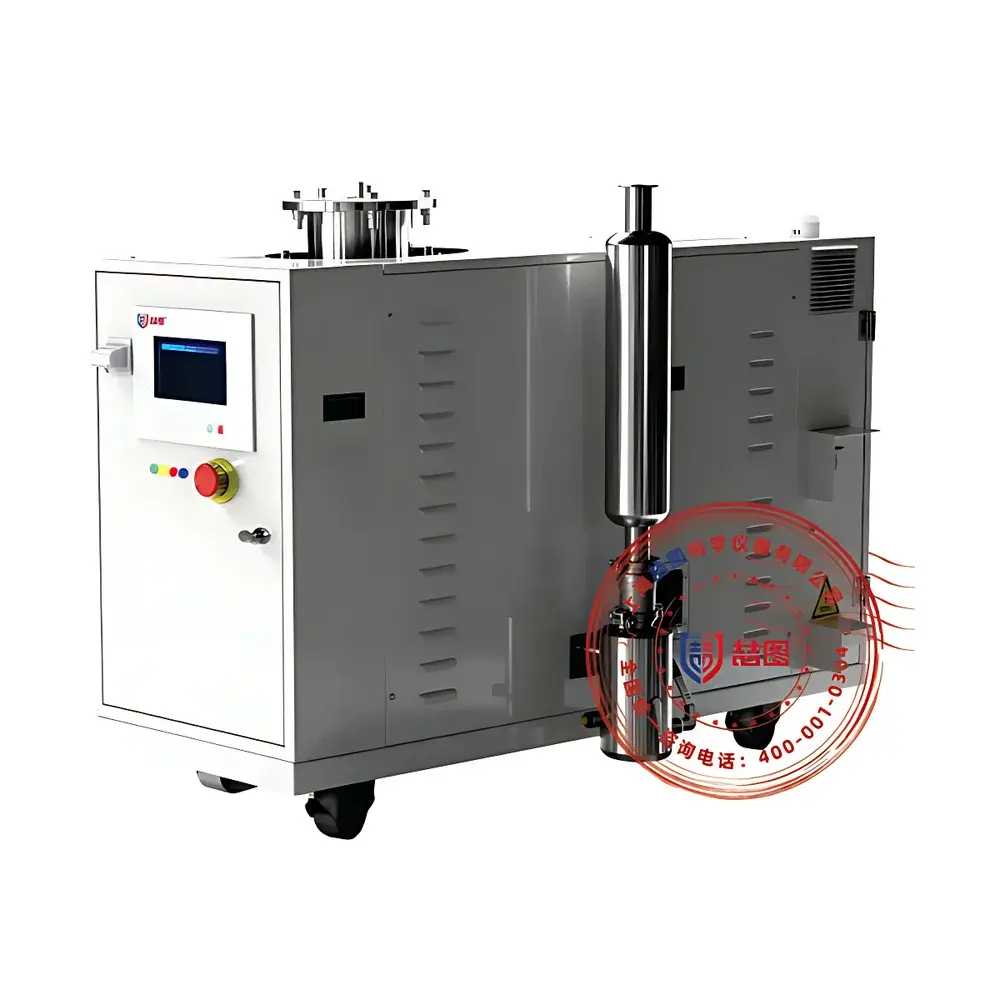
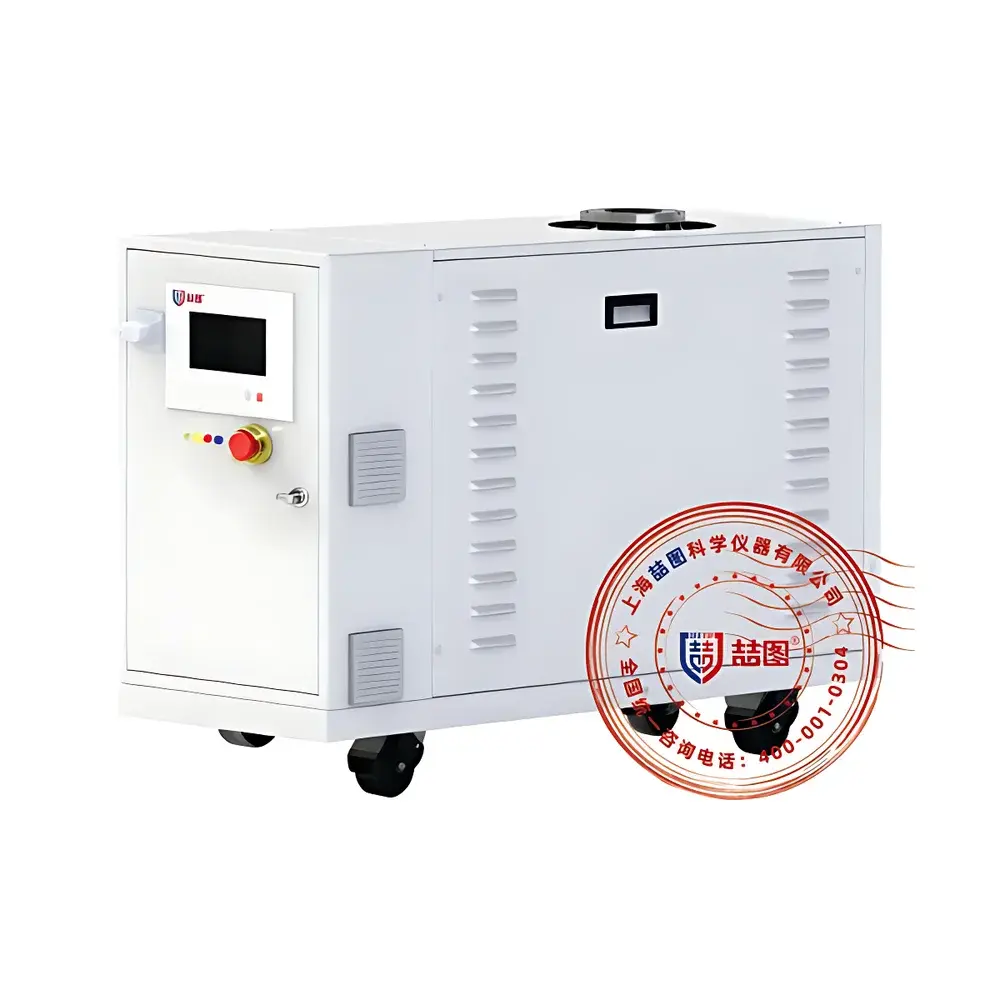
DRETOP MFP-4320 Magnetic Levitation Hybrid Molecular Pump
| Brand | DRETOP |
|---|---|
| Origin | Shanghai, China |
| Manufacturer Type | Direct Manufacturer |
| Product Type | Oil-Free Molecular Pump |
| Pumping Speed | 2000 L/s |
| Ultimate Vacuum Pressure | 5 × 10⁻⁸ Pa |
| Motor Power | 0.75 kW |
| Inlet Flange | ISO 200 |
| Outlet Flange | NW 40 |
| Electrical Supply | 220 V, 50 Hz |
| Cooling | Standard N₂ Purge & Optional Water Cooling |
Overview
The DRETOP MFP-4320 Magnetic Levitation Hybrid Molecular Pump is a high-performance, ultra-high vacuum (UHV) pumping solution engineered for demanding scientific and industrial applications requiring clean, oil-free vacuum environments down to 5 × 10⁻⁸ Pa. Unlike conventional turbomolecular or diffusion pumps, the MFP-4320 integrates magnetic levitation bearing technology with a hybrid rotor architecture—combining optimized molecular drag stages and high-efficiency compression stages—to achieve exceptional pumping speed (2000 L/s at N₂), minimal vibration, and long-term operational stability without mechanical contact or lubrication. Its design eliminates hydrocarbon backstreaming and particulate generation, making it suitable for contamination-sensitive processes in semiconductor fabrication, surface science (e.g., XPS, AES), thin-film deposition (PVD, CVD, ALD), and fundamental physics research where base pressure integrity and process repeatability are critical.
Key Features
- Magnetic levitation bearings eliminate mechanical wear, enabling >50,000 hours of continuous operation with zero oil consumption or scheduled bearing replacement.
- Hybrid rotor configuration delivers balanced performance across both high-speed molecular pumping (for light gases) and enhanced compression capability (for heavier species and condensable vapors).
- Integrated water-cooled stator housing and optional N₂ purge system suppress thermal drift and maintain dimensional stability under sustained load, supporting reproducible vacuum chamber conditioning.
- Corrosion-resistant rotor and stator surfaces—available with optional TiN or Al₂O₃ PVD coatings—ensure compatibility with aggressive process chemistries including Cl₂, NF₃, HBr, and HF-based etchants.
- Low-vibration operation (<0.5 µm RMS at 10 kHz bandwidth) meets stringent requirements for electron microscopy, cryogenic systems, and quantum device fabrication where microseismic coupling must be minimized.
- Compact footprint (ISO 200 inlet, NW 40 outlet) enables seamless integration into existing UHV systems without major reconfiguration of foreline plumbing or chamber layout.
Sample Compatibility & Compliance
The MFP-4320 is compatible with inert, reactive, and mildly corrosive gases—including Ar, N₂, O₂, H₂, He, CO, CO₂, and low-concentration halogenated compounds—when used with appropriate forepumping (typically a dry scroll or diaphragm pump capable of sustaining ≤2 Torr at the inlet). It is not intended for direct pumping of solvent vapors, high-moisture loads (>100 ppm H₂O), or abrasive particulates without upstream filtration. The pump complies with IEC 61000-6-2 (EMC immunity) and IEC 61000-6-4 (EMC emission) standards. Its control interface supports integration into GLP- and GMP-regulated environments via optional audit-trail-capable firmware compliant with FDA 21 CFR Part 11 requirements when paired with validated SCADA or PLC systems.
Software & Data Management
The MFP-4320 features an embedded microcontroller with RS-485 Modbus RTU and optional Ethernet/IP communication protocols. Real-time monitoring includes rotational speed (RPM), bearing temperature (dual-point), motor current, vacuum status, and fault diagnostics (e.g., overspeed, overtemperature, imbalance detection). Firmware supports configurable safety interlocks (e.g., forepressure lockout, cooling flow verification) and programmable ramp profiles to minimize thermal shock during startup/shutdown. Data logging (up to 30 days at 1 Hz resolution) is stored internally and exportable via USB or network transfer. Compatible with DRETOP’s PumpControl Suite v3.2—a Windows-based application enabling remote commissioning, trend analysis, predictive maintenance alerts, and CSV/Excel report generation aligned with ISO/IEC 17025 documentation workflows.
Applications
- Semiconductor manufacturing: Load-lock evacuation, ion implantation beamlines, and atomic layer etching (ALE) chambers requiring sub-10⁻⁷ Pa base pressures and zero hydrocarbon contamination.
- Research-grade UHV systems: Surface analysis instruments (XPS, UPS, LEED), molecular beam epitaxy (MBE) reactors, and cold atom traps demanding ultra-low outgassing and vibration isolation.
- Advanced materials processing: High-purity sputtering, e-beam evaporation, and pulsed laser deposition (PLD) where residual oil vapor would compromise film stoichiometry or interfacial adhesion.
- Nuclear fusion diagnostics: Vacuum pumping for neutral beam injectors and plasma-facing component test stands operating under strict radiological cleanliness protocols.
- Space simulation: Thermal vacuum testing of satellite subsystems where outgassed organics could condense on optical sensors or thermal radiators.
FAQ
What forevacuum pressure is required for safe MFP-4320 operation?
The pump requires a stable forepressure ≤2 Torr (≤266 Pa) prior to acceleration; operation above this threshold triggers automatic shutdown to prevent rotor instability.
Can the MFP-4320 be operated continuously at full speed?
Yes—its magnetic bearing system and thermally managed stator allow indefinite continuous operation at rated speed (≥50,000 rpm) provided cooling and forepressure conditions remain within specification.
Is helium leak testing supported?
The MFP-4320 exhibits excellent helium transmission characteristics and is routinely used downstream of helium mass spectrometer leak detectors in UHV system certification per ASTM E493 and ISO 10648-2.
Does the pump require periodic calibration?
No mechanical calibration is needed; however, annual verification of speed sensor accuracy and temperature sensor offset against NIST-traceable references is recommended for metrology-critical installations.
What maintenance intervals apply under typical lab use?
Scheduled maintenance is limited to annual inspection of purge gas filters, cooling circuit integrity checks, and firmware updates—no bearing lubrication, rotor balancing, or seal replacement is required.



