
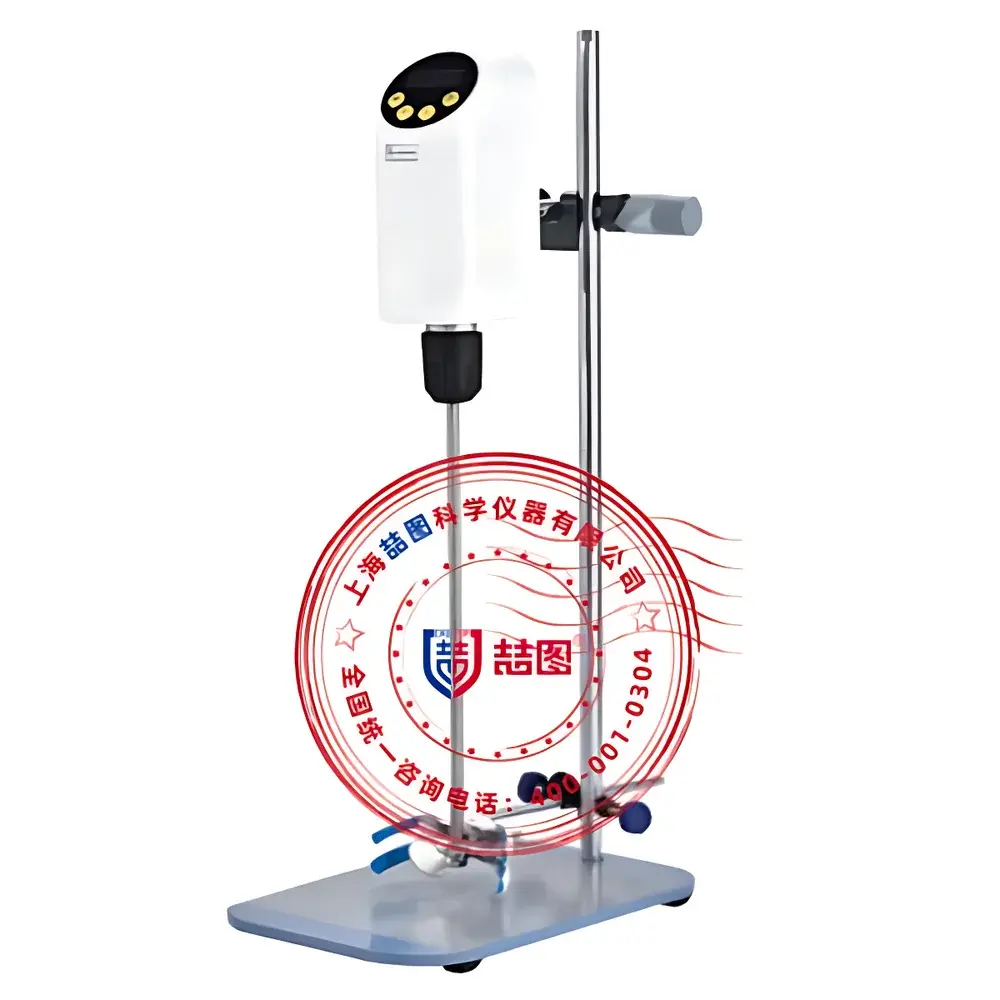
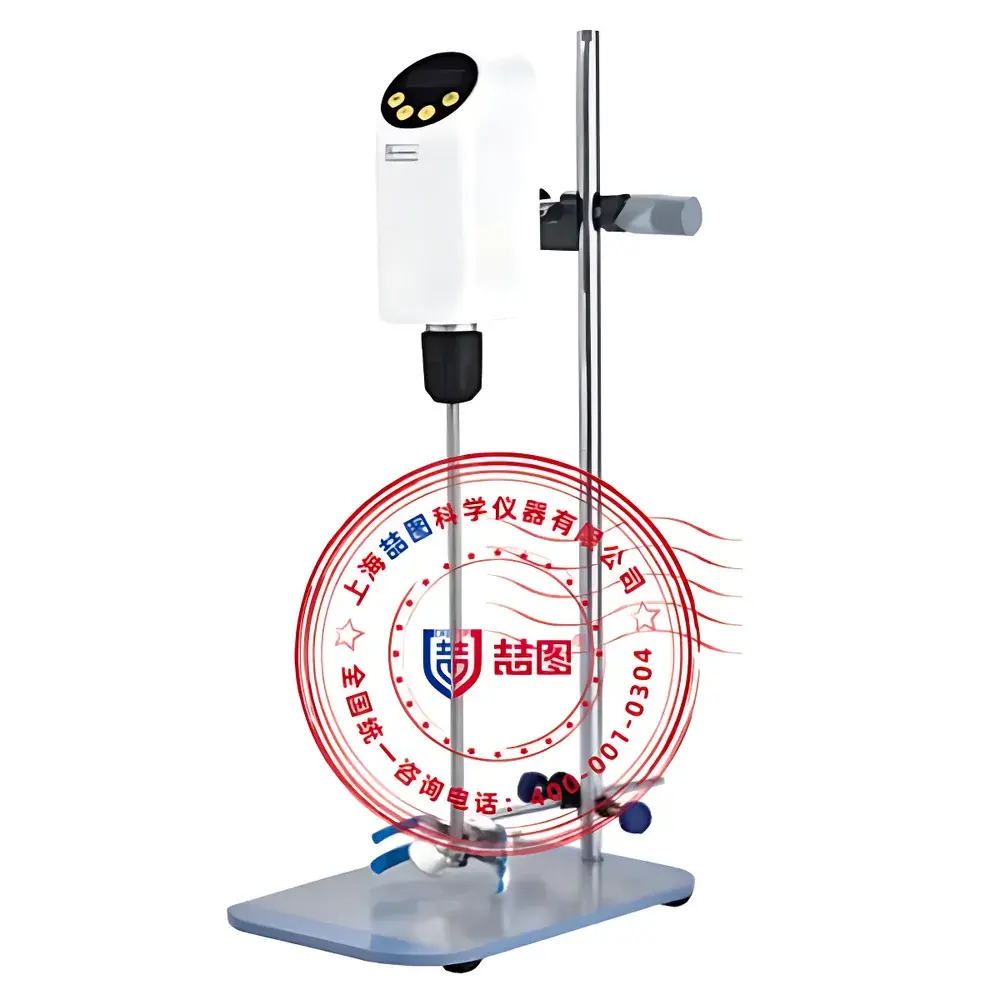
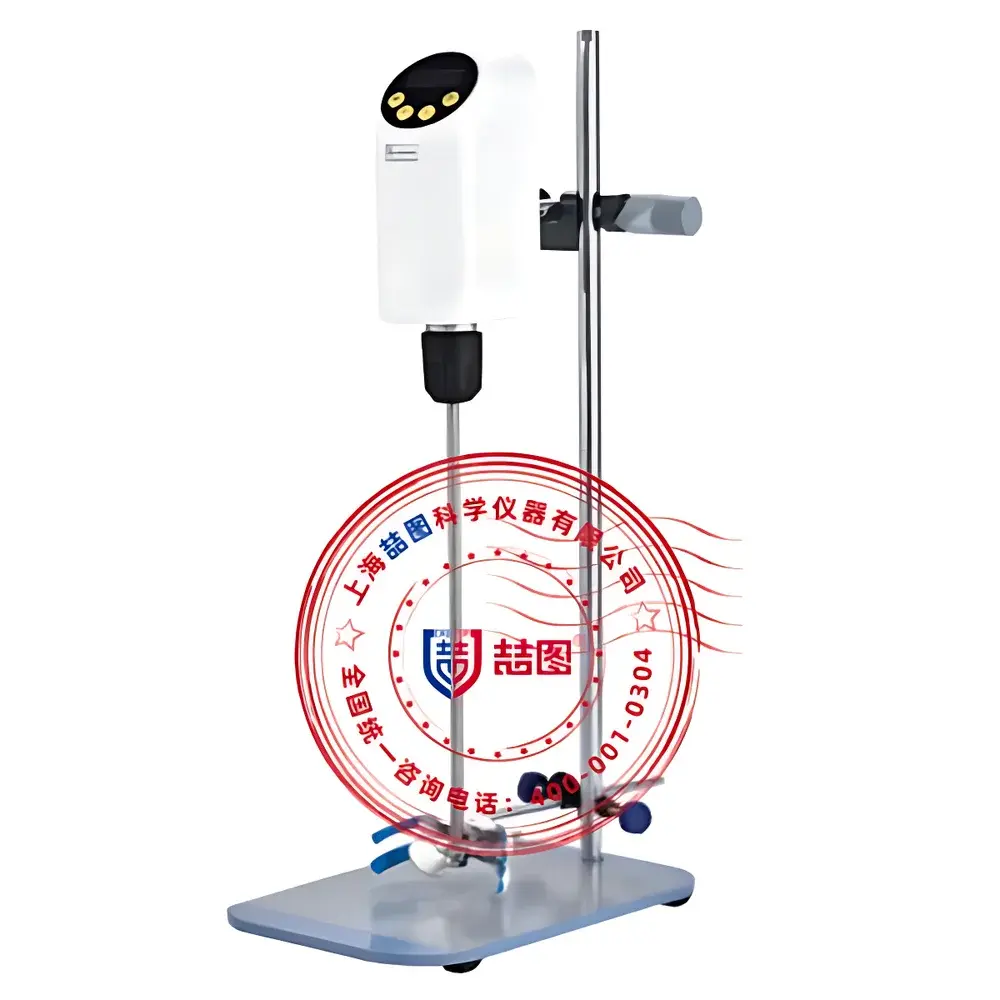
DRETOP TS5-60 Overhead Digital Stirrer
| Brand | DRETOP |
|---|---|
| Origin | Shanghai, China |
| Manufacturer Type | Direct Manufacturer |
| Product Category | Domestic |
| Model | TS5-60 |
| Instrument Type | Electric Overhead Stirrer |
| Maximum Mixing Volume | 5 L |
| Speed Range | 0–3000 rpm |
| Motor Output Power | 60 W |
| Voltage | 220 V, 50 Hz |
| Speed Increment/Decrement | 20 rpm |
| Max Torque | 40 N·cm |
| Chuck Capacity | 0.5–10 mm |
| Dimensions (D×W×H) | 160 × 230 × 600 mm |
| Safety Features | Auto Overload Shutdown, Circuit Protection, Soft Start, Forward/Reverse Control |
| Drive Motor | Brushless DC Motor |
| Display | Dual LED (Set Speed & Actual Speed), Timer Function |
Overview
The DRETOP TS5-60 Overhead Digital Stirrer is an engineered solution for precise, reproducible mechanical agitation in laboratory-scale mixing and dispersion applications. Based on the principle of rotational torque transmission via a vertically aligned drive shaft and interchangeable impeller, it delivers controlled shear and bulk fluid motion across a wide viscosity spectrum—from low-viscosity aqueous solutions to moderately viscous polymer dispersions and resin systems. Unlike magnetic stirrers limited by heat sensitivity and torque constraints, the TS5-60 employs a brushless DC motor coupled with a robust gear-free transmission architecture, enabling stable operation at both low speeds (e.g., 50 rpm for gentle suspension) and high speeds (up to 3000 rpm for rapid homogenization). Its overhead configuration eliminates contact between the drive unit and vessel contents, supporting use with sealed reactors, jacketed vessels, and corrosive or temperature-sensitive media—making it suitable for R&D workflows under GLP-aligned conditions in chemical synthesis, pharmaceutical formulation development, and environmental sample preparation.
Key Features
- Brushless DC motor ensures maintenance-free operation, low acoustic noise (<55 dB(A) at 1 m), and consistent torque delivery over extended duty cycles (continuous 8-hour operation validated).
- Dual LED display simultaneously shows set speed and real-time actual speed with ±1% full-scale accuracy; integrated digital timer supports programmable run durations from 1 second to 99 hours 59 minutes.
- Intelligent soft-start algorithm prevents sudden torque surges—reducing splashing, vortex formation, and mechanical stress on glassware during initiation.
- Forward/reverse rotation mode enables bidirectional mixing protocols critical for de-agglomeration of settled solids or breaking surface films in emulsion studies.
- Standardized 10 mm keyless chuck accepts ISO-compliant stirring rods (0.5–10 mm diameter); compatible with ASTM E2750-specified impeller geometries including paddle, propeller, turbine, anchor, and disperser types.
- Integrated electronic overload protection triggers immediate shutdown upon current anomaly detection, followed by automatic reset after thermal recovery—ensuring compliance with IEC 61000-4-5 surge immunity requirements.
Sample Compatibility & Compliance
The TS5-60 accommodates standard laboratory vessels up to 5 L capacity—including borosilicate glass beakers, Erlenmeyer flasks, jacketed reactors, and stainless-steel mixing tanks—provided mechanical clamping is applied per ISO 8573-7 guidelines for vibration control. It supports impellers fabricated from 304/316 stainless steel, PTFE-coated alloys, and chemically resistant composites, ensuring compatibility with pH 1–14 aqueous systems, organic solvents (e.g., acetone, THF), and mildly aggressive reagents (e.g., dilute HCl, NaOH). The device meets CE marking requirements under Directive 2014/30/EU (EMC) and 2014/35/EU (LVD), and its firmware architecture supports audit-trail-capable operation when integrated into validated environments compliant with FDA 21 CFR Part 11 Annex 11 expectations.
Software & Data Management
While the TS5-60 operates as a standalone instrument with embedded microcontroller logic, its RS-232 serial interface (optional adapter available) enables integration with LabVIEW™, MATLAB®, or custom SCADA platforms for remote parameter setting, real-time speed logging, and event-triggered data capture. All operational parameters—including start/stop timestamps, speed profiles, and fault codes—are stored in non-volatile memory for post-run traceability. When deployed in regulated settings, users may configure password-protected access levels (operator vs. administrator), enforce electronic signature requirements for method changes, and export CSV-formatted logs compatible with LIMS ingestion pipelines.
Applications
- Homogenization of polymer emulsions and colloidal suspensions in materials science labs.
- Controlled dissolution testing of active pharmaceutical ingredients (APIs) per USP using standardized paddle or basket impellers.
- Gas dispersion experiments (e.g., O2 or CO2 sparging) in bioreactor seed train optimization.
- Preparation of calibration standards for ICP-MS and AAS analysis requiring particle-free homogeneous matrices.
- Viscosity-dependent mixing validation in QC release testing of adhesives, coatings, and cosmetic gels.
- Student training in physical chemistry laboratories for studying Reynolds number transitions and power number correlations.
FAQ
What impeller types are recommended for high-viscosity fluids (>5,000 mPa·s)?
Anchor-style or helical ribbon impellers mounted on low-speed, high-torque configurations (e.g., TS20-180 model) are preferred; the TS5-60 supports anchor variants up to 100 mm diameter with appropriate shaft reinforcement.
Is the TS5-60 compatible with explosion-proof environments?
No intrinsic safety certification is provided; for hazardous area deployment, consult local ATEX/IECEx zone classification and consider external purging or pressurization strategies.
Can speed data be exported for regulatory documentation?
Yes—via RS-232 output, timestamped speed values can be logged externally and archived as raw ASCII files meeting ALCOA+ data integrity criteria.
Does the device support GLP-compliant user access control?
Local password protection is implemented at hardware level; full role-based access control requires integration with third-party laboratory information management systems (LIMS).
What maintenance intervals are recommended for long-term reliability?
No scheduled lubrication or carbon brush replacement is required; annual verification of chuck concentricity and motor bearing preload is advised per manufacturer’s service bulletin SB-TS5-2023-01.



