
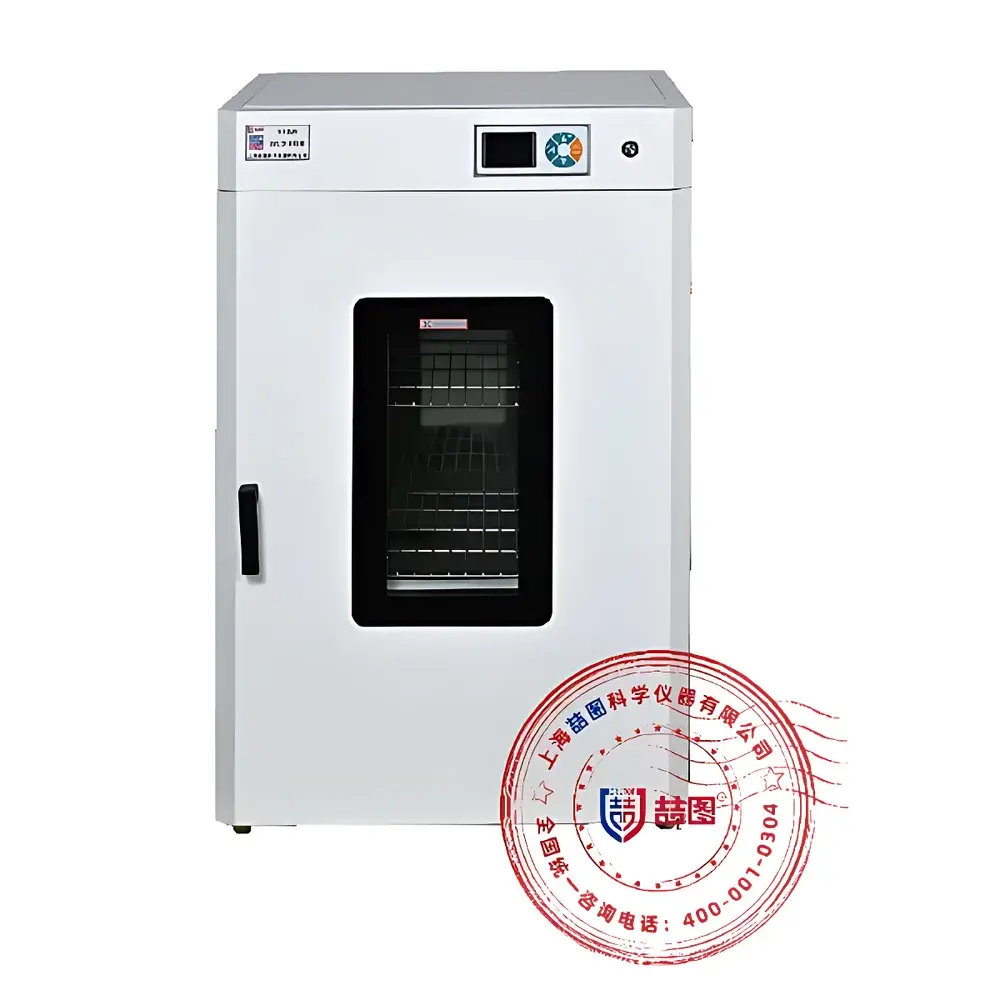
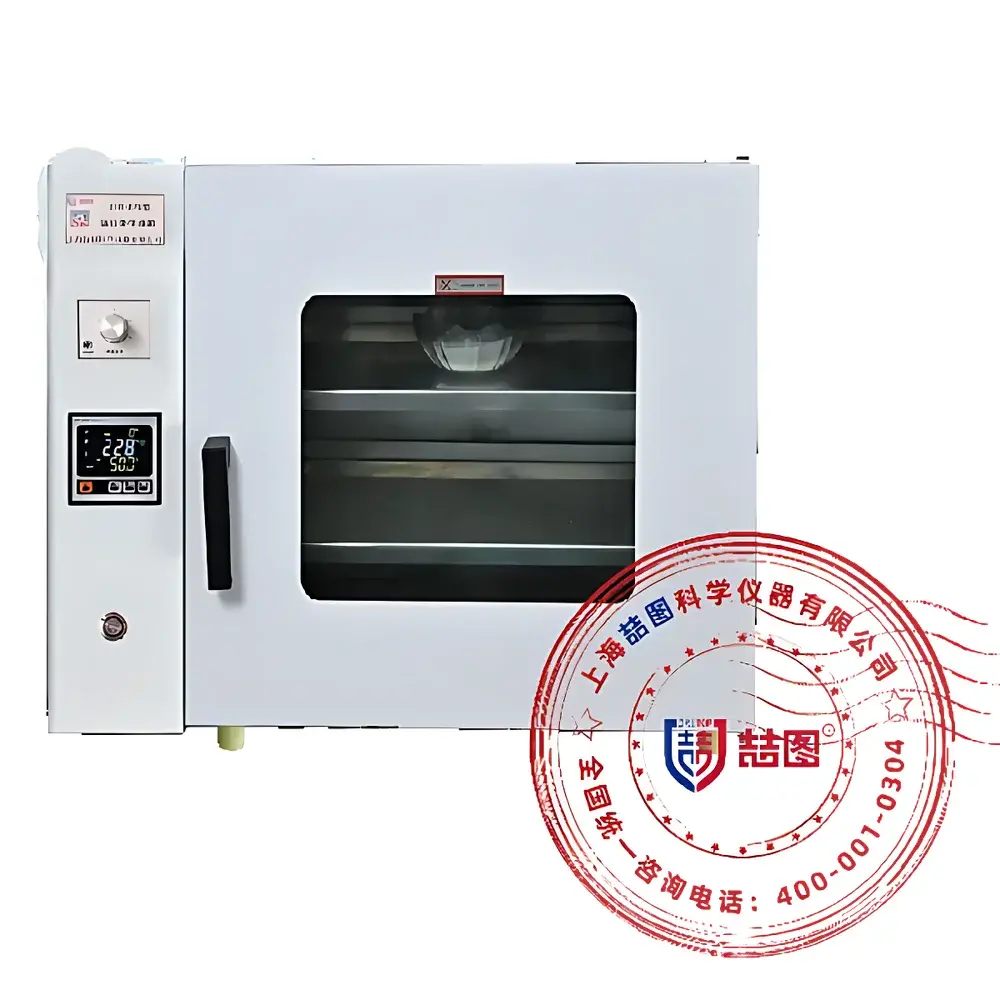
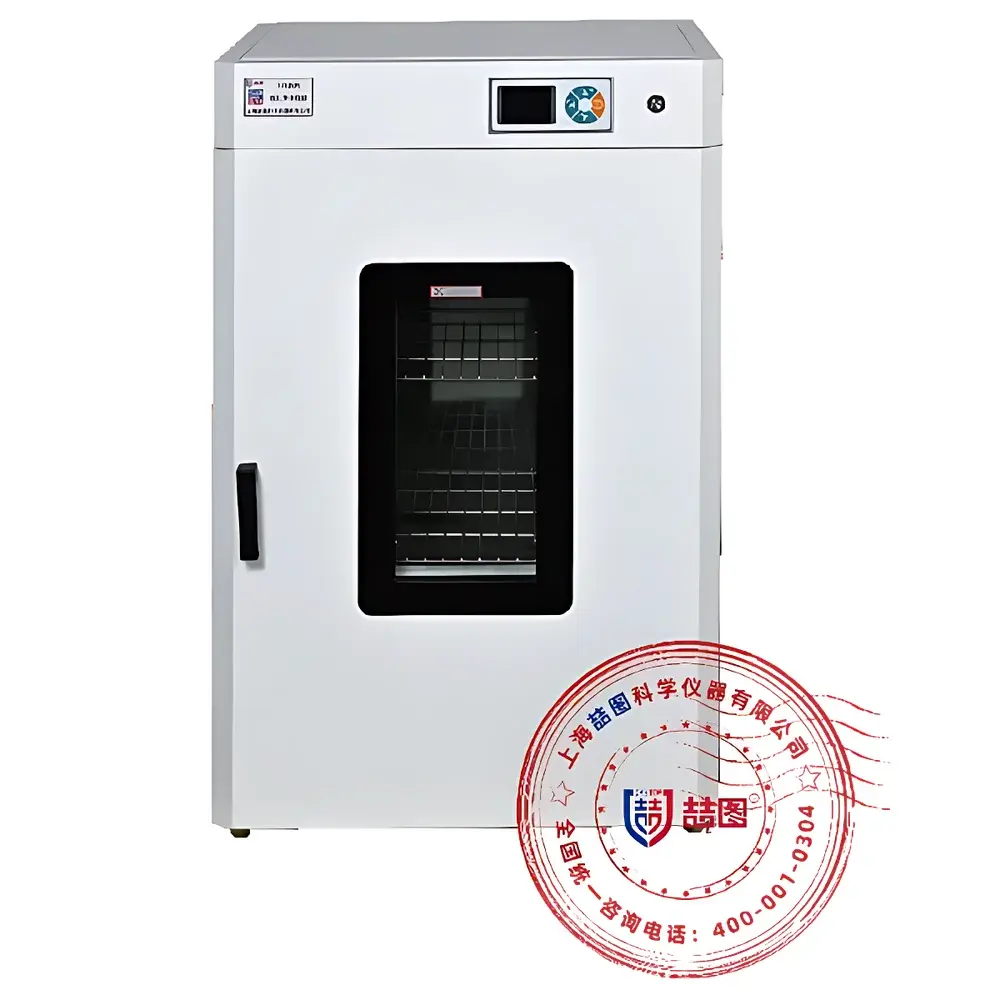
DRETOP TIR-78A Far-Infrared Drying Oven
| Brand | DRETOP |
|---|---|
| Origin | Shanghai, China |
| Manufacturer Type | Direct Manufacturer |
| Product Category | Domestic |
| Model | TIR-78A |
| Instrument Type | General-Purpose Drying Oven |
| Temperature Range | RT + 10°C to 250°C |
| Temperature Uniformity | ±2.5°C (at 100°C with forced air circulation) |
| Temperature Fluctuation | ±1°C |
| Temperature Resolution | 0.1°C |
| Internal Chamber Dimensions | 400 × 425 × 445 mm (W × D × H) |
| Working Ambient Temperature | 5–45°C |
| Inner Chamber Material | Stainless Steel |
| Heating Method | Far-Infrared Radiant Heating |
| Airflow Control | Continuously Adjustable Fan Speed (including off position) |
| Safety Features | Overtemperature Cut-off, Leakage Protection, Short-Circuit Protection, Thermal Overload Protection, Power-Failure Data Retention |
Overview
The DRETOP TIR-78A Far-Infrared Drying Oven is an engineered solution for precise thermal processing in research laboratories, quality control environments, and industrial R&D settings where controlled dehydration, curing, sterilization, or pre-conditioning of temperature-sensitive samples is required. Unlike conventional convection ovens relying solely on heated air circulation, the TIR-78A employs far-infrared (FIR) radiant heating elements—typically operating in the 3–10 µm wavelength range—to deliver direct, volumetric energy transfer to materials. This mechanism minimizes thermal inertia, accelerates heating response, and reduces surface overheating risks commonly observed with convective systems. The integrated variable-speed fan enables selective activation of forced-air circulation only when uniform temperature distribution is critical (e.g., during ISO 5628 or ASTM D2244-compliant drying protocols), while permitting zero-airflow operation to preserve fragile particulates, powders, or thin-film substrates. Designed to meet baseline GLP documentation requirements, the unit supports traceable temperature logging and alarm-triggered event capture.
Key Features
- Microprocessor-based PID temperature controller with dual-display LCD interface: simultaneous readout of setpoint, real-time chamber temperature, and elapsed time; three-color backlight for intuitive status indication (green = stable, yellow = ramping, red = alarm)
- Self-diagnostic system with alphanumeric fault code display (e.g., E01 = sensor open circuit, E03 = SSR failure), enabling rapid troubleshooting without service dispatch
- Far-infrared heating modules with silicon-controlled rectifier (SCR) or solid-state relay (SSR) power regulation ensure repeatable thermal output and minimal overshoot (<0.5°C typical at 100°C setpoint)
- Optimized internal airflow architecture featuring directional ducting and 3D reflective chamber walls to enhance spatial temperature homogeneity across the full working volume
- Double-layer insulated door with high-transmittance tempered glass viewport (≥85% visible light transmission) and silicone gasket seal rated for continuous operation up to 250°C
- Adjustable stainless-steel shelving system (two standard trays included) with 25 mm vertical pitch increments; fully removable for cleaning or custom fixture integration
Sample Compatibility & Compliance
The TIR-78A accommodates a broad spectrum of sample formats—including Petri dishes, crucibles, aluminum weighing pans, glass vials, polymer films, and ceramic substrates—without risk of displacement due to its configurable airflow mode. Its stainless-steel interior (AISI 304 grade) resists corrosion from organic solvents, saline solutions, and mild acids encountered in pharmaceutical stability testing (ICH Q1A–Q5C) or food moisture analysis (AOAC 950.46). The unit complies with IEC 61010-1:2010 safety standards for laboratory electrical equipment and incorporates design elements aligned with FDA 21 CFR Part 11 data integrity principles when paired with optional USB or RS485 interfaces. Temperature uniformity validation (±2.5°C at 100°C under forced-air mode) satisfies minimum performance criteria outlined in ISO 17025-accredited calibration procedures for thermal equipment.
Software & Data Management
While the base configuration operates via embedded firmware, optional digital upgrades extend functionality significantly. A USB data export module enables timestamped temperature logs (.CSV format) to be saved directly onto standard USB flash drives—ideal for audit-ready record retention. For regulated environments, the RS485 serial interface supports Modbus RTU protocol, allowing integration into centralized SCADA or LIMS platforms for automated data ingestion and electronic signature workflows. Optional programmable controllers offer up to 30-segment ramp-soak profiles with independent dwell time, rate, and end-action parameters—essential for accelerated aging studies per ASTM F1980 or ISO 11137. All configurations include non-volatile memory with power-loss recovery, preserving user-defined parameters and active program states after unexpected shutdowns.
Applications
- Moisture content determination in pharmaceutical excipients and active ingredients (USP <921>)
- Pre-drying of filter membranes prior to gravimetric particulate analysis (EPA Method 160.1)
- Curing of epoxy-coated substrates in materials science labs
- Stabilization of biological reference standards under defined humidity- and temperature-controlled conditions
- Thermal conditioning of sensors and microelectromechanical systems (MEMS) prior to functional testing
- Residual solvent removal from printed electronics inks without substrate warping
FAQ
What is the maximum recommended operating temperature for continuous use?
The TIR-78A is rated for sustained operation at 250°C; prolonged exposure above this limit may degrade insulation integrity and compromise temperature uniformity specifications.
Can the fan be completely disabled during operation?
Yes—the airflow control switch provides infinite adjustment from full-off to maximum velocity, eliminating convective forces that could disturb loose powders or granular samples.
Is the stainless-steel interior electropolished or passivated?
The inner chamber uses standard mill-finish AISI 304 stainless steel; electropolishing is available as a custom order for enhanced cleanability in GMP environments.
Does the unit support external temperature probe inputs for independent verification?
No native analog input is provided; however, the RS485 interface allows connection to third-party calibrated thermocouple readers via Modbus-compatible gateways.
What is the typical warm-up time to reach 100°C from ambient?
Under no-load conditions with fan enabled, average stabilization time is approximately 12–15 minutes—consistent with far-infrared thermal transfer kinetics and chamber thermal mass.
Related Products



