
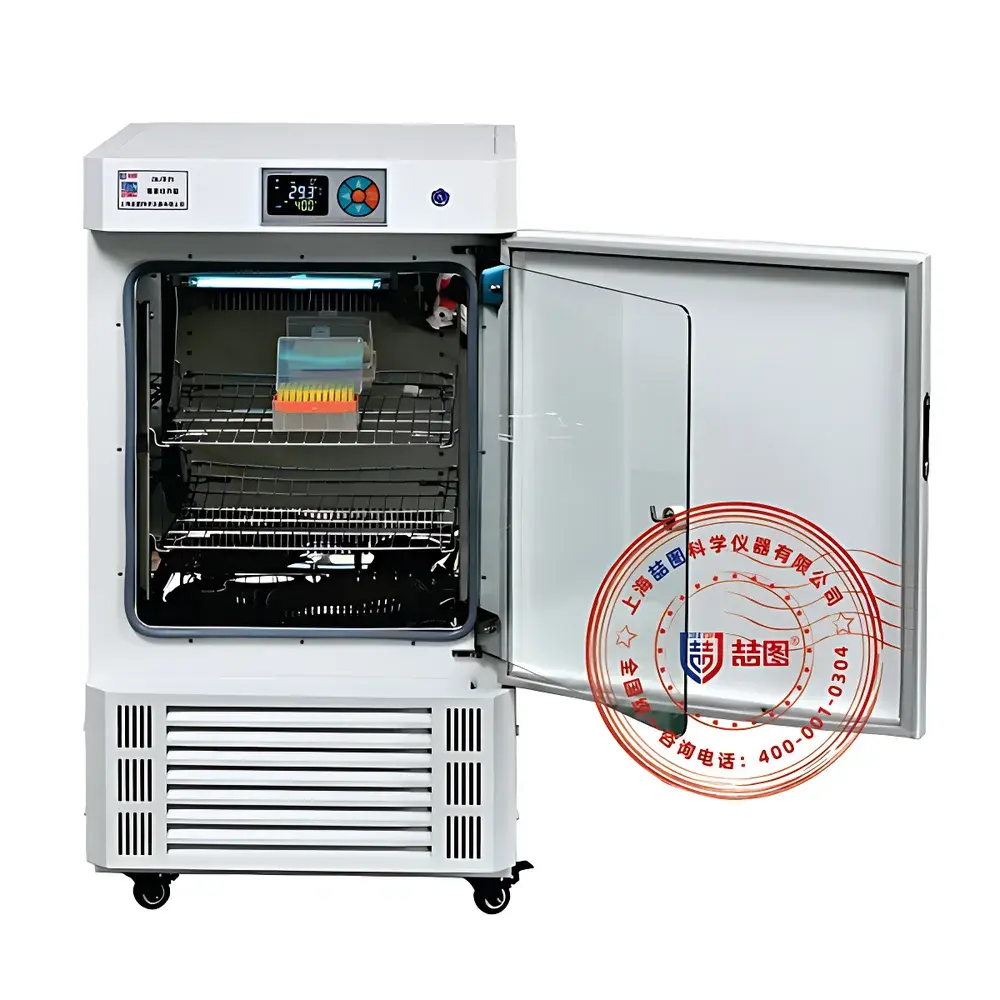
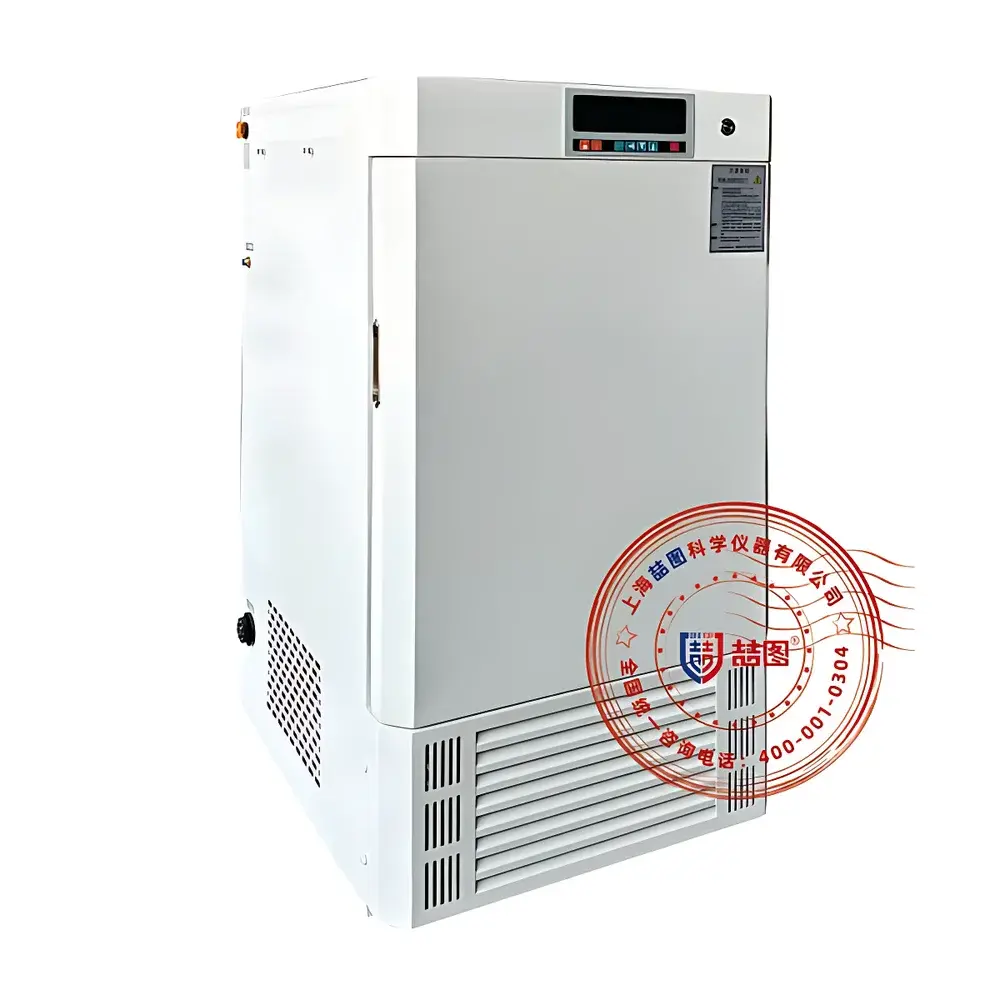
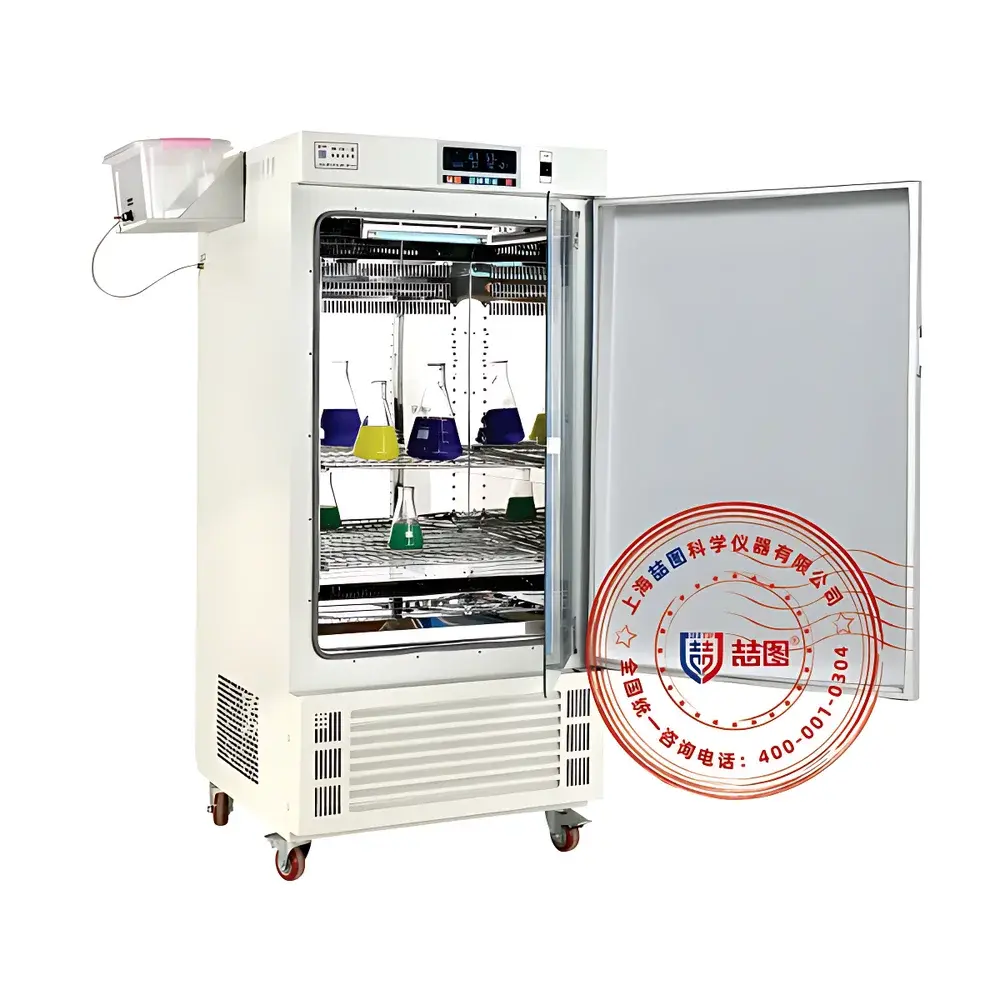
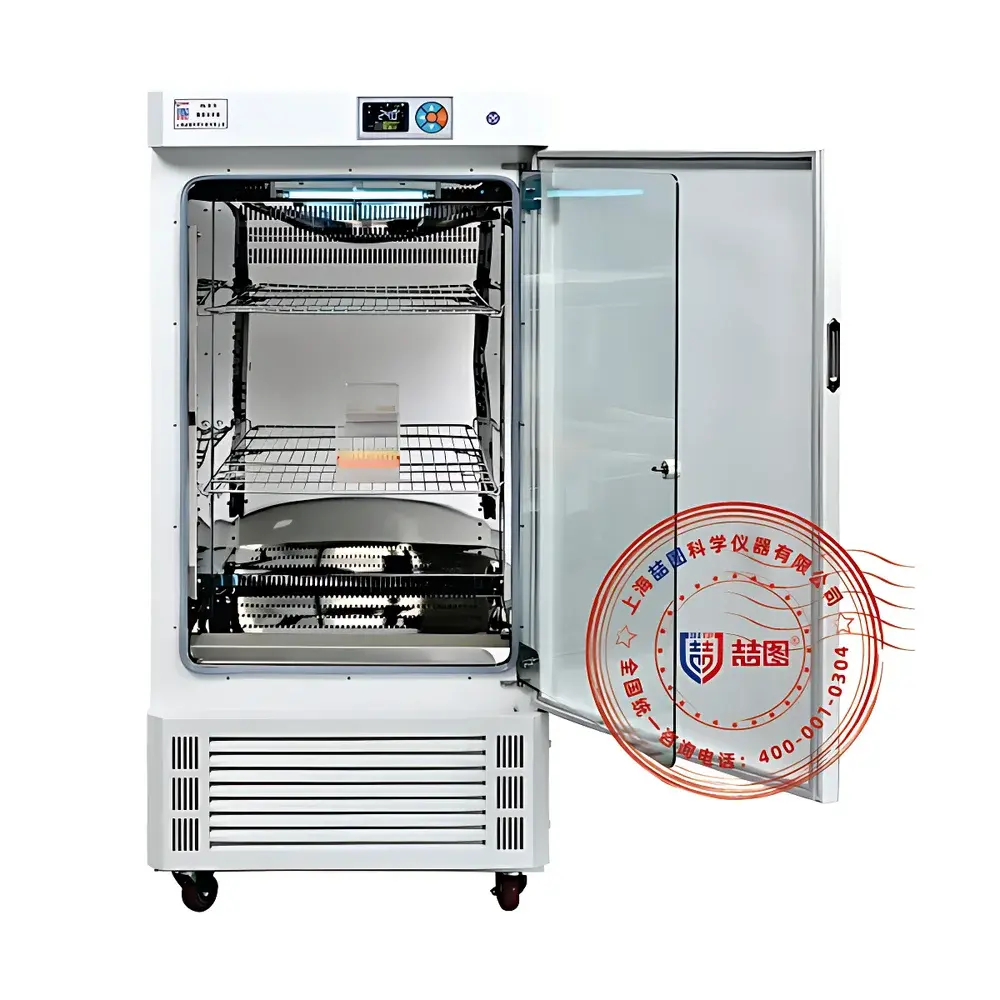
DRETOP ZMJ-350-II Mold Incubator
| Brand | DRETOP |
|---|---|
| Origin | Shanghai, China |
| Manufacturer Type | Direct Manufacturer |
| Model | ZMJ-350-II |
| Control Method | Digital Touchscreen Interface |
| Air Circulation | Forced Convection |
| Temperature Range | 15–45 °C (with Humidification), 10–45 °C (without Humidification) |
| Temperature Fluctuation | ±0.5 °C |
| Temperature Uniformity | ±1 °C (empty chamber @ 25 °C) |
| Humidity Range | 55–85 %RH |
| Humidity Fluctuation | ±5 %RH |
| Chamber Capacity | 350 L |
| External Dimensions (W×D×H) | 820×835×1650 mm |
| Internal Dimensions (W×D×H) | 680×550×950 mm |
Overview
The DRETOP ZMJ-350-II Mold Incubator is a purpose-engineered environmental chamber designed to maintain precise, stable, and reproducible temperature and relative humidity conditions required for the cultivation and propagation of filamentous fungi, yeasts, and other hygrophilic microorganisms. Unlike general-purpose incubators, this unit integrates calibrated humidification control with forced-air convection and P.I.D. thermal regulation—enabling consistent moisture retention critical for mycelial growth, spore germination, and morphological differentiation in mold studies. Its operational envelope (15–45 °C with active humidification; 10–45 °C in dry mode) aligns with ISO 8573-1, ASTM D3273 (Standard Test Method for Resistance to Growth of Mold on the Surface of Interior Coatings in an Environmental Chamber), and USP microbiological evaluation protocols. The chamber is widely deployed in BOD incubation, microbial strain preservation, antifungal efficacy testing, and environmental stress screening per ICH Q5C guidelines.
Key Features
- Microprocessor-based P.I.D. temperature controller with 0.1 °C resolution, real-time digital display, and programmable over-temperature alarm threshold—ensuring GLP-compliant thermal integrity.
- Dual-mode humidification system: high-efficiency ultrasonic mist generator coupled with precision capacitive RH sensor (±5 %RH accuracy), enabling dynamic adjustment across 55–85 %RH range without condensation or localized saturation.
- Forced convection architecture utilizing optimized axial airflow ducting and low-turbulence贯流 (cross-flow) fan—validated to deliver ≤±1 °C uniformity (empty load @ 25 °C) per ISO 15270:2017 Annex C calibration methodology.
- Stainless steel interior (304 grade), fully removable adjustable shelves, and seamless corner radii minimize microbial harborage points and support validated cleaning cycles using ethanol, hydrogen peroxide vapor (HPV), or saturated steam.
- Double-glazed observation window with tempered inner glass and magnetic door seal—reducing thermal bridging and maintaining insulation performance at elevated humidity levels.
- Integrated UV-C germicidal lamp (254 nm, 15 W) with safety interlock and timer function—providing automated decontamination of recirculated air and chamber surfaces between runs.
- Modular refrigeration subsystem featuring R134a-free eco-refrigerant (R600a), compressor soft-start logic, and duty-cycle protection—designed for continuous operation under GMP-grade laboratory environments.
Sample Compatibility & Compliance
The ZMJ-350-II accommodates standard Petri dishes (90–150 mm), multi-well plates (6–96-well), slant tubes, Erlenmeyer flasks (up to 2 L), and custom bioreactor inserts. Its internal geometry supports ISO/IEC 17025-accredited validation protocols—including IQ/OQ/PQ documentation packages for temperature mapping (ASTM E2874), humidity distribution analysis (ISO 14644-3), and alarm response verification. The unit complies with IEC 61010-1:2010 safety standards for laboratory equipment and meets electromagnetic compatibility requirements per EN 61326-1. Optional RS485 interface enables integration into centralized LabVantage or Thermo Fisher SampleManager LIMS platforms with audit-trail-enabled parameter logging.
Software & Data Management
While the base model operates via embedded touchscreen HMI, optional firmware upgrades support Modbus RTU communication for remote monitoring via SCADA or building management systems (BMS). All setpoints, alarms, and runtime logs are timestamped and stored onboard for ≥30 days (non-volatile memory). When equipped with the optional smart program controller, users may define up to 30 multi-step profiles—each with independent ramp/soak segments for temperature and humidity—supporting accelerated aging tests per MIL-STD-810H Method 508.5 (Fungal Resistance). Data export is available via USB flash drive in CSV format, compatible with JMP, Minitab, and Python pandas workflows.
Applications
- Regulatory fungal challenge testing for pharmaceutical packaging (USP , ) and medical device sterilization validation (ISO 11137).
- Environmental simulation of tropical or subtropical storage conditions for food safety shelf-life modeling (ISO 21872-1).
- Antimicrobial coating performance assessment under sustained high-humidity exposure (ASTM D3273, JIS Z 2801).
- Mycotoxin production studies requiring controlled water activity (aw) modulation via RH-temperature coupling.
- Biodegradation assays of polymer substrates using defined fungal consortia (e.g., Aspergillus niger, Trichoderma reesei).
- Quality control of probiotic cultures where hyphal morphology correlates with viability (EP 2.6.12).
FAQ
Does the ZMJ-350-II support validation for GMP environments?
Yes—the unit includes traceable calibration points, configurable alarm thresholds, and non-volatile event logging. Optional IQ/OQ documentation kits are available for FDA 21 CFR Part 11 compliance.
Can the humidity system be disabled independently of temperature control?
Yes—dry-mode operation (10–45 °C) disables humidification while retaining full thermal regulation and forced-air circulation.
What maintenance intervals are recommended for long-term reliability?
Humidifier reservoir cleaning every 72 hours during continuous use; UV lamp replacement annually; HEPA filter inspection quarterly; annual thermistor and RH sensor recalibration using NIST-traceable references.
Is external data logging supported without optional hardware?
No—USB data export requires the optional “Smart Program Controller” module. Basic alarm events and runtime totals are viewable on-screen but not exportable in base configuration.
How is temperature uniformity verified across the working volume?
Per ISO 15270:2017, 9-point mapping (3×3 grid at center height) is performed with calibrated Class A Pt100 probes; results must fall within ±1 °C of setpoint at 25 °C, 65 %RH steady state.





