
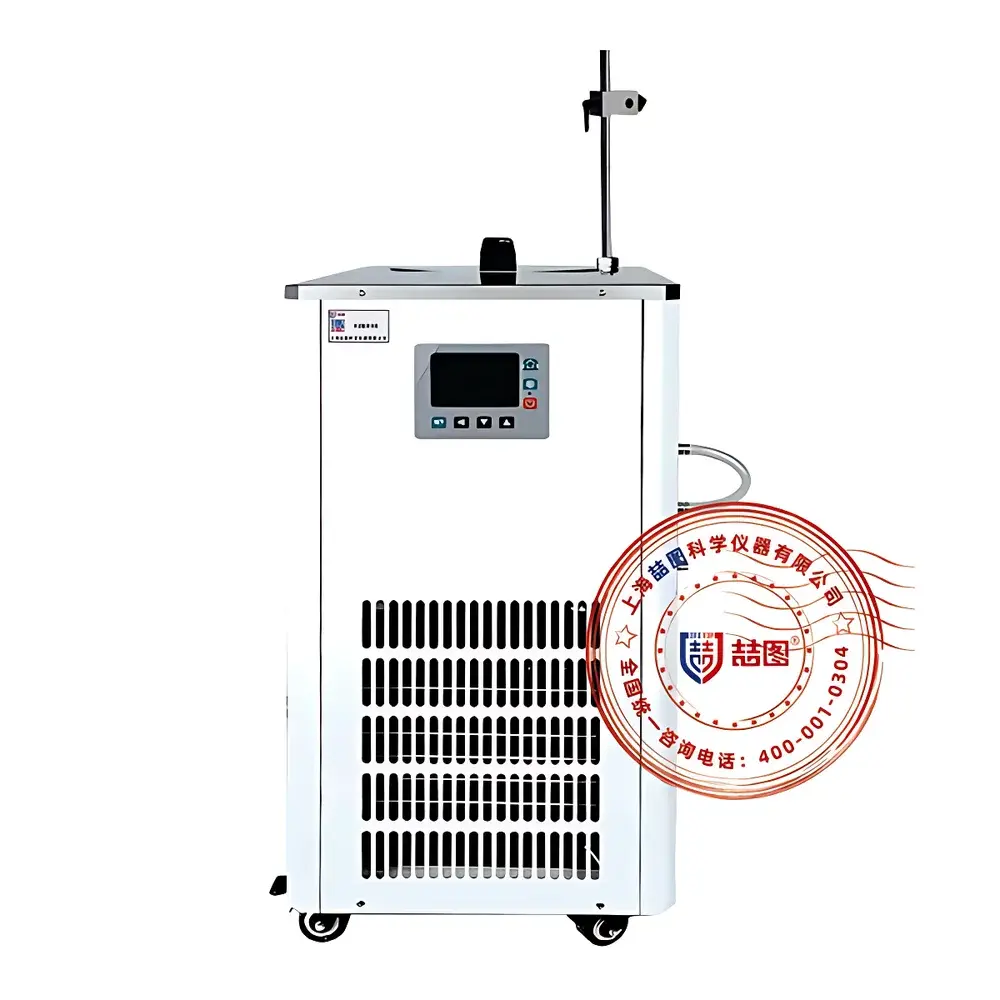
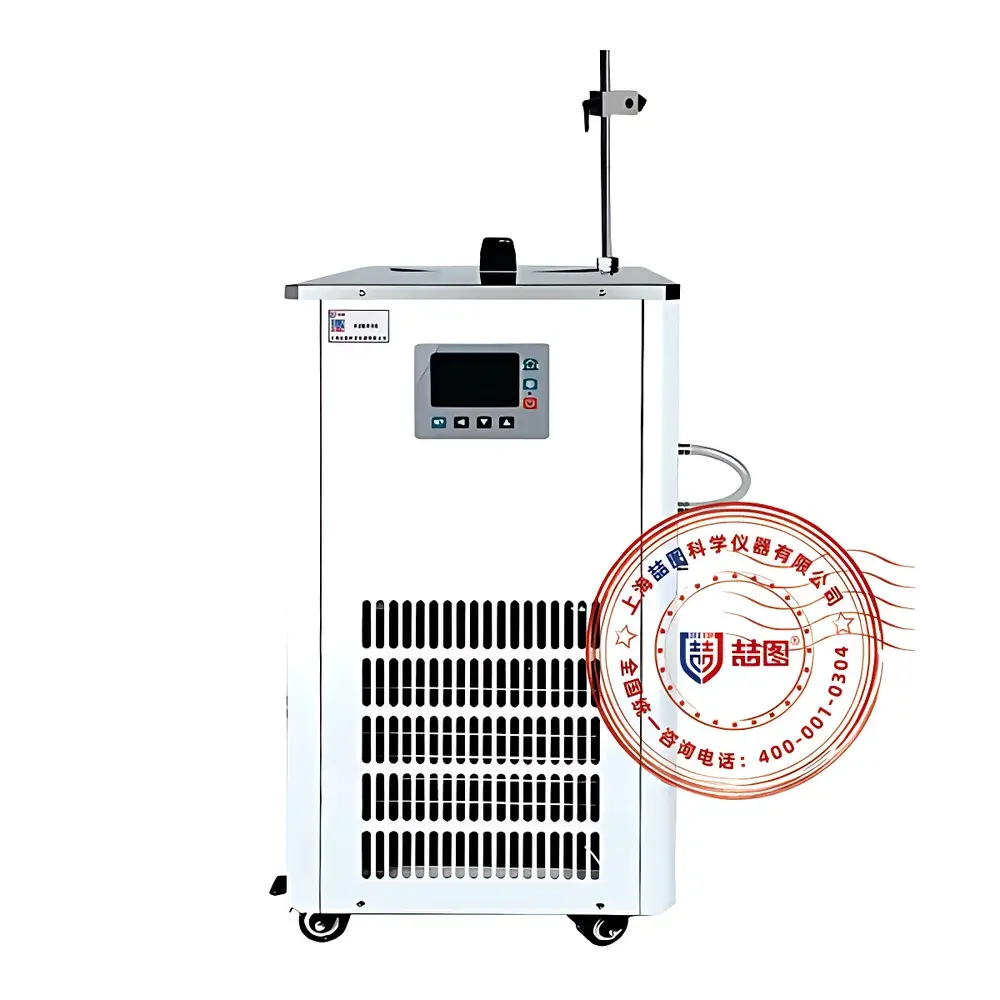
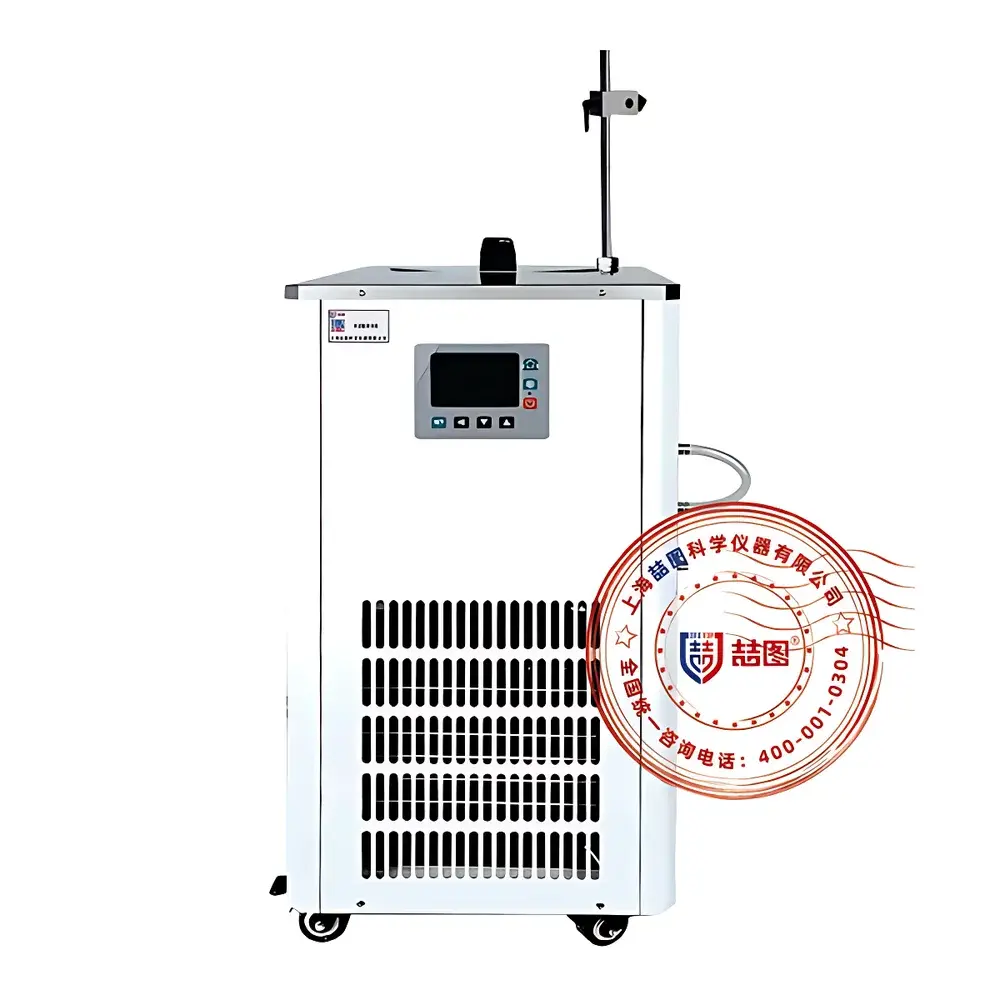
DRETOP LX5-10 Integrated Circulating Chiller
| Brand | DRETOP |
|---|---|
| Origin | Shanghai, China |
| Manufacturer Type | OEM Manufacturer |
| Regional Classification | Domestic (China) |
| Model | LX5-10 |
| Instrument Type | Integrated Unit |
| Cooling Method | Water-Cooled |
| Temperature Control Range | −10 °C to 100 °C |
| Circulating Pump Flow Rate | 20 L/min |
| Reservoir Capacity | 5 L |
| Temperature Stability | ±0.1 °C |
| Pump Head | 4–6 m |
| Power Supply | 220 V, 50 Hz |
| Opening Diameter | Φ210 mm |
| Communication Interface | RS485 |
Overview
The DRETOP LX5-10 Integrated Circulating Chiller is a precision-engineered thermal management system designed for laboratory and industrial applications requiring stable, bidirectional temperature control across a wide operational range (−10 °C to 100 °C). Unlike basic cooling water units limited to ambient or mild sub-zero operation, the LX5-10 employs a closed-loop refrigeration architecture with dual-mode thermal regulation—combining variable-speed compressor-based cooling and electric resistance heating—to enable rapid, uniform thermal transitions without external auxiliary systems. Its core function is to circulate thermally stabilized fluid (e.g., deionized water, ethylene glycol/water mixtures, or silicone oil) through external equipment—such as rotary evaporators, spectrometers, laser diodes, chromatographic columns, or jacketed reactors—thereby extracting or delivering heat with high reproducibility. The unit operates on the principle of forced-convection heat exchange within a sealed hydraulic circuit, where thermal load is dynamically balanced via PID-controlled compressor modulation and proportional heating output.
Key Features
- PID-based digital temperature controller with ±0.1 °C setpoint stability and real-time deviation compensation, ensuring minimal thermal drift during extended operation.
- Integrated high-efficiency magnetic drive circulation pump (20 L/min flow, 4–6 m head), engineered for low self-heating and corrosion-resistant operation using stainless-steel wetted components.
- Double-walled, insulated 5 L reservoir with stainless-steel interior and exterior surfaces—resistant to oxidation, chemical attack, and thermal fatigue under repeated freeze-thaw cycling.
- RS485 serial interface compliant with Modbus RTU protocol, enabling integration into centralized lab monitoring systems for remote parameter adjustment, data logging, and audit-trail generation.
- Dual-mode thermal actuation: inverter-driven scroll compressor for low-noise, energy-responsive cooling; and immersed tubular heater for precise, uniform warming—both governed by shared temperature feedback loop.
- IP54-rated enclosure with comprehensive safety interlocks: overtemperature cutoff, low-level fluid detection, leak sensing, phase-loss protection, and automatic power recovery with memory retention after interruption.
Sample Compatibility & Compliance
The LX5-10 supports a broad spectrum of heat-transfer media—including aqueous solutions (deionized water, 30–50% ethylene glycol), synthetic oils, and low-volatility silicone fluids—selected per application-specific thermal, viscosity, and chemical compatibility requirements. Its closed-loop design prevents evaporation loss, oxidation, and particulate ingress, maintaining medium integrity over thousands of operational hours. The unit complies with IEC 61000-6-3 (EMC emissions), IEC 61000-6-2 (immunity), and GB 4793.1–2007 (safety requirements for electrical equipment used in measurement, control, and laboratory use). While not certified to UL/CSA or CE for medical device integration, its architecture aligns with GLP and GMP environmental control prerequisites when deployed in validated QC laboratories—particularly where traceable temperature records, alarm event logging, and user-access controls are implemented via external SCADA or LIMS platforms.
Software & Data Management
The LX5-10 does not include embedded touchscreen HMI or proprietary software; instead, it delivers raw process data (temperature setpoint, actual bath temperature, pump status, fault codes) via ASCII-formatted RS485 packets at configurable baud rates (9600–115200 bps). This open-protocol interface allows seamless integration with third-party data acquisition systems (e.g., LabVIEW, MATLAB, Ignition SCADA) or custom Python/Node-RED scripts for time-series logging, statistical process control (SPC) charting, and automated report generation. All communication events—including command execution timestamps and response acknowledgments—are timestamped with millisecond resolution, supporting 21 CFR Part 11–compliant electronic recordkeeping when paired with validated software layers that enforce user authentication, audit trails, and electronic signatures.
Applications
- Rotor Evaporator Condensation: Supplies −20 °C to 5 °C coolant to condenser coils, improving solvent recovery efficiency for low-boiling-point compounds (e.g., diethyl ether, dichloromethane).
- Analytical Instrument Thermal Stabilization: Maintains constant column oven or detector housing temperatures in HPLC, GC, and ICP-OES systems, reducing baseline drift and improving retention time reproducibility.
- Reaction Calorimetry & Low-Temperature Synthesis: Delivers controlled cryogenic fluid to reactor jackets for exothermic Grignard, lithiation, or nitration reactions requiring precise sub-zero initiation (−10 °C to −40 °C).
- Laser & Optoelectronic Cooling: Regulates junction temperature of high-power diode lasers and fiber amplifiers to sustain wavelength stability and prevent thermal lensing-induced mode distortion.
- Materials Testing: Supports thermal cycling protocols for polymer glass-transition analysis, battery cell thermal runaway simulation, and semiconductor package reliability assessment per ASTM E1545 and ISO 11357 standards.
FAQ
What cooling media are compatible with the LX5-10?
Deionized water, 30–50% ethylene glycol/water mixtures (for sub-zero operation), and low-viscosity silicone oils (for >80 °C applications) are recommended. Avoid chlorinated solvents, acetone, or methanol due to material compatibility and flammability risks.
Can the LX5-10 be used for direct immersion applications?
No—it is a circulating chiller only, not a bath unit. For direct sample immersion, consider the LF-series reaction baths with integrated stirring and open reservoirs.
Is remote monitoring supported out-of-the-box?
Yes, via RS485 Modbus RTU. No additional hardware is required, but host-side software must be configured to parse register maps provided in the technical manual.
What is the maximum allowable backpressure at the outlet fitting?
The magnetic pump is rated for continuous operation up to 1.2 bar (17 psi) static backpressure. Exceeding this may reduce flow rate and accelerate seal wear.
Does the unit support 21 CFR Part 11 compliance?
The hardware provides necessary data integrity features (audit logs, user-level access via external controller), but full Part 11 validation requires implementation at the supervisory software layer—not within the chiller’s firmware.



