
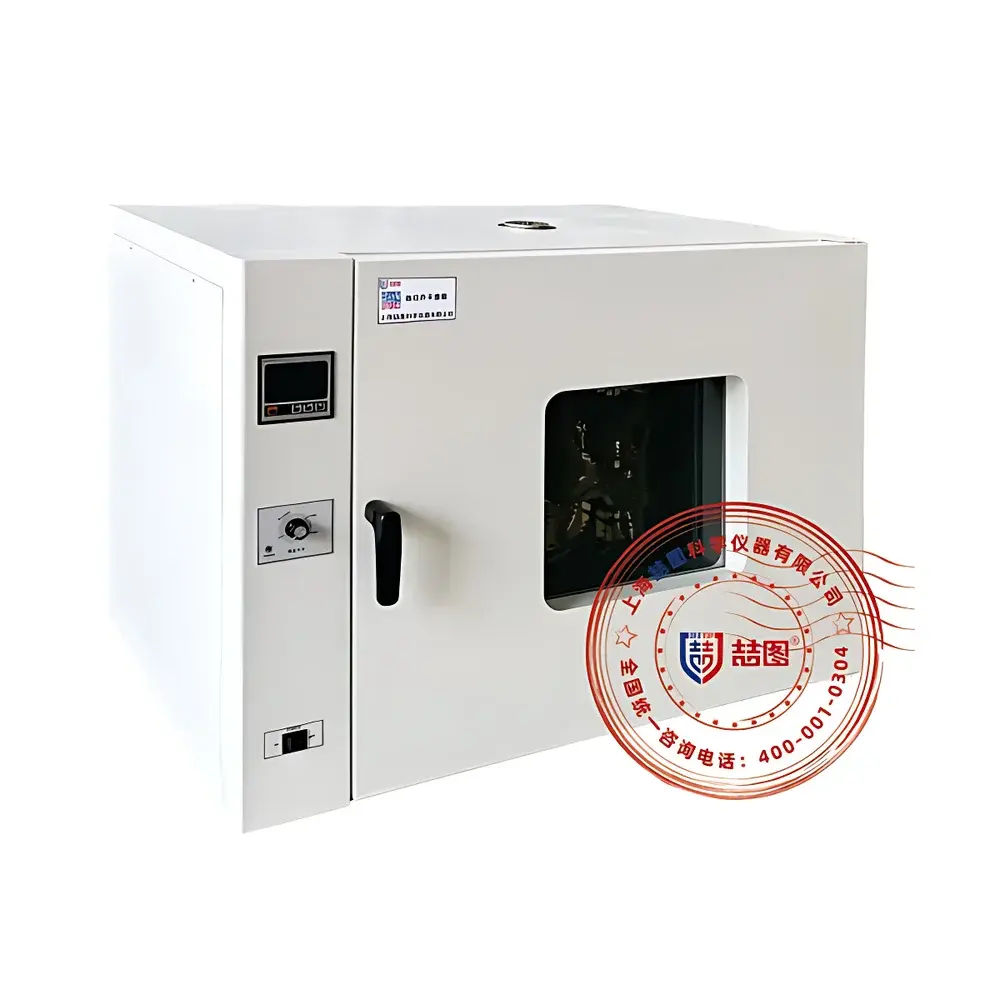
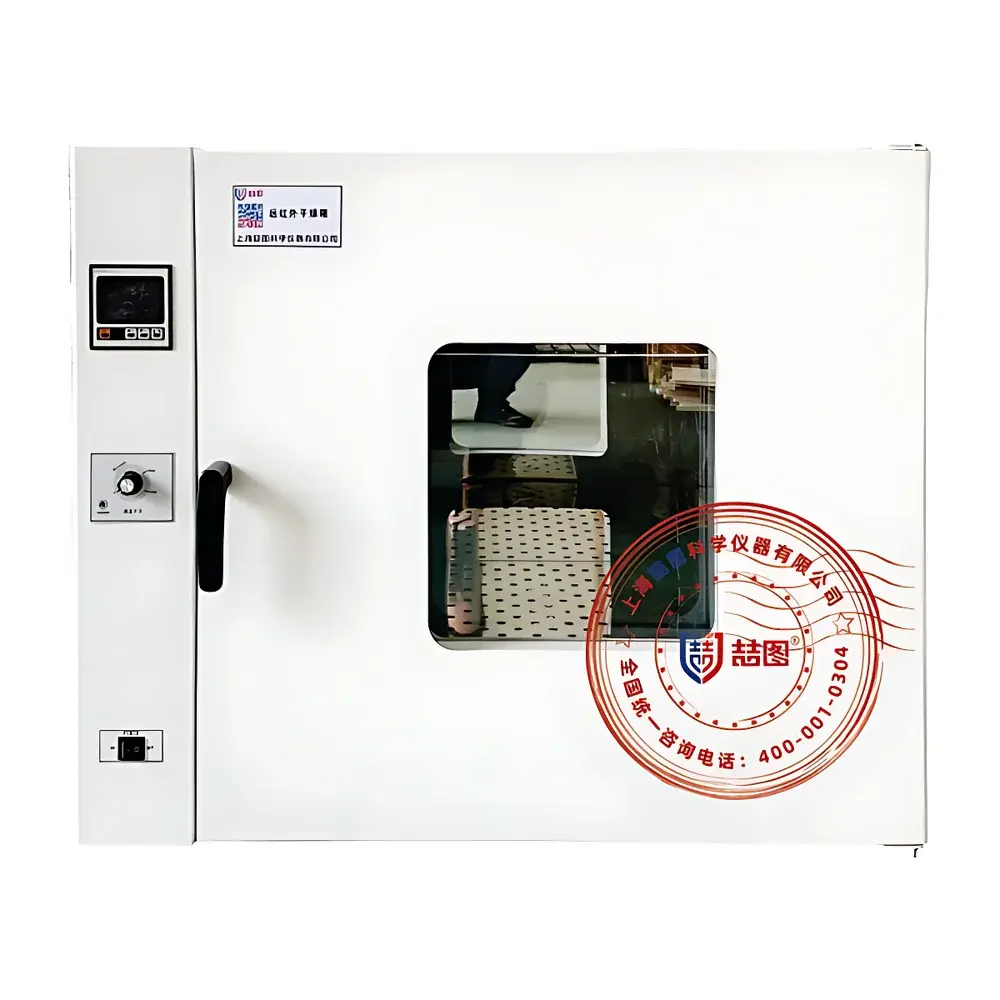
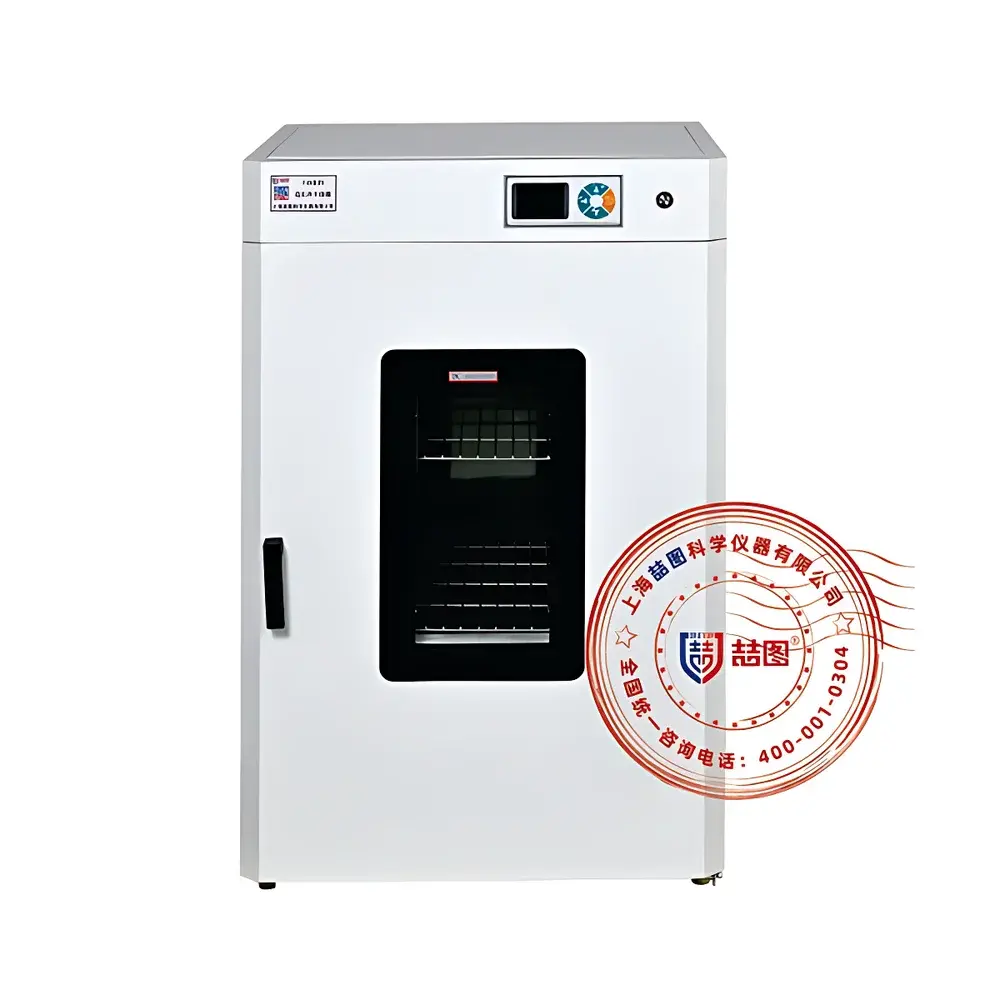
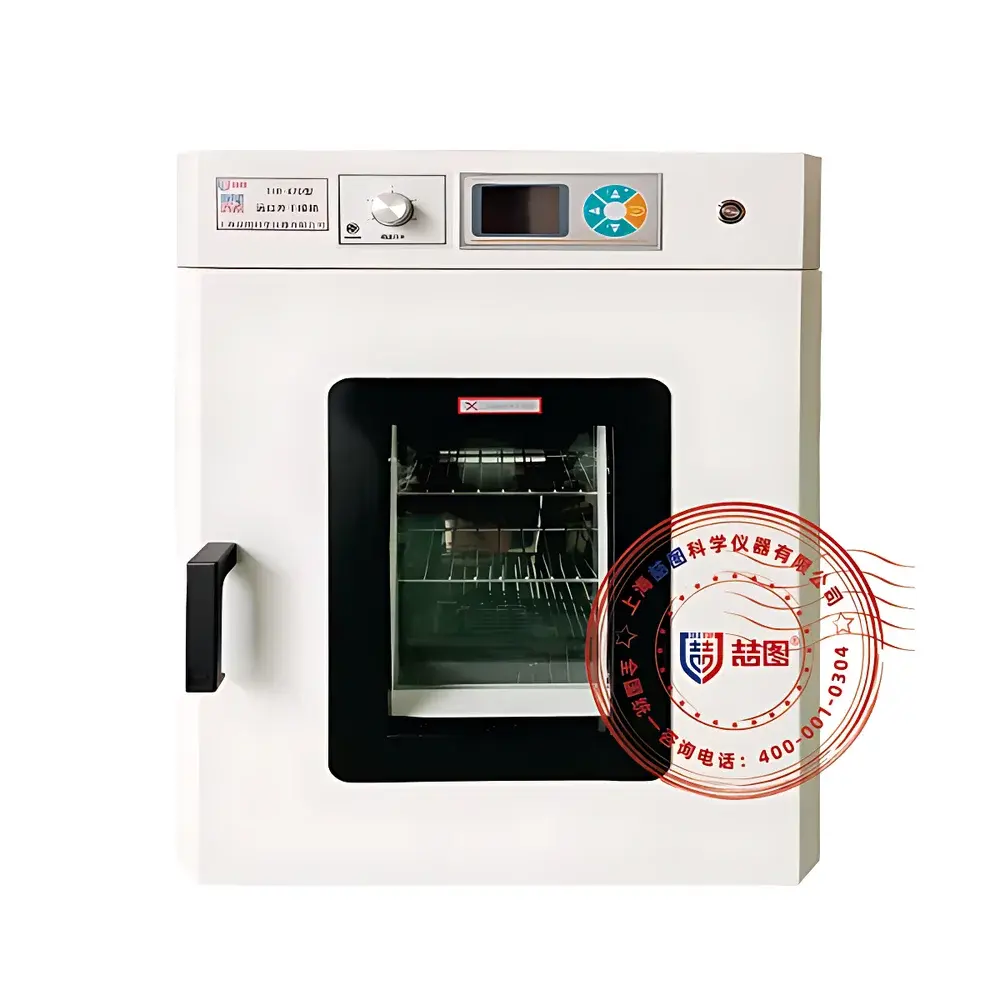
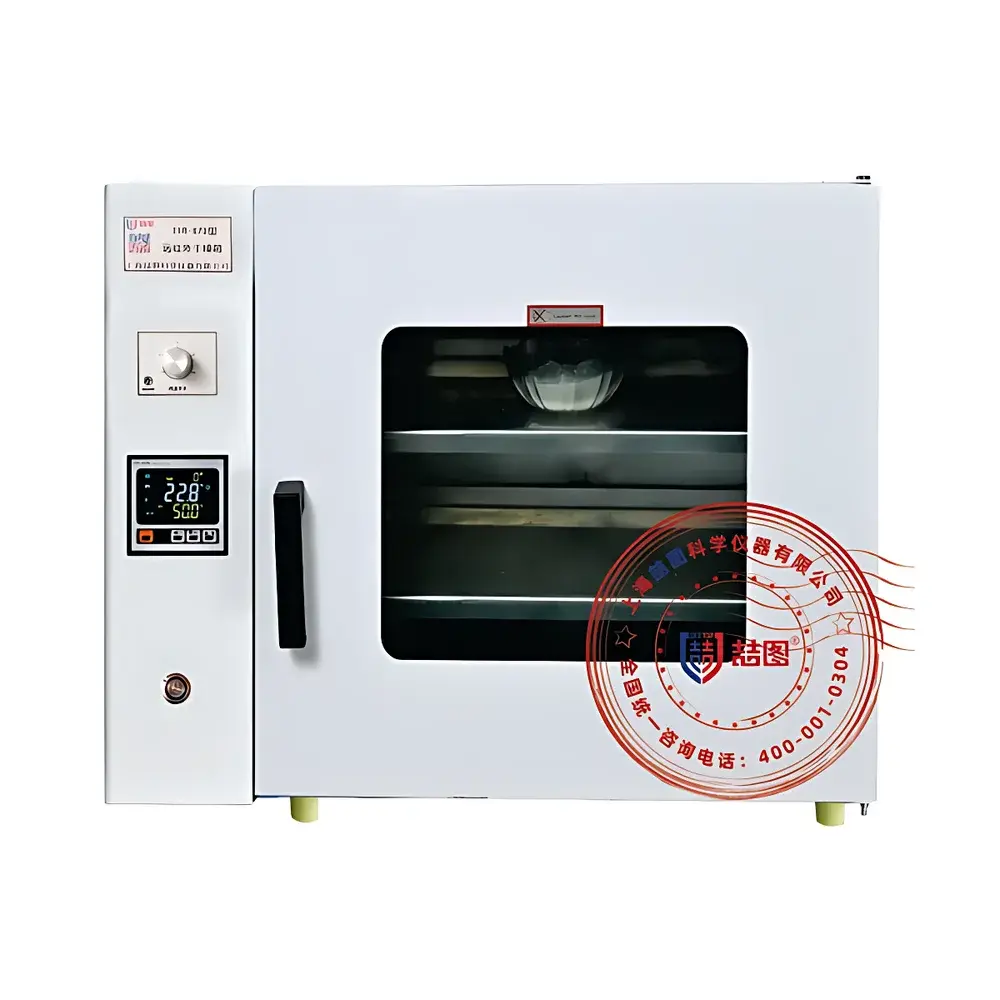
DRETOP TIR-250B Far-Infrared Drying Oven
| Brand | DRETOP |
|---|---|
| Origin | Shanghai, China |
| Manufacturer Type | Direct Manufacturer |
| Product Category | Domestic |
| Model | TIR-250B |
| Instrument Type | General-Purpose Drying Oven |
| Temperature Range | RT + 10°C to 300°C |
| Temperature Uniformity | ±2.5°C (at 100°C, with forced air circulation) |
| Temperature Fluctuation | ±1°C |
| Temperature Resolution | 0.1°C |
| Internal Chamber Dimensions | 500 × 600 × 750 mm (W × D × H) |
| Heating Method | Far-Infrared Radiant Emitters |
| Chamber Material | Stainless Steel (SUS304) |
| Working Ambient Temperature | 5–45°C |
| Control System | Microprocessor-Based PID Controller with Timer Function |
| Airflow Control | Continuously Adjustable Fan Speed (including off position) |
| Safety Features | Over-Temperature Protection, Leakage Current Protection, Short-Circuit & Overload Protection, Parameter Memory Backup after Power Failure |
Overview
The DRETOP TIR-250B Far-Infrared Drying Oven is an engineered solution for precise thermal processing in laboratory and industrial environments where controlled, uniform heating—without mechanical disturbance to delicate samples—is essential. Unlike conventional convection ovens that rely on high-velocity airflow, this model integrates far-infrared (FIR) radiant heating elements combined with a variable-speed, low-turbulence air recirculation system. FIR radiation directly transfers thermal energy to materials with minimal air movement, reducing sample displacement risk while maintaining thermal homogeneity across the chamber. The oven operates within a calibrated range of RT + 10°C to 300°C, with microprocessor-based PID control ensuring stable setpoint maintenance and minimal overshoot. Its design complies with fundamental thermal safety and electromagnetic compatibility requirements for Class II laboratory equipment under IEC 61010-1, and supports routine validation protocols aligned with ISO/IEC 17025 and GLP documentation practices.
Key Features
- Far-infrared heating system with rapid thermal response and low thermal inertia, enabling fast ramp-up and precise dwell control.
- Adjustable forced-air circulation: fan speed is continuously variable—including full shutoff—to accommodate both volatile powder handling and uniform heat distribution requirements.
- Microcomputer PID temperature controller with real-time display, timer function (1–9999 min), and self-diagnostic capability; fault codes appear directly on the LCD interface for rapid troubleshooting.
- Stainless steel (SUS304) interior chamber and adjustable stainless steel shelving; electrostatically coated exterior housing for corrosion resistance and long-term durability.
- Large-view tempered glass observation window with dual-seal silicone gasket (high-temp synthetic rubber), rated for continuous operation up to 300°C.
- Comprehensive safety architecture: independent over-temperature cutoff, leakage current protection, thermal overload protection, and non-volatile parameter memory retention following power interruption.
Sample Compatibility & Compliance
The TIR-250B accommodates a broad spectrum of thermally stable samples—including powders, granules, thin-film coatings, biological specimens (post-fixation), ceramic precursors, and polymer blends—without compromising integrity during drying or pre-conditioning. Its low-turbulence airflow profile minimizes particle dispersion, making it suitable for ASTM D2240 (Shore hardness sample conditioning), ISO 293 (thermoplastic sheet conditioning), and USP (sterile product drying validation support). The chamber’s 250 L nominal volume and 500 × 600 × 750 mm internal dimensions allow flexible loading configurations. All electrical components meet CE marking directives (EMC Directive 2014/30/EU and LVD Directive 2014/35/EU); optional RS485 communication and USB data export interfaces support integration into validated laboratory information management systems (LIMS) compliant with FDA 21 CFR Part 11 audit trail requirements.
Software & Data Management
While the base configuration uses an embedded LCD interface with local data logging (time-stamped temperature history stored in internal memory), optional upgrades expand digital functionality. A USB port enables direct export of temperature/time logs to FAT32-formatted USB drives for offline analysis in Excel or statistical software. Optional programmable controllers support multi-step thermal profiles (up to 30 segments), with ramp/soak parameters stored in non-volatile memory. An RS485 interface permits Modbus RTU communication for centralized monitoring via SCADA or LabVIEW environments. For regulated environments, the optional color touchscreen variant includes electronic signature capability, event logging with user ID stamping, and configurable alarm thresholds—all traceable for GMP/GLP audits.
Applications
- Moisture content determination per ISO 712 and AOAC 950.46 (with gravimetric balance integration).
- Pre-drying of filter papers, crucibles, and weighing boats prior to ash content analysis (ASTM D3174).
- Thermal conditioning of elastomers and composites prior to tensile or hardness testing (ISO 23529, ASTM D412).
- Stabilization of pharmaceutical excipients and active ingredients during stability-indicating method development.
- Drying of chromatographic stationary phases and catalyst supports without structural collapse.
- Post-curing of epoxy resins and UV-curable coatings under controlled thermal gradients.
FAQ
What distinguishes far-infrared heating from conventional convection heating in this oven?
Far-infrared emitters transfer energy directly to molecular bonds via electromagnetic radiation (wavelengths ~3–10 µm), minimizing reliance on air as a heat-transfer medium. This reduces convective turbulence and improves surface-to-core heating efficiency for low-density or fragile samples.
Can the TIR-250B be used for sterilization or depyrogenation?
No—it is not designed or validated for microbial kill or endotoxin reduction. It meets specifications for drying, curing, and thermal conditioning only; autoclave-grade sterilization requires saturated steam at ≥121°C and validated cycle mapping.
Is calibration documentation provided with the unit?
A factory calibration certificate (traceable to NIM, China) is included, covering temperature uniformity and controller accuracy at three points (100°C, 150°C, 250°C). Full IQ/OQ documentation packages are available upon request for GxP environments.
How is temperature uniformity verified during operation?
Uniformity is confirmed using a 9-point thermocouple mapping procedure per ISO 14644-3 guidelines, performed with the fan operating at mid-range speed and chamber loaded at 50% capacity.
Does the oven support remote monitoring via Ethernet or Wi-Fi?
Standard configuration includes RS485 serial communication only. Ethernet or Wi-Fi connectivity requires third-party gateway integration; DRETOP does not supply proprietary cloud platforms or IoT firmware.



