
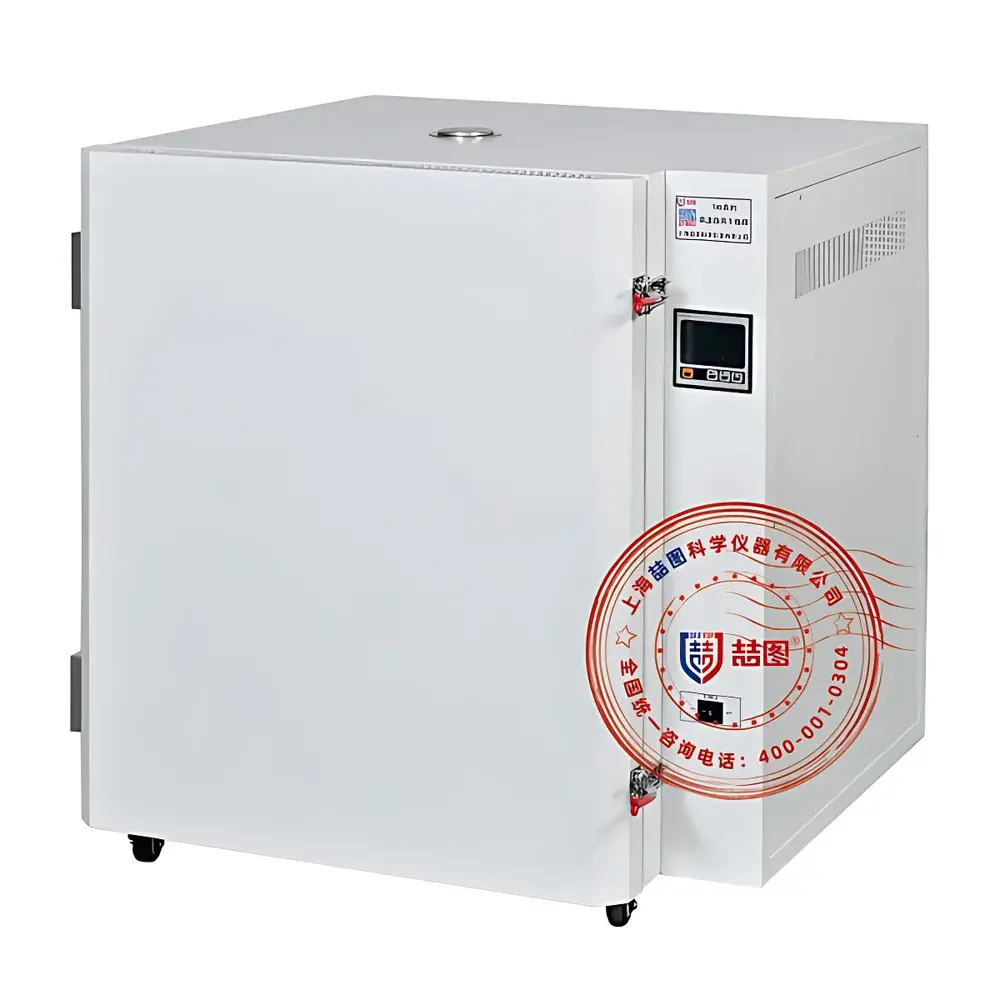
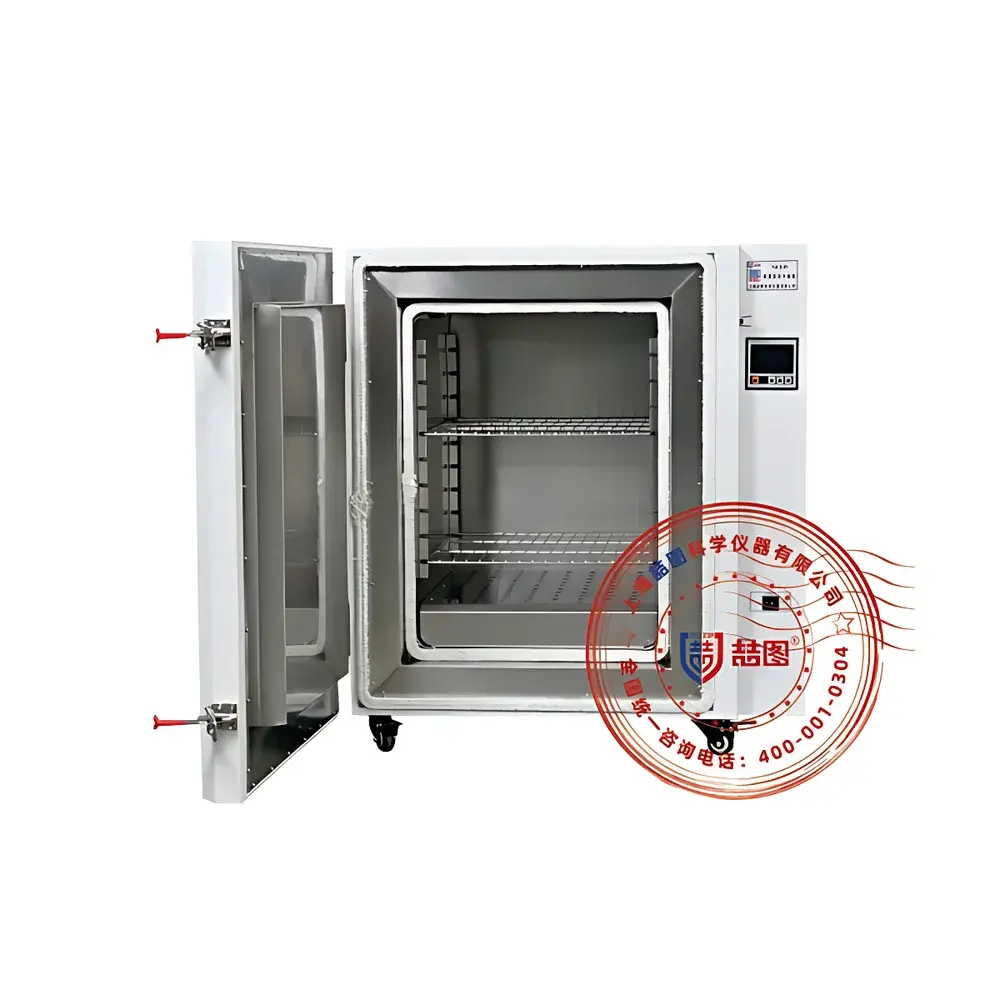
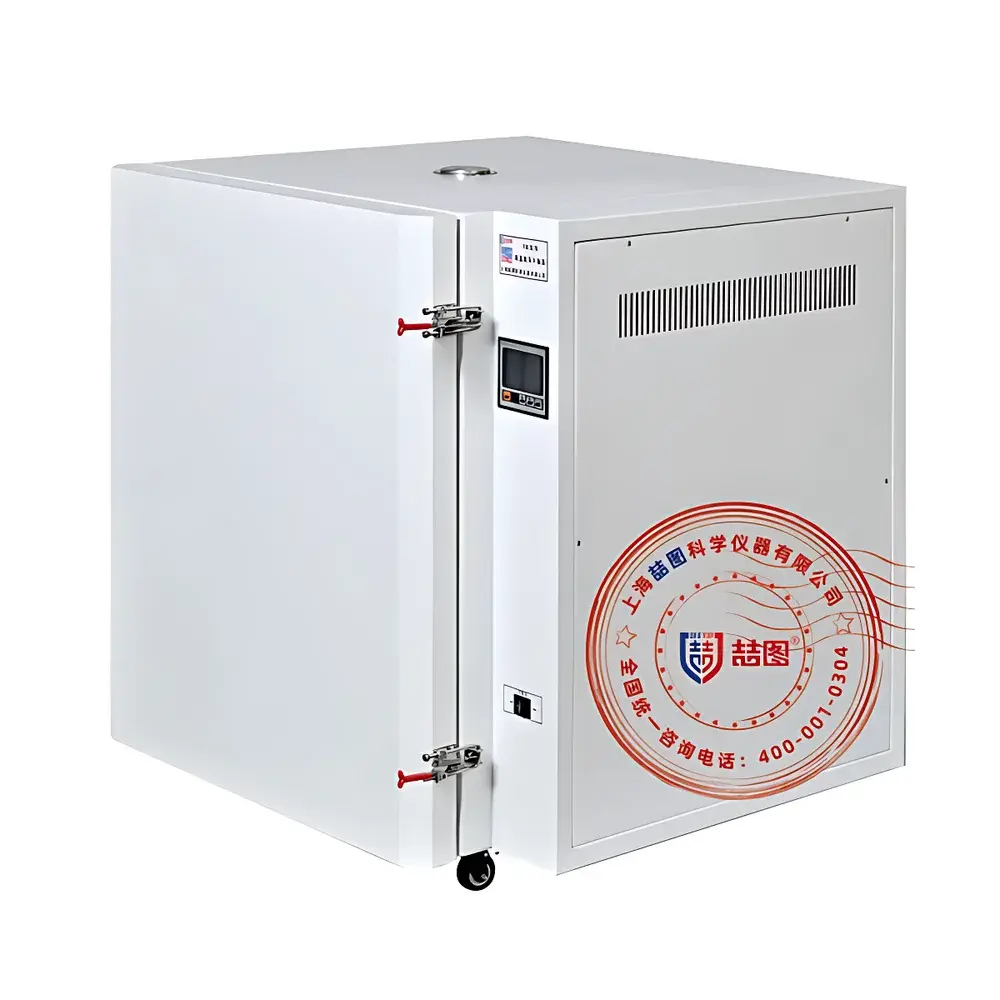
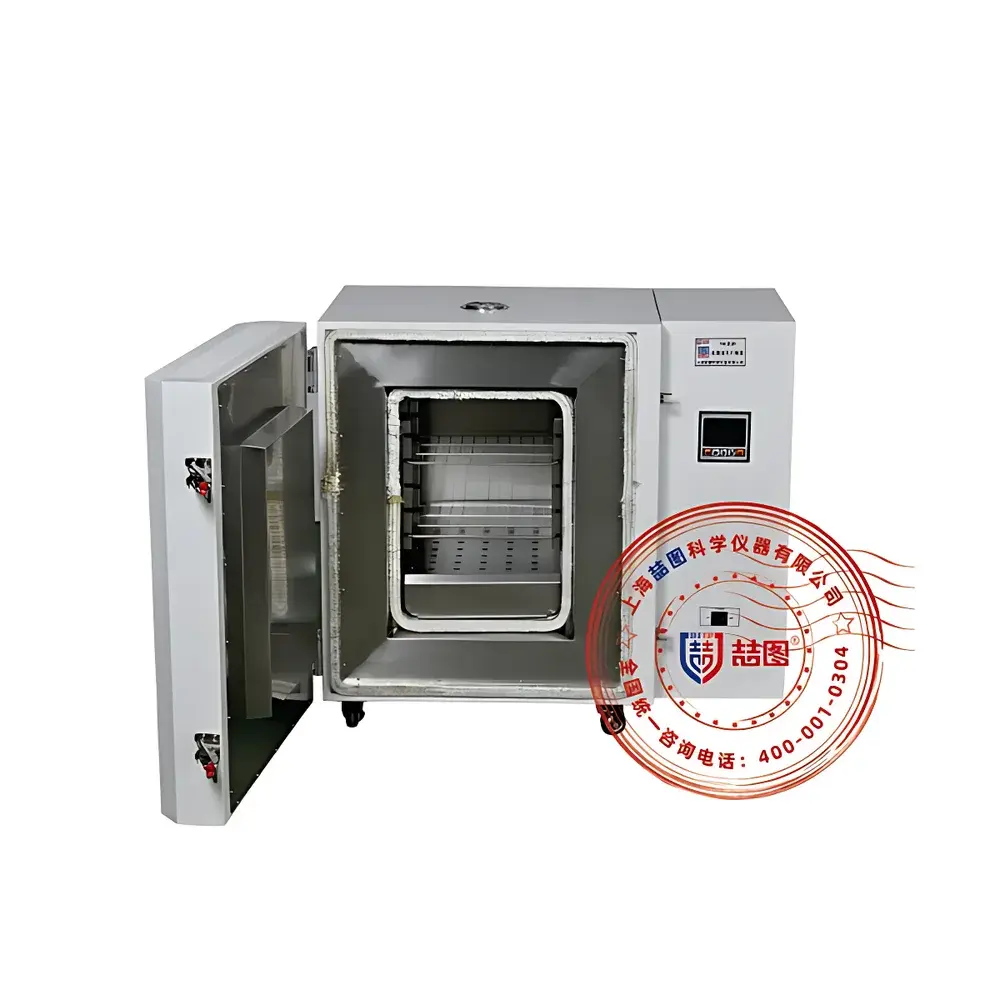
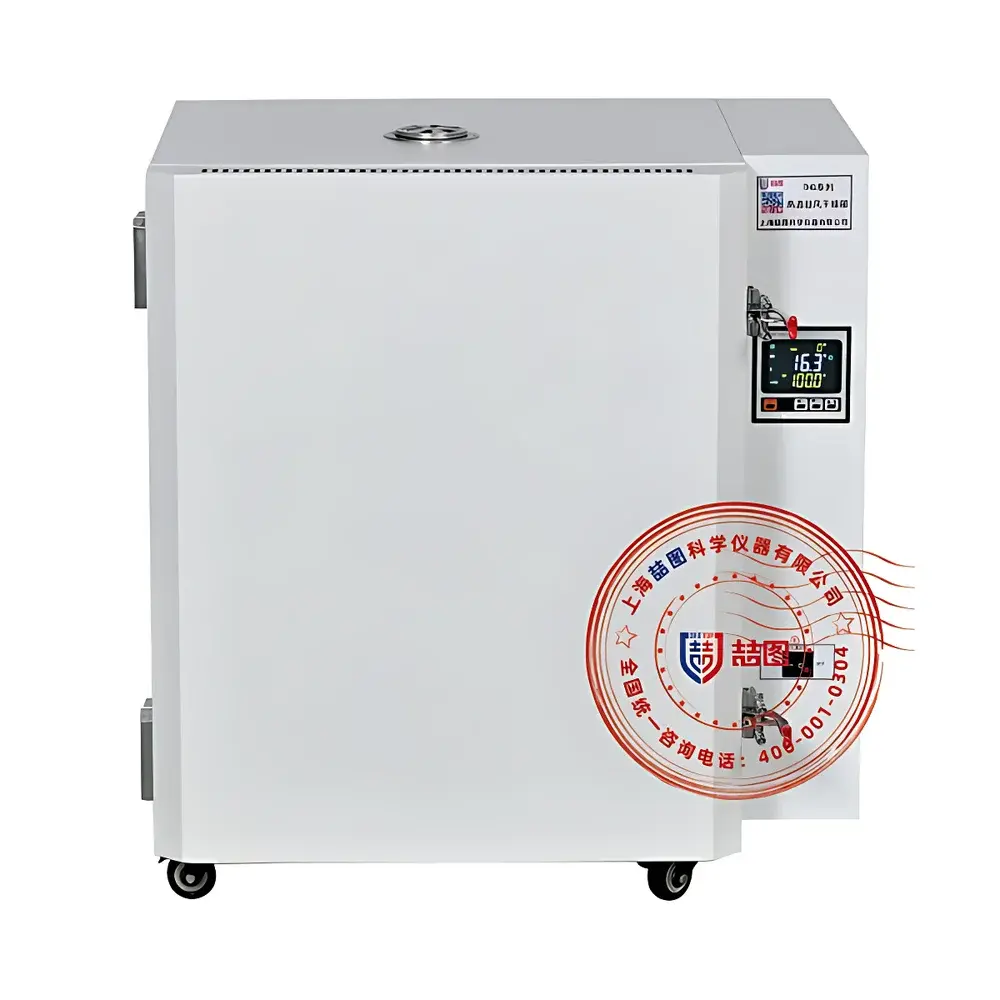
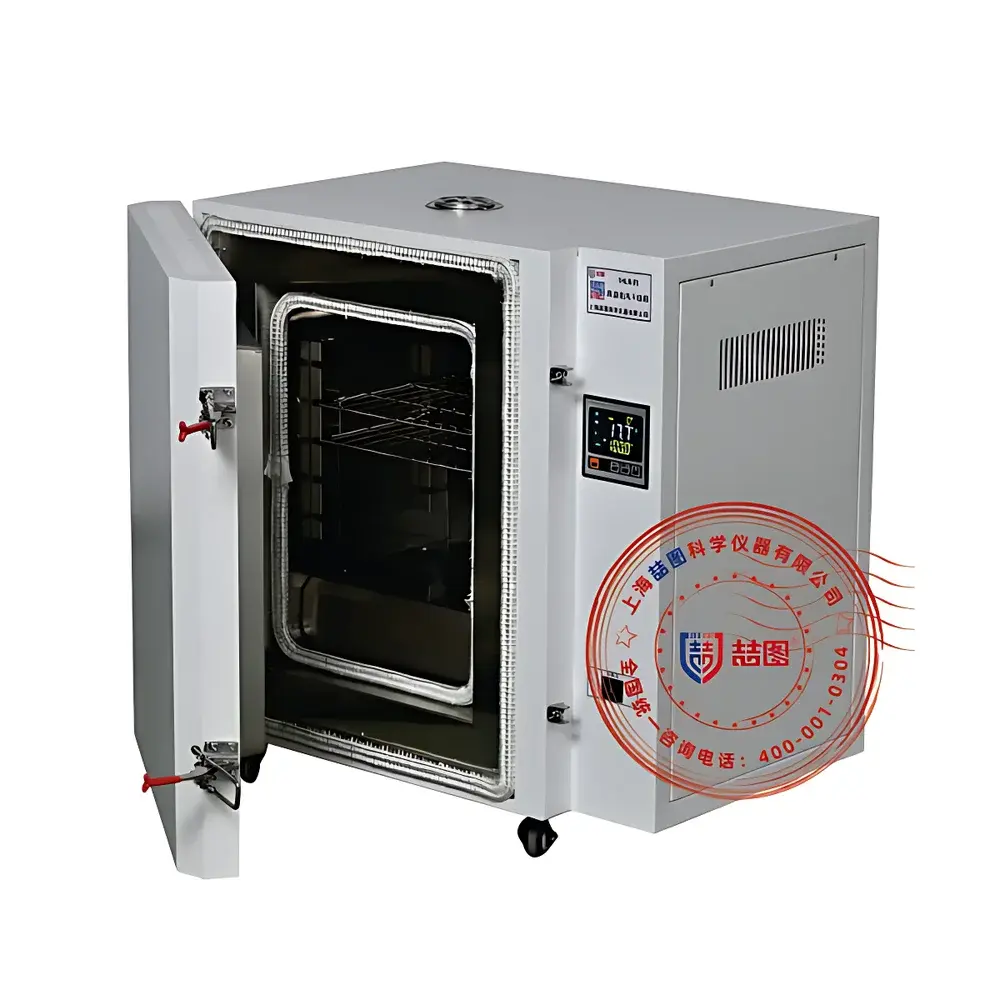
DRETOP THG-9038A High-Temperature Forced-Air Drying Oven
| Brand | DRETOP |
|---|---|
| Origin | Shanghai, China |
| Manufacturer Type | Direct Manufacturer |
| Instrument Category | High-Temperature Oven |
| Temperature Range | RT+20°C to 400°C |
| Temperature Uniformity | ±2.5°C |
| Temperature Fluctuation | ±1°C |
| Temperature Resolution | 0.1°C |
| Chamber Dimensions (W×D×H) | 300×300×350 mm |
| External Dimensions (W×D×H) | 670×480×700 mm |
| Operating Ambient Temperature | 5–45°C |
| Interior Material | Brushed Stainless Steel (SUS304) |
| Heating Method | Forced-Air Convection with Dual-Air-Channel System |
| Safety Protections | Overtemperature Alarm, Leakage Protection, Short-Circuit Protection, Overload Protection, Power-Failure Data Retention |
| Optional Accessories | USB Data Export Interface, Programmable Controller, Color Touchscreen, RS-485 Communication Port, Thermal Printer Interface, Independent Limit Temperature Controller |
Overview
The DRETOP THG-9038A High-Temperature Forced-Air Drying Oven is an engineered laboratory-grade thermal processing system designed for precise, repeatable, and uniform heating across demanding industrial and research applications. Based on forced-air convection thermodynamics, the oven employs a dual-channel air circulation architecture driven by a high-efficiency, low-noise centrifugal blower and stainless-steel sheathed heating elements. This configuration ensures rapid thermal response, minimized temperature overshoot, and stable equilibrium conditions within the working chamber — critical for applications requiring strict thermal protocol adherence, such as pre-baking of ceramic substrates, post-curing of composite laminates, or thermal aging of polymeric components per ASTM D3045 or ISO 2578. The unit operates within a certified control range of RT+20°C to 400°C, meeting the functional requirements of ISO 17025-accredited laboratories for thermal validation and routine stability testing.
Key Features
- Microprocessor-based PID temperature controller with K-type thermocouple feedback, offering 0.1°C resolution and ±1°C fluctuation tolerance at setpoint;
- Dual independent air channels and optimized baffle geometry ensure ≥90% volumetric airflow coverage, delivering ±2.5°C temperature uniformity across the full 30 L chamber (300 × 300 × 350 mm);
- Brushed SUS304 stainless-steel interior with seamless welded corners and removable, height-adjustable wire shelves — fully compliant with ISO 14644-1 Class 8 cleanroom-compatible cleaning protocols;
- Electrostatically coated mild steel exterior with 50 mm thick glass-fiber insulation; door seal utilizes high-temperature silicone rubber rated to 450°C for long-term compression set resistance;
- Integrated safety architecture includes dual-stage overtemperature protection: primary PID-based alarm and optional independent mechanical limit controller (IEC 61000-4-5 compliant);
- Self-diagnostic firmware with alphanumeric fault code display (e.g., E01 = sensor open circuit, E03 = heater short) enables rapid troubleshooting without service dispatch.
Sample Compatibility & Compliance
The THG-9038A accommodates a broad spectrum of sample forms — including crucibles, petri dishes, metal coupons, ceramic wafers, and pharmaceutical vials — without compromising thermal integrity. Its chamber design supports static and dynamic load configurations up to 15 kg distributed mass. From a regulatory standpoint, the oven meets essential requirements for GLP-compliant thermal processing workflows: traceable calibration paths (NIST-traceable thermocouple inputs), audit-ready parameter logging (when equipped with USB or RS-485 interface), and configurable alarm thresholds aligned with USP sterilization process controls. While not a Class I medical device, its construction adheres to EN 61010-1:2019 safety standards for electrical equipment used in laboratory environments.
Software & Data Management
Standard operation requires no external software — all settings are managed via the front-panel LCD interface with three-color backlighting for ambient-light adaptability. Optional upgrades extend functionality significantly: the programmable controller supports up to 30 segment ramp-soak profiles with real-time deviation monitoring; the color touchscreen variant includes built-in data logging (≥10,000 timestamped entries) and CSV export via USB flash drive. When connected to a host PC via RS-485 (Modbus RTU protocol), the oven integrates into centralized Lab Information Management Systems (LIMS) for automated report generation, electronic signature capture, and 21 CFR Part 11-compliant audit trails — provided supplementary validation documentation is implemented per organizational SOPs.
Applications
- Materials Science: Pre-sintering of oxide ceramics (e.g., Al₂O₃, ZrO₂), stress-relief annealing of machined aluminum alloys (per AMS 2750E Zone 2 tolerances), and outgassing of vacuum chamber components;
- Pharmaceutical R&D: Residual solvent removal from active pharmaceutical ingredients (APIs), depyrogenation of glassware per USP , and accelerated stability studies under ICH Q1A(R3) conditions;
- Electronics Manufacturing: PCB pre-bake prior to conformal coating, moisture removal from encapsulated sensors, and curing of high-Tg epoxy underfills;
- Food & Agriculture Testing: Moisture content determination per AOAC 950.46, ash residue preparation for elemental analysis (ASTM D5630), and thermal inactivation kinetics modeling for pathogen surrogates.
FAQ
What is the maximum recommended continuous operating temperature?
The THG-9038A is rated for sustained operation at 400°C; exceeding this value voids warranty and compromises thermal insulation integrity.
Can the oven be validated for IQ/OQ/PQ protocols?
Yes — the unit ships with factory calibration certificates and supports third-party qualification using calibrated reference thermometers (e.g., Fluke 1523/1524) and mapping probes per ISO 14644-3 Annex B.
Is vacuum capability available on this model?
No — the THG-9038A is a forced-air convection oven only; vacuum drying requires separate models (e.g., DRETOP ZK series) with reinforced chamber walls and vacuum-rated seals.
How often should the temperature sensor be recalibrated?
Annual recalibration is recommended for GMP/GLP environments; more frequent checks (e.g., quarterly) are advised when used for critical thermal validation tasks.
Does the oven meet CE marking requirements for export to the EU?
Yes — it carries CE marking per Directive 2014/30/EU (EMC) and 2014/35/EU (LVD), with test reports available upon request from DRETOP’s technical documentation portal.



