
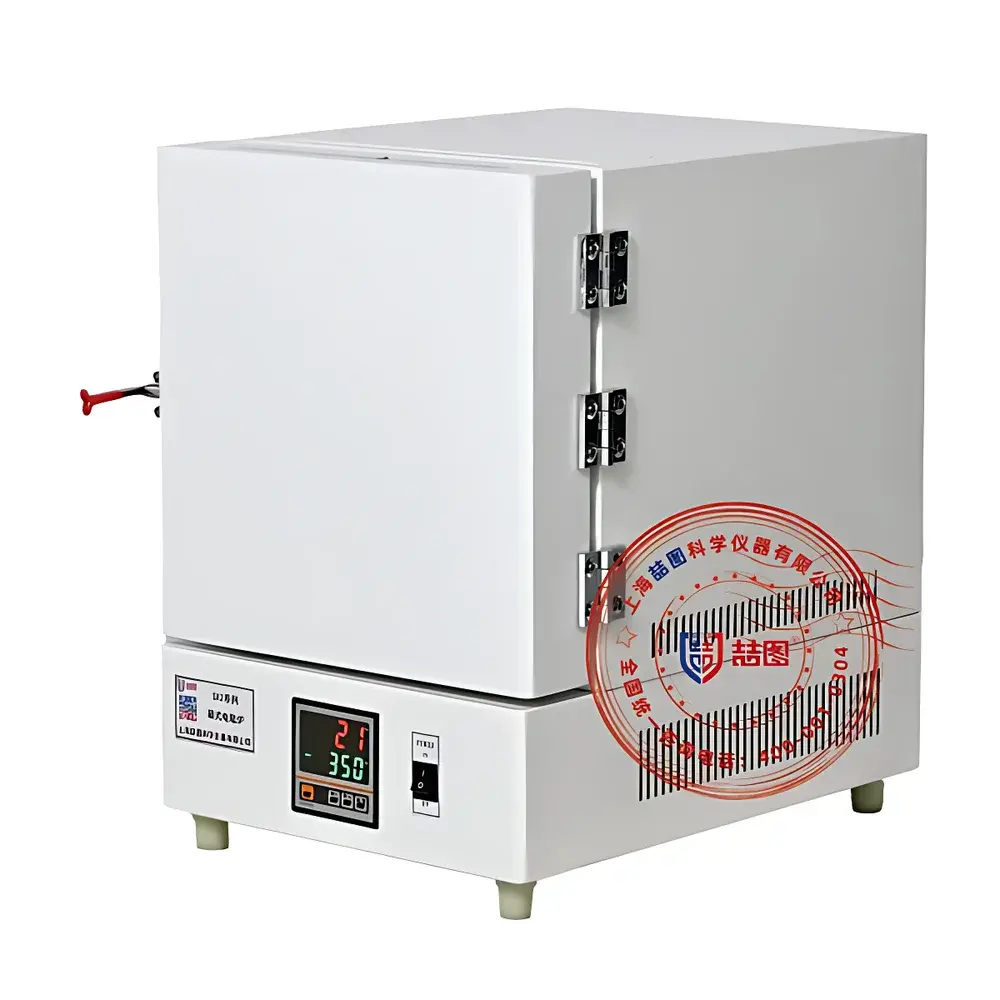
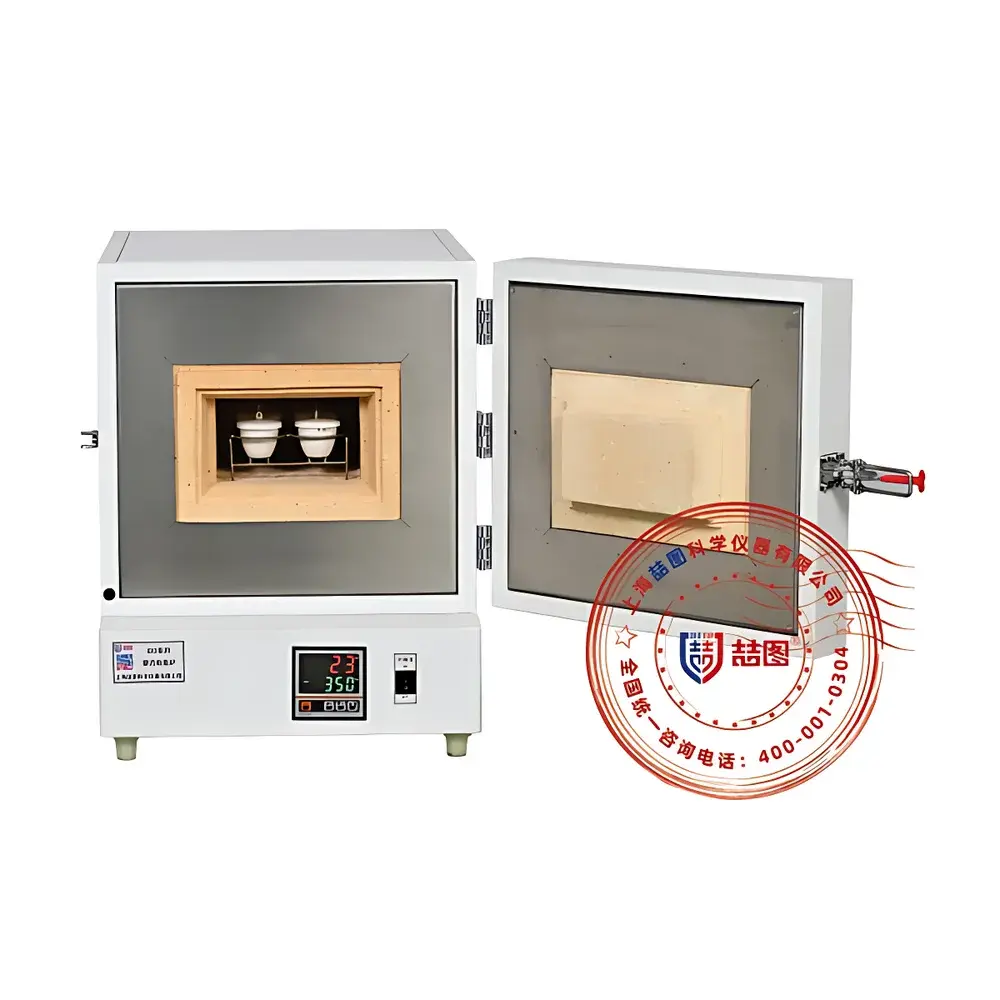
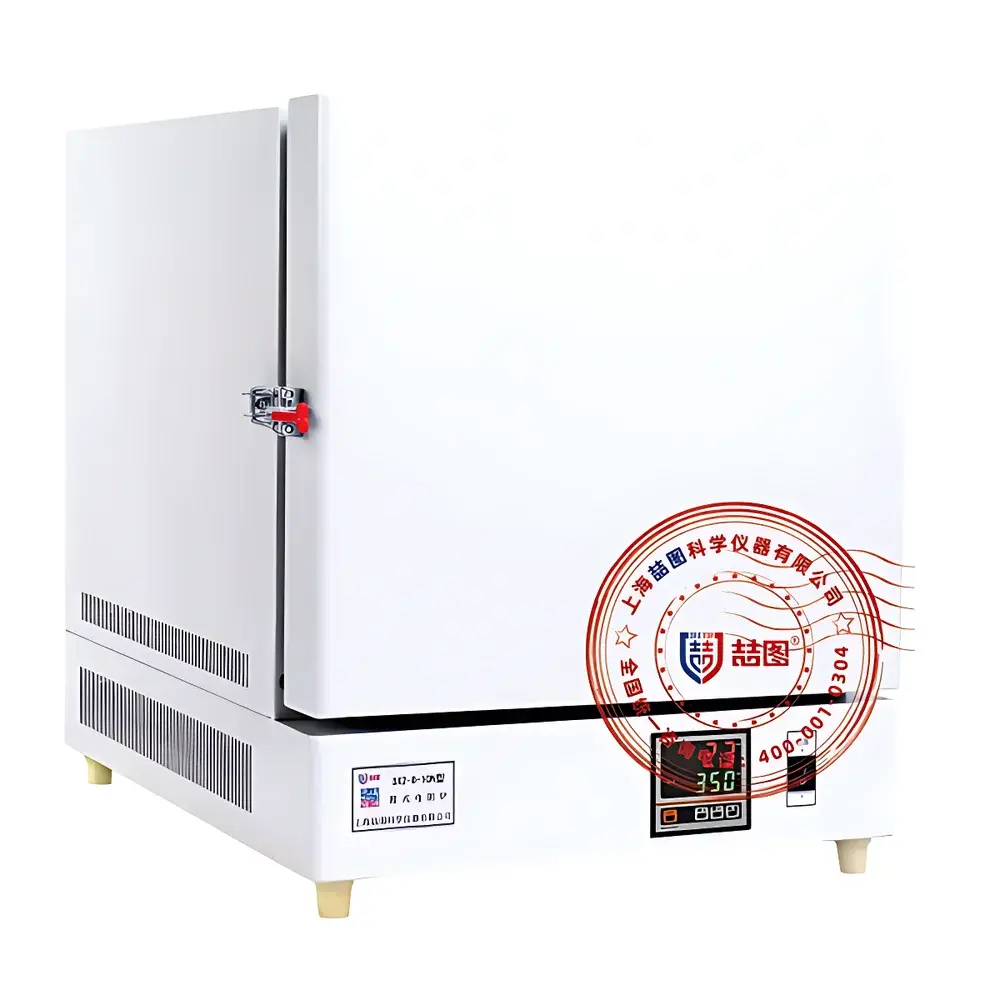
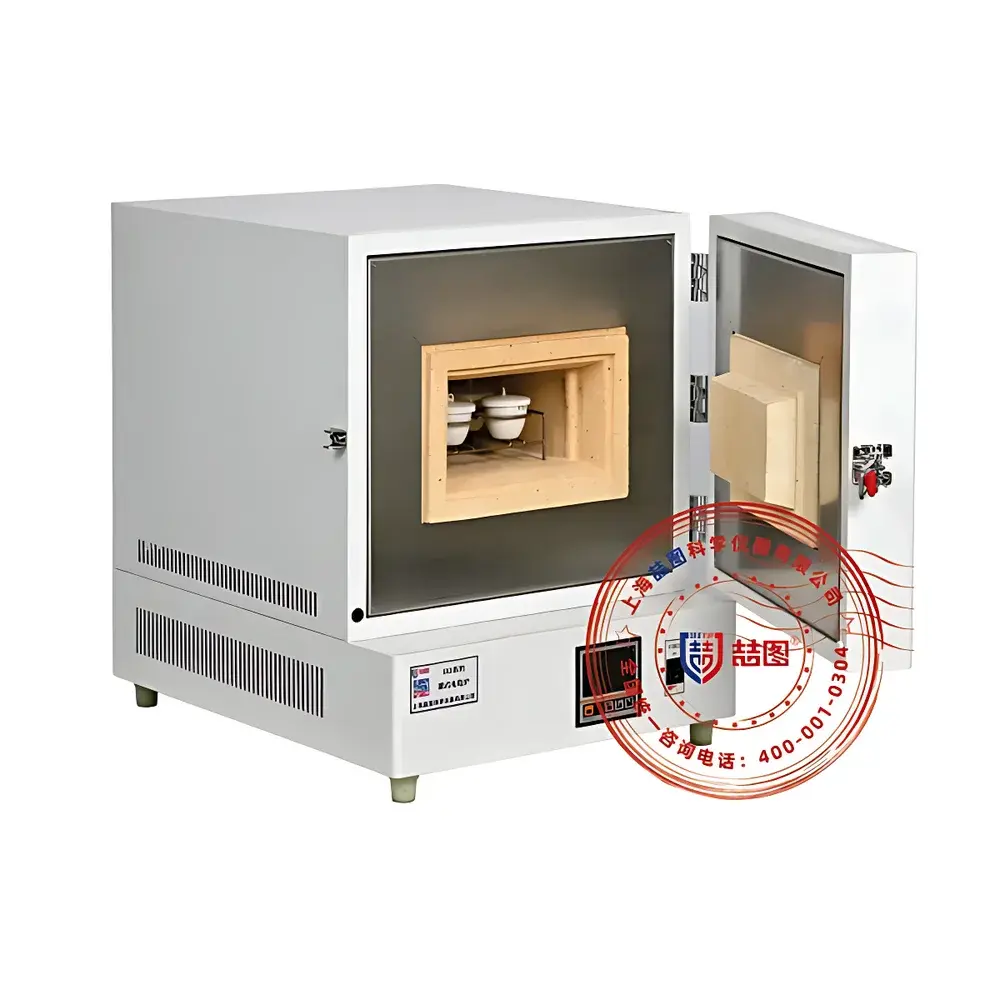
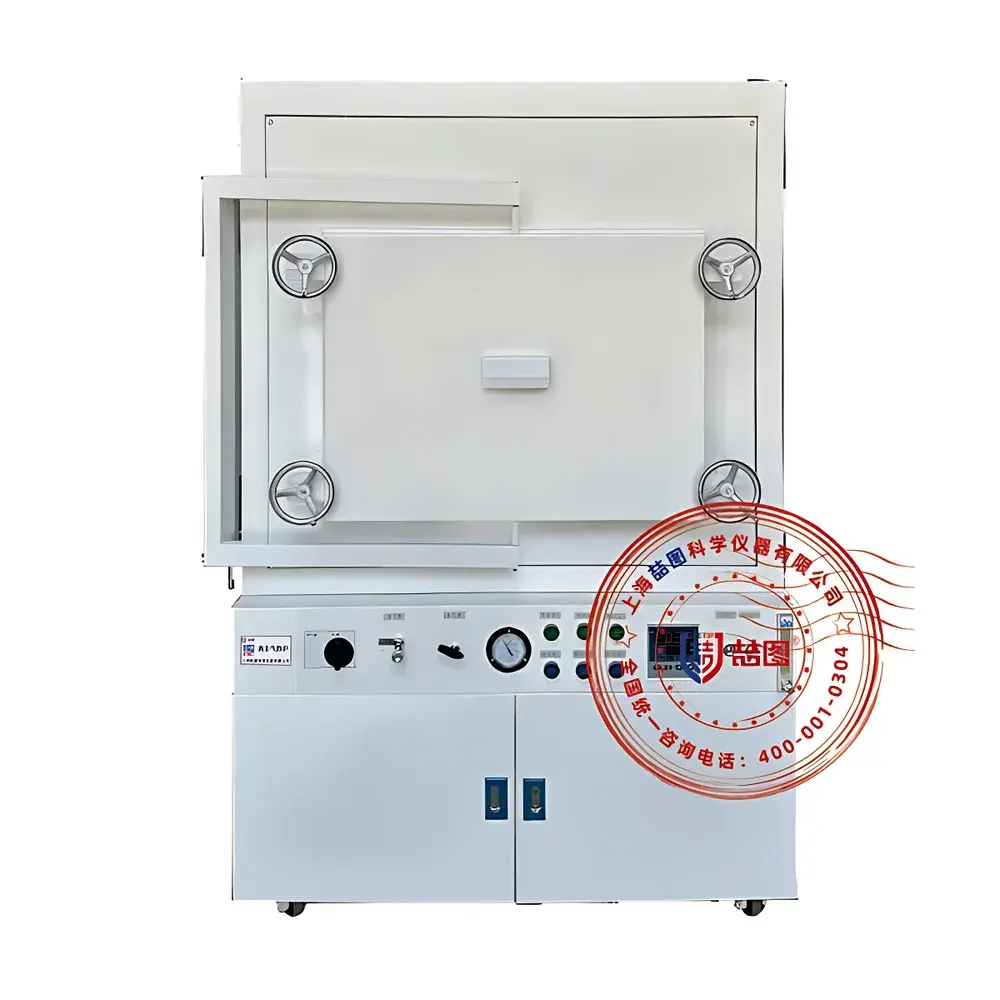
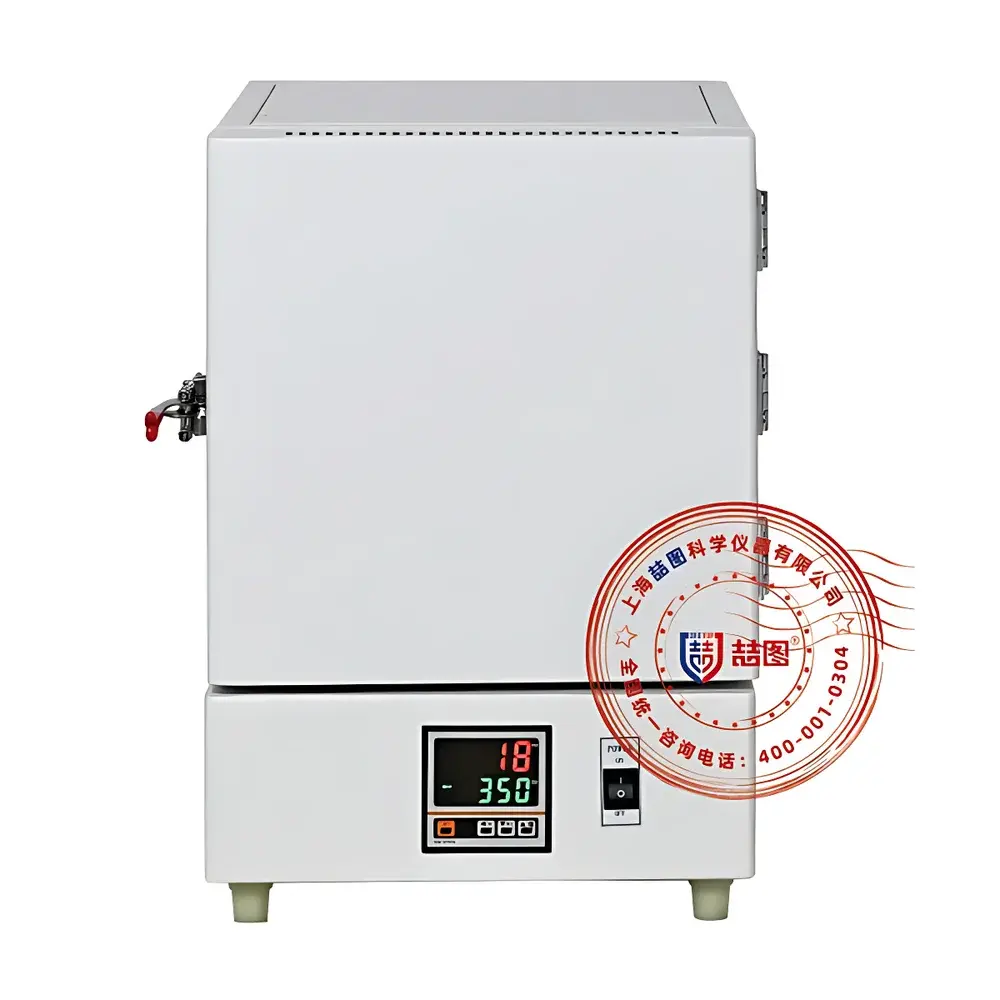
DRETOP NF12-30 Box-Type Muffle Furnace
| Brand | DRETOP |
|---|---|
| Origin | Shanghai, China |
| Manufacturer Type | Direct Manufacturer |
| Country of Origin | China |
| Model | NF12-30 |
| Instrument Type | Box-Type Muffle Furnace |
| Maximum Temperature | 1200 °C |
| Temperature Control Accuracy | ±1 °C |
| Rated Power | 12,000 W |
| Heating Time to Max Temp | ≤60 min |
| Heating Element | Nickel-Chromium Alloy Wire |
| Internal Chamber Dimensions (W×D×H) | 300 mm × 500 mm × 200 mm |
| Nominal Volume | 30 L |
| Control System | Microprocessor-Based PID Controller with Digital Display |
| Programmable Ramp/Soak Capability | 30-Stage (P-Series Optional) |
| Safety Features | Dual-Stage Over-Temperature Protection, Door-Interlocked Power Cut-off, Real-Time Voltage/Current Monitoring,断偶/Phase-Loss/Overheat Alarms |
| Insulation | Refractory Brick Lining with High-Density Ceramic Fiber Backup |
| Exterior Finish | Phosphate Conversion Coating + High-Temp Epoxy Powder Coating |
Overview
The DRETOP NF12-30 Box-Type Muffle Furnace is a laboratory-grade resistive heating furnace engineered for precise thermal processing in analytical, quality control, and materials research applications. Operating on Joule heating principles, it utilizes high-resistivity nickel-chromium alloy wire wound uniformly across all four chamber walls to generate stable, isotropic radiant heat transfer. Its muffle design isolates the sample chamber from direct contact with heating elements and combustion byproducts—ensuring contamination-free thermal treatment essential for ash content determination (ASTM D3174, ISO 1171), loss-on-ignition (LOI) analysis, calcination of catalysts, and pre-treatment of geological or metallurgical samples. With a maximum operating temperature of 1200 °C and ±1 °C control stability under steady-state conditions, the NF12-30 meets critical requirements for reproducible thermal protocols in GLP-compliant laboratories and ISO/IEC 17025-accredited testing facilities.
Key Features
- Four-wall heating configuration ensures uniform radial and axial temperature distribution; measured temperature uniformity within ±5 °C across the full 30 L working volume at 1000 °C (per internal validation per ASTM E220)
- Microprocessor-based PID controller with 30-segment programmable ramp/soak functionality (P-series variant), enabling automated thermal profiles for multi-step calcination, sintering, or annealing protocols
- Dual-stage over-temperature protection: primary limit set at 1220 °C, secondary hardware cut-off at 1250 °C; both independently monitored via redundant thermocouple inputs (Type K)
- Door-interlocked power interruption system halts heating immediately upon door opening and resumes automatically upon closure—preserving process integrity during intermediate sample inspection
- Refractory brick-lined chamber backed with low-conductivity ceramic fiber insulation minimizes standby heat loss and improves energy efficiency (typical surface temperature <55 °C at 1200 °C operation)
- Phosphate-treated steel enclosure with high-temp epoxy powder coating resists oxidation and mechanical abrasion in shared lab environments
Sample Compatibility & Compliance
The NF12-30 accommodates standard crucibles (alumina, silica, platinum, or graphite) up to Ø90 mm × 80 mm height, supporting routine procedures including coal ash fusion testing (ASTM D1857), cement clinker free-lime analysis (ASTM C114), and pharmaceutical residual solvent removal (USP <631>). Its sealed muffle architecture prevents cross-contamination between sequential runs—a prerequisite for trace metal analysis workflows governed by EPA Method 3050B or ISO 11885. All electrical components comply with IEC 61010-1:2010 safety standards for laboratory equipment. Optional RS485 Modbus RTU interface enables integration into centralized lab automation systems adhering to FDA 21 CFR Part 11 data integrity requirements when paired with compliant SCADA software.
Software & Data Management
While the base model features a front-panel digital display with real-time setpoint/actual temperature readout, the P-series upgrade includes non-volatile memory for storing up to 10 user-defined thermal programs. Each program logs timestamped temperature data at 1-second intervals internally; export is supported via optional RS485-to-USB adapter for CSV output compatible with Excel, LabVIEW, or LIMS platforms. Audit trail functionality—including operator ID entry (via numeric keypad), parameter change history, and alarm event timestamps—is available with the C-series color touchscreen controller, satisfying ALCOA+ data governance expectations for regulated environments.
Applications
- Thermal gravimetric analysis (TGA) pre-conditioning of polymer composites and battery cathode precursors
- Ash content quantification in biomass, feedstuffs, and municipal solid waste per AOAC 942.05 and ISO 5984
- Calcination of metal oxide nanoparticles (e.g., TiO₂, ZnO) under controlled air atmosphere
- Heat treatment of ceramic green bodies prior to sintering in R&D labs
- Standardized drying and ignition steps in water content and volatile matter determinations (ASTM D3173, ISO 589)
- Pre-firing of Pt/Rh thermocouples and reference standards calibration
FAQ
What is the recommended maintenance interval for the heating elements?
Nickel-chromium alloy elements require no scheduled replacement under normal use (≤10 h/day at ≤1100 °C); visual inspection every 6 months is advised for discoloration or deformation.
Can inert gas purging be implemented?
Yes—optional inlet/outlet ports (NPT 1/4″) support nitrogen or argon purge configurations; flow rate must be externally regulated to maintain positive pressure and avoid back-drafting.
Is the furnace suitable for continuous operation at 1200 °C?
Rated for intermittent use up to 1200 °C; sustained operation above 1100 °C is not recommended beyond 4 hours per cycle to preserve refractory integrity and thermocouple longevity.
Does the unit meet CE or UL certification requirements?
The NF12-30 complies with IEC 61010-1:2010 and carries CCC certification (China Compulsory Certification); CE marking requires additional regional conformity assessment per customer request.
How is temperature uniformity validated?
Uniformity mapping is performed using a 9-point thermocouple array per ASTM E220 Annex A2; a certificate of uniformity (±5 °C at 1000 °C) is provided with each unit upon factory acceptance testing.



