
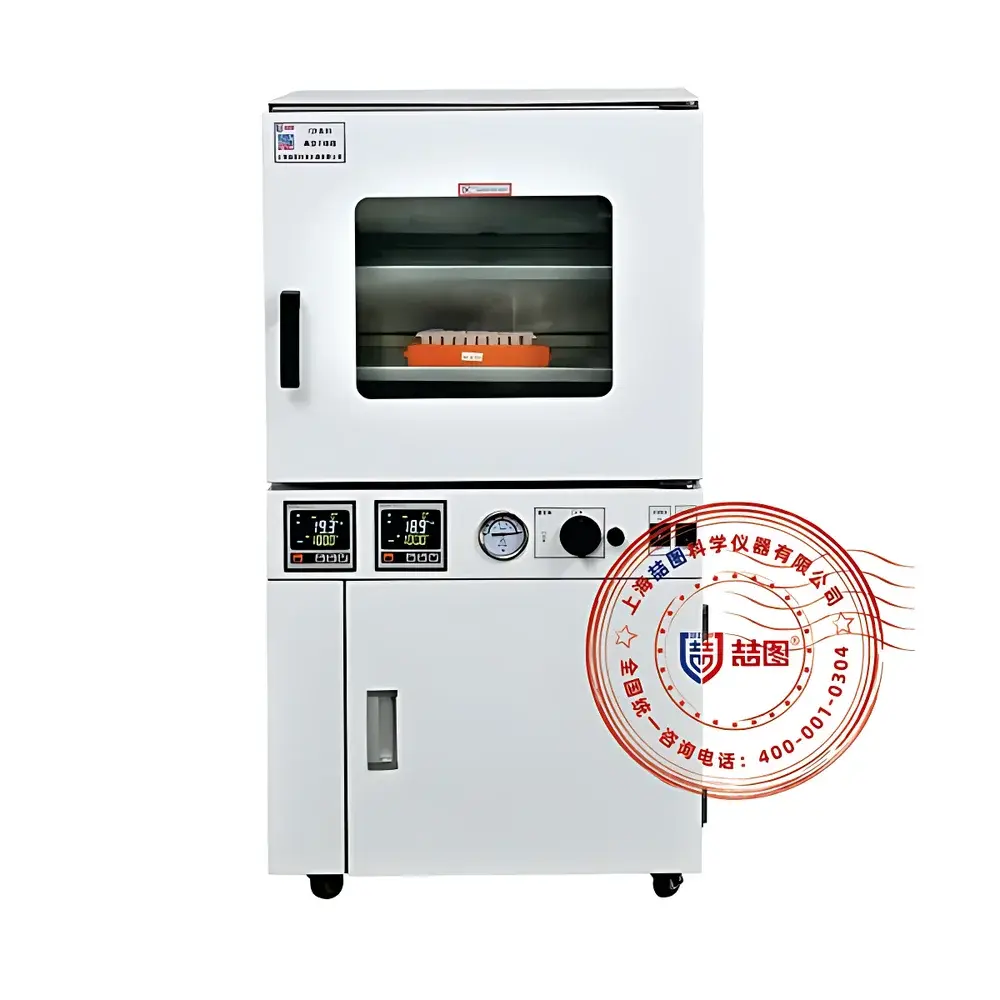
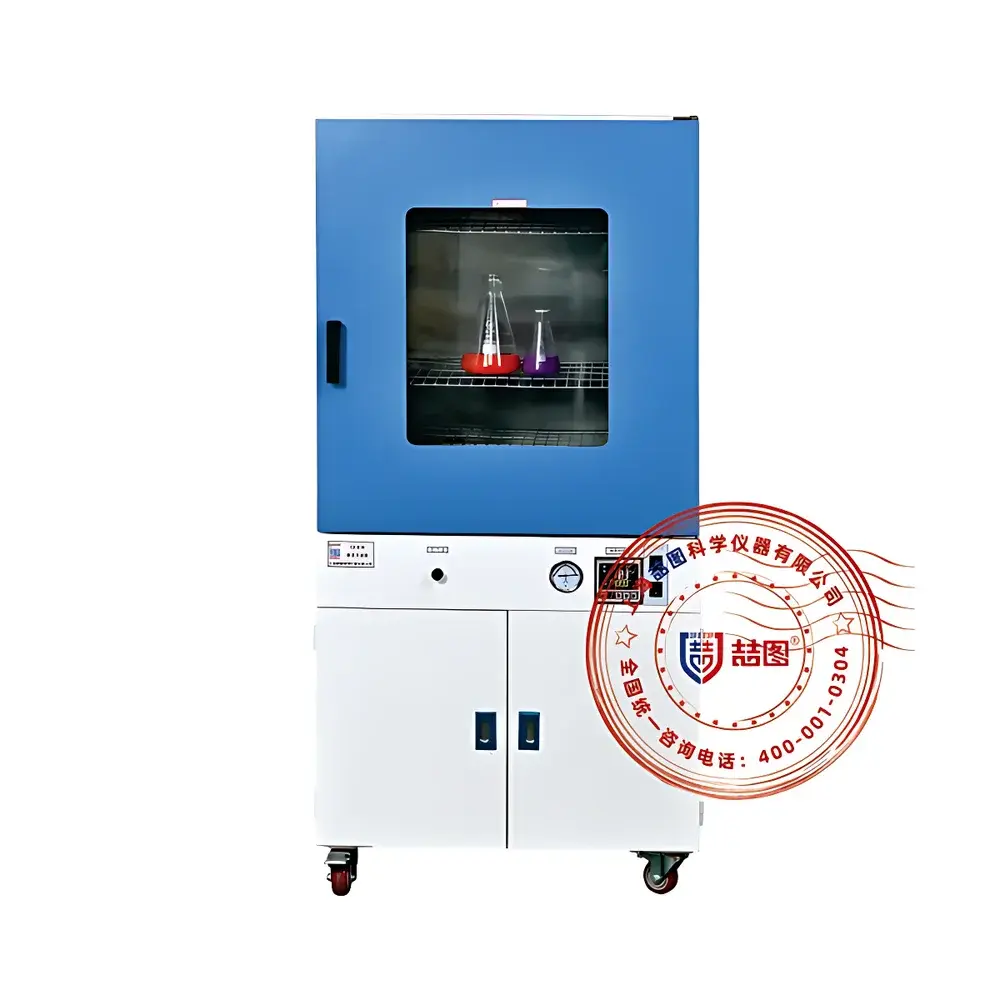
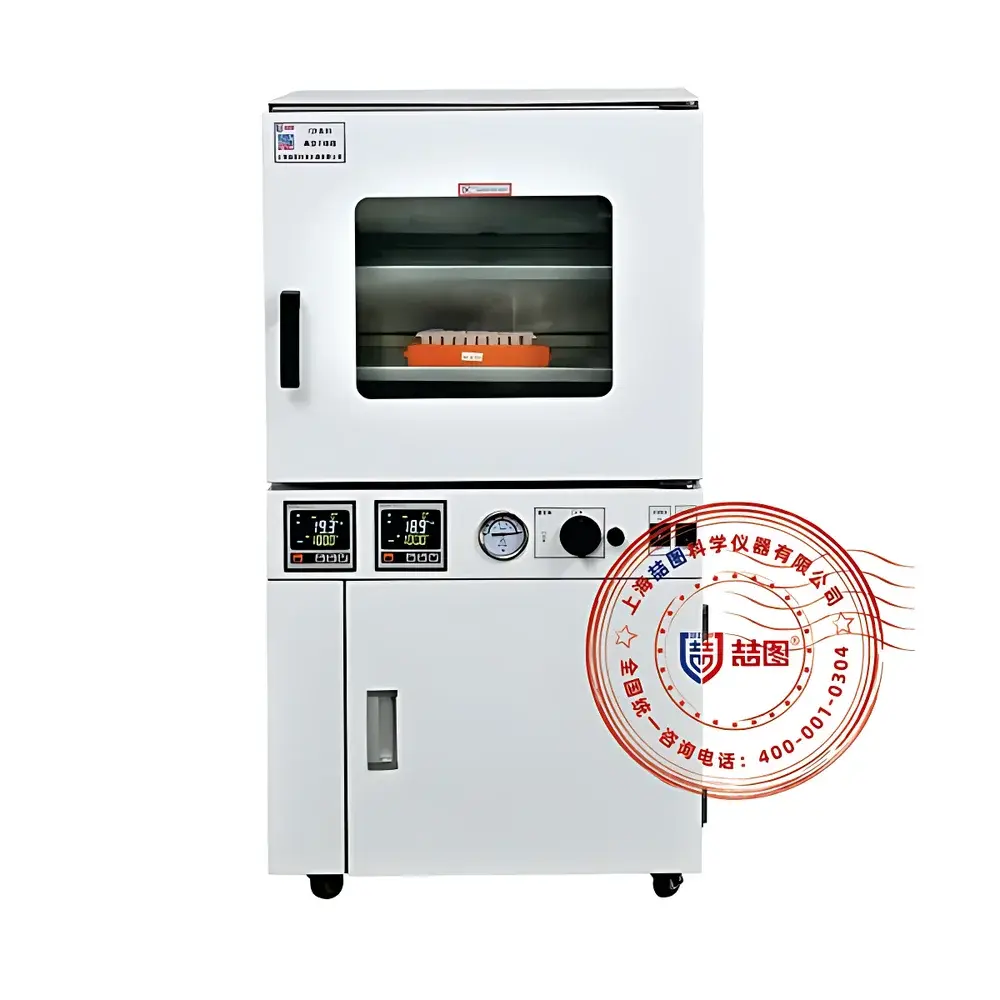
DRETOP TZS-6125VD Programmable Vacuum Drying Oven
| Brand | DRETOP |
|---|---|
| Origin | Shanghai, China |
| Manufacturer Type | Direct Manufacturer |
| Product Category | Domestic |
| Model | TZS-6125VD |
| Instrument Type | Vacuum Oven |
| Temperature Range | RT+10 to 250 °C |
| Temperature Uniformity | ±1 °C |
| Temperature Fluctuation | ±0.5 °C |
| Temperature Resolution | 0.1 °C |
| Vacuum Level | ≤133 Pa |
| Internal Chamber Dimensions | 500 × 500 × 500 mm |
| External Dimensions | 660 × 640 × 1290 mm |
| Chamber Material | 304 Stainless Steel |
| Heating Method | External Radiant Heating |
| Operating Ambient Temperature | 5–45 °C |
| Insulation | Glass Fiber |
| Safety Protections | Over-Temperature Alarm, Leakage Protection, Short-Circuit & Overload Protection, Power-Failure Data Retention |
Overview
The DRETOP TZS-6125VD Programmable Vacuum Drying Oven is an engineered solution for thermal processing under controlled low-pressure environments. It operates on the principle of vacuum-assisted drying—removing ambient air via a mechanical vacuum pump to reduce chamber pressure below atmospheric levels (≤133 Pa), thereby lowering the boiling point of volatile components and enabling moisture or solvent removal at significantly reduced temperatures. This mitigates thermal degradation risks associated with conventional convection ovens, making it indispensable for thermally sensitive, oxidation-prone, or compositionally complex samples. Designed for laboratory-scale R&D and pilot-line manufacturing, the TZS-6125VD complies with foundational requirements for ISO/IEC 17025-accredited testing environments and supports process validation protocols aligned with GLP and GMP frameworks.
Key Features
- Microprocessor-based PID temperature controller with programmable ramp-soak profiles, real-time deviation monitoring, and dual-stage over-temperature protection (hardware + software)
- Large-format backlit LCD interface displaying simultaneous vacuum level, setpoint temperature, actual chamber temperature, and elapsed time—all in tri-color coding for rapid status recognition
- Self-diagnostic system with alphanumeric fault codes (e.g., E01 = sensor open circuit; E03 = heater short) displayed directly on screen for accelerated troubleshooting
- Robust external radiant heating architecture: four-wall-mounted stainless steel-sheathed heating elements ensure uniform thermal distribution without internal wiring exposure, eliminating vacuum arcing, carbon deposition, or localized hot spots
- Double-layer tempered glass observation window with silicone-sealed gasket and dual-stage rotary zinc-alloy latch mechanism—guarantees long-term vacuum integrity and visual sample monitoring without interruption
- 304 stainless steel interior chamber (500 × 500 × 500 mm) with smooth welded seams and electropolished finish—resists corrosion from acidic vapors, solvents, and reactive byproducts
- Integrated thermal insulation using high-density glass fiber (≥80 mm thickness) between inner chamber and outer cabinet—reduces surface temperature rise and improves energy efficiency per ASTM C177 test methodology
Sample Compatibility & Compliance
The TZS-6125VD accommodates diverse sample forms—including powders, granules, thin-film coatings, porous ceramics, battery electrode slurries, and lyophilized biologics—without particle dispersion or surface oxidation due to absence of convective airflow. Its ≤133 Pa operating vacuum falls within the medium vacuum range (10²–10⁻¹ Pa), where mean free path increases sufficiently to suppress oxidative reactions while maintaining practical pump-down times and operational stability. The unit meets structural and electrical safety requirements per IEC 61010-1:2010 and incorporates grounding continuity, reinforced insulation, and current-limiting circuitry compliant with UL 61010B-1. Optional RS485 serial interface enables integration into centralized lab management systems supporting audit trails per FDA 21 CFR Part 11 when paired with validated software.
Software & Data Management
While the base configuration uses a standalone microcontroller with non-volatile EEPROM memory, optional upgrades include a full-color capacitive touchscreen HMI (VT-series) supporting up to 10 programmable drying cycles, each with multiple ramp/soak segments, vacuum hold steps, and inert gas purging triggers. All temperature and vacuum data are timestamped and stored internally for ≥10,000 records. USB export (FAT32 formatted) allows CSV transfer to LIMS or statistical analysis platforms. When equipped with the embedded printer option, hard-copy reports include operator ID, batch number, start/end timestamps, maximum deviation, and final vacuum reading—satisfying traceability demands in regulated QC labs. Firmware supports firmware-over-the-air (FOTA) updates via secure HTTPS handshake.
Applications
- Semiconductor packaging: degassing epoxy encapsulants and curing under inert atmosphere to prevent void formation
- Lithium-ion battery R&D: drying cathode/anode slurry-coated foils prior to calendaring, minimizing residual NMP and water content (<10 ppm target)
- Pharmaceutical development: stabilizing amorphous solid dispersions and removing residual solvents from API intermediates per ICH Q5C guidelines
- Materials science: outgassing metal-organic frameworks (MOFs) and zeolites prior to BET surface area analysis
- Environmental testing: conditioning soil/sediment samples for gravimetric moisture content determination per ASTM D2216
- Optoelectronics: annealing OLED layers and drying LED phosphor pastes without thermal quenching or crystallite growth
FAQ
What vacuum level does the TZS-6125VD achieve, and how is it measured?
The chamber achieves ≤133 Pa (1 Torr) using a standard rotary vane vacuum pump (V-series, optional). Vacuum is monitored continuously via a calibrated digital piezoresistive gauge integrated into the control loop.
Can this oven operate under inert gas purge conditions?
Yes—optional inert gas inlet valve (with mass flow controller) enables nitrogen or argon purging before, during, or after vacuum cycles to further suppress oxidation or facilitate solvent displacement.
Is the temperature uniformity verified per industry standards?
Temperature uniformity of ±1 °C across the working volume is confirmed per ISO 14644-3 Annex B using nine calibrated PT100 sensors placed on a 3×3 grid at mid-height, following a 30-minute stabilization period at 120 °C.
How is data integrity maintained during power interruption?
Non-volatile memory retains all setpoints, program steps, and real-time logs. Upon power restoration, the controller resumes operation from the last valid state without manual reinitialization.
What maintenance intervals are recommended for sustained vacuum performance?
Vacuum pump oil should be changed every 500 operating hours; chamber O-rings inspected quarterly; and interior surfaces cleaned with ethanol or isopropanol after each use involving volatile organics or salts.



