

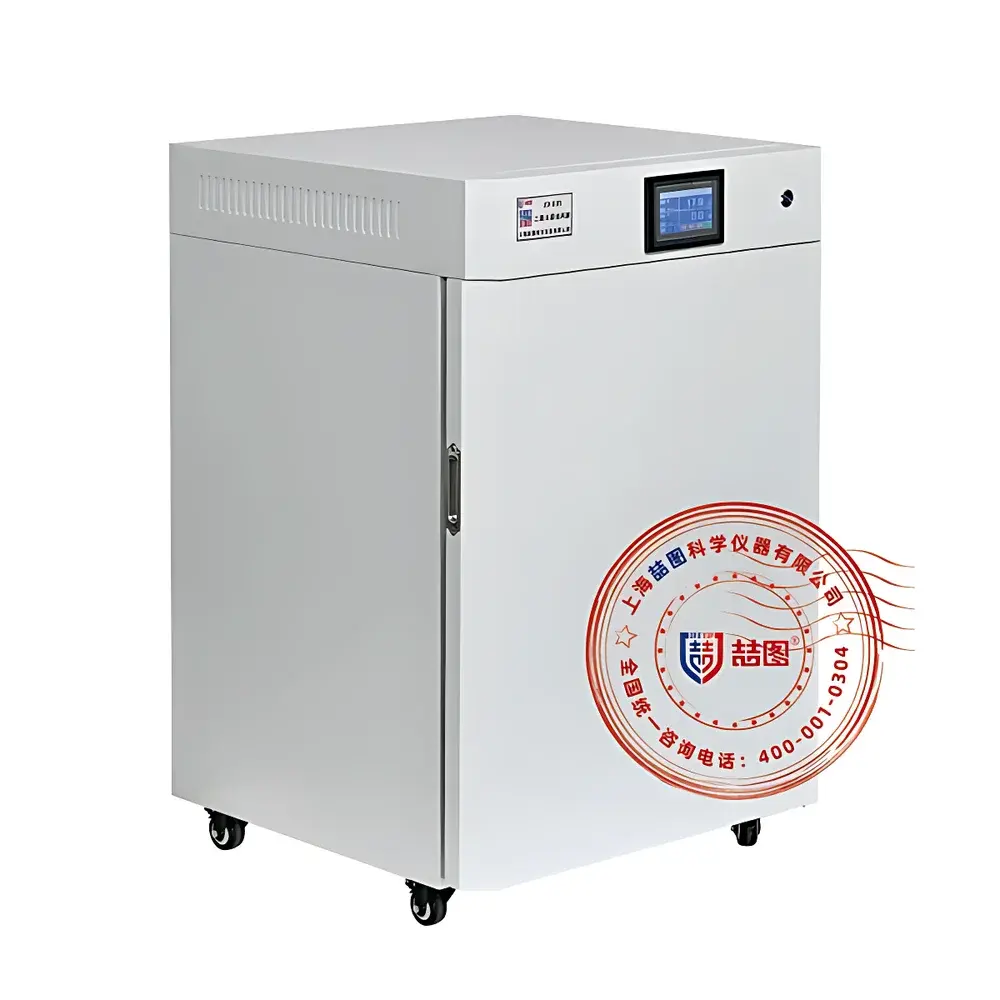
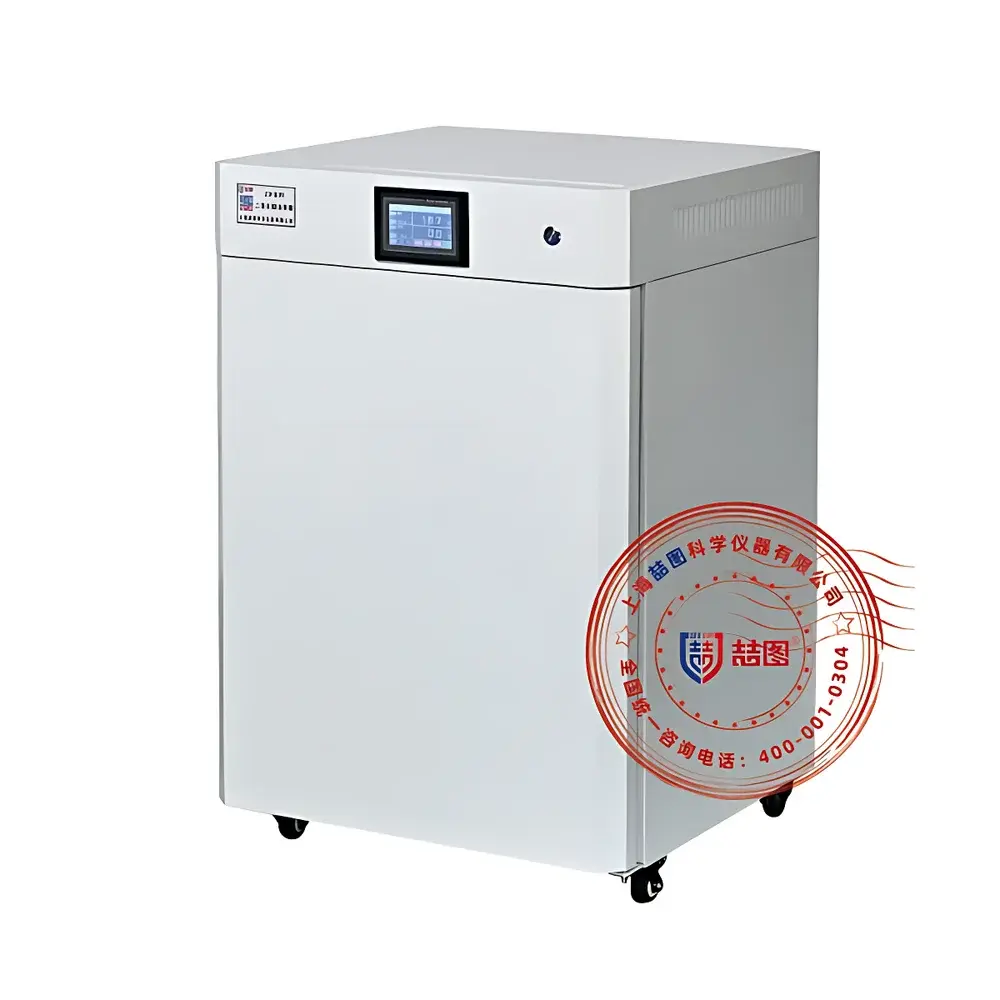
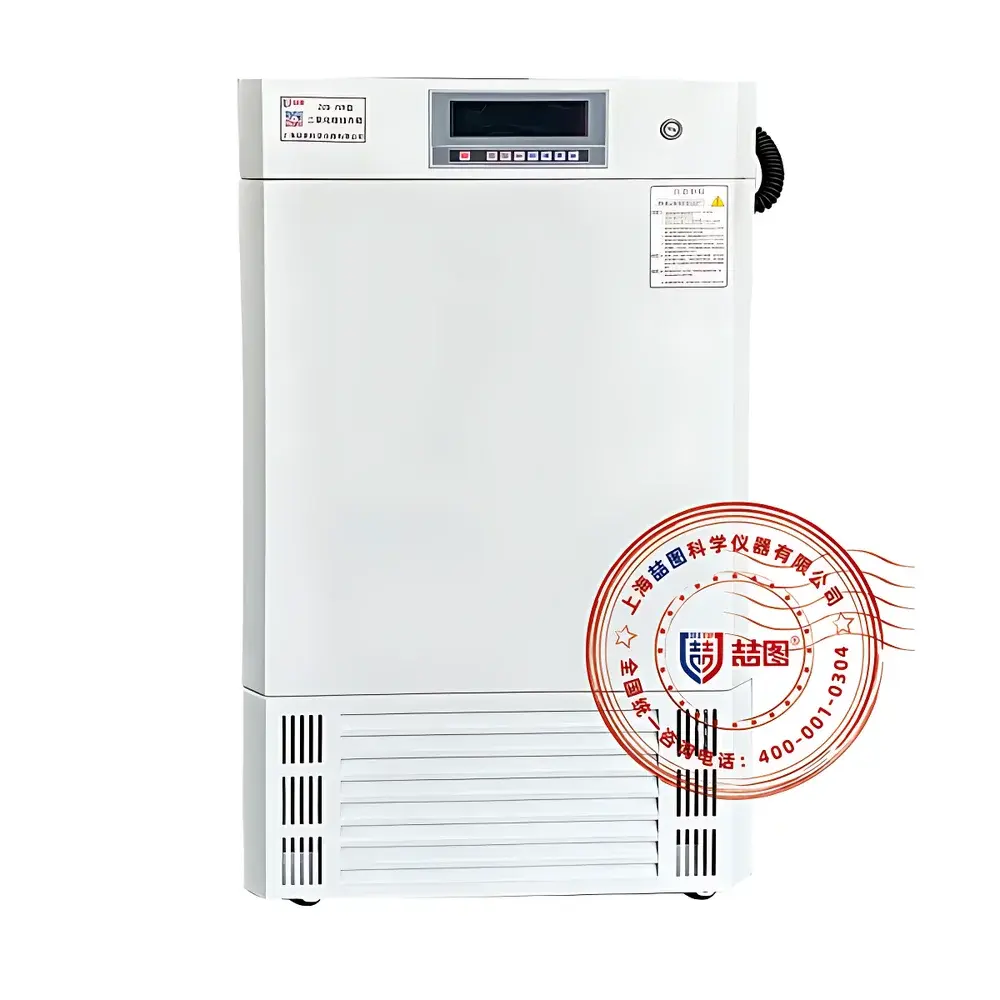
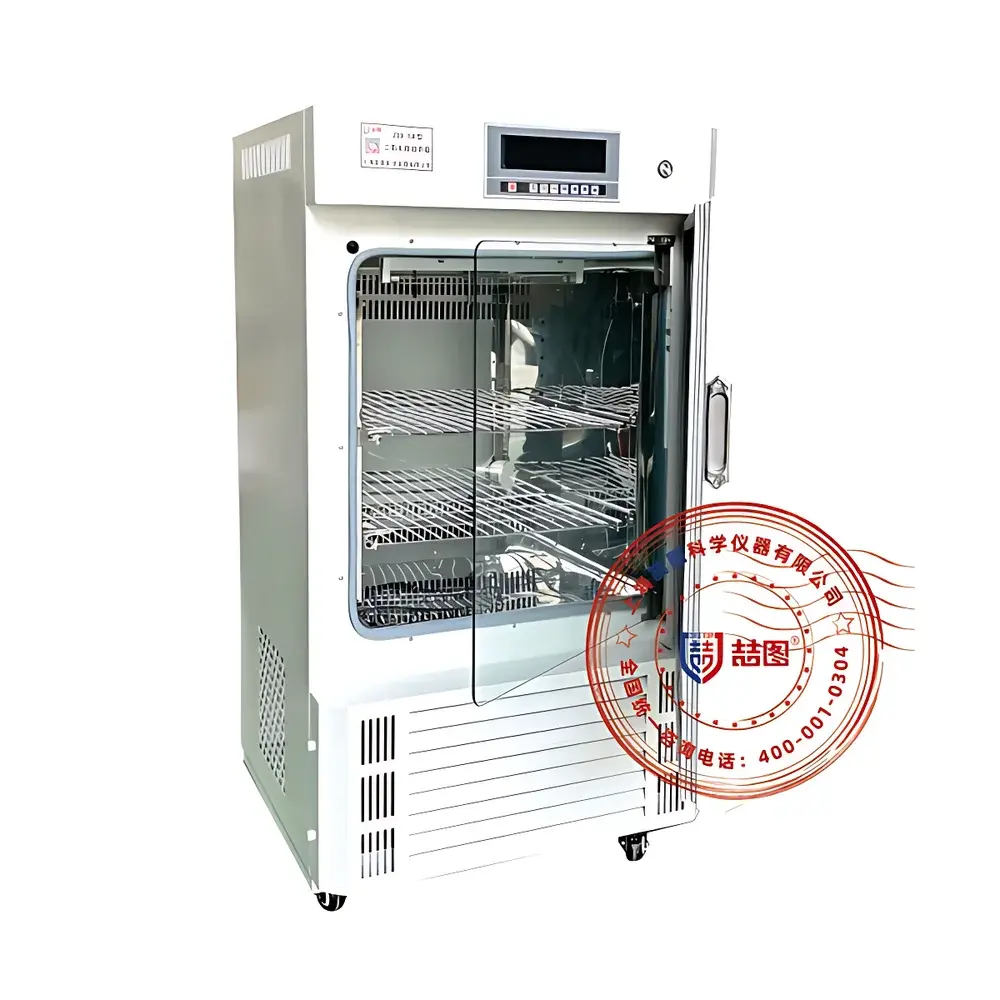
DRETOP ZCQ-80T CO₂ Incubator
| Brand | DRETOP |
|---|---|
| Origin | Shanghai, China |
| Manufacturer Type | Direct Manufacturer |
| Instrument Type | Air-Jacketed CO₂ Incubator |
| CO₂ Detection | Infrared (IR) Sensor |
| Temperature Control Range & Accuracy | RT +5°C to 60°C |
| CO₂ Concentration Control Range & Accuracy | 0–20% vol, ±0.1% vol |
| Humidity Control | 95% RH ±3% RH |
| Chamber Capacity | 80 L |
| External Dimensions (W×D×H) | 400 × 400 × 500 mm |
| Standard Configuration | UV Germicidal Lamp (Optional: 90°C High-Temperature Humid Heat Sterilization) |
Overview
The DRETOP ZCQ-80T CO₂ Incubator is an air-jacketed, microprocessor-controlled environmental chamber engineered for reliable, long-term mammalian cell culture under physiologically relevant conditions. It maintains precise control of three critical parameters—temperature, CO₂ concentration, and relative humidity—to replicate in vivo tissue environments. The system operates on the principle of convective air heating via independent internal heaters, enabling rapid thermal recovery after door openings—a key requirement for labs with high-throughput workflows or frequent user access. Its infrared (IR) CO₂ sensor delivers stable, oxygen-independent measurement with no catalytic poisoning risk, ensuring consistent gas-phase calibration across extended operation cycles. Designed for compliance-driven life science applications, the ZCQ-80T meets foundational requirements for GLP-compliant cell banking, monoclonal antibody production, IVF laboratories, and stem cell expansion protocols.
Key Features
- Intelligent LCD interface with full-screen multi-parameter display and menu-driven navigation for intuitive operation.
- Air-jacketed heating architecture ensures fast temperature recovery: ≤6 minutes to return to 37°C and ≤3 minutes to re-establish 5% CO₂ after a 30-second door opening.
- High-efficiency particulate air (HEPA) filter (≥0.3 µm, 99.998% filtration efficiency) installed at the intake port to minimize airborne contamination.
- Reservoir-style stainless steel water pan design maximizes evaporation surface area, supporting rapid humidity recovery to 95% RH ±3% RH following chamber access.
- Anti-tilt shelf mechanism maintains horizontal orientation even when extended halfway—preventing media spillage during handling.
- Mirror-finish 304 stainless steel interior with radius-corner transitions enables seamless cleaning and reduces microbial adhesion sites.
- Door heating system prevents condensation on inner glass surfaces, eliminating moisture-mediated microbial ingress pathways.
- Dual-stage safety logic includes over/under temperature alarms, power-loss memory retention, and automatic heater cutoff upon low-water-level detection (in water-jacketed variants; not applicable to ZCQ series).
Sample Compatibility & Compliance
The ZCQ-80T supports standard T-25, T-75, and 100-mm Petri dishes, multi-well plates, roller bottles, and flasks used in primary cell isolation, hybridoma maintenance, and induced pluripotent stem cell (iPSC) propagation. Its construction conforms to IEC 61010-1:2010 safety standards for laboratory equipment. While not certified to ISO 13485 or FDA 21 CFR Part 11 out-of-the-box, the incubator’s architecture—including non-volatile parameter memory, configurable alarm thresholds, and traceable sensor calibration routines—facilitates integration into auditable quality systems. UV germicidal irradiation (254 nm, ozone-free) provides periodic decontamination of circulating air and reservoir water vapor, aligning with USP recommendations for controlled environment bioburden mitigation.
Software & Data Management
The ZCQ-80T employs embedded firmware with real-time logging of temperature, CO₂, and operational status (e.g., door open/close events, alarm triggers). Data export is supported via optional RS485 interface (Modbus RTU protocol), enabling connection to centralized lab information management systems (LIMS) or SCADA platforms. Time-stamped event logs include timestamps accurate to ±1 second and support audit trail reconstruction per ALCOA+ principles. Optional accessories—including external temperature/humidity probes, programmable controllers, and thermal printers—extend traceability capabilities for regulated workflows requiring documented environmental continuity.
Applications
- Mammalian cell line maintenance (e.g., HEK293, CHO-K1, HeLa) under 5% CO₂ / 37°C / 95% RH conditions.
- Hybridoma culture for monoclonal antibody production, where pH stability via CO₂ buffering is essential.
- In vitro fertilization (IVF) embryo culture, adhering to ESHRE-recommended atmospheric controls.
- Stem cell differentiation assays requiring tightly constrained thermal and gaseous microenvironments.
- Toxicology screening using co-culture models sensitive to transient CO₂ or humidity excursions.
- Bioprocess development for recombinant protein expression, including transient transfection optimization.
FAQ
What is the difference between air-jacketed and water-jacketed CO₂ incubators?
Air-jacketed designs (like the ZCQ series) use heated air circulation for faster temperature recovery and lower maintenance; water-jacketed units (ZCW series) offer superior thermal stability during power interruptions but require routine water level monitoring and descaling.
Does the ZCQ-80T support humidity monitoring with external feedback control?
The standard configuration maintains humidity via passive reservoir evaporation at 95% RH ±3% RH; optional humidity sensing modules with closed-loop PID adjustment are available upon request.
Is the IR CO₂ sensor factory-calibrated and field-serviceable?
Yes—the infrared sensor undergoes NIST-traceable calibration prior to shipment and supports user-initiated zero-point verification without specialized tools.
Can the incubator be integrated into a facility-wide building management system (BMS)?
When equipped with the RS485 communication module, it transmits real-time status and setpoint data compatible with BACnet/IP or Modbus TCP gateways via protocol converters.
What validation documentation is provided with the instrument?
Each unit ships with a Factory Acceptance Test (FAT) report detailing temperature uniformity mapping (per ISO 15189 Annex C), CO₂ linearity verification, and alarm response verification—serving as baseline IQ/OQ evidence.





