
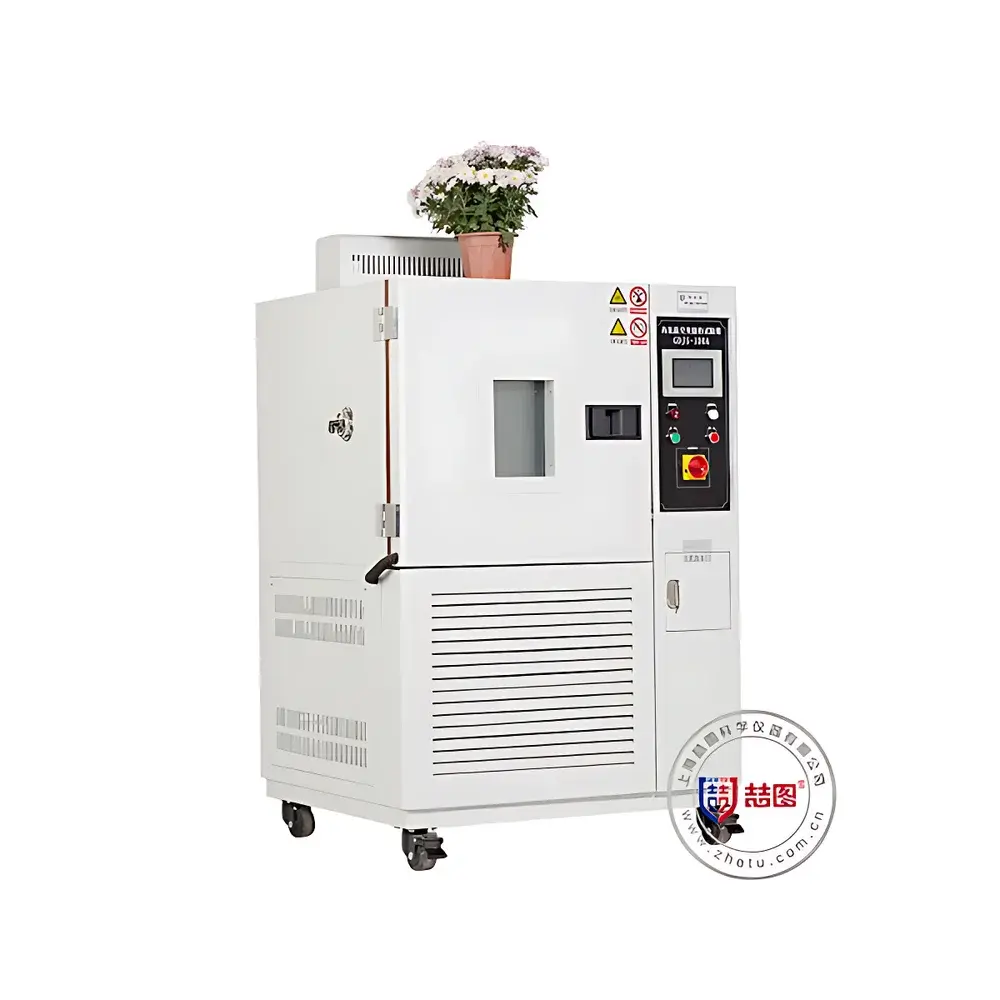
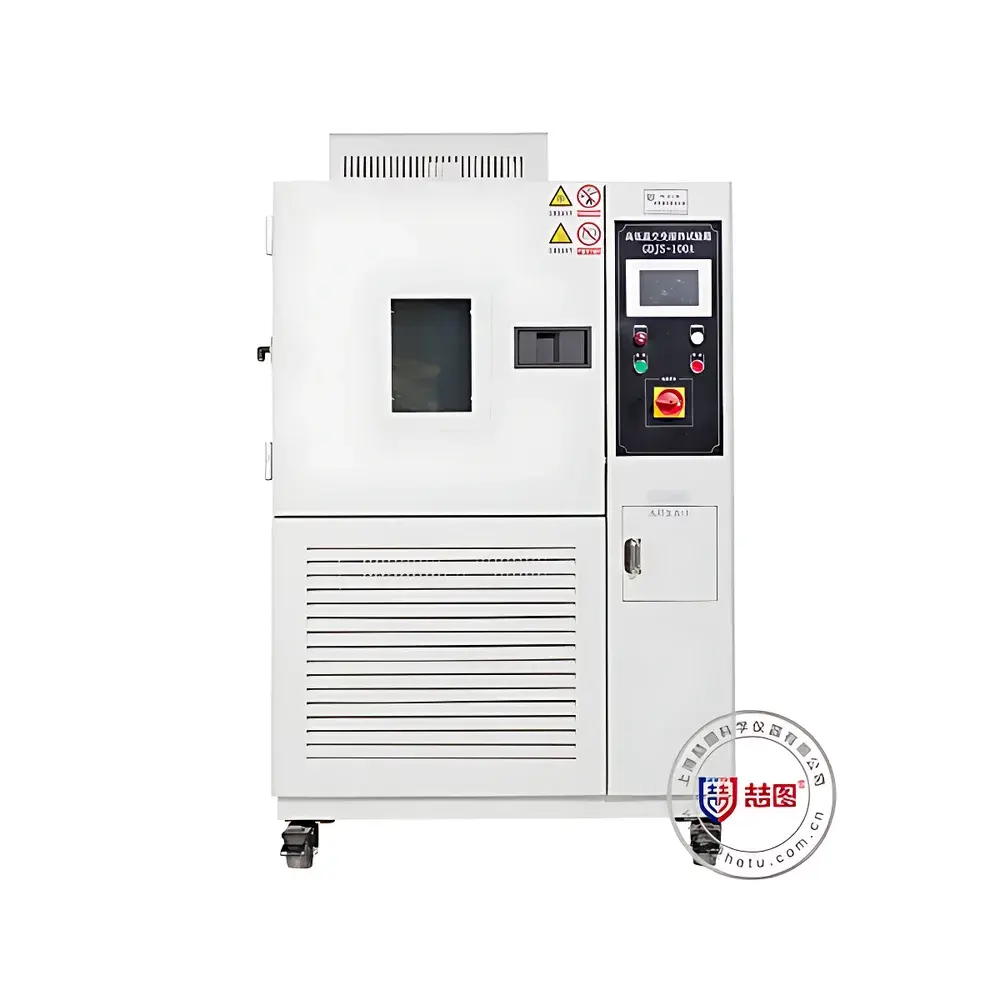
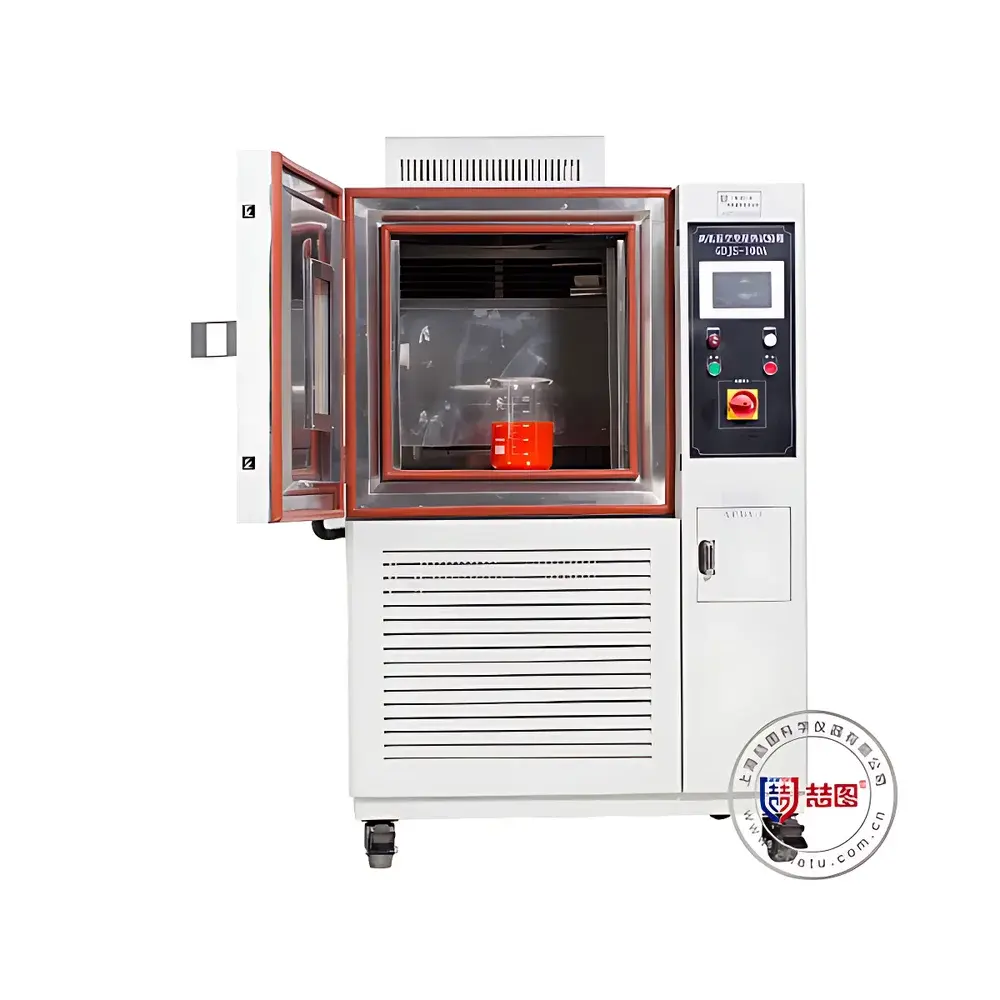
DRETOP THS-C225-I High-Low Temperature Environmental Test Chamber
| Brand | DRETOP |
|---|---|
| Origin | Shanghai, China |
| Manufacturer Type | Direct Manufacturer |
| Model | THS-C225-I |
| Temperature Range | −60 °C to +120 °C |
| Refrigeration Method | Compressor-based Cooling |
| Explosion-Proof | Standard (Non-Explosion-Proof) |
| Temperature Fluctuation | ±0.5 °C |
| Temperature Uniformity | ≤2 °C |
| Heating Rate | 1–3 °C/min (adjustable) |
| Cooling Rate | 0.7–1 °C/min (adjustable) |
| Interior Dimensions (W×D×H) | 600 × 500 × 750 mm |
| Cabinet Construction | Stainless Steel Interior, Electrostatically Powder-Coated Exterior |
| Control System | 7-inch Color Touchscreen with PID Auto-Tuning |
| Programmability | 1000 Programs, 100 Segments per Program |
| Data Logging | Real-time Export to Excel, Graphical Trend Reports |
| Remote Access | Web Browser, Mobile App (iOS/Android), Multi-user Concurrent Access (Up to 10 Accounts) |
| Safety Protections | Overtemperature Cut-off, Compressor/Fan Overload Protection, Leakage Current Protection, Power Failure Recovery |
| Optional Interfaces | RS485, USB, Standard Test Port (Φ50 mm) |
Overview
The DRETOP THS-C225-I High-Low Temperature Environmental Test Chamber is an engineered solution for accelerated environmental stress testing of industrial components and finished products under controlled thermal extremes. Designed in accordance with international test standards—including IEC 60068-2-1 (cold), IEC 60068-2-2 (dry heat), and MIL-STD-810G Method 502.6—the chamber delivers precise, repeatable temperature cycling across a wide operational range of −60 °C to +120 °C. Its dual independent control architecture separates heating, cooling, and air circulation systems to minimize cross-interference and ensure thermodynamic stability during dynamic ramp-and-soak profiles. The chamber’s forced-air convection system—driven by high-efficiency centrifugal fans and optimized duct geometry—maintains ≤2 °C spatial uniformity throughout the 225 L working volume (600 × 500 × 750 mm), meeting critical requirements for qualification testing in electronics, automotive, aerospace, and medical device manufacturing.
Key Features
- 7-inch full-color resistive touchscreen HMI with multilingual interface (English/Chinese), hierarchical password-protected access (up to 5 operator levels), and audit-trail-capable event logging.
- PID auto-tuning algorithm dynamically adjusts control parameters in real time to compensate for load variation, door openings, or ambient fluctuations—ensuring ±0.5 °C temperature stability during steady-state operation.
- Independent heating (nickel-chromium alloy sheathed elements) and refrigeration (imported hermetic compressor, eco-friendly R404A/R23 cascade system) subsystems enable rapid, decoupled ramp rates: 1–3 °C/min (heating) and 0.7–1 °C/min (cooling), both fully programmable per segment.
- Double-layer heated anti-fog tempered glass viewing window with integrated LED illumination—prevents condensation-induced sample contamination and enables non-intrusive visual monitoring under extreme humidity or low-temperature conditions.
- Robust mechanical design: stainless steel interior (304 grade), seamless arc-welded corners, silicone rubber door gasket rated for −70 °C to +150 °C service life, and dual-locking casters (swivel + fixed) for stable positioning and safe relocation.
- Comprehensive safety architecture: triple-redundant overtemperature protection (mechanical, electronic, and software-based), compressor phase-loss detection, fan failure monitoring, and automatic power recovery after grid interruption.
Sample Compatibility & Compliance
The THS-C225-I accommodates a broad spectrum of test specimens—from printed circuit assemblies (PCBAs) and LED modules to automotive ECUs and polymer enclosures—via its standard Φ50 mm cable/port access point, supporting powered, signal-fed, or pneumatic testing configurations. Internal shelving (2 adjustable stainless steel trays) allows flexible vertical staging without obstructing airflow. The chamber complies with ISO/IEC 17025 calibration traceability requirements when used with external reference sensors; it supports GLP/GMP documentation workflows through configurable data export (CSV/Excel), timestamped trend graphs, and user-defined report templates. While not intrinsically explosion-proof, its standard configuration meets CE marking requirements (2014/30/EU EMC Directive, 2014/35/EU LVD Directive) and is routinely deployed in QC labs operating under ISO 9001 and IATF 16949 quality management systems.
Software & Data Management
Embedded firmware provides native support for ASTM E145-22 Annex A1-compliant temperature profile execution, including step, ramp, soak, and cyclic sequences. Data acquisition occurs at 1-second intervals, with onboard storage retaining ≥30 days of continuous logging. All measurements are exportable via USB or network transfer as CSV files compatible with MATLAB, JMP, or Minitab for statistical process analysis. Remote supervision is enabled through a responsive HTML5 web interface—accessible from any modern browser—and a dedicated iOS/Android application that mirrors the local HMI layout in real time. Up to 10 concurrent user accounts may be provisioned with granular permission sets (e.g., “Program Editor”, “Operator”, “Auditor”), and all remote sessions are logged with IP address, timestamp, and action metadata—supporting FDA 21 CFR Part 11 compliance when paired with enterprise identity management.
Applications
This chamber serves as a core validation tool in product development and incoming inspection protocols. Typical use cases include: thermal shock pre-screening of solder joints per JEDEC JESD22-A104; cold-start performance evaluation of battery packs under −40 °C conditioning; accelerated aging of elastomeric seals per SAE J2045; humidity-free thermal cycling of optical sensors; and qualification of avionics housings per RTCA DO-160 Section 4.2. It is widely adopted by Tier-1 automotive suppliers for PPAP submissions, by contract manufacturers performing IPC-A-610 Class 3 reflow simulation, and by academic research groups investigating polymer crystallinity transitions under controlled thermal gradients.
FAQ
What is the maximum allowable specimen weight per shelf?
Each stainless steel shelf is rated for 25 kg uniformly distributed load. Total internal payload must not exceed 60 kg to preserve airflow integrity and temperature uniformity.
Can the chamber operate continuously at −60 °C?
Yes—continuous operation at minimum setpoint is supported, provided ambient room temperature remains ≤30 °C and relative humidity <80% RH to prevent excessive frost accumulation on evaporator coils.
Is third-party calibration certification available?
DRETOP offers optional NIST-traceable calibration certificates (per ISO/IEC 17025) performed using Fluke 1524 readers and PT100 probes, valid for 12 months.
Does the system support custom alarm notifications?
Yes—email/SMS alerts can be configured for deviation thresholds, program completion, or hardware fault events via SMTP integration or cloud-based notification gateways.
How is firmware updated remotely?
Over-the-air updates are delivered via secure HTTPS push from DRETOP’s cloud portal; version history, rollback capability, and checksum verification are built into the update manager.



