
Dolomite Microfluidics Monodisperse Double Emulsion Generation System
| Brand | Dolomite |
|---|---|
| Origin | United Kingdom |
| Manufacturer Type | Authorized Distributor |
| Import Status | Imported |
| Model | Dolomite MicroFluidics |
| Pricing | Available Upon Request |
| Droplet Size Range | 50–200 µm |
| Emulsion Types | (o/w/o, w/o/w) |
| Flow Rate Range | 70 nL/min to 5 mL/min |
| Precision Control | Yes |
| Reproducibility | High |
| Primary Applications | Drug Delivery, Enzyme Immobilization, Taste Masking in Food, Cosmetic Active Delivery, In Vitro Encapsulation, Flow Cytometry Beads, Microcapsule Carriers |
Overview
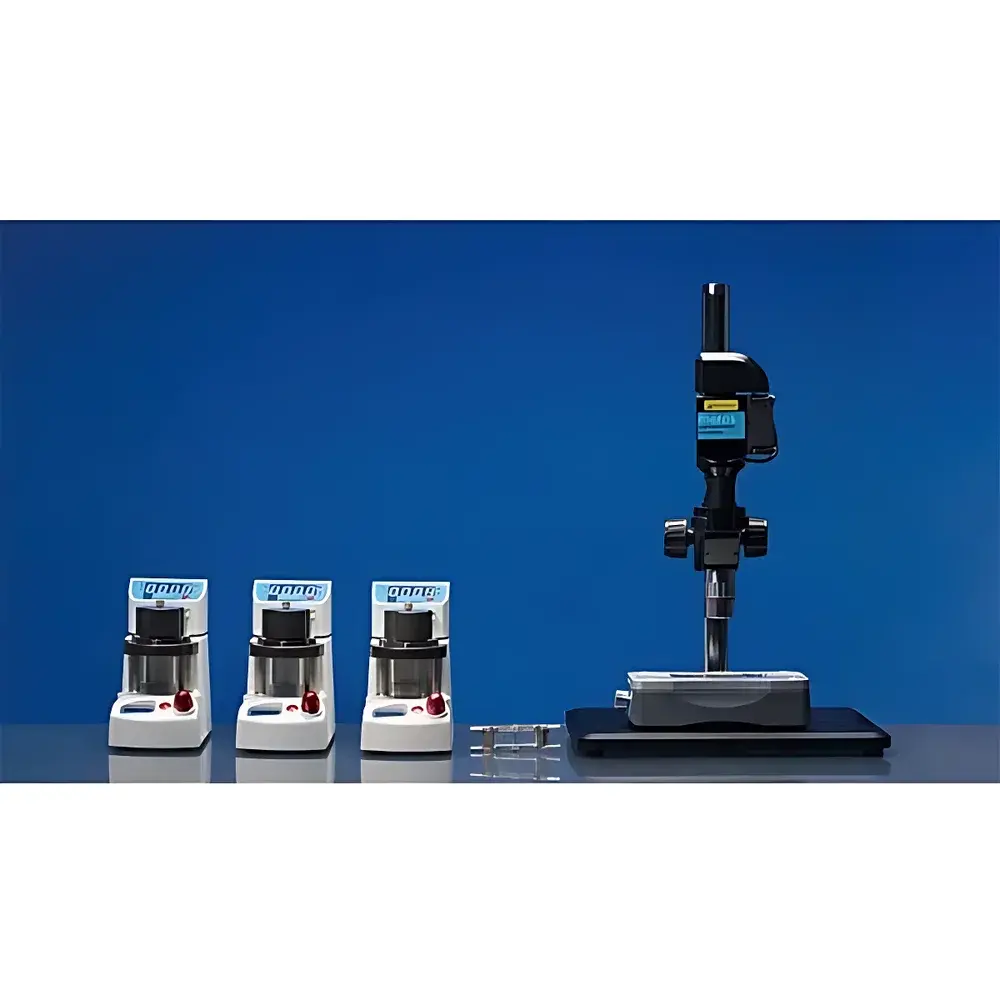
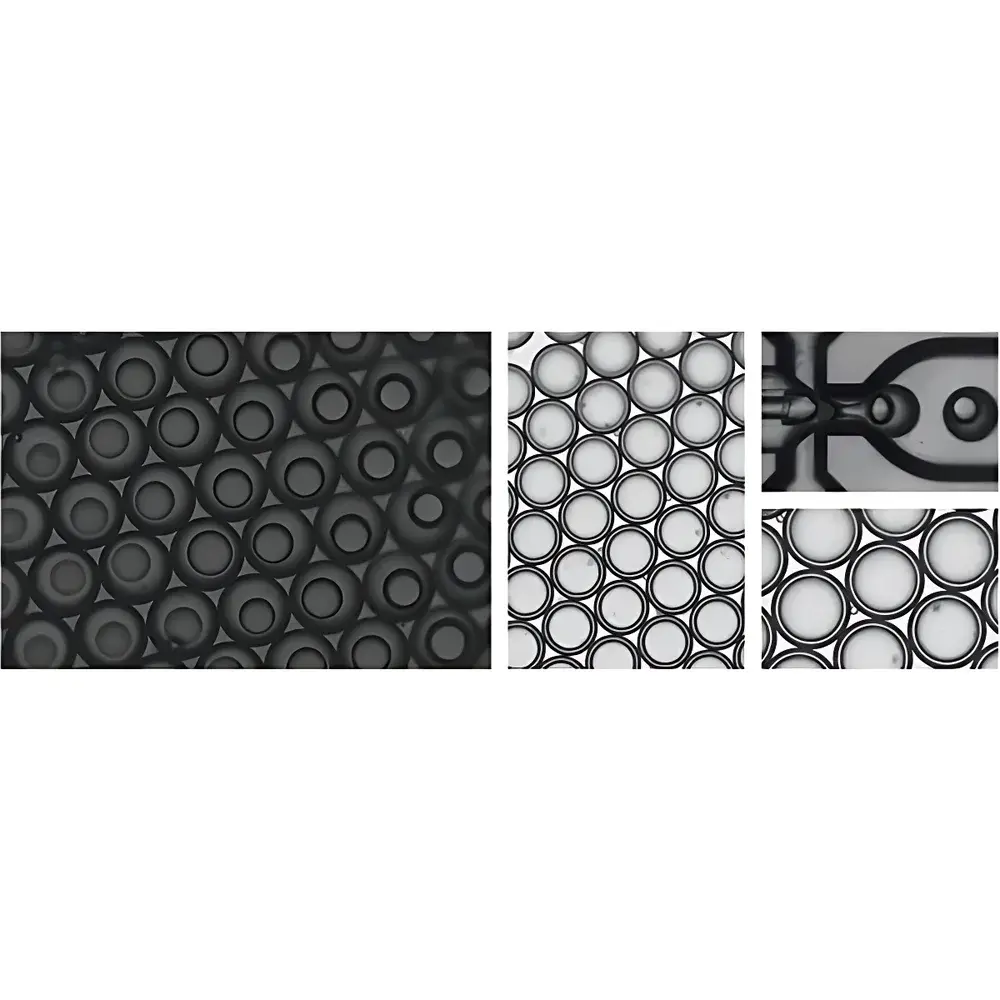
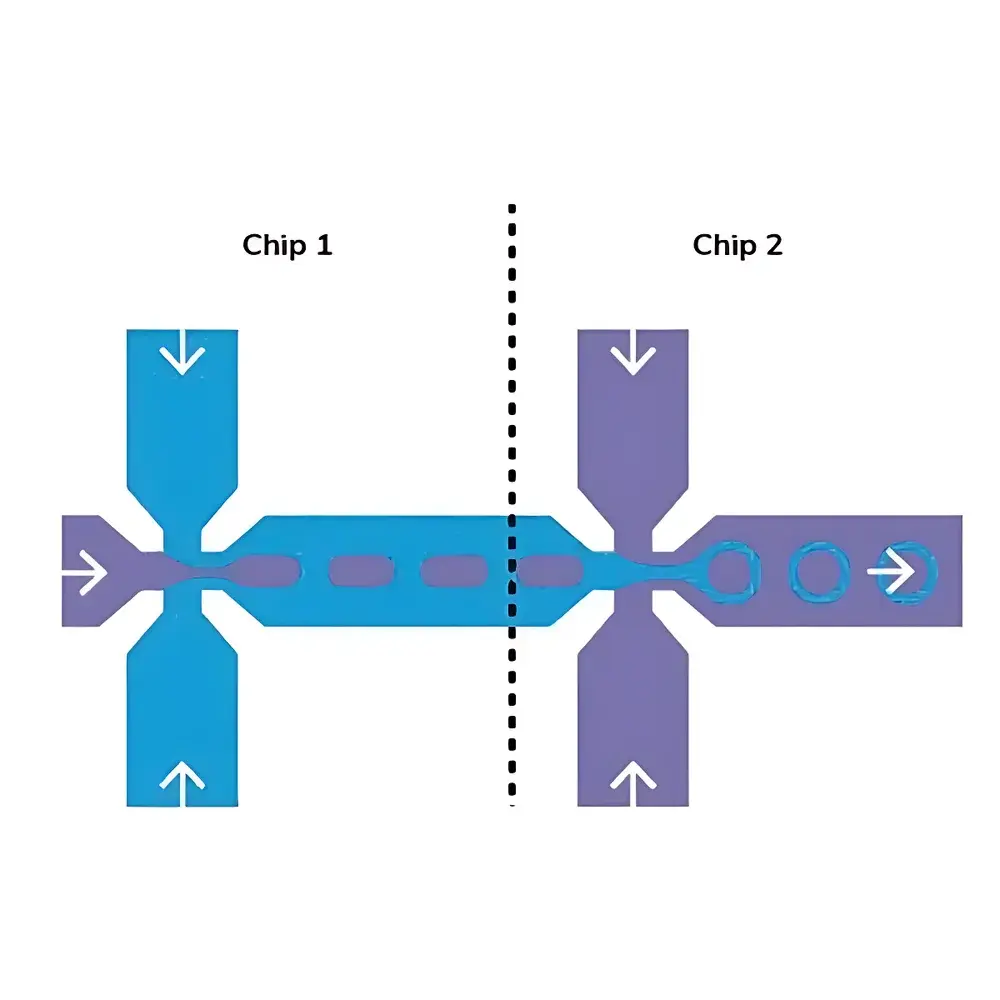
The Dolomite Microfluidics Monodisperse Double Emulsion Generation System is an engineered microfluidic platform designed for the controlled, continuous production of highly uniform double emulsions (e.g., o/w/o and w/o/w). Based on hydrodynamic flow-focusing and co-flow microfluidic principles, the system leverages precisely fabricated glass or thermoplastic chips to generate droplets with exceptional monodispersity (coefficient of variation <3%). Unlike bulk emulsification methods—such as high-shear homogenization or ultrasonication—which yield polydisperse distributions and poor batch-to-batch consistency, this system operates under laminar flow conditions where interfacial tension, capillary number, and flow rate ratios govern droplet formation mechanics. It is purpose-built for research laboratories and process development teams requiring deterministic control over both inner droplet diameter and outer shell thickness—critical parameters in encapsulation efficiency, release kinetics, and functional stability.
Key Features
- Modular chip-based architecture supporting interchangeable double emulsion configurations (o/w/o and w/o/w)
- High-precision syringe pump integration enabling stable flow rates from 70 nL/min to 5 mL/min across three independent fluid channels
- Glass or cyclic olefin copolymer (COC) microfluidic chips with sub-10 µm feature resolution and low protein adsorption characteristics
- Real-time optical monitoring via integrated microscope-compatible viewing ports and high-speed imaging compatibility
- Scalable design: chip outputs can be directly coupled to downstream collection vessels, inline UV-Vis spectrophotometers, or automated fraction collectors
- No moving parts in the chip—eliminating mechanical wear and ensuring long-term operational repeatability
Sample Compatibility & Compliance
The system accommodates a broad range of aqueous and organic phases, including but not limited to PBS, cell culture media, PEGylated surfactants (e.g., Span 80, Tween 20), mineral oils, silicone oils, and biodegradable polymers (e.g., PLGA, chitosan solutions). All wetted components comply with USP Class VI and ISO 10993-5 standards for cytotoxicity and extractables testing. Chip materials are autoclavable (glass) or gamma-sterilizable (COC), supporting GLP-compliant workflows. The system supports documentation packages aligned with FDA 21 CFR Part 11 requirements when paired with validated data acquisition software, facilitating audit readiness for preclinical formulation development.
Software & Data Management
Operation is coordinated through Dolomite’s proprietary MicroDrop Control Software, which provides synchronized multi-channel flow profiling, real-time pressure monitoring, and programmable stepwise protocols (e.g., gradient emulsification, sequential phase introduction). All experimental parameters—including flow rates, timing sequences, and camera trigger events—are timestamped and exported in CSV/JSON formats. Audit trails record user logins, parameter modifications, and system error logs—enabling full traceability per ISO/IEC 17025 and GMP Annex 11 guidelines. Raw image datasets (TIFF/AVI) are stored with embedded metadata for post-acquisition droplet size distribution analysis using ImageJ plugins or commercial tools such as NIS-Elements or MATLAB-based custom scripts.
Applications
- Pharmaceutical Development: Production of core-shell microparticles for sustained-release drug delivery, mRNA lipid nanoparticle (LNP) precursors, and vaccine adjuvant carriers
- Food Science: Encapsulation of volatile flavors, probiotics, or omega-3 fatty acids with pH-responsive or enzymatically cleavable shells for targeted intestinal release
- Cosmetic Formulations: Stabilized delivery of retinoids, vitamin C, or peptides within occlusive oil-in-water-in-oil systems to enhance skin penetration and oxidative stability
- Diagnostic Tools: Fabrication of uniform fluorescent or magnetic microbeads for calibration standards in flow cytometry and digital ELISA platforms
- Enzyme Engineering: Compartmentalization of single enzymes or multi-enzyme cascades within semi-permeable double emulsions for synthetic biology and biocatalysis screening
- Tissue Engineering: Generation of artificial extracellular matrix microgels with spatially resolved growth factor gradients
FAQ
What emulsion architectures does the system support?
The platform is configured for both water-in-oil-in-water (w/o/w) and oil-in-water-in-oil (o/w/o) double emulsions, with independent control over inner droplet size (50–200 µm) and shell thickness.
Can the system integrate with existing lab automation?
Yes—digital I/O ports and Ethernet connectivity enable synchronization with robotic liquid handlers, environmental chambers, and LIMS via Modbus TCP or custom API endpoints.
Is chip cleaning and reuse supported?
Glass chips are fully cleanable using piranha solution (H₂SO₄:H₂O₂), oxygen plasma, or sequential solvent flushes; COC chips are single-use but compatible with rapid prototyping workflows.
What level of training and technical support is provided?
Dolomite-certified engineers deliver on-site installation, SOP development, and application-specific protocol optimization, backed by remote diagnostics and annual calibration verification services.





