
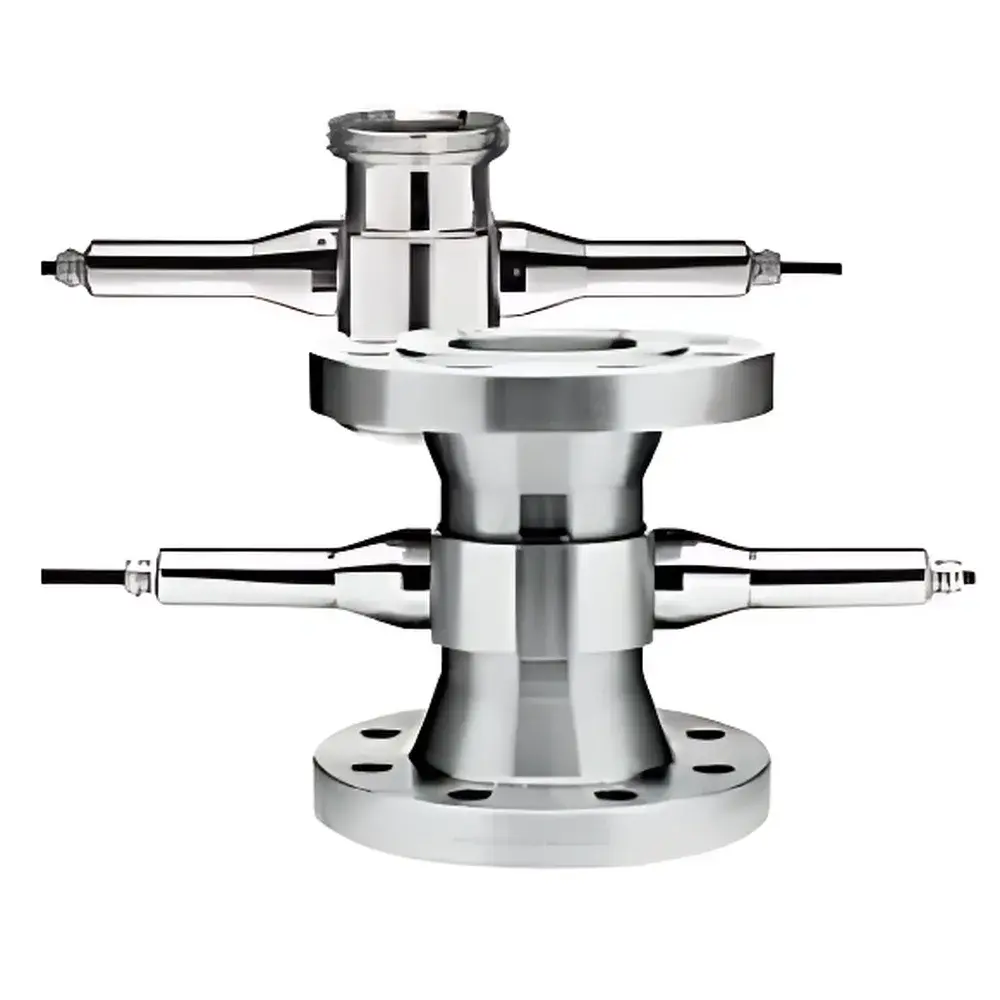
GALVANIC Monitek-MoniTurb Online Turbidimeter
| Brand | GALVANIC |
|---|---|
| Origin | USA |
| Model | Monitek-MoniTurb |
| Type | Online Turbidimeter |
| Measurement Range | 0–500 NTU |
| Resolution | 0.1 NTU |
| Operating Temperature | −10°C to 50°C |
| Accuracy | ±1% |
| Protection Rating | IP65 / NEMA 4X |
| Hazardous Area Certification | ATEX Ex d IIC/T6 |
| Light Source | Gas-filled lamp (380–1100 nm), ~2-year lifetime |
| Flow Cell Material | Stainless steel (optional Ti, PTFE) |
| Viewing Window | Sapphire (optional borosilicate, acrylic) |
| Seals | FKM (optional FFKM, EPDM, silicone) |
| Process Connections | DIN, ANSI, NPT |
| Scattering Angles | 12° forward scatter and 90° side scatter |
| Data Logging Capacity | 8,000 entries |
| Communication | RS-232C / RS-485 (Modbus RTU) |
| Programmable Units | NTU, JTU, AU, EBC, ppm, g/L, %TS, Hazen, ASTM, Saybolt |
| Cleaning | CIP-compatible, optional spray nozzle |
| Calibration/Maintenance Interval | Up to 24 months (application-dependent) |
Overview
The GALVANIC Monitek-MoniTurb Online Turbidimeter is an industrial-grade, process-integrated optical instrument engineered for continuous, real-time turbidity monitoring in demanding water, wastewater, beverage, pharmaceutical, and chemical production environments. It operates on the principle of dual-angle light scattering detection—simultaneously measuring both 12° forward-scattered and 90° side-scattered light intensity generated by suspended particles in a flowing sample stream. This dual-channel approach enhances measurement robustness across varying particle size distributions and refractive indices, minimizing errors associated with color interference, bubble entrainment, or flow-induced signal fluctuation. The system employs a stabilized, gas-filled broadband light source (380–1100 nm) coupled with hermetically sealed photodetectors and a precision-machined flow cell. Its design complies with ISO 7027 (nephelometric principle) and supports traceable calibration per ASTM D6508 and USP , making it suitable for regulated applications requiring documented metrological integrity.
Key Features
- High-reliability optical architecture featuring sapphire viewing windows and stainless-steel wetted parts—optionally configurable with titanium or PTFE for aggressive media compatibility.
- IP65/NEMA 4X-rated enclosure ensures protection against dust ingress and high-pressure water jets, enabling deployment in outdoor or washdown-intensive facilities.
- ATEX-certified explosion-proof housing (Ex d IIC/T6) permits safe operation in non-classified hazardous zones adjacent to Zone 1/2 areas—no intrinsic safety barriers required.
- Factory-calibrated dual-detector system with automatic baseline compensation and temperature-stabilized electronics for long-term signal stability.
- Two independent, fully programmable cleaning cycles—supporting timed or event-triggered CIP sequences via integrated solenoid-controlled spray nozzles.
- Embedded linearization algorithms correct for non-linear scattering response across the full 0–500 NTU range, improving accuracy at low (100 NTU) turbidity levels.
- Gas-filled lamp with 2-year typical service life reduces scheduled maintenance frequency and eliminates frequent lamp replacement logistics.
Sample Compatibility & Compliance
The Monitek-MoniTurb accommodates a broad spectrum of process streams—including potable water, clarified effluent, fermentation broths, sugar syrups, and API suspensions—without requiring dilution or filtration. Its flow cell geometry minimizes sedimentation and air entrapment, while optional PTFE-lined or titanium components extend chemical resistance for chlorine-rich, acidic, or caustic applications. Regulatory compliance includes adherence to ISO 7027:2016 for turbidity measurement methodology, and its firmware architecture supports audit-ready data handling aligned with FDA 21 CFR Part 11 requirements when paired with validated software configurations. The device meets GLP/GMP environmental monitoring criteria for continuous quality assurance in pharmaceutical water systems (PW, WFI) and bioprocessing lines.
Software & Data Management
Configuration and diagnostics are performed via a menu-driven interface accessible through RS-232C or RS-485 Modbus RTU protocol—enabling seamless integration into DCS, SCADA, or MES platforms. The built-in data logger stores up to 8,000 timestamped measurements per sensor channel, with cyclic overwrite and exportable binary backup files (.bak) for offline analysis. Each sensor channel operates independently, supporting concurrent measurement of turbidity (NTU), absorbance (AU), color (EBC, Hazen), or concentration (%TS, g/L) using user-defined conversion curves. Help menus provide context-sensitive guidance, and configuration changes are logged with timestamps and operator IDs—facilitating change control documentation. Optional panel-mounted PC integration enables local HMI functionality without external computing infrastructure.
Applications
- Real-time monitoring of filtration efficiency in municipal drinking water plants and membrane bioreactors (MBRs).
- Endpoint detection during backwash cycles and filter integrity testing in pharmaceutical water distribution loops.
- Yeast viability and broth clarity assessment in beer, wine, and biotherapeutic manufacturing.
- Sludge blanket level estimation in clarifiers and thickening basins via multi-point turbidity profiling.
- Quality control of liquid APIs, excipients, and sterile suspensions where particulate load correlates directly with product stability.
- Regulatory reporting for EPA NPDES discharge permits and EU Urban Wastewater Treatment Directive compliance.
FAQ
What is the recommended calibration frequency for the Monitek-MoniTurb in continuous operation?
Calibration verification is advised every 6 months under standard conditions; however, the system supports extended intervals up to 24 months in stable, low-fouling applications—subject to documented risk assessment and trending of drift data.
Can the instrument measure both turbidity and color simultaneously?
Yes—the dual-channel detector array and programmable unit engine allow concurrent output of NTU (turbidity) and EBC or Hazen units (color) from the same optical path, provided the sample exhibits measurable absorbance in the visible spectrum.
Is the device compatible with Modbus TCP/IP networks?
The native interface is Modbus RTU over RS-485; Modbus TCP/IP connectivity requires an external protocol converter or gateway configured per IEC 61850 or OPC UA standards.
Does the system support automated validation protocols per IQ/OQ requirements?
While the hardware supports traceable sensor verification, formal IQ/OQ execution requires third-party validation services or integration with validated LIMS/SCADA platforms compliant with Annex 11 and GAMP 5 guidelines.
What materials are available for the flow cell gasket to ensure compatibility with sodium hypochlorite solutions?
FKM is standard; for sustained exposure to oxidizing agents, FFKM (perfluoroelastomer) or EPDM gaskets are factory-installable options—material selection must be confirmed against specific concentration and temperature profiles.





