
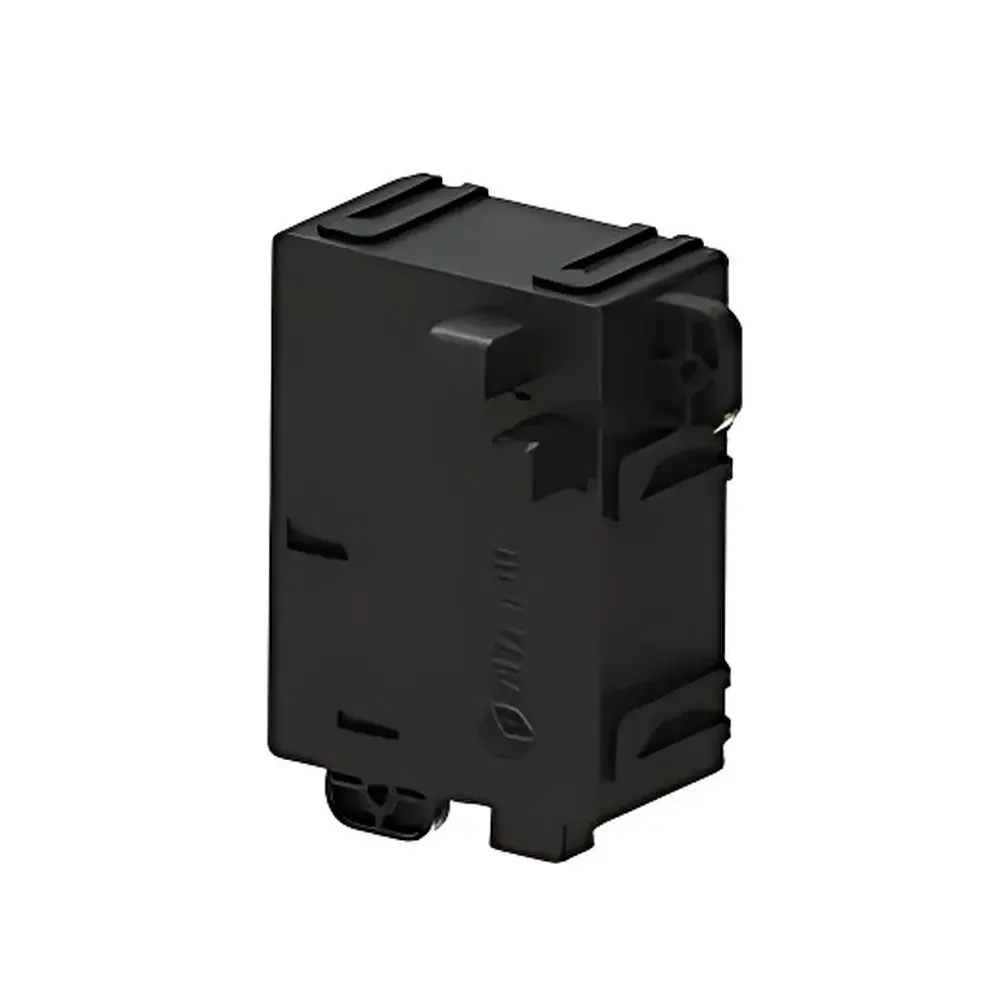
Cubic APMS-5000 Dual-Channel Automotive PM2.5 Sensor
| Brand | Cubic |
|---|---|
| Origin | Hubei, China |
| Manufacturer Type | Authorized Distributor |
| Origin Category | Domestic (China) |
| Model | APMS-5000 |
| Price | Upon Request |
| Detection Principle | Laser Light Scattering |
| Measurement Range | 0–1000 µg/m³ |
| Accuracy | ±10% (100–1000 µg/m³) and ≤±10 µg/m³ (0–100 µg/m³) at –20–50°C |
| Extended Accuracy | ±20% (100–1000 µg/m³) and ≤±20 µg/m³ (0–100 µg/m³) at –40––20°C & 50–70°C |
| Particle Size Range | 0.3–2.5–10 µm |
| Operating Environment | –40 to +85°C, 0–95% RH (non-condensing) |
| Communication Interface | LIN Bus |
Overview
The Cubic APMS-5000 is a dual-channel automotive particulate matter sensor engineered for real-time, in-vehicle air quality monitoring. It employs the principle of laser light scattering—where a collimated laser beam interacts with airborne particles, generating scattered light intensity proportional to particle size and concentration. This optical detection method enables quantitative assessment of suspended particulates across three defined aerodynamic diameter ranges: PM1.0, PM2.5, and PM10. Unlike single-point ambient sensors, the APMS-5000 integrates two physically independent optical sensing channels within one compact housing: one dedicated to cabin air (recirculation mode), the other to fresh external air intake. This architecture supports closed-loop HVAC control strategies—enabling automatic air recirculation activation when external PM2.5 exceeds threshold levels, thereby maintaining occupant exposure below WHO-recommended limits (<25 µg/m³ annual mean). The sensor’s core optical path features an anti-contamination lens design with periodic self-cleaning via controlled airflow pulsation, minimizing drift during long-term deployment under road vibration and variable humidity.
Key Features
- Dual independent optical channels for simultaneous cabin and ambient PM2.5 measurement—no time-multiplexing or sampling delay
- High-stability 650 nm laser diode with >50,000-hour operational lifetime and temperature-compensated output power regulation
- Adaptive Particle Identification (API) algorithm that discriminates between combustion soot, tire wear debris, and pollen based on scattering angular distribution profiles
- Integrated thermal management system ensuring consistent calibration stability across –40°C to +85°C operating envelope
- LIN 2.2A-compliant interface with configurable message scheduling (default: 100 ms update interval) and diagnostic frame support per ISO 17987-4
- Optical chamber sealed to IP65 equivalent (dust-tight, water-jet resistant) with silicone-gel-filled electrical connectors for automotive-grade EMI/EMC robustness
Sample Compatibility & Compliance
The APMS-5000 is validated for use with standard automotive cabin air filtration media (e.g., activated carbon + electrostatic HEPA composites) and compatible with both gasoline and battery-electric vehicle architectures. Its mechanical mounting interface conforms to ISO 20653:2013 (IP rating verification) and its environmental stress profile meets ISO 16750-4 (chemical resistance) and ISO 16750-5 (mechanical vibration). Electrical compliance includes ISO 7637-2 (transient immunity), CISPR 25 Class 5 (radiated emissions), and AEC-Q200 Rev D qualification for passive components. While not a medical device, its output data may be incorporated into OEM-level air quality dashboards compliant with UNECE R156 (Software Update Management System) requirements.
Software & Data Management
Sensor firmware supports over-the-air (OTA) updates via LIN bootloader protocol. Raw scattering pulse data (16-bit resolution, 10 kHz sampling) is accessible through diagnostic service requests (UDS SID 0x22 subfunctions), enabling OEMs to implement proprietary post-processing algorithms. Calibration parameters—including zero offset, gain coefficients, and temperature compensation polynomials—are stored in write-protected EEPROM with CRC-16 checksum validation. All configuration changes and fault logs are timestamped and retained for ≥10,000 cycles, supporting GLP-aligned traceability in development and validation environments. No cloud connectivity is embedded; data exchange remains strictly vehicle-internal per ISO/SAE 21434 cybersecurity guidelines.
Applications
- OEM integration into HVAC control units for intelligent air recirculation logic
- Real-time PM2.5 mapping in connected vehicle telematics platforms (aggregated anonymized data)
- Validation of cabin air filter efficiency per ISO 11146-2 test procedures
- Driver wellness monitoring systems correlating particulate exposure with biometric inputs (e.g., heart rate variability)
- Regulatory reporting for China’s GB/T 35665–2017 “Technical Requirements for In-Vehicle Air Quality Monitoring Devices”
FAQ
Does the APMS-5000 require periodic recalibration in field operation?
No. The sensor is factory-calibrated against NIST-traceable PSL (polystyrene latex) reference aerosols and maintains accuracy without user-initiated recalibration for the full vehicle lifecycle (≥15 years), provided mechanical integrity and optical window cleanliness are maintained.
Can the sensor differentiate between PM2.5 from brake wear versus diesel exhaust?
It does not chemically identify sources, but the API algorithm classifies particles by scattering signature morphology—enabling statistical separation of coarse-mode (brake/tire) vs. fine-mode (combustion) distributions when deployed with multi-point spatial sampling.
Is LIN the only supported communication interface?
Yes. The APMS-5000 implements LIN 2.2A exclusively; CAN or SENT variants are not available. OEMs requiring CAN integration must deploy an external LIN-to-CAN gateway module.
What is the minimum detectable particle size and how is it verified?
The lower detection limit is 0.3 µm, confirmed using ISO 27498-generated monodisperse PSL aerosols and validated per ISO 21501-4 Annex B protocols for optical particle counters.
How does the self-cleaning lens mechanism operate without consuming excessive power?
A piezoelectric actuator induces controlled micro-vibrations (120 Hz, <5 mW avg. power) to dislodge dust adhesion forces—activated only upon detected optical attenuation exceeding 8% baseline, limiting duty cycle to <0.3% during typical urban driving.







