
Orient KOJI Micro-tau Time-Correlated Single-Photon Counting (TCSPC) Microfluorescence Lifetime Imaging System
| Brand | Orient KOJI |
|---|---|
| Origin | Tianjin, China |
| Model | Micro-tau |
| Spectral Dispersion | Grating and Filter-Based |
| Instrument Type | Steady-State & Time-Resolved Fluorescence Spectrometer |
| Slit Width (Spectral Bandpass) | 5–20 nm |
| Optical Resolution | 1 nm |
| Sensitivity | 5000:1 (Signal-to-Noise Ratio) |
| Wavelength Accuracy | ±5 nm |
| Excitation Source | Pulsed Laser Diode or DPSS Lasers |
| Fluorescence Lifetime Range | 50 ps – 100 s (Full Temporal Domain) |
| Spatial Resolution | <1 µm |
| Field of View (Imaging Camera) | <0.5 mm |
| Spectral Range (Microspectroscopy) | 360–1100 nm |
| Lifetime Detection Range | 400–1050 nm (Optional Extended IR-II Band) |
| Timing Resolution | ≤1 ps |
| Jitter | <10 ps |
| Counting Rate | >65 MHz per channel |
| Simultaneous Channels | ≥8 |
| Optional Modules | Cryogenic Stage (Liquid Nitrogen), Motorized XYZ Stage (FLIM-Ready), Picosecond Detectors (Wavelength- & Temperature-Tunable), Multi-Laser Combiner (266–1030 nm, up to 4 inputs), Raman Dual-Channel Add-on, Fiber-Coupled Excitation Path |
Overview
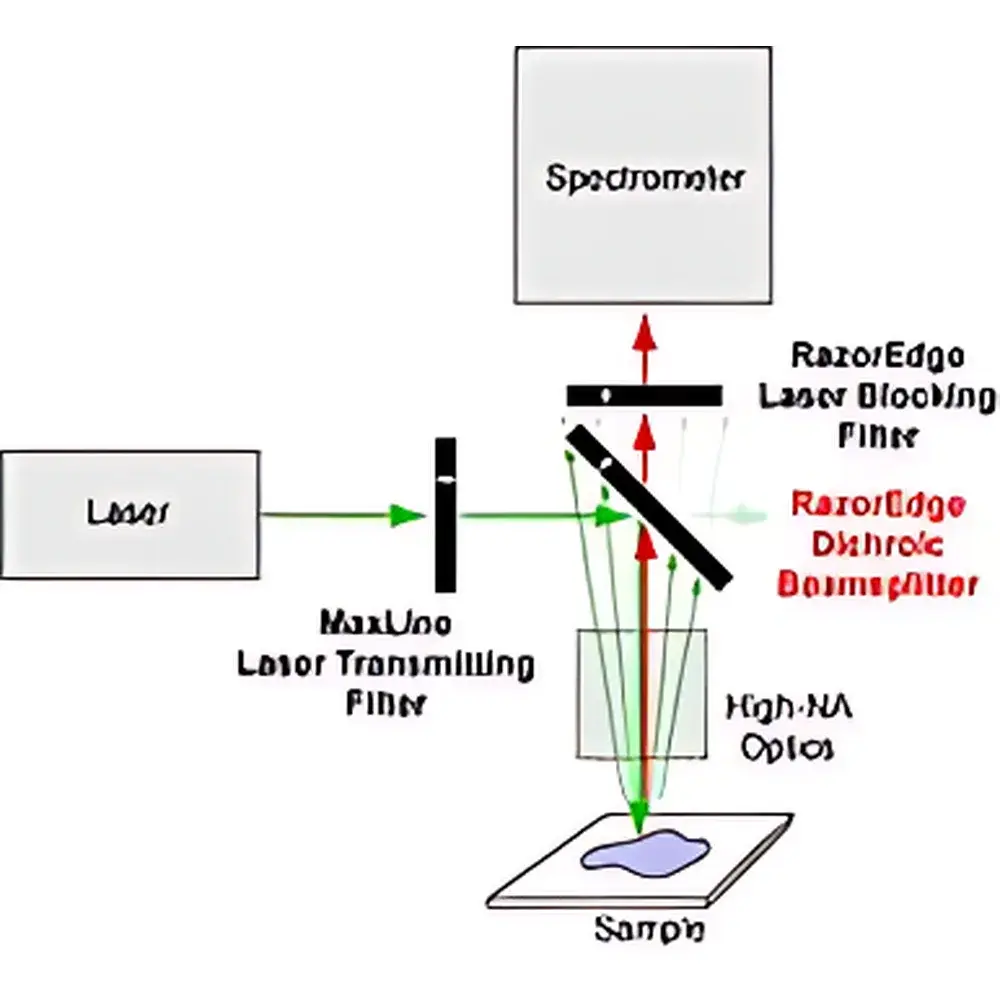
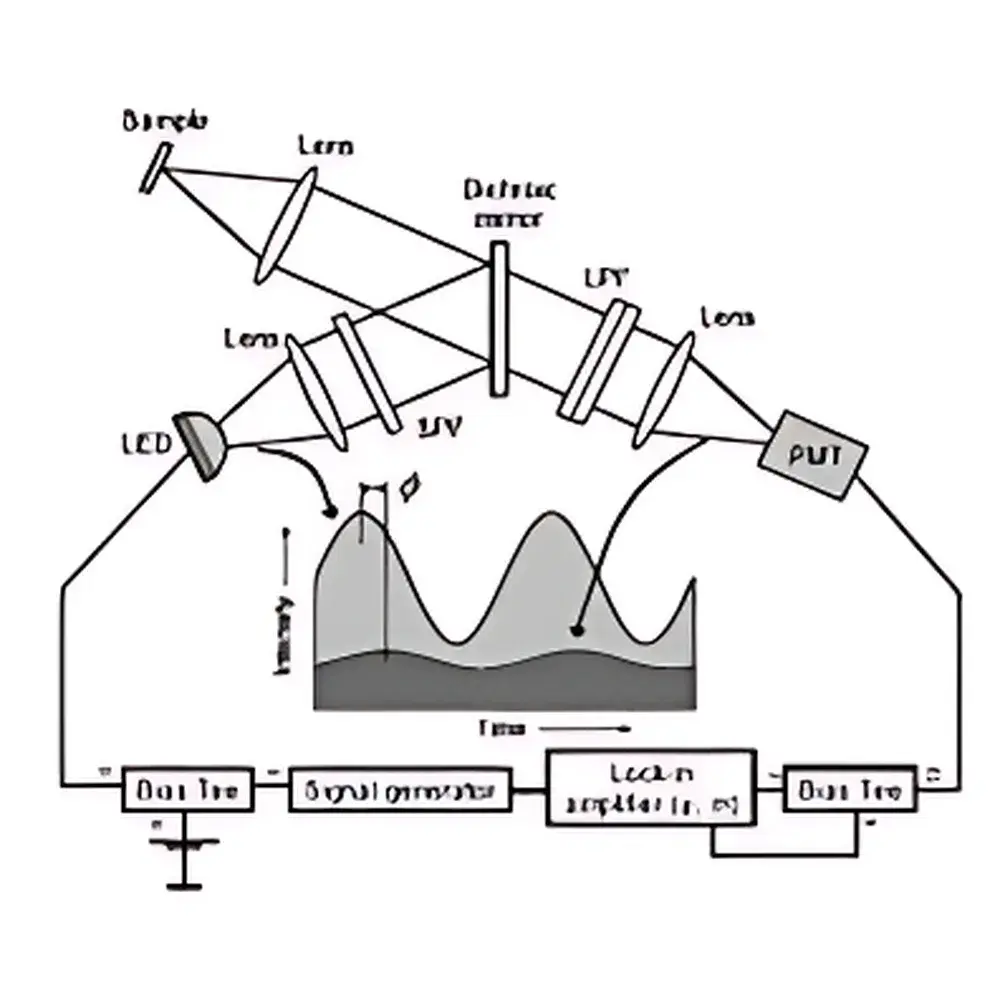
The Orient KOJI Micro-tau is a fully integrated, confocal-grade time-correlated single-photon counting (TCSPC) system engineered for quantitative microscale fluorescence lifetime analysis across the full temporal domain—from sub-100 picoseconds to 100 seconds. Built upon a modular optical architecture, it combines high-spatial-resolution microscopy (<1 µm excitation spot size) with ultrafast timing electronics and multi-channel photon detection to resolve complex decay kinetics in heterogeneous samples. Unlike conventional intensity-based fluorometers, the Micro-tau operates on the physical principle that fluorescence lifetime is an intrinsic molecular property—immune to concentration, photobleaching, and excitation intensity fluctuations—making it ideal for probing local microenvironmental changes, energy transfer (FRET), molecular conformational dynamics, and excited-state equilibria (e.g., singlet vs. triplet populations, delayed fluorescence, room-temperature phosphorescence). Its dual-path optical design supports both free-space and fiber-coupled excitation, enabling seamless integration with external laser sources and compatibility with cryogenic or electrochemical sample environments.
Key Features
- Full-temporal-domain TCSPC acquisition (50 ps – 100 s) with hardware-based pile-up correction and real-time dead-time compensation
- Sub-micron spatial resolution enabled by diffraction-limited excitation optics and high-NA objective coupling
- Multi-laser support: Integrated combiner accepts up to four pulsed lasers (266 nm – 1030 nm), each independently gated and synchronized
- Eight parallel TCSPC channels with >65 MHz sustained count rate per channel and <10 ps timing jitter
- Modular spectral dispersion: User-selectable configuration between scanning monochromator (1 nm resolution) and filter-based detection for rapid spectral binning
- Simultaneous acquisition of time-resolved PL spectra, transient absorption maps, and optional dual-channel Raman signals
- PC-based acquisition software with built-in convolution fitting engine (IRF deconvolution), global lifetime analysis, and multi-exponential decay modeling
- FLIM-ready platform: Compatible with motorized XYZ stages for raster-scanned lifetime imaging; supports time-gated spectral unmixing
Sample Compatibility & Compliance
The Micro-tau accommodates solid, liquid, thin-film, and biological specimens—including single cells, 2D materials, perovskite thin films, OLED layers, and polymer blends—without requiring labeling in many cases. Its open optical path allows direct coupling to cryostats (liquid nitrogen stage optional), electrochemical cells, or environmental chambers. All firmware and acquisition modules comply with GLP/GMP data integrity requirements: audit trails, user-access controls, electronic signatures, and raw-data immutability are enforced at the driver level. Exported datasets conform to HDF5 and vendor-neutral ASCII formats, facilitating traceability under ISO/IEC 17025, ASTM E2919 (fluorescence lifetime standards), and FDA 21 CFR Part 11-compliant workflows.
Software & Data Management
Acquisition and analysis are unified within the TauStudio™ software suite—a Windows-native application developed specifically for multi-dimensional TCSPC data handling. It provides real-time histogramming, live IRF monitoring, automatic pulse-width calibration, and batch processing for lifetime distribution mapping. Advanced analysis modules include phasor plot generation, component-wise decay separation (e.g., prompt vs. delayed fluorescence), and temperature-dependent Arrhenius modeling. Raw TCSPC histograms (.ptu format) are stored with full metadata (laser wavelength, detector bias, slit width, temperature, stage coordinates), ensuring reproducibility and third-party interoperability with Igor Pro, MATLAB, or Python-based lifetimes libraries (e.g., LIFETIME, FLIMfit).
Applications
- Quantitative mapping of carrier recombination dynamics in perovskite solar cells and quantum dot films
- Distinguishing native tryptophan lifetime shifts in protein folding intermediates and ligand-binding events
- Resolving overlapping emissive species in multicomponent organic LEDs via lifetime-assisted spectral unmixing
- Measuring oxygen quenching coefficients in phosphorescent probes for intracellular pO₂ sensing
- Characterizing triplet-triplet annihilation upconversion kinetics in triplet sensitizer systems
- Time-gated rejection of autofluorescence in tissue sections for enhanced contrast in histopathology
FAQ
What is the minimum detectable lifetime with this system?
The system achieves ≤1 ps instrument response function (IRF) width when paired with optimized detectors and ultrafast lasers—enabling reliable resolution of decays down to ~50 ps with high signal fidelity.
Can the system perform FLIM without hardware upgrades?
The base Micro-tau supports point-scan lifetime acquisition; FLIM requires optional motorized XYZ stage and TauStudio™ FLIM module license—both field-upgradable.
Is the software validated for regulated environments?
Yes—TauStudio™ includes 21 CFR Part 11 compliance mode with electronic signature logs, change history, and role-based access control, validated per IQ/OQ protocols.
Does the system support time-resolved Raman spectroscopy?
A dual-channel Raman add-on is available, enabling simultaneous TCSPC-gated Raman acquisition with adjustable delay windows for resonance Raman or transient vibrational analysis.
How is wavelength calibration maintained across long-term operation?
Internal Hg/Ne reference lamp and automated grating position feedback ensure ±0.2 nm repeatability over 12-month intervals; NIST-traceable calibration certificates are provided with each system.
Related Products




