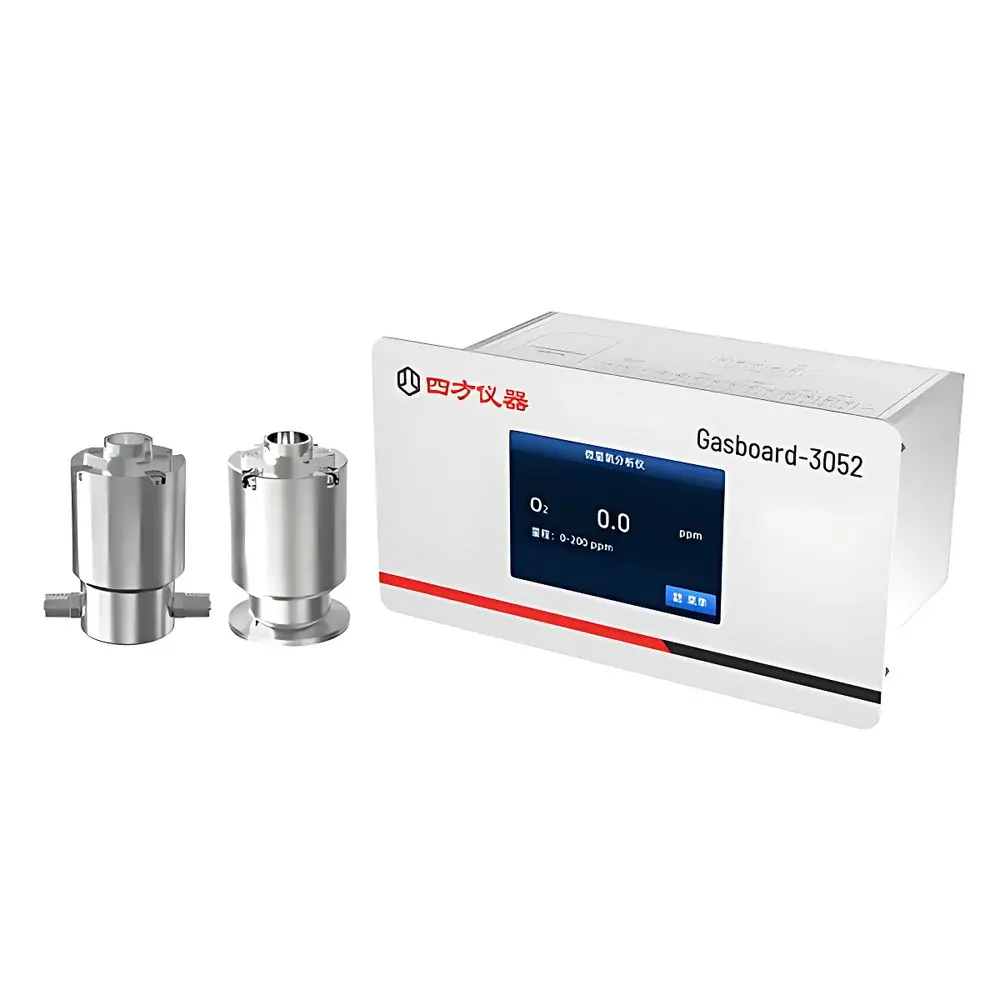
CUBIC INSTRUMENTS Gasboard-3052 Trace Oxygen Analyzer
| Brand | CUBIC INSTRUMENTS |
|---|---|
| Origin | Hubei, China |
| Model | Gasboard-3052 |
| Measurement Range | 0–10 ppm / 0–100 ppm / 0–1000 ppm (auto-ranging) |
| Resolution | 0.1 ppm |
| Accuracy | ≤±2% FS |
| Repeatability | ≤±2% FS |
| Response Time (T90) | ≤10 s |
| Operating Temperature | 0–50 °C |
| Relative Humidity | 0–95% RH (non-condensing) |
| Output Signals | 4–20 mA, 0–1 V / 0–5 V / 0–10 V DC |
| Alarm Outputs | 2 configurable alarm relays + 1 fault relay |
| Communication Interfaces | RS-232, RS-485 |
| Power Supply | 12 V DC or 20 V AC, 50 Hz |
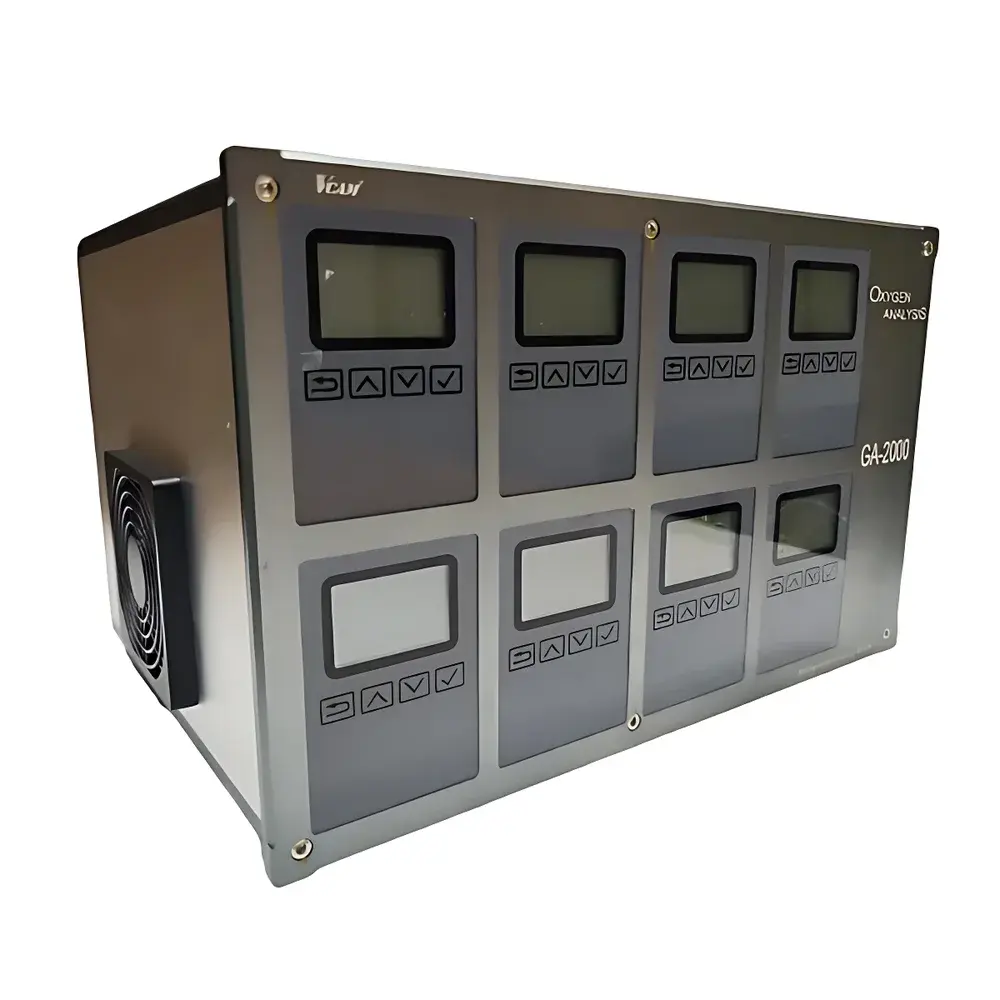
| Dimensions (Analyzer) | 178 × 107 × 95 mm (L×W×H) |
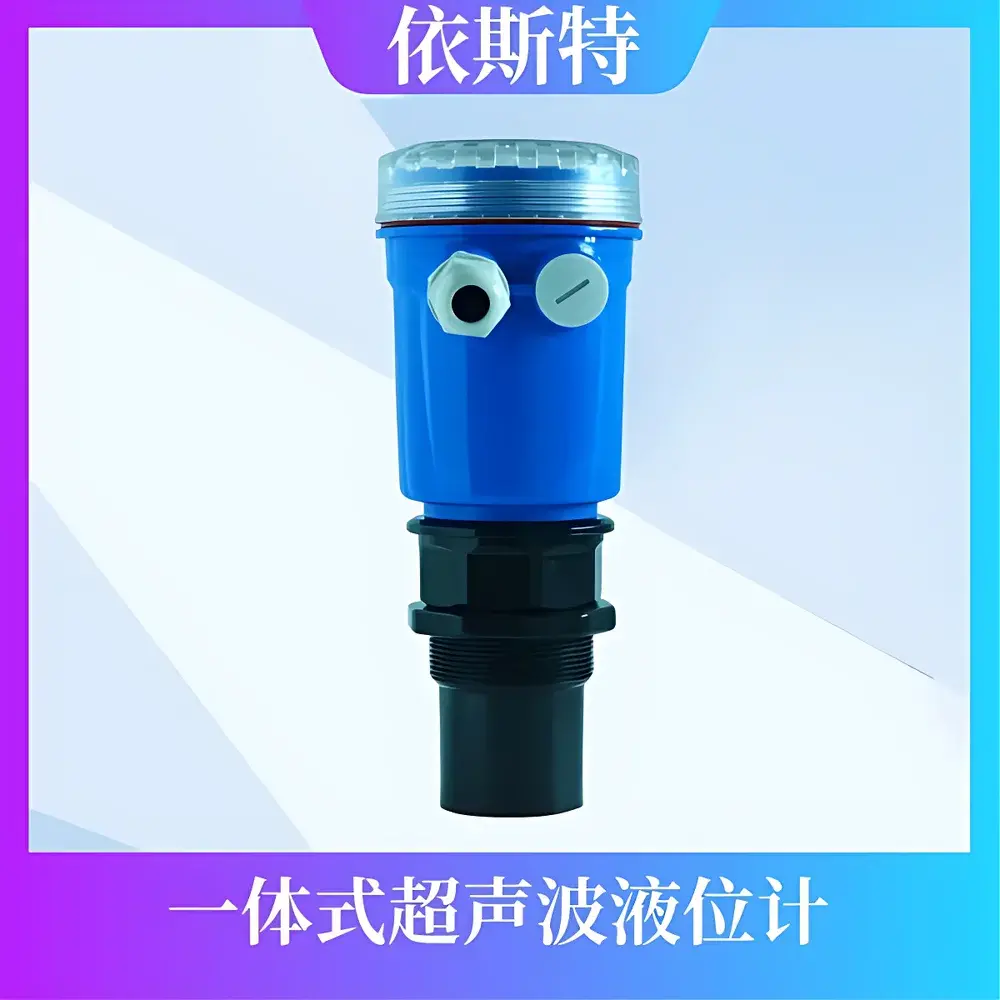
| Sensor Dimensions | Ø38.1 × 71.5 mm (D×L) |
Overview
The CUBIC INSTRUMENTS Gasboard-3052 Trace Oxygen Analyzer is an industrial-grade online analyzer engineered for continuous, real-time measurement of oxygen concentration at parts-per-trillion (ppt) to parts-per-million (ppm) levels in inert, reactive, and process gas streams. It employs a galvanic-limiting-current zirconia (ZrO₂) electrochemical sensor — a mature, field-proven technology offering high selectivity for molecular oxygen (O₂) with minimal cross-sensitivity to CO₂, CO, H₂, N₂, Ar, He, and other common background gases. Unlike paramagnetic or laser-based alternatives, the zirconia cell operates without consumables, optical alignment, or external reference gases, delivering stable baseline performance over extended deployment intervals. Designed for integration into critical manufacturing environments — including semiconductor fabrication cleanrooms, cryogenic air separation units (ASUs), high-purity inert gas supply lines, and controlled-atmosphere welding systems — the Gasboard-3052 meets stringent requirements for trace-level oxygen monitoring where deviations as small as ±0.5 ppm can compromise product yield, material integrity, or safety compliance.
Key Features
- Triple-range auto-switching capability (0–10 ppm / 0–100 ppm / 0–1000 ppm) ensures optimal signal-to-noise ratio across diverse application scenarios without manual range selection.
- High-resolution detection down to 0.1 ppm, with full-scale accuracy maintained at ≤±2% FS under ISO 17025-aligned calibration conditions.
- T90 response time ≤10 seconds enables rapid detection of oxygen ingress during purging cycles or system leak events.
- Compact modular architecture: analyzer head (178 × 107 × 95 mm) and threaded-insert zirconia probe (Ø38.1 × 71.5 mm) support panel-mount, pipe-tap, or inline installation in space-constrained skids or cabinets.
- Intuitive backlit LCD interface with dual-line display provides real-time O₂ concentration, status flags (e.g., sensor health, alarm state), and menu-driven configuration without external PC dependency.
- Robust electrical design includes opto-isolated analog outputs (4–20 mA and selectable voltage ranges), two programmable alarm relays (SPDT), and one dedicated fault relay — all compliant with IEC 61000-4 immunity standards.
- Low-power operation (12 V DC or 20 V AC) facilitates integration into explosion-proof enclosures or battery-backed backup systems in remote or hazardous area deployments.
Sample Compatibility & Compliance
The Gasboard-3052 is validated for use with non-corrosive, dry-to-moderately humid gas matrices (0–95% RH, non-condensing). It is routinely deployed in nitrogen, argon, helium, hydrogen, and synthetic air streams where oxygen concentrations must be verified per ASTM D6803 (standard practice for measuring trace oxygen in high-purity gases) and ISO 8573-1 Class 1–2 compressed air purity specifications. While not intrinsically safe certified, the analyzer may be installed in Zone 2/Class I Div 2 areas when housed in appropriate NEMA 4X or ATEX-compliant enclosures. Its firmware architecture supports audit-ready operation: all parameter changes, alarm triggers, and calibration events are timestamped and stored locally — facilitating GLP/GMP-aligned recordkeeping when paired with external SCADA historians.
Software & Data Management
Configuration and diagnostics are accessible via built-in keypad navigation or optional serial communication (RS-232/RS-485 Modbus RTU protocol). The device supports standard Modbus register mapping for seamless integration into PLC-based control systems (e.g., Siemens S7, Allen-Bradley ControlLogix) and DCS platforms. No proprietary software is required; configuration tools compatible with generic terminal emulators (e.g., PuTTY, Tera Term) enable remote setup, firmware updates, and diagnostic logging. All analog outputs include linearization and damping filters to suppress noise from variable-frequency drives or switching power supplies. Data retention includes 30 days of rolling event logs (alarms, faults, range switches) stored in non-volatile memory.
Applications
- Semiconductor wafer processing: monitoring O₂ contamination in purge gases for epitaxial reactors and ALD/CVD tool chambers.
- Air separation plants: verifying oxygen purity in liquid nitrogen (LN₂) and liquid argon (LAr) storage tanks and vaporizer outlets.
- Pharmaceutical inerting: validating residual oxygen levels in lyophilizer chambers and nitrogen-blanketed API synthesis vessels.
- Food packaging: ensuring modified atmosphere packaging (MAP) gas mixtures meet O₂ <100 ppm thresholds prior to sealing.
- Metal heat treatment: controlling furnace atmospheres during annealing, brazing, and sintering to prevent oxidation of stainless steel and titanium alloys.
- Hydrogen fuel cell feed gas conditioning: detecting trace oxygen that could poison PEM catalyst layers.
FAQ
What sensor technology does the Gasboard-3052 use, and how does it differ from paramagnetic analyzers?
It uses a limiting-current zirconia electrochemical cell, which generates a current proportional to O₂ partial pressure. Unlike paramagnetic sensors, it requires no moving parts, magnetic shielding, or temperature stabilization — resulting in lower long-term drift and higher resistance to vibration and EMI.
Is field calibration required, and what reference gases are needed?
Zero calibration can be performed using high-purity nitrogen (99.999% N₂); span calibration uses certified O₂-in-N₂ standards (e.g., 10 ppm or 100 ppm). Calibration intervals depend on application severity but typically range from 3–6 months under stable operating conditions.
Can the analyzer operate in high-humidity or corrosive gas streams?
It is rated for up to 95% RH (non-condensing). For wet or acidic gas applications (e.g., biogas, flue gas), a heated sample line and particulate/moisture filter are mandatory upstream of the sensor inlet.
Does the Gasboard-3052 support FDA 21 CFR Part 11 compliance?
While the embedded firmware does not provide electronic signatures or role-based access control, its timestamped event logging and uneditable audit trail meet foundational data integrity requirements for Part 11 readiness when integrated with validated third-party LIMS or MES systems.
What is the expected service life of the zirconia sensor under typical industrial conditions?
The sensor module is rated for ≥24 months of continuous operation in clean, dry inert gas. Actual lifetime depends on exposure to moisture, hydrocarbons, or reducing species — regular verification against certified standards is recommended to confirm functional integrity.